Rehabilitation in China: What Your Plan Covers and Real Costs
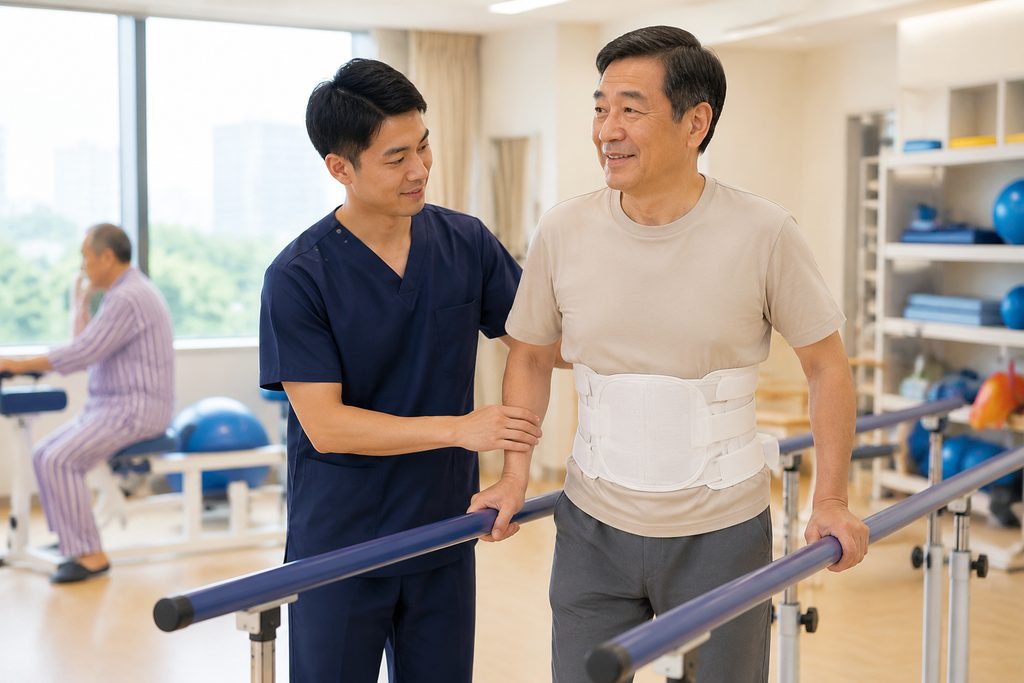
Rehabilitation means rebuilding function after illness or injury. A stroke, a spinal cord injury, a joint replacement — the surgery or acute treatment is only the first chapter. The harder work is learning to move, speak, swallow, or think again. In China, that work happens in dedicated rehabilitation centers attached to major hospitals, and the rehabilitation center cost China patients pay is often a fraction of Western prices. But “what your plan covers” depends entirely on how you structure it — and that is where most international patients get confused.
How This Actually Works, Step by Step
You do not simply fly to Shanghai and check into a rehab ward. The sequence matters. Here is the realistic path from where you are now to sitting in a therapy gym in Beijing or Guangzhou.
First, you send us your existing medical records — discharge summaries, imaging reports, surgical notes, current medication list. Our team reviews them with the rehabilitation department at hospitals that match your condition. This review is not a formality. Chinese rehab physicians want to see the full picture before they accept a case, especially for spinal cord injury or post-stroke care.
Second, we arrange a written second opinion or video consultation. A written second opinion from a top-tier rehabilitation specialist costs $300–500. A video consultation runs $100–300 with a standard international department, or $500–800 for a top specialist. You speak directly with the physician. You explain your goals. They explain what is realistic.
Third, the hospital issues an invitation letter and treatment plan. You apply for an S2 visa with that documentation. Visa processing typically takes 1–4 weeks depending on your home country’s Chinese embassy or consulate.
Fourth, you arrive. A bilingual medical companion meets you, handles registration, payment, and translation. Your rehab program begins — usually 2–4 hours of therapy per day, five or six days a week.
That is the honest sequence. There is no shortcut where you book a bed online and show up the next day.
Rehabilitation Center Cost China: The Numbers Behind the Plan
The phrase “what your plan covers” means different things in different health systems. In the US, your insurance plan might cover 20 physical therapy visits per year, then you pay out of pocket. In China, you typically purchase a rehab package or pay per day, and the total cost includes therapy, nursing, and often a shared or private room.
Let us put numbers on it. A mid-range inpatient rehabilitation program at a top public hospital in China — say, Shanghai or Beijing — costs from $150 to $400 per day. That includes daily physiotherapy, occupational therapy if needed, nursing care, and basic room charges. A more intensive program at a private international hospital runs $400 to $800 per day.
Compare that to the United States, where inpatient rehabilitation averages $1,700 to $2,500 per day without insurance. A 30-day stroke rehab stay in China might total $5,000 to $12,000 at a public hospital. In the US, the same 30 days could exceed $50,000. That is the core appeal of rehabilitation center cost China — the math is hard to ignore.
| Service | China (Public Top Hospital) | China (Private International) | United States Average |
|---|---|---|---|
| Inpatient rehab, per day | $150–$400 | $400–$800 | $1,700–$2,500 |
| Stroke rehab, 30 days | $5,000–$12,000 | $12,000–$24,000 | $50,000+ |
| Spinal cord injury rehab, 90 days | $15,000–$35,000 | $35,000–$70,000 | $120,000+ |
| Written second opinion | $300–$500 | — | $700–$1,500 |
| Video consultation | $100–$300 | — | $250–$500 |
Prices vary by hospital and case complexity. A patient who needs one-on-one speech therapy daily will pay more than someone doing group physiotherapy three times a week. Always confirm the final quote after the hospital reviews your records.
Best Physical Therapy Hospital Shanghai and Other Regional Leaders
If you search for the best physical therapy hospital Shanghai, you will find several strong candidates. Huashan Hospital, affiliated with Fudan University, runs one of China’s most respected rehabilitation medicine departments. Its sports medicine and neurological rehab programs are consistently ranked among the top in the country. Zhongshan Hospital, also in Shanghai, has a well-regarded cardiac and post-surgical rehab unit.
But Shanghai is not the only option. Beijing offers China Rehabilitation Research Center (CRRC), which is effectively the national reference center for spinal cord injury and stroke rehabilitation. It handles a high volume of complex cases. Guangzhou has strong rehab departments at Sun Yat-sen University hospitals. Chengdu’s West China Hospital runs a large rehabilitation center with dedicated spinal cord injury wards.
For a broader view of ranked programs, see our department rankings across 45 specialties, which includes rehabilitation medicine. You can also browse top-ranked hospitals by city to compare Shanghai, Beijing, and Guangzhou options side by side.
A Realistic Timeline
People underestimate the waiting steps. Here is what a typical international rehab patient actually experiences.
| Stage | What Happens | Duration |
|---|---|---|
| Day 1–7 | You send medical records. We translate and submit them to 2–3 hospital rehab departments. | 1 week |
| Day 7–21 | Hospitals review the case. Some request additional imaging or test results. A written opinion or video consult is scheduled. | 2–3 weeks |
| Day 21–35 | Hospital issues treatment plan and invitation letter. You apply for S2 visa. | 2 weeks |
| Day 35–63 | Visa processing. Varies by country. Some embassies take 4+ weeks. | 2–4 weeks |
| Arrival week | You fly to China. Companion meets you. Admission paperwork, baseline assessments, therapy starts. | 3–5 days |
| Month 1–3 | Active rehab. For stroke, 4–8 weeks is common. For spinal cord injury, 8–12 weeks minimum. | 8–12 weeks |
So from first contact to starting therapy, expect 6 to 10 weeks. That is not bureaucracy for its own sake. Hospitals want to accept patients they can actually help, and the visa process is what it is. Plan for it.
What Can Go Wrong — and What Happens Then
Let us be blunt about failure modes. They exist, and you should know them before you commit.
The hospital rejects your case. This happens. If your condition is too unstable, or if the rehab department believes you would not tolerate international travel, they will say no. What happens then? We take the feedback back to you, often with a written explanation. Sometimes a different hospital with a different specialty focus will accept the case. Sometimes the answer is that you need more acute medical stabilization at home first. That is not a dead end. It is a redirection.
Progress is slower than expected. Rehab is not a straight line. A stroke patient might regain walking in six weeks — or might still need a wheelchair after three months. Chinese rehab centers are honest about this. They set functional goals at admission and reassess every two to four weeks. If progress stalls, the therapy plan changes. If you are not satisfied, you can request a case review with the attending physician. You are not locked into a package with no recourse.
Insurance refuses to reimburse. Most international patients pay out of pocket in China and seek reimbursement from their home insurer afterward. Public hospitals require prepayment. Private international hospitals sometimes bill directly. If your insurer denies the claim, that is between you and your insurer — but we provide itemized invoices and translated medical records to support your appeal. Get pre-approval in writing from your insurer before you travel. Do not assume.
Language friction. Even at hospitals with English-speaking staff, the day-to-day reality of rehab involves Chinese-speaking therapists, nurses, and administrative staff. A bilingual companion solves most of this. Without one, small things become big frustrations. We are direct about this because it is true.
Is Rehab in China Good for Spinal Cord Injury? What the Numbers Say
This is a fair question, and the answer is more nuanced than “yes” or “no.” China treats a high volume of spinal cord injury patients. The China Rehabilitation Research Center in Beijing alone admits thousands of SCI patients annually. Volume matters in rehab — therapists who see 50 spinal cord injury cases a year develop pattern recognition that a generalist seeing five cases never will.
But volume is not the same as outcome. What China offers is structured, intensive, multidisciplinary rehab at a price that allows for longer stays. A 90-day program in the US might be financially impossible for many patients. The same 90 days in China might cost $15,000–$35,000. That length of stay matters for spinal cord injury, where recovery timelines stretch into months, not weeks.
Chinese SCI rehab typically includes daily physiotherapy, occupational therapy, bladder and bowel management training, psychological support, and — increasingly — robotic-assisted gait training and functional electrical stimulation. Some centers also integrate traditional Chinese medicine approaches like acupuncture as adjunctive therapy, though evidence for TCM in SCI recovery remains limited and it should not replace conventional rehab.
So is rehab in China good for spinal cord injury? For patients who are medically stable, who can commit to 8–12 weeks, and who understand that rehab maximizes function rather than guaranteeing recovery — yes, it can be a strong option. For patients expecting a miracle cure, no program anywhere will satisfy them.
How Long Does Post Surgery Rehab Take in China?
The honest answer: it depends on the surgery and your baseline. But here are the ranges Chinese rehab departments typically plan for.
After a knee or hip replacement, inpatient rehab usually runs 2–4 weeks, followed by a home exercise program. After cardiac bypass surgery, 3–6 weeks of supervised cardiac rehab is standard. After a stroke, 4–8 weeks for a first rehab admission, with some patients staying 12 weeks or longer. After spinal cord injury, 8–12 weeks minimum, often split into two or three admissions over a year.
Chinese rehab physicians tend to favor longer inpatient stays than Western systems allow. That is partly cultural — families expect the hospital to “fix” the problem — and partly practical, since the daily cost is low enough to make extended stays feasible. If you ask how long does post surgery rehab take in China, the answer is usually “longer than your home country would approve, and that might be exactly what you need.”
Practical Considerations: Records, Visa, Payment, and Follow-Up
Before you book anything, get these pieces in order.
Medical records. You need discharge summaries, surgical reports, imaging (CT, MRI, X-ray) on CD or digital files, current medication list, and any prior rehab assessments. If records are not in English, we handle translation. Incomplete records slow everything down.
Visa. Medical treatment in China uses an S2 visa, annotated for medical purposes. Family members accompanying you also apply for S2. The hospital’s invitation letter is a key supporting document. Visa processing times vary — apply as early as possible. We guide you through the paperwork but cannot guarantee approval; that is the embassy’s call.
Payment. Public hospitals require prepayment — typically a deposit covering the first 1–2 weeks, then top-ups. Private international hospitals may accept credit cards or direct insurance billing. Bring multiple payment methods. Wire transfers to Chinese hospital accounts are possible but slow.
Insurance. Get pre-approval in writing. Ask your insurer specifically about international rehab coverage, out-of-network rates, and whether they reimburse foreign hospital invoices. Some insurers require a written second opinion before approving international treatment.
Follow-up at home. Your Chinese rehab team will provide a discharge summary and home exercise plan. You may need to find a local physiotherapist to continue care. Some Chinese hospitals offer follow-up video consultations at $100–300 per session — a practical bridge after you return home.
Frequently Asked Questions
You can reserve a treatment plan and admission slot through a hospital’s international department, but you cannot finalize admission without a face-to-face evaluation. The hospital will review your records remotely, issue a plan and invitation letter, and confirm a tentative start date. Final admission happens after you arrive and complete baseline assessments. This is standard practice at public hospitals. Private international hospitals may offer more flexible pre-booking.
A typical inpatient rehab package includes daily physiotherapy and occupational therapy sessions, nursing care, room and board, and regular physician reviews. Some packages add speech therapy, psychological support, or TCM adjuncts. Read the package breakdown carefully — “rehab package” is not a standardized term. Ask for a line-item quote before you commit.
At top-tier hospitals — the ones we work with — yes. These are Fudan-ranked or JCI-accredited institutions with established international patient departments. The risk is not the quality of therapy. The risk is misaligned expectations: thinking rehab will cure what medicine cannot, or underestimating the physical and emotional toll of an 8-week stay in a foreign country. Choose a hospital with a track record in your specific condition, not just a famous name.
Leaving early is your right — you are not contractually locked into a fixed package at most hospitals, though you may forfeit prepaid fees for unused days. Extending is usually possible if the hospital has bed availability and your visa allows it. S2 visas can sometimes be extended within China, but do not assume it. Plan your stay length conservatively and discuss extension scenarios with the hospital before you arrive.
Your Next Step
Rehabilitation in China is not for everyone. It suits patients who are medically stable, who want intensive therapy at a lower cost, and who are willing to navigate a foreign healthcare system with professional support. That is where China Medical Services comes in. We do not provide medical treatment. We connect you with ranked rehabilitation departments, translate your records, coordinate appointments, and put a bilingual companion beside you on the ground. If you are weighing whether this path makes sense for your case, start with a conversation. Send us your records and let our team give you an honest read on what is possible — no pressure, no obligation, just a clear-eyed assessment of whether Chinese rehab fits your goals.
For more medical information and treatment options in China, visit chinamedservices.com (China Medical Services).
