Heart Screening: What a Checkup Finds Before You Travel to China
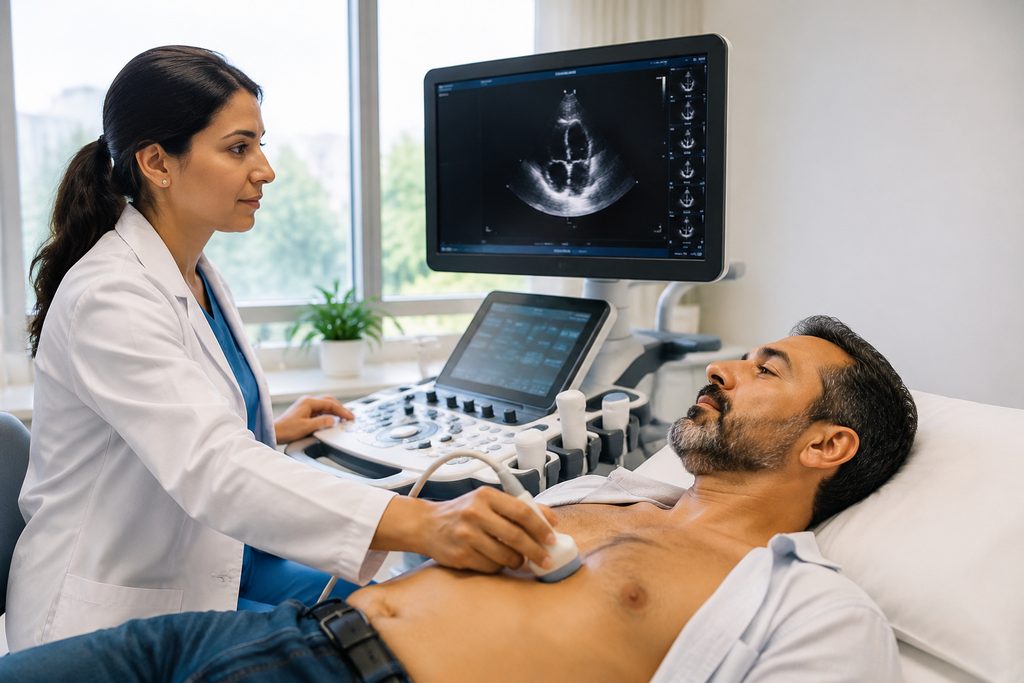
Have you ever lain awake wondering whether that occasional chest flutter is something serious, or just stress? A proper heart screening answers that question with evidence instead of anxiety. For many international patients, the deciding factor is simple arithmetic: the heart screening cost China runs roughly one-fifth to one-tenth of what the same comprehensive cardiac checkup costs in the United States or Western Europe, without sacrificing diagnostic depth.
Key Takeaways
- A comprehensive heart screening in a top-tier Chinese hospital typically costs $300–$800, compared to $2,500–$5,000+ for an equivalent panel in the US.
- Chinese cardiac centers like Fuwai Hospital perform over 14,000 heart surgeries annually — volume that directly sharpens diagnostic accuracy.
- Language barriers and hospital navigation are real challenges; you cannot simply walk into a public Chinese hospital and expect English-speaking staff.
- Understand exactly which tests a heart screening includes before you book — packages vary dramatically between hospitals and private clinics.
The Problem: Cardiac Anxiety Is Expensive to Resolve at Home
Cardiovascular disease remains the leading cause of death globally, claiming approximately 17.9 million lives each year according to the World Health Organization. Yet for many people without a confirmed diagnosis, getting answers is surprisingly difficult. In countries like the United States, an uninsured patient facing chest pain and requesting a full cardiac workup — echocardiogram, stress test, Holter monitor, and blood panels — can expect a bill exceeding $3,000. Even insured patients often face deductibles that make the out-of-pocket cost prohibitive.
Wait times compound the problem. In Canada and the United Kingdom, referrals for non-emergency cardiology consultations routinely stretch to 3–6 months. That is a long time to wonder whether your heart is quietly failing. The result is predictable: people delay screening, ignore symptoms, and sometimes discover problems only after a cardiac event that could have been prevented.
Why a Heart Screening in China Delivers Results
China’s top cardiac centers operate at a scale that most Western hospitals cannot match. That scale translates directly into diagnostic experience, faster turnaround, and structural cost advantages that have nothing to do with cutting corners.
Clinical Volume Sharpens Diagnostic Accuracy
Fuwai Hospital in Beijing — the National Center for Cardiovascular Diseases — performs more than 14,000 cardiac surgeries annually, the highest volume of any heart center globally. Its echocardiography department reads tens of thousands of studies each year. When a cardiologist has seen 10,000 echocardiograms, subtle abnormalities that a lower-volume clinician might miss become recognizable patterns. This is not speculation; multiple studies in journals including Circulation and The Lancet have demonstrated a clear volume-outcome relationship in cardiac care. Hospitals that do more procedures simply get better at them.
Comprehensive Packages, Not Piecemeal Testing
Western cardiac evaluations often unfold over multiple appointments across different facilities — a blood draw here, an echo there, a stress test scheduled weeks later. Chinese hospitals typically bundle everything into a single cardiac checkup package. A standard executive heart screening in Shanghai or Beijing includes resting ECG, echocardiogram, treadmill stress test, lipid panel, fasting glucose, and a cardiologist consultation — all completed within one morning, with results reviewed the same day.
Cost Advantage Without Quality Compromise
Why is the heart screening cost China so much lower? Not because of inferior equipment or undertrained physicians. The structural reasons: lower labor costs for nurses and technicians, hospital-owned equipment that is already amortized across enormous patient volumes, and a system designed for throughput rather than insurance billing complexity. Chinese public hospitals do not employ armies of billing specialists to negotiate with dozens of insurers. That administrative overhead simply does not exist in the same form. The result is a cardiac evaluation that costs $300–$800 in China versus $2,500–$5,000 in the US — using comparable or newer equipment, read by cardiologists who see more hearts in a month than many Western cardiologists see in a year.
What Does a Heart Screening Detect? The Actual Test Panel
If you search “what does a heart screening detect,” you will find vague marketing language from wellness clinics. Here is the concrete list of what a comprehensive Chinese cardiac package actually includes — and what each test is designed to uncover.
| Test | What It Detects | Typical Cost in China (USD) | Typical US Cost (USD) |
|---|---|---|---|
| Resting ECG | Arrhythmias, prior heart attack, conduction blocks | $15–$40 | $100–$250 |
| Echocardiogram | Valve function, ejection fraction, chamber size, wall motion | $80–$200 | $800–$2,000 |
| Treadmill Stress Test | Exercise-induced ischemia, functional capacity | $60–$150 | $400–$1,200 |
| 24h Holter Monitor | Intermittent arrhythmias, silent ischemia | $100–$250 | $500–$1,500 |
| Coronary CT Angiography | Coronary artery calcium, plaque burden, stenosis | $300–$600 | $1,500–$3,500 |
| Lipid Panel + hs-CRP | Atherosclerosis risk, inflammation markers | $30–$80 | $100–$300 |
Prices vary by hospital tier and city. A cardiac checkup package Shanghai at a public Grade-A hospital will run toward the lower end. A private international hospital like United Family or Jiahui will charge more — closer to $1,000–$2,000 for the full panel — but offers English-speaking staff throughout and direct insurance billing.
Is Heart Screening in China Reliable? What the Data Shows
The question “is heart screening in China reliable” deserves a straight answer. For top-tier hospitals, the evidence says yes — with important caveats.
China’s best cardiac centers are accredited by JCI (Joint Commission International) or ranked in the Fudan Hospital Rankings, which evaluates hospitals using peer review from thousands of Chinese specialists. Fuwai Hospital, Zhongshan Hospital in Shanghai, and Peking Union Medical College Hospital consistently appear in the top tier for cardiology and cardiac surgery. Their equipment is current — many use the same Siemens, GE, and Philips imaging platforms found in leading Western centers.
The caveat: reliability drops sharply outside the top tier. China has over 35,000 hospitals, and the quality gap between the top 5% and the rest is significant. A screening at an unranked county hospital may use older equipment and less experienced readers. This is precisely why patients should target hospitals from the Fudan-ranked specialty lists or JCI-accredited private facilities. The hospital matters more than the country.
How to Book a Full Heart Checkup at a Beijing Hospital
Here is the reality that surprises most foreign patients: you cannot simply book a full heart checkup at a Beijing hospital online from abroad. Chinese public hospitals do not offer international online scheduling for standard outpatient services. The system works like this:
- Public hospital registration happens through hospital apps or on-site kiosks, usually requiring a Chinese mobile number and ID.
- Same-day registration means queuing at 6:00 AM with hundreds of other patients.
- Specialist consultations require first seeing a general cardiologist, who then refers you onward.
- All communication — registration, payment, test instructions, results — happens in Mandarin.
That does not mean it is impossible. It means the process requires either fluent Chinese, a local friend willing to spend a full day navigating, or a bilingual coordinator who handles registration, payment, and interpretation. For patients who want to book full heart checkup Beijing hospital appointments without the chaos, the practical route is through a hospital’s international medical department — which charges 1.5–2 times the standard rate but provides English support and scheduled appointments — or through a service that coordinates on your behalf.
Practical tip: If you have recent cardiac test results from your home country, bring them. Chinese cardiologists will review them and may reduce redundant testing, saving both time and money.
Practical Considerations: Documentation, Visa, and Payment
Planning a cardiac screening trip to China involves more than booking a flight. Here is what you need to know before you go.
Medical Records and Referrals
Bring all existing cardiac records — ECGs, echo reports, stress test results, and any imaging on CD or USB. English records are generally acceptable; top-tier hospital cardiologists read English medical terminology. If your records are in another language, arrange translation before travel.
Visa Category
For medical treatment in China, the applicable short-stay visa is the S2 visa, issued for private affairs including medical treatment. You will need supporting documents from the hospital — typically an invitation letter or appointment confirmation from the hospital’s international department. The M visa is for commercial and trade activities and is not the correct category for medical travel. Visa requirements change; always confirm current documentation requirements with the Chinese embassy or consulate in your country before applying.
Payment Methods
Chinese public hospitals require prepayment — you deposit funds at registration and draw down as tests are performed. Cash and Chinese mobile payment (WeChat Pay, Alipay) are standard; international credit cards are often not accepted at public hospital counters. Private international hospitals accept major credit cards and often bill insurers directly. Bring sufficient funds or arrange payment through a coordinator who can handle local transactions.
Insurance and Reimbursement
Most international insurers reimburse care at JCI-accredited facilities. Public Chinese hospitals, even top-ranked ones, may not meet some insurers’ accreditation requirements. Check with your insurer before booking. If reimbursement matters, a private international hospital in Shanghai or Beijing may be the better choice despite higher upfront cost.
Language and Follow-Up
You will need interpretation for any public hospital visit. Test results are issued in Chinese; a bilingual companion can translate on the spot and ensure you understand what the cardiologist recommends. For follow-up after returning home, request a written summary in English — most international departments provide this on request.
Frequently Asked Questions
A full cardiac evaluation — ECG, echo, stress test, Holter, and CT angiography — costs roughly $300–$800 at a top Chinese public hospital, and $1,000–$2,500 at a private international hospital in China. The same panel in the US typically runs $2,500–$5,000 or more, depending on insurance status and facility. The savings are structural, not a reflection of lower quality.
No. Chinese hospitals do not require primary care referrals. You can register directly with a cardiology department. However, top specialists at elite hospitals may have limited appointment availability, and the registration process itself is challenging without Chinese language ability.
If your screening reveals a significant finding — severe stenosis, arrhythmia requiring intervention, or valve disease — the cardiologist will recommend next steps. You are under no obligation to pursue treatment in China. Many patients take the diagnostic results back to their home cardiologist for treatment planning. If you choose to proceed in China, the same hospital can typically schedule further testing or intervention, though admission is always subject to the hospital’s own rules and bed availability.
At private international hospitals, yes — English is standard. At public hospitals, raw results are in Chinese. You will need a bilingual coordinator or companion to translate findings accurately. Some public hospital international departments provide English summaries for an additional fee.
Your Next Step
A heart screening is one of the highest-value diagnostic investments you can make — and doing it in China can save thousands of dollars while giving you access to some of the world’s most experienced cardiac centers. The tradeoff is logistical complexity: language, registration, payment, and navigation all demand either local knowledge or professional support. Our team at China Medical Services helps international patients arrange cardiac screenings at top-ranked Chinese hospitals — handling appointment coordination, bilingual accompaniment, and document translation. We are not a hospital and do not provide diagnoses; we are your bridge to the medical expertise you need. When you are ready to explore options, request a free consultation and we will help you map out the most practical path forward.
For more medical information and treatment options in China, visit chinamedservices.com (China Medical Services).
