Cardiac Screening in China: How We Arrange Your Heart Checkup
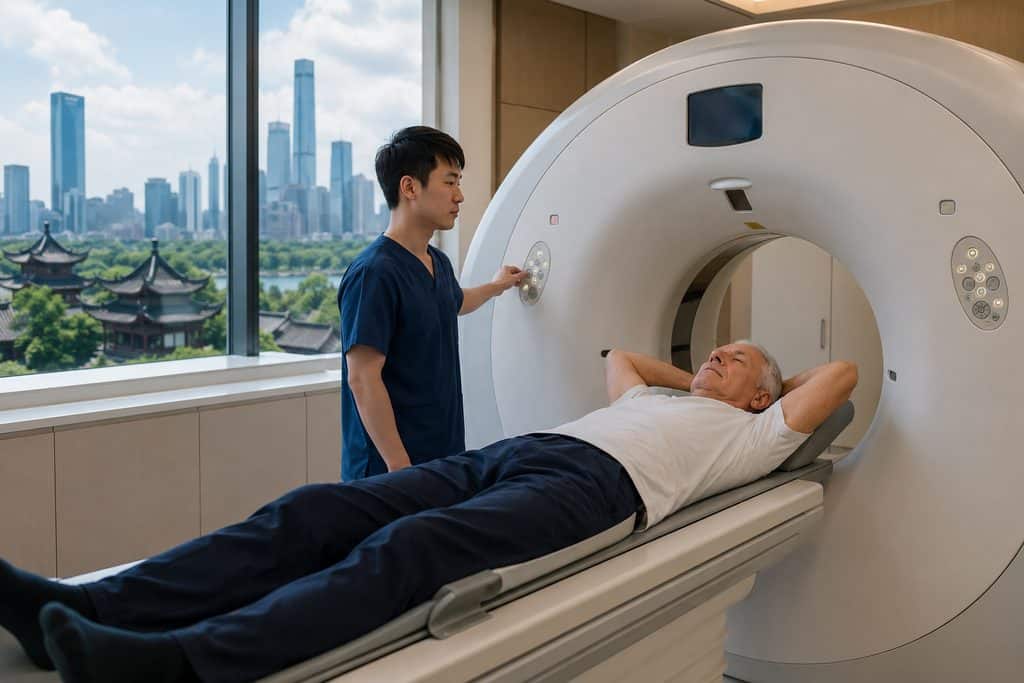
What would you do if you needed a comprehensive heart checkup but the quote at your local hospital made you pause? Maybe you’ve heard that the heart screening cost China offers runs at a fraction of Western prices. That part is true. But how does a foreigner actually arrange one without speaking Mandarin, without knowing which of China’s 35,000+ hospitals is legitimate, and without getting lost in a system that moves fast and rarely slows down for outsiders?
We get asked this every week. Patients from the US, UK, Australia, and the Gulf write to us with the same core worry: they want the quality, but they fear the logistics. Our team has spent years building the bridge between international patients and China’s top-ranked cardiology departments. This article walks you through exactly how we arrange a cardiac screening in China, what it costs, what the safety picture looks like, and the honest friction points you should know before booking a flight.
How This Actually Works, Step by Step
The process is more structured than most people expect. Here is the real sequence, from your first email to the moment you sit down with a cardiologist in Beijing or Shanghai.
First, you send us whatever medical records you have. Recent ECG, echocardiogram, stress test results, blood work, family history notes. If you have none, that is fine too. Many patients arrive for a baseline screening with no prior cardiac workup. Our team reviews what you send and identifies which screening tier fits your risk profile. A 35-year-old with no symptoms and no family history needs a different package than a 58-year-old with hypertension and a parent who died of a heart attack.
Next, we match you with a hospital. We work with more than 340 top-ranked hospitals across 37 cities, including the cardiac powerhouses in Beijing and Shanghai. For cardiology specifically, we often point patients toward Fuwai Hospital, which performs over 14,000 cardiac surgeries annually — the highest volume in the world. But Fuwai is not right for everyone. Sometimes a private international hospital like United Family or Jiahui makes more sense because of English-speaking staff and direct insurance billing. The choice depends on your budget, your clinical needs, and how much hand-holding you want.
Then we handle the booking. Here is the part most foreigners get wrong: you cannot simply call a Chinese public hospital from overseas and reserve a screening slot. Ordinary outpatient registration happens same-day, in person, often through a hospital app that requires a Chinese phone number and ID. Our bilingual coordination team manages this through the hospital’s official international department or VIP channel. We translate your records into Chinese, submit them for review, and secure a confirmed appointment time before you ever board a plane.
On the day of your screening, a bilingual medical companion meets you at the hospital entrance. They handle registration, queueing, payment, navigation between departments, and real-time interpretation with the cardiologist. You never stand alone in a crowded lobby wondering which floor to go to. After the screening, the companion helps you collect all reports, and we arrange a follow-up consultation where the findings are explained to you in plain English. If the results indicate a need for further evaluation, we can coordinate that too. If everything is clear, you leave with a complete cardiac profile and a written summary you can share with your doctor back home.
What Does Heart Screening Cost China Actually Look Like?
Let’s talk numbers. The heart screening cost China clinics charge varies significantly by hospital tier, city, and package depth. Here is what we have seen across the past several years of arranging these checkups for international patients.
| Screening Package | What It Includes | Typical Cost (USD) |
|---|---|---|
| Basic cardiac panel | ECG, blood lipids, blood glucose, blood pressure, basic consultation | $150–350 |
| Standard heart screening | Above plus echocardiogram, chest X-ray, cardiologist review | $400–800 |
| Comprehensive cardiac checkup | Above plus stress ECG, carotid ultrasound, 24-hour Holter if indicated | $800–1,500 |
| Advanced cardiac screening | Above plus coronary CT calcium score or CT angiography, specialist panel review | $1,200–2,500 |
Compare that to the United States, where a coronary CT angiogram alone often runs $1,000 to $3,000 without insurance, and a full preventive cardiac workup at a major academic center can easily exceed $5,000. The cardiac checkup price Shanghai hospitals quote for international patients typically lands in the $500 to $1,800 range for a thorough package, depending on whether you go through a public hospital’s VIP department or a private international facility. Prices vary by hospital and case complexity, always.
One thing to understand clearly: public hospital international departments in China charge more than the standard domestic rate. You are paying for English-speaking coordination, shorter queues, and often more senior physicians. Expect to pay roughly 1.5 to 2 times the local price. Even with that premium, you are still looking at 60% to 80% savings compared to equivalent US pricing. That is the value proposition, and it holds up.
Is Heart Screening Safe in China?
The short answer is yes — at the right hospitals. The longer answer requires nuance, because “China” is not one medical system. It is a landscape with enormous variance between the top 5% and everything else.
We only arrange screenings at hospitals ranked by the Fudan University hospital rankings or accredited by JCI. That is a deliberate filter. Fuwai Hospital, Zhongshan Hospital affiliated with Fudan University, Peking Union Medical College Hospital, and West China Hospital all run cardiology departments that publish in major international journals and handle patient volumes that dwarf most Western centers. A physician at Fuwai may see more complex cardiac cases in a month than a typical Western cardiologist sees in a year. Volume drives competence, especially in diagnostic imaging and stress testing.
But volume also drives chaos if you are unprepared. A top Chinese public hospital can see over 10,000 outpatient visits in a single day. The corridors are crowded. Queues form early. Signage is mostly in Chinese. Without a bilingual companion, a foreigner can easily spend an entire day just figuring out where to go. That is not a safety issue in the clinical sense, but it is a real risk to your sanity and your schedule. We address it directly by never sending a patient into one of these hospitals alone.
Equipment standards at the hospitals we work with are modern. Many use Siemens, Philips, or GE imaging systems that are identical to what you would find in a US or European hospital. The technicians are trained, the protocols are standardized, and reports are generated digitally. The weak point is rarely the technology. It is communication. That is our job to fix.
A Realistic Timeline
People underestimate how long the whole process takes. Here is a realistic calendar, assuming you are starting from zero and targeting a screening in Beijing or Shanghai.
| Stage | What Happens | Duration |
|---|---|---|
| Week 1 | You contact us, send records, we review and recommend a screening tier | 2–4 days |
| Week 2 | Hospital matching, document translation, appointment request submitted | 3–7 days |
| Week 3 | Appointment confirmation, visa application (S2), travel booking | 5–10 days |
| Week 4–5 | Arrival in China, screening day, follow-up consultation, report collection | 2–5 days on the ground |
| Week 6+ | Return home, share results with your local physician | Ongoing |
The visa step trips people up. Foreigners coming to China for medical treatment apply for an S2 visa, which covers short stays for private affairs including medical purposes. Your accompanying family member also needs an S2. The hospital’s official invitation letter or appointment confirmation supports the application. Processing times vary by country and embassy workload, so we always advise building in at least two weeks of buffer. You cannot show up on a tourist visa and expect to walk into a hospital international department without complications.
Document translation is another hidden delay. Chinese hospitals require your medical records in Chinese for their internal review. A poorly translated ECG report can confuse the cardiologist or delay your appointment. We handle this in-house, which saves days compared to finding a certified translator on your own.
What Can Go Wrong — and What Happens Then
We would rather tell you now than have you discover it in a hospital lobby. Here are the honest failure modes for cardiac screening in China, and how we handle each one.
Your appointment gets moved. It happens. A senior cardiologist gets called into emergency surgery, and your 9 a.m. slot becomes 2 p.m. or the next day. Our companion stays with you, rebooks, and adjusts the schedule. You are not left to figure it out alone. If you booked through our coordination service and we cannot secure the appointment at all, you get a full refund of the coordination fee. That is the promise we make, and we have never had to break it.
The screening finds something unexpected. A borderline stress test. A calcium score that raises eyebrows. The cardiologist recommends further imaging or a consultation with a cardiac surgeon. This is not a failure of the screening. It is the screening doing its job. But it can be frightening when you are far from home and the doctor is explaining findings through an interpreter. Our companion ensures you understand every word before you leave the room. If follow-up care is needed, we can coordinate a second opinion, a video consultation with a specialist, or in some cases a treatment plan. You are never rushed out the door with a piece of paper you cannot read.
You arrive without the right visa. This is the most preventable problem and the one that causes the most stress. Some patients assume a business visa or a tourist visa will work. It will not. The S2 visa is the correct category for medical treatment and private affairs. If you arrive on the wrong visa, the hospital may still see you, but you risk complications with immigration authorities and your insurance company. We flag this early and check your documents before you travel.
Your insurance refuses to reimburse. Public hospitals in China typically require prepayment. You pay upfront, then submit claims to your insurer. Private international hospitals often bill directly. Before you commit to a screening package, we help you understand which option your policy supports. We cannot guarantee reimbursement, but we can make sure you have the documentation your insurer needs — itemized receipts, translated reports, and a formal discharge summary.
How to Arrange Cardiac Checkup in Beijing: Choosing the Right Hospital
Beijing is where most international patients start their search. It makes sense. The city has 21 hospitals on the Fudan Top 100 list, more than any other Chinese city. But more choices can mean more confusion. Here is how to think about it.
If you want the highest-volume cardiac center in the world, you go to Fuwai Hospital. It is not the most foreigner-friendly environment, but the clinical depth is unmatched. Patients with complex histories, prior interventions, or unusual symptoms often benefit most from Fuwai’s experience. Our bilingual companion makes the experience manageable.
If you want a smoother, more Western-style experience, you book through a private international hospital. United Family Beijing and Beijing United Family Rehabilitation Hospital offer English-speaking cardiologists, JCI accreditation, and direct billing with many international insurers. The trade-off is cost. You will pay more than at a public hospital’s international department, though still less than in the US or UK.
If you want the best of both worlds, you consider Peking Union Medical College Hospital (PUMCH). It is a public hospital with a strong international department, a cardiology division ranked among China’s top 10 in the Fudan specialty rankings, and decades of experience treating foreign patients. The cardiac checkup price Shanghai and Beijing public international departments quote is usually similar, so geography matters less than clinical fit.
Our advice: do not choose a hospital based on a Google search. Choose based on your medical history, your budget, and your tolerance for chaos. We make that match for you based on years of working with these specific departments. That is the value of a bilingual medical companion service — not just translation, but judgment.
Book Heart Screening Package China: What to Look For
If you are comparing screening packages across hospitals, here is what actually matters.
Look at the imaging equipment. A modern 256-slice CT scanner produces far better coronary artery images than an older 64-slice machine. Ask which scanner the hospital uses. Reputable centers will tell you. Fuwai and Zhongshan use current-generation Siemens and GE systems. If a hospital cannot answer this question, walk away.
Look at the cardiologist’s background. Chinese cardiologists at top hospitals often hold international fellowships or have published in journals like Circulation or the Journal of the American College of Cardiology. You can ask for the reviewing physician’s credentials before you book. We provide this information as part of our matching process.
Look at what the package actually includes. Some “screening packages” are little more than a blood test and a blood pressure reading. Others include echocardiography, stress testing, and coronary calcium scoring. The price difference is not always obvious from the brochure. We review package contents with you item by item so you know exactly what you are paying for and why each test matters for your risk profile.
And be realistic about what a screening can and cannot do. A cardiac screening is not a guarantee against future heart disease. It is a snapshot of your current cardiovascular health. It can catch early signs of coronary artery disease, valve abnormalities, arrhythmias, and risk factors like high cholesterol or hypertension. It cannot predict a heart attack with certainty. No test can. If you have symptoms — chest pain, shortness of breath, palpitations — you need a diagnostic workup, not a screening package. Tell us about your symptoms honestly, and we will route you to the right type of evaluation.
Practical Considerations: Records, Visa, Payment, and Follow-Up
Before you book a flight, get your paperwork in order. Bring any prior cardiac test results, even if they are years old. A 2019 echocardiogram showing mild mitral regurgitation is useful context for the cardiologist reviewing your current images. Bring a list of medications with dosages. Bring your family history — specifically, any first-degree relative who had a heart attack, stroke, or sudden cardiac death before age 55 for men or 65 for women.
Scan everything before you travel. Keep digital copies of your records, passport, visa, and insurance card on your phone and in cloud storage. Hospitals in China move fast, and having documents instantly accessible saves hours.
Visa: S2, as covered earlier. Apply through your local Chinese embassy or consulate with the hospital’s appointment confirmation. Processing typically takes 4 to 10 business days, but can stretch longer during peak seasons. Do not book non-refundable flights until your visa is approved.
Payment: public hospitals require upfront payment via cash, Chinese debit card, or sometimes international credit card. Private international hospitals accept major credit cards and often bill insurers directly. Plan your payment method before you arrive. Your companion can help with hospital payment counters, which are notoriously busy.
Follow-up at home: after your screening, you will receive a full written report in English. We recommend sharing it with your primary care physician or cardiologist back home. If the Chinese cardiologist recommends further testing or treatment, you can pursue it in China or at home. The report belongs to you. Use it however serves your health best.
Frequently Asked Questions
Yes, at top-ranked hospitals with modern equipment and experienced cardiologists. The clinical safety is comparable to Western standards at the hospitals we work with. The practical challenges — language, navigation, and queue management — are real but manageable with a bilingual companion.
Fuwai Hospital in Beijing is the highest-volume cardiac center globally and our top recommendation for complex cases. For a smoother experience with English-speaking staff, United Family or Jiahui are strong private options. Peking Union Medical College Hospital offers a middle path with strong clinical depth and a well-run international department.
The cardiac checkup price Shanghai hospitals quote is generally similar to Beijing, ranging from about $500 to $1,800 for a comprehensive package at a public hospital’s international department. Private international hospitals in both cities run higher. Final pricing always varies by hospital and case complexity.
Can I book a heart screening package in China before I arrive?
Yes, through a hospital’s international department or a coordination service like ours. You cannot book through the standard public outpatient system from overseas. The international channel requires document submission and advance scheduling, which is
For more medical information and treatment options in China, visit chinamedservices.com (China Medical Services).
