Inpatient Companion: What to Know About Costs, Roles, and Hiring in China
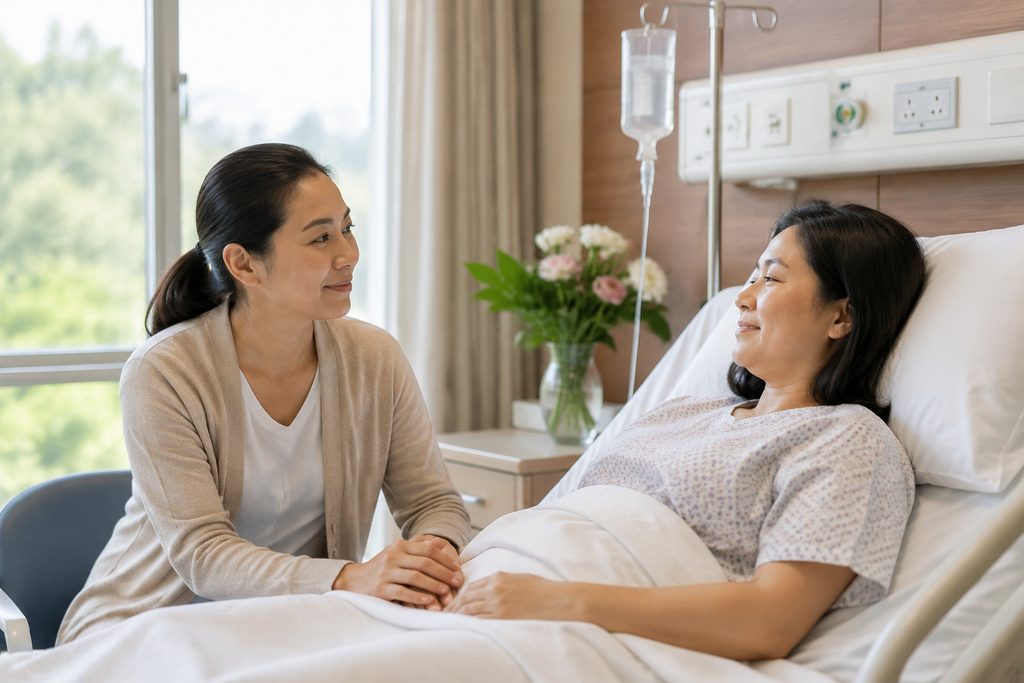
You’ve probably heard that flying to China for surgery means going it alone once you’re admitted. That’s not quite true. A growing number of international patients now arrange a dedicated inpatient companion — a bilingual person who stays with them on the ward, handles communication with nurses, manages payments, and coordinates with family back home. The practice is common in Shanghai, Beijing, and Guangzhou. What surprises most people is not that the service exists, but how structured and affordable it has become relative to Western private nursing costs.
The inpatient companion service cost China varies by city, hospital tier, and shift length. Expect to pay from $300 per day for an 8-hour bilingual companion. Overnight or 24-hour coverage costs more. This person is not a nurse. They do not administer medication or make clinical decisions. They are your communication bridge, logistics coordinator, and advocate on the ward. For patients who don’t speak Mandarin, that role can mean the difference between a smooth recovery and a stressful, confusing hospital stay.
How This Actually Works, Step by Step
The process starts long before you board a plane. First, you send your existing medical records — discharge summaries, imaging reports, lab results — to a coordination team. We translate these into Chinese and forward them to the relevant department at a hospital from our network of 340+ top-ranked hospitals across 37 cities. A specialist reviews the materials and issues a written opinion on whether treatment in China is appropriate for your case.
You then choose between a video consultation with the treating team or a written second opinion. If the plan moves forward, the hospital’s international department schedules your admission window. This is where the inpatient companion enters the picture. We assign a companion based on your language needs, medical condition, and the specific hospital. The companion meets you at admission, helps with registration and deposit payment, and remains with you during the agreed shifts.
During your stay, the companion translates every conversation with doctors and nurses, tracks medication schedules, arranges meals, coordinates with your family via WeChat or WhatsApp, and handles any administrative friction. After discharge, they help collect your medical records, discharge summary, and billing documents for insurance reimbursement.
What Does an Inpatient Companion Do in Shanghai Hospitals?
Shanghai has the second-highest concentration of top-tier hospitals in China, with 18 institutions on the Fudan ranking list. Hospitals like Zhongshan Hospital and Ruijin Hospital see enormous daily patient volumes. A single ward may house 40 to 60 patients. Nurses are competent but stretched. They cannot serve as translators. That is where the companion steps in.
What does an inpatient companion do in Shanghai hospitals on a typical day? They arrive before morning rounds, usually around 7:30 AM. They note your questions for the attending physician, then stand beside your bed during rounds to interpret. They relay the doctor’s assessment, any changes to the treatment plan, and what tests are scheduled. They walk with you to imaging departments, wait in line for you, and bring results back to the ward. They pick up prescriptions from the hospital pharmacy and confirm dosages with the nursing station.
They also handle the non-medical side. Paying a deposit, topping up your hospital account, ordering appropriate meals, buying toiletries from the hospital convenience store. If you need a second opinion within the same hospital, they can help request one. The job is part interpreter, part care coordinator, part errand runner. It is not glamorous. But it removes the daily friction that wears down recovering patients.
Private Nurse for Hospital Stay Beijing Price: What You Actually Pay For
A companion provides translation, coordination, and advocacy. They do not administer medication, change dressings, or perform clinical tasks. A private nurse has clinical training and costs significantly more — often $500 to $900 per day in Beijing’s international wards.
Some hospital international departments maintain lists of bilingual coordinators, but availability is inconsistent. Hiring through a medical coordination service gives you a vetted companion, a written agreement, and a replacement guarantee if the first person is not a good fit.
Reputable coordination services include a replacement clause. You report the issue, and a new companion is assigned, usually within 24 to 48 hours. This is one reason to avoid informal arrangements through expat groups, where you have no recourse.
It depends. Family members provide emotional support but often lack Mandarin skills and hospital familiarity. Many patients use a companion for the first few days after surgery — the most critical period — and then rely on family for the remainder of the stay.
Your Next Step
An inpatient companion can transform a disorienting hospital stay into a manageable, even comfortable experience. The key is hiring the right person for the right scope of work, with clear expectations on both sides. Our team at China Medical Services coordinates bilingual companions, hospital admissions, and visa documentation for international patients across 37 Chinese cities. We do not provide medical care or guarantee clinical outcomes — we handle the logistics so you can focus on recovery. If you are considering treatment in China, start with a conversation. Tell us your diagnosis, your target city, and your language needs. We will tell you honestly what a companion can and cannot do for your specific situation.
Frequently Asked Questions
Yes. The hospitals used for international patients are JCI-accredited and follow the same international safety standards as top hospitals in the US and Europe. Surgical teams perform high volumes of procedures — often more than their Western counterparts — which studies show leads to better outcomes.
Costs vary by procedure and hospital, but international patients typically save 40-80% compared to US prices — even when factoring in travel and accommodation. A consultation with our team will give you an exact, all-inclusive quote with no hidden fees.
Send us your existing medical reports to get started. We handle everything from hospital selection and appointment scheduling to visa assistance and post-operative recovery planning. Your medical records are reviewed by the specialist before you even book a flight.
For more medical information and treatment options in China, visit chinamedservices.com (China Medical Services).
