Mobility Rehab: Moving Again — Costs, Timelines & Top Hospitals in China
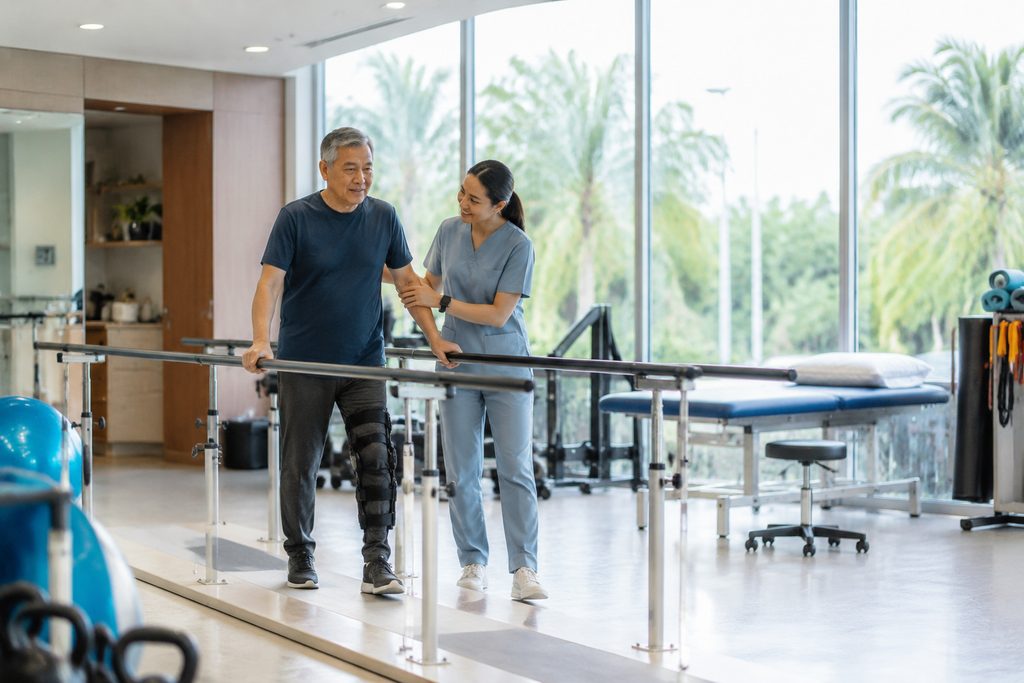
You’ve probably heard that traveling abroad for rehabilitation means either a luxury spa in Switzerland or a bare-bones clinic in Southeast Asia. China sits in neither camp. The country runs some of the highest-volume rehabilitation departments on earth, yet a full mobility rehab program in a top-tier Chinese hospital typically costs a fraction of what you’d pay in the United States or Western Europe. The real question isn’t whether the infrastructure exists. It’s whether you can navigate it without getting lost in the system.
That’s where the mobility rehab cost China equation gets interesting. A four-week inpatient stroke rehabilitation program at a leading Shanghai hospital might run between $8,000 and $15,000, depending on the intensity of therapy and the hospital tier. Compare that to $30,000–$60,000 for a comparable program in the US. The gap is real. But so are the coordination challenges — language, medical records, visa timing, and knowing which of China’s 35,000+ hospitals actually excels at neurorehabilitation versus sports injury recovery.
Our team at China Medical Services works with 340+ top-ranked hospitals across 37 cities. We’ve seen what works and what falls apart. This guide walks through how mobility rehabilitation actually functions for international patients in China, what it costs, how long it takes, and where the honest risks lie.
How This Actually Works, Step by Step
You don’t just fly to Shanghai and check into a rehab ward. The sequence matters, and skipping steps costs time and money.
Step 1: Send your records. You’ll need recent imaging (MRI, CT, or X-ray), surgical reports if applicable, discharge summaries, current medication lists, and ideally a short video showing your current mobility level — walking, standing, transferring from bed to chair. A clinician reviewing your file needs to see function, not just diagnosis codes.
Step 2: A specialist reviews everything. Depending on your condition — stroke, spinal cord injury, joint replacement, sports trauma — a rehabilitation physician or orthopedic surgeon at one of our partner hospitals evaluates whether inpatient rehab, outpatient therapy, or a hybrid program makes sense. This is a written second opinion or video consultation, typically $300–$800 depending on the specialist’s seniority.
Step 3: You get a proposed plan. The hospital’s international department drafts a treatment outline: therapy hours per day, expected length of stay, estimated cost range, and any additional diagnostics they want to run on arrival. This is not a binding contract. It’s a working document.
Step 4: Visa and travel. For medical treatment in China, you apply for an S2 visa with supporting documents from the hospital — an invitation letter or treatment confirmation. Processing usually takes 1–3 weeks depending on your home country’s Chinese embassy or consulate. Family members accompanying you also apply for S2 visas.
Step 5: Arrival, assessment, treatment. Your first 2–3 days on the ground involve physical assessment, baseline functional testing, and therapy scheduling. Treatment then runs in daily blocks — typically 2–4 hours of combined physiotherapy, occupational therapy, and sometimes robotic-assisted gait training.
Step 6: Discharge and home program. Before you leave, the therapy team gives you a written home exercise protocol and, in many cases, a video review call 4–6 weeks later. You’re not abandoned at the airport.
This is how a coordinated program works. What it costs depends heavily on where you go and what you need.
Mobility Rehab Cost China: What You’ll Actually Pay
Let’s get specific. Prices below are ranges for international patients using hospital international departments or VIP channels — the route that allows advance scheduling and English-speaking coordination. Standard public outpatient pricing is lower, but you cannot book that from overseas and you’ll need full Chinese language support on site.
| Rehab Service | China (International Dept.) | United States | United Kingdom (Private) |
|---|---|---|---|
| Inpatient stroke rehab (4 weeks) | $8,000–$15,000 | $30,000–$60,000 | $25,000–$45,000 |
| Outpatient physiotherapy (per session) | $40–$120 | $100–$250 | $80–$180 |
| Robotic gait training session (Lokomat or similar) | $80–$200 | $300–$600 | $250–$500 |
| Total knee replacement rehab package (2 weeks) | $3,000–$6,000 | $8,000–$15,000 | $7,000–$12,000 |
| Spinal cord injury rehab (8 weeks, intensive) | $18,000–$35,000 | $80,000–$150,000 | $60,000–$120,000 |
These figures vary by hospital and case complexity. A top-tier facility like Huashan Hospital in Shanghai or China Rehabilitation Research Center in Beijing charges more than a strong provincial hospital. But even the premium tier lands well below Western private pay rates.
What drives the cost difference? Labor costs for therapists, lower facility overhead, and a healthcare system built for volume. Chinese rehab departments treat enormous patient loads. A single physiotherapy department at a major Shanghai hospital might see 500–800 patients daily. That volume means equipment gets used constantly, which spreads capital costs thin.
For anyone asking specifically about how long does mobility rehab take after stroke, the honest answer is: longer than most people hope, shorter than they fear. The first 3–6 months post-stroke show the fastest functional gains. Most inpatient programs run 4–8 weeks, followed by 3–6 months of outpatient or home-based therapy. Meaningful recovery can continue for 12–18 months, but the slope flattens. A realistic expectation: 4 weeks of intensive inpatient rehab in China might improve your Berg Balance Scale score by 10–15 points and your 10-meter walk test time by 20–30%. Individual results depend on lesion location, age, baseline fitness, and therapy intensity.
If you’re wondering whether robotic gait training is available in China — yes, and it’s more common than in most Western countries. Lokomat systems, exoskeletons, and body-weight-supported treadmill trainers are standard equipment in top rehabilitation centers. The technology isn’t magic. But for patients with severe gait impairment, robotic-assisted therapy allows high-repetition stepping practice that would exhaust a human therapist. That’s the clinical logic.
Best Rehabilitation Hospital Shanghai: Where the Strong Programs Are
Shanghai has the deepest concentration of top-tier rehabilitation resources in China. When patients ask us for the best rehabilitation hospital Shanghai has to offer, we point to a few names that consistently appear in the Fudan University hospital rankings — the most authoritative hospital evaluation system in China.
Huashan Hospital, affiliated with Fudan University, runs one of China’s strongest rehabilitation medicine departments, with particular depth in neurological rehabilitation. Zhongshan Hospital, also Fudan-affiliated, excels in post-surgical and cardiac rehabilitation. Shanghai Sixth People’s Hospital is known for orthopedic rehabilitation following joint replacement and trauma. For private international options with English-speaking staff and direct insurance billing, JCI-accredited private hospitals in Shanghai like Jiahui and United Family offer Western-style rehab programs at higher price points.
Beijing is the other heavyweight. China Rehabilitation Research Center (CRRC) in Beijing is one of the largest dedicated rehabilitation facilities in Asia, with specialized programs for spinal cord injury, stroke, and traumatic brain injury. Peking University Third Hospital runs a strong sports medicine and orthopedic rehab program. If you’re looking to book mobility rehab program Beijing, these are the names that come up first in any serious evaluation.
Beyond the two big cities, our hospital database covers 340+ top-ranked institutions across 37 cities, including strong rehab programs in Guangzhou, Chengdu, and Hangzhou. The right hospital depends on your specific diagnosis. Stroke patients need neurorehabilitation depth. Joint replacement patients need orthopedic rehab with early mobilization protocols. Spinal cord injury patients need specialized equipment and nursing ratios.
One thing to understand about Chinese public hospitals: the Fudan rankings list departments by specialty reputation, not by overall hospital rank. A hospital that’s average for cardiology might have a top-10 rehabilitation department. That’s why matching your condition to the right department matters more than picking a famous hospital name.
A Realistic Timeline
Here’s what the calendar actually looks like for an international patient pursuing mobility rehab in China. These are ranges, not guarantees.
| Stage | Duration | What Happens |
|---|---|---|
| Record collection & translation | 3–10 days | Gathering imaging, reports, medication lists; translating key documents into Chinese or English as needed |
| Specialist review & plan proposal | 5–14 days | Rehab physician reviews your file; hospital drafts treatment outline and cost estimate |
| Visa processing (S2) | 7–21 days | Embassy processing time varies by country; hospital provides invitation or confirmation letter |
| Travel & arrival | 1–2 days | Flights, airport transfer, hotel or hospital accommodation check-in |
| On-site assessment | 2–3 days | Baseline functional testing, imaging if needed, therapy schedule set |
| Active rehab program | 2–8 weeks | Daily therapy blocks; typical inpatient stay 4 weeks for stroke, 2–3 weeks for post-surgical |
| Discharge & home program | 1–2 days | Written exercise protocol, equipment recommendations, follow-up video call scheduled |
Total realistic timeline from first inquiry to starting rehab: 3–6 weeks. Most of that is document preparation and visa processing, not hospital delays. If you need treatment faster, some patients arrive on an existing tourist or business visa and convert — but that’s messy and not something we recommend. The S2 route is cleaner.
And here’s the part people forget: you’ll need someone on the ground who speaks Chinese. Hospital administrative staff, nursing teams, and even some therapy assistants may not speak English, even at top hospitals. This is not a reflection of clinical quality. It’s a staffing reality in a system built for domestic patients. A bilingual medical companion — costing from $300 per day — handles registration, payment counters, pharmacy runs, and translation during therapy sessions. For many patients, this is the difference between a smooth program and a daily struggle.
What Can Go Wrong — and What Happens Then
We’d rather you hear this from us than discover it on day three in a Shanghai hospital ward.
Your records are incomplete or in the wrong language. A hospital may refuse to proceed with the planned program until they get proper documentation. The fix: send everything you have, even if it seems irrelevant. We translate and organize it. If a document is missing, the hospital’s international department usually tells us within 48 hours of review.
Your condition doesn’t match the initial assessment. Sometimes the video you sent overestimates or underestimates your actual function. The on-site assessment may show you need more or less intensive therapy than planned. The hospital adjusts the program. Costs may shift up or down accordingly.
Visa processing takes longer than expected. Embassy backlogs happen. If your S2 visa is delayed, the hospital’s international department can usually extend the proposed admission window. But flights and accommodation may need rebooking. We coordinate that.
You need a procedure, not just therapy. Occasionally the rehab physician discovers an underlying issue — a joint contracture requiring surgical release, or a pressure sore needing wound care. The rehab hospital may not offer that procedure. In that case, we coordinate a transfer or cross-consultation with a surgical department at a partner hospital. This adds time and cost.
Insurance won’t cover international rehab. Most US and European private insurers exclude overseas rehabilitation unless it’s part of a medical tourism package with pre-authorization. Some medical tourism packages for physical therapy China are structured with cash-pay pricing precisely because insurance rarely covers cross-border rehab. You should assume you’re paying out of pocket and seeking reimbursement later, if at all. Get pre-authorization in writing before you book flights.
None of these failure modes are catastrophic. But each one costs time and money if you’re navigating alone. That’s the honest trade-off.
How to Evaluate a Rehab Program Before You Commit
Not every “international rehab program” in China is worth the flight. Here’s what separates a serious clinical program from a wellness retreat with a therapy room attached.
Ask about therapist-to-patient ratios. In a good inpatient rehab program, you should get at least 2–3 hours of one-on-one or small-group therapy daily. If the program advertises “daily therapy” without specifying hours, push for numbers.
Ask which equipment they actually use. If robotic gait training is part of the plan, ask for the device name — Lokomat, A3, Flexbot, or similar. Ask how many sessions per week you’ll get. Equipment sitting in a corner doesn’t help you.
Ask about outcome measurement. A legitimate program will assess you with standardized tools — Functional Independence Measure (FIM), Berg Balance Scale, 6-Minute Walk Test, 10-Meter Walk Test — at admission and discharge. If a program can’t name its outcome measures, walk away.
Ask about the medical director’s background. The lead rehabilitation physician should have fellowship training or equivalent experience in rehabilitation medicine, not just orthopedics or neurology. In China, many top rehab physicians trained in the US, Germany, or Japan.
Ask about discharge planning. What happens when you leave? A written home program, a video follow-up, equipment recommendations — these are signs of a program that cares about outcomes, not just occupancy.
And a note on medical tourism packages for physical therapy China: some agencies bundle flights, hotel, and therapy sessions into a fixed-price package. These can be convenient. But the clinical component should still be delivered by a hospital department, not a hotel gym with a visiting physio. Ask who employs the therapists and who holds liability if something goes wrong.
Practical Considerations: Records, Visas, Payment, and Language
Let’s cover the logistics that determine whether your rehab trip actually happens.
Medical records. Bring originals and digital copies of everything: imaging discs, surgical reports, pathology, medication lists, allergy information, and your primary physician’s contact details. Chinese hospitals will create their own records, but your history shapes the treatment plan. Translation into Chinese is helpful but not always required — top international departments read English.
Visa. You need an S2 visa for medical treatment stays under 180 days. If your rehab program runs longer than 180 days, you need an S1 visa. Your accompanying family members also apply for S2. The hospital’s international department provides the supporting documents — a treatment confirmation or invitation letter. We guide you through the exact paperwork for your country’s embassy.
Payment. Chinese public hospitals require prepayment for international patients. You’ll deposit an estimated treatment amount upfront, and the hospital draws down against it. Unused funds are refunded at discharge. Private international hospitals may bill insurance directly. Cash, credit card, and international wire transfer are all workable, but confirm the hospital’s preferred method before you arrive.
Language. Even at hospitals with English-speaking physicians, nurses and administrative staff often speak only Mandarin. A bilingual medical companion from $300 per day handles the friction: registration lines, pharmacy pickup, therapy scheduling, and translating between you and the care team. Some patients try to manage with translation apps. It works until it doesn’t.
Follow-up at home. Your Chinese rehab team will give you a home program. But you’ll need a local physiotherapist at home to continue the work. Ask your Chinese team to write the program in English and include specific parameters — sets, repetitions, resistance levels, gait speed targets. A vague “continue exercises” note won’t help your home therapist.
Frequently Asked Questions
How much does mobility rehab cost in China compared to the US?
For international patients using hospital international departments, a four-week inpatient stroke rehab program in China typically costs $8,000–$15
For more medical information and treatment options in China, visit chinamedservices.com (China Medical Services).
