Inpatient Companion: Wound Care Observation Cost in China
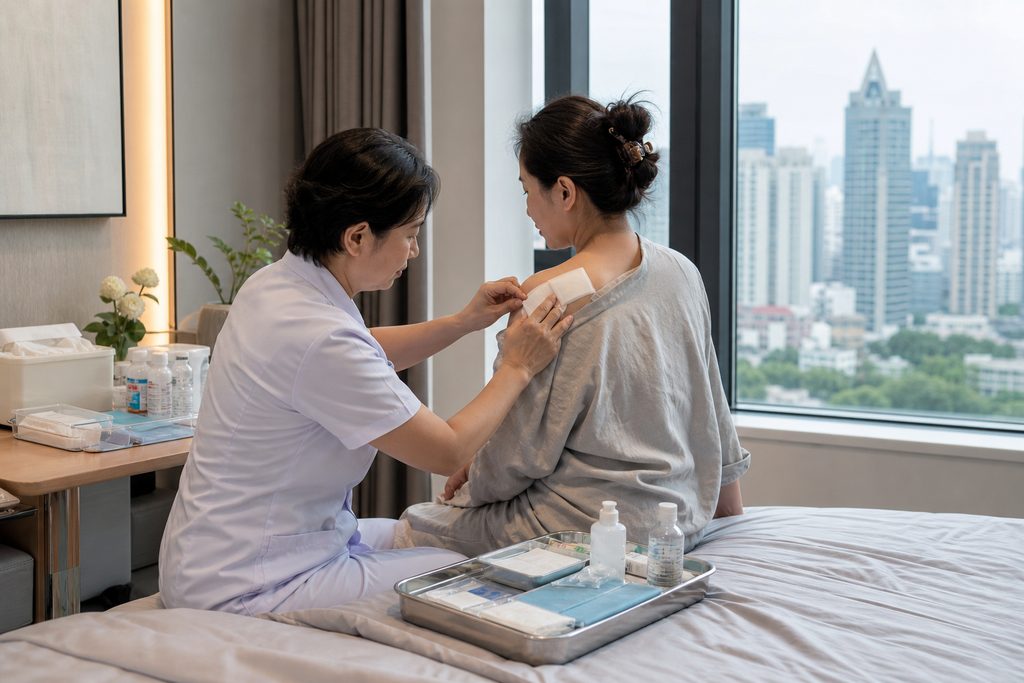
Wound Care Hospital Cost China: Inpatient Observation for International Patients
Have you ever looked at a post-surgical wound and wondered whether it is healing correctly, only to realize that getting a professional to look at it would mean another appointment, another copay, and another week of waiting? That anxiety multiplies tenfold when you are considering treatment abroad. The wound care hospital cost China sits at roughly one-fifth to one-tenth of comparable inpatient care in the United States, which is why a growing number of international patients now book structured observation stays in Shanghai and Beijing after complex procedures. This article breaks down what those stays actually involve, what they cost, and how to evaluate whether the option makes sense for your situation.
Key Takeaways
- Inpatient wound observation in top Chinese hospitals typically costs $180–$450 per day, compared to $2,500–$4,500 per day in US facilities for equivalent monitoring.
- Fudan-ranked hospitals in Beijing and Shanghai operate dedicated wound care units with nurse-to-patient ratios that often exceed Western benchmarks.
- Language barriers and documentation standards remain real friction points; a bilingual companion is functionally necessary for most foreign patients in public hospitals.
- You cannot book inpatient observation remotely as a private patient; a written second opinion or video consultation must precede any admission arrangement.
The Problem: Wound Complications Are Common, Costly, and Hard to Monitor Remotely
Surgical site infections affect approximately 2–4% of all inpatient procedures in the United States, according to CDC surveillance data. That sounds small until you realize it translates to roughly 157,000 infections annually in US hospitals alone. And the financial consequence is staggering: a single surgical site infection adds an average of $20,000 to $25,000 in additional hospital costs per patient. For patients traveling abroad for surgery, the risk calculus becomes even more complex. You leave the operating country within days of a procedure. You board a long-haul flight. You land somewhere without immediate access to the surgical team that knows your case. If the wound starts looking wrong, you are now navigating a foreign emergency system with no continuity of care.
That is the scenario driving interest in structured inpatient wound observation. Patients want a defined window—typically 5 to 14 days—where trained clinicians check the wound daily, document healing progression, and catch early signs of dehiscence, infection, or necrosis before they spiral. The problem in Western systems is cost and access. A 10-day inpatient stay for wound monitoring in a US hospital routinely exceeds $30,000 before insurance negotiations. Even in European public systems, non-residents face full private rates that make extended observation financially prohibitive. So patients either fly home too early or pay a premium that erases any savings from having the procedure abroad in the first place.
Why China Delivers Results for Inpatient Wound Observation
The structural advantages here are not marketing language. They are a function of how Chinese hospital systems are organized, staffed, and priced. Understanding the mechanics matters because it explains why outcomes can be comparable to Western facilities at a fraction of the price.
Clinical Volume Creates Pattern Recognition
Top-tier Chinese hospitals handle patient volumes that would be inconceivable in most Western facilities. Fuwai Hospital in Beijing performs over 14,000 cardiac surgeries annually—more than any single center in the world. Zhongshan Hospital in Shanghai manages outpatient volumes exceeding 10,000 visits per day. This scale means wound care teams see more complications, more unusual presentations, and more healing trajectories in a single month than a typical Western wound clinic sees in a year. Pattern recognition is the single most valuable asset in wound assessment. A nurse who has observed 500 post-operative wounds in the past quarter spots subtle changes—the slight increase in exudate, the faint periwound erythema—that a less experienced clinician might miss. That is not a claim about superior training. It is arithmetic about exposure frequency.
Nurse Staffing and Observation Protocols
Chinese public hospitals operate on a ward-based model where nursing stations are continuously staffed. In the international departments of hospitals like Peking Union Medical College Hospital or Ruijin Hospital in Shanghai, patient-to-nurse ratios often run 3:1 or better during daytime shifts. Compare that to US med-surg units where 5:1 or 6:1 is common. The observation protocol for inpatient wound care in these units typically includes twice-daily dressing changes, photographic documentation at each assessment, and structured wound scoring using tools like the Bates-Jensen Wound Assessment Tool. The documentation matters because it creates an objective record you can take home to your primary surgeon. That record becomes the bridge between your Chinese observation stay and your ongoing care elsewhere.
Cost Structure Without Quality Compromise
The wound care hospital cost China is low for structural reasons, not quality reasons. Chinese hospital labor costs are a fraction of Western equivalents because the entire medical education and staffing pipeline operates on different economics. A senior wound care nurse in Shanghai earns perhaps $1,500–$2,500 per month. A comparable nurse in California earns $10,000–$14,000 per month. Hospital construction costs, pharmaceutical pricing, and administrative overhead all follow similar patterns. The result is that a private room in the international wing of a top Shanghai hospital costs $200–$400 per night including nursing care, wound supplies, and daily physician rounds. The same level of monitoring in a US facility would cost ten times that. Quality is not the variable being discounted. Labor economics is.
What an Inpatient Wound Observation Stay Actually Looks Like
Let us walk through a typical stay so you understand exactly what you are booking. The process begins before you travel. You send your surgical records, discharge summary, and current wound photos to the hospital’s international department. A wound care specialist reviews them and determines whether inpatient observation is medically appropriate or whether outpatient follow-up would suffice. This remote evaluation typically costs $100–$300 for a video consultation or $300–$500 for a written second opinion from a top specialist. If inpatient observation is recommended, the hospital proposes a length of stay—usually 5 to 10 days depending on wound complexity, surgical site, and your risk factors.
Day one involves admission, baseline wound assessment, and a care plan. You will have blood work drawn to check for systemic infection markers. The wound gets photographed, measured, and scored. Days two through discharge follow a structured rhythm: morning physician rounds, wound assessment and dressing change, any necessary debridement or advanced therapy like negative pressure wound therapy, and evening nursing checks. The daily cost includes all of this. What it does not include is treatment for unexpected complications that require surgery or ICU admission—those are billed separately and can change the financial picture significantly.
How Long Is Inpatient Wound Observation After Surgery: Realistic Timelines
How long is inpatient wound observation after surgery depends on the procedure and the wound classification. For clean surgical wounds from procedures like thyroidectomy or hernia repair, 3–5 days of observation is usually sufficient to confirm normal healing. For clean-contaminated wounds—think colorectal surgery or gynecologic procedures—5–7 days is more typical because infection risk runs higher. For contaminated or dirty wounds, including trauma cases or abscess drainage, observation commonly extends to 10–14 days. The hospital will not keep you admitted longer than clinically necessary, and Chinese discharge standards are generally conservative. That means you are unlikely to be pushed out early, but you also will not be held for observation beyond the point where the wound is clearly progressing well.
One practical consideration: many patients combine wound observation with other medical services during the same stay. A patient who had orthopedic surgery in another country might use the observation window to also complete physiotherapy sessions or consult a TCM practitioner for adjunctive care. The hospital’s international department can coordinate these add-ons, but each comes with its own fee schedule.
Best Wound Care Clinic Beijing Reviews: What Patients Actually Report
When patients search for best wound care clinic Beijing reviews, they are usually trying to separate marketing claims from clinical reality. The honest picture is this: Beijing’s top wound care capability sits inside the major public hospitals, not in standalone clinics. Peking Union Medical College Hospital, China-Japan Friendship Hospital, and Beijing Hospital all operate dedicated wound care units within their general surgery or plastic surgery departments. Patient reviews consistently highlight three things. First, the clinical thoroughness—daily assessments are genuinely daily, and documentation is detailed. Second, the language barrier—even in international departments, not every nurse speaks English fluently. Third, the administrative friction—registration, payment, and discharge paperwork require patience and ideally a local coordinator.
Private international hospitals in Beijing, including United Family and Raffles, offer wound care with fully English-speaking staff and Western-style documentation. The tradeoff is cost: expect to pay 1.5 to 2 times the public hospital international department rates. For some patients, the smoother experience justifies the premium. For others, a bilingual companion at a public hospital delivers equivalent clinical quality at lower total cost.
Is Wound Care in China Safe for Foreigners: Standards, Accreditation, and Real Risks
Is wound care in China safe for foreigners is a fair question, and the answer requires nuance. The top hospitals in our network are ranked in the top 5% of China’s 35,000+ hospitals by the Fudan University ranking system, and many hold JCI accreditation—the same international standard applied to hospitals in the US, Europe, and Singapore. Infection control protocols, wound care standards, and nursing documentation in these facilities meet or exceed international benchmarks. The clinical safety is not the issue.
The real risks are operational. Medical records in Chinese public hospitals are primarily maintained in Chinese. Your home surgeon may not be able to read the discharge summary without translation. Payment is typically required upfront, and insurance reimbursement is your responsibility to pursue afterward. If a complication arises that requires a different specialist, navigating that referral without Chinese language ability is genuinely difficult. None of these are safety issues in the clinical sense. But they are real friction points that affect your experience, and they are exactly the problems a structured companion service exists to solve. The honest answer: the clinical care is safe. The administrative experience without support is not.
Inpatient Wound Management Price Shanghai: A Realistic Cost Breakdown
Let us put concrete numbers on inpatient wound management price Shanghai so you can plan realistically. These figures reflect current rates at Fudan-ranked public hospitals’ international departments. Private international hospitals run higher. All prices vary by hospital and case complexity.
| Cost Component | Shanghai Public Hospital International Dept | Shanghai Private International Hospital | US Hospital (for comparison) |
|---|---|---|---|
| Private room per night | $180–$350 | $400–$800 | $2,000–$4,000 |
| Daily physician rounds | Included | Included | $250–$500 |
| Wound dressing change (per session) | $15–$40 | $50–$100 | $150–$300 |
| Negative pressure wound therapy (per day) | $80–$150 | $150–$250 | $400–$800 |
| Blood work panel | $50–$100 | $100–$200 | $300–$600 |
| Bilingual companion (per day) | from $300 | Often not needed | N/A |
A 7-day inpatient wound observation stay in a Shanghai public hospital international department, including room, daily care, dressing changes, and basic labs, typically lands between $1,800 and $3,500. The same stay in a private international hospital runs $3,500 to $7,000. The same stay in a US hospital starts around $20,000. These are the numbers that make the decision for most patients.
Book Wound Care Package China Medical Tourism: What You Can and Cannot Arrange Remotely
Searching for book wound care package China medical tourism suggests you want a turnkey solution. Here is what is actually possible. You can book a remote video consultation with a wound care specialist before traveling. You can arrange a written second opinion based on your existing records and wound photos. You can coordinate hospital registration, admission paperwork, and a bilingual companion for your stay. What you cannot do is book a specific bed on a specific date without a prior clinical evaluation. Chinese public hospitals require a face-to-face consultation before admission for any non-emergency care. The international departments follow the same rule. So the realistic sequence is: remote evaluation first, travel second, admission third. Plan for a 1–2 day gap between arrival and admission while paperwork and baseline assessments are completed.
For patients who want help structuring this process, our coordination service handles the remote consultation booking, hospital communication, and on-the-ground logistics. We are not a hospital and we do not provide medical advice or diagnoses. What we do is remove the administrative friction that otherwise consumes your time and patience.
Practical Considerations: Documentation, Visa, Payment, and Follow-Up
Before you commit to an inpatient wound observation stay in China, handle these logistics. First, documentation. Bring your complete surgical record, including operative notes, discharge summary, culture results if any, and current wound photographs. If records are not in English, arrange translation. Hospitals can translate on-site, but it adds time and cost. Second, visa. Medical treatment in China requires an S2 visa, not an M visa. The S2 covers short-term private affairs including medical treatment. Your accompanying family member also needs an S2. The hospital’s international department can provide the supporting invitation letter, but final approval rests with the Chinese embassy or consulate in your country. Apply at least 4–6 weeks before travel.
Payment is the third consideration. Chinese hospitals require prepayment for inpatient stays. Bring a credit card with sufficient limit, or arrange a wire transfer. Some private international hospitals accept direct insurance billing; public hospital international departments generally do not. You pay, then claim reimbursement from your insurer. Fourth, language. Even in international departments, expect a mix of English and Chinese. A bilingual companion costs from $300 per day and handles translation, registration, payment queues, and communication with nursing staff. Fifth, follow-up after discharge. Request a complete discharge summary in English, including wound photos and a healing assessment. Your home surgeon will need this. Schedule a follow-up consultation with your original surgical team within 2 weeks of returning home.
Frequently Asked Questions
You can arrange the remote evaluation—video consultation or written second opinion—from your home country. But admission requires an in-person consultation at the hospital. No reputable Chinese public hospital will admit an international patient for non-emergency observation without first seeing them. Plan for a short gap between arrival and admission.
The hospital will escalate care within the same facility. That could mean surgical debridement, antibiotic therapy, or transfer to a different department. These escalated treatments are billed separately from the observation stay. Your companion or coordinator can help you understand the new charges and communicate with your insurer. The clinical team will not wait for insurance approval before treating an urgent complication.
Most will, provided the documentation is complete and translated. Request a discharge summary in English that includes wound measurements, photographs, treatment provided, and healing assessment. If your surgeon has concerns, the Chinese wound care team can usually arrange a brief video call to discuss the case directly. This is a service worth requesting before you leave the hospital.
No. The cost difference reflects labor economics, not quality. The Fudan-ranked hospitals in our network operate at international standards, and many hold JCI accreditation. What you are not paying for is the administrative overhead and malpractice insurance costs that dominate Western hospital pricing. The clinical protocols—wound assessment, infection control, documentation—are comparable to what you would receive in a US or European facility.
Your Next Step
Inpatient wound observation in China offers a structurally sound solution to a real problem: getting professional monitoring after surgery without paying Western hospital prices. The clinical care in top Chinese facilities is solid, the documentation is adequate when properly requested, and the cost advantage is real. What requires planning is the logistics—visa, records, language support, and the remote-to-in-person sequence. If you want help structuring that process, China Medical Services coordinates hospital matching, remote consultations, and on-the-ground support for international patients. Start with a conversation about your specific situation. The facts are here. The decision is yours.
For more medical information and treatment options in China, visit chinamedservices.com (China Medical Services).
