Inpatient Companion: How We Prepare for Your Hospital Stay
Inpatient Companion: The Short Answer
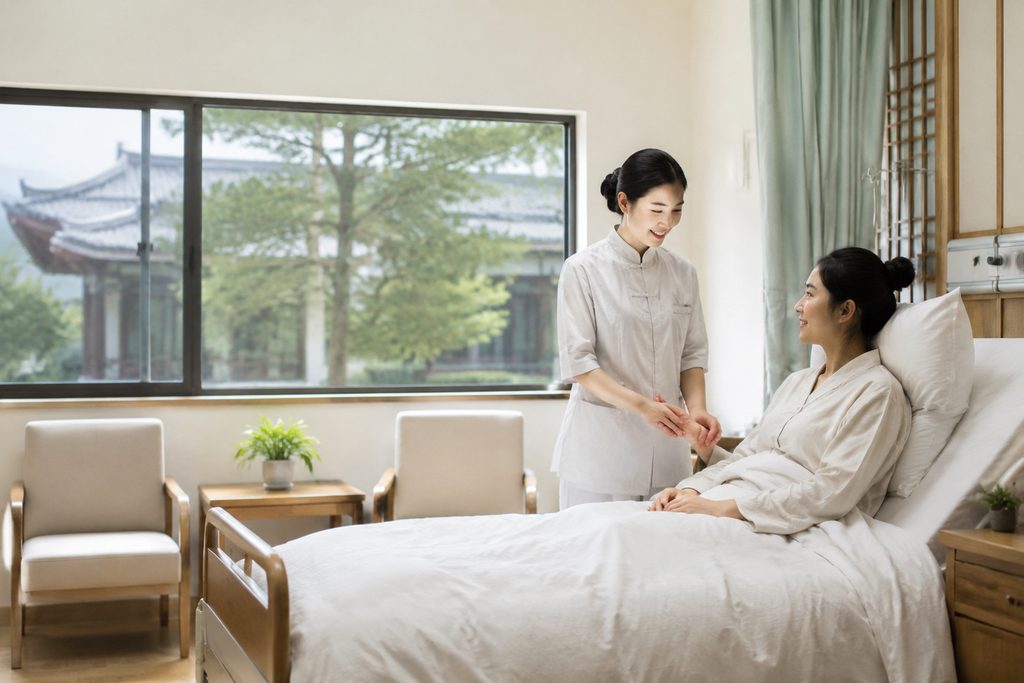
How much does a companion cost during hospital stay in China? For a bilingual medical companion through a coordination service, expect from $300 per day for an 8-hour shift. A private nurse for hospital stay Shanghai price runs higher — typically $150 to $400 per day depending on clinical qualifications — while a family member staying overnight costs nothing but time and logistics.
That’s the headline number. The full picture requires understanding what “companion” means in a Chinese inpatient context, because the role shifts depending on whether you need translation, clinical care, or simply a familiar face during recovery.
Chinese public hospitals operate differently from Western ones. Nursing staff handle medical tasks — medication, wound care, monitoring. They generally do not handle feeding, bathing assistance, bathroom help, or emotional support. That gap is filled by family members or hired companions. In fact, most Chinese inpatient wards expect a family member to be present during the day. The system is built around that assumption.
Who This Is Right For — and Who It Isn’t
Not every international patient needs a hired inpatient companion. Some genuinely benefit. Others would be paying for redundancy.
A hired companion makes sense when:
- You’re traveling alone and will be admitted for surgery or a procedure requiring several days of recovery
- You don’t speak Mandarin and the hospital’s English support is limited outside the international department
- Your procedure involves mobility restrictions — orthopedic surgery, abdominal surgery, cardiac recovery
- You need help coordinating with ward nurses, understanding medication schedules, and communicating pain levels or symptoms
- A family member wants to be present but cannot handle the logistics of navigating a large Chinese hospital alone
A hired companion is probably unnecessary when:
- You’re admitted to a private international hospital like United Family or Jiahui, where English-speaking nursing staff handle most communication and care coordination
- A capable family member is traveling with you and is comfortable with the physical demands of hospital support
- Your stay is short — one or two nights for a minor procedure
- You’re admitted through a hospital’s international VIP ward, which typically includes higher nurse-to-patient ratios and concierge-level support
Being honest about this matters. We’ve told patients to skip the companion service when their situation didn’t warrant it. The goal is the right level of support, not the highest bill.
The Options, Compared
When patients search for “best hospitals in China with inpatient companion service,” they’re usually trying to understand what support models exist. Here’s the realistic landscape across different hospital tiers and service types.
| Option | Daily Cost | What You Get | Best For |
|---|---|---|---|
| Family member stays | $0 (plus lodging and meals) | Emotional support, basic help; no translation unless bilingual | Patients with a capable, Mandarin-speaking relative |
| Hospital-hired caregiver (护工) | $30–80 per day | Basic physical care — feeding, washing, bathroom assistance; usually no English | Non-English-speaking domestic patients; not practical for most foreigners |
| Bilingual medical companion (coordination service) | From $300 per day (8 hours) | Translation, navigation, communication with medical staff, logistics, emotional support | International patients without Mandarin skills |
| Private nurse (Shanghai, Beijing, Guangzhou) | $150–400 per day | Clinical monitoring, medication management, wound care, plus translation if bilingual | Post-surgical patients needing clinical oversight beyond hospital nursing |
| International VIP ward package | $500–1,500 per day (room and care) | Higher nurse ratios, English-speaking staff, better facilities; companion may be redundant | Patients wanting a Western-style experience with built-in support |
Which column fits you depends on two factors: your Mandarin ability and your clinical needs. No Mandarin and complex surgery? A bilingual companion or private nurse is the practical choice. Fluent Mandarin and a capable family member? You can manage with the standard ward setup. The international VIP ward eliminates the language problem entirely but costs significantly more per day than a standard ward plus companion.
How We Prepare: The Pre-Admission Checklist
This is the section that answers the search intent directly. When someone searches “Inpatient Companion: How We Prepare,” they want to know what happens before the hospital stay begins. Here’s the actual preparation sequence.
Medical records translation. Before anything else, we translate your existing medical records — discharge summaries, imaging reports, lab results, medication lists — into Chinese. This takes 2–4 business days depending on volume. The hospital’s admitting department needs these to assess your case. Incomplete records delay admission.
Ward assignment confirmation. We confirm which ward you’ll be admitted to and what the visitor policy is. Chinese public hospital wards have specific visiting hours, typically 3:00–7:00 PM for non-caregivers. The designated caregiver — whether family or hired companion — receives a caregiver pass that allows extended presence. This pass is issued by the ward nursing station and requires your admission documents.
Companion matching. If you’re hiring a companion through us, we match based on three criteria: language pair (your language ↔ Mandarin), clinical familiarity (cardiac, orthopedic, oncology, etc.), and hospital location. The companion receives your case summary — not full medical records, but enough to understand your procedure, mobility restrictions, and communication needs.
Logistics briefing. We provide a written briefing covering: ward location and how to get there, what to pack (toiletries, loose clothing, phone charger with long cable, slip-on shoes), hospital payment procedures (deposit amount, payment methods accepted), and the daily schedule for meals, rounds, and medication.
Day-of coordination. On admission day, the companion meets you at the hospital entrance or your hotel. They handle registration, deposit payment, ward check-in, and initial communication with the nursing team. This first day is typically the most chaotic — having someone who knows the building layout and process saves hours.
One thing we cannot do: guarantee a specific ward or bed type. Chinese public hospitals assign beds based on medical need and availability. The international/VIP ward is the only way to secure a specific standard of room in advance, and that comes at a premium.
What It Costs: Full Breakdown
Let’s get specific about money, because “how much does a companion cost during hospital stay in China” deserves a real answer, not a range that hides the truth.
Bilingual medical companion: from $300 per day for an 8-hour shift. A half-day (4 hours) runs approximately $180–200. This covers the companion’s time, translation, navigation, and communication with hospital staff. It does not cover the companion’s meals, parking, or any hospital fees.
Private nurse for hospital stay Shanghai price: $150–400 per day. The lower end is a nurse with basic clinical skills and limited English. The upper end is a registered nurse with strong English and specific post-surgical experience. Shanghai and Beijing trend toward the higher end due to demand.
Overnight companion: If you need someone present overnight — which many wards do not allow for non-family members — expect $400–500 per day. Overnight shifts are harder to staff and carry a premium. Family members staying overnight typically sleep on a fold-out cot provided by the hospital for a small fee (usually $5–10 per night) or free of charge.
What’s not included: hospital deposit, treatment costs, medications, meals, the companion’s transportation to and from the hospital, and any translation of new medical documents generated during the stay.
Cost varies by hospital and case complexity. A straightforward 3-day stay with a bilingual companion in Guangzhou will cost less than a 10-day post-cardiac-surgery recovery in Shanghai with a private nurse. We provide a firm quote only after reviewing your case and confirming the hospital.
Practical Considerations: What You Need to Know Before Booking
Several logistics matter more than the companion cost itself. Ignore these and the stay becomes stressful regardless of how good your companion is.
Is it allowed to have a family member stay overnight in Chinese hospital? Yes, in most public hospital wards, one designated family member may stay overnight. The hospital provides a fold-out cot or reclining chair. Some wards restrict overnight stays to immediate family only. Private and international hospital rooms often include a proper sofa bed for one companion. Always confirm the specific ward’s policy before admission — policies vary by hospital and even by department within the same hospital.
Visa category. Medical travel to China uses the S2 visa, with the purpose of medical treatment noted. Accompanying family members apply for S2 as well. The hospital’s admission letter and a letter from the coordinating service (if applicable) support the application. Processing time varies by embassy — plan for 2–4 weeks. The S2 visa does not permit employment, so your companion must be hired through a legitimate service; they cannot be paid under the table as an individual contractor on a tourist visa.
Payment methods. Chinese public hospitals require a deposit at admission — typically $1,500–5,000 depending on the procedure. Payment is by cash, Chinese bank card, or international credit card (Visa/Mastercard accepted at most large hospitals, though not always at smaller ones). WeChat Pay and Alipay are ubiquitous but require a linked Chinese bank account for foreign users. Your companion can help navigate this, but the funds must come from you.
Insurance. Most international health insurance plans reimburse Chinese hospital expenses after the fact. Public hospitals in China do not bill insurance directly. Private international hospitals — United Family, Jiahui, Parkway, Raffles — often do direct billing. If you’re using insurance, check whether your plan covers inpatient companion services. Most do not; companion fees are typically out-of-pocket.
Language during rounds. Morning rounds happen once daily, usually between 8:00–10:00 AM. This is when the attending physician and team assess you and adjust the treatment plan. If your companion is not present during rounds, you miss the opportunity to ask questions and understand changes. We advise companions to be on-site by 7:30 AM for this reason.
Follow-up after discharge. Chinese hospitals provide a discharge summary in Chinese. We translate this into English within 1–2 business days so your home physician can review it. If follow-up imaging or lab work is needed after returning home, the discharge summary specifies what to monitor and when.
Frequently Asked Questions
A half-day bilingual companion (4 hours) runs approximately $180–200. If you only need someone present for morning rounds and medication communication, this is the most cost-effective option. You’d handle meals, bathroom needs, and rest periods independently.
Yes. Some agencies offer standalone companion services without hospital matching or record translation. Expect to pay $250–350 per day for a Beijing-based bilingual companion booked independently. The trade-off: no case review beforehand, no quality guarantee, and no recourse if the companion is a poor fit. Booking through a coordination service means the companion receives your case summary and is matched to your specific clinical needs.
This happens. Personality mismatches are real, especially during stressful hospital stays. A reputable coordination service will replace the companion within 24–48 hours, no questions asked. Independent hires offer no such guarantee. Before booking, ask about the replacement policy. If the answer is vague, that’s a red flag.
Yes, but with a caveat. Major surgery — cardiac, orthopedic, oncologic — requires a longer hospital stay and more intensive companion support. You’re looking at 7–14 days of companion service at $300+ per day, plus the hospital costs. The total is still often 1/5 to 1/10 of equivalent care in the US, but it’s not a budget trip. The companion is one component of a larger medical travel plan that includes visa, flights, accommodation, and post-discharge recovery.
No. A companion — whether hired through us or any other service — translates, navigates, and supports. They do not make medical decisions, sign consent forms, or override your wishes. You remain the decision-maker. If you’re incapacitated, the hospital will look to your designated medical power of attorney, which should be arranged before travel if this is a concern.
Your Next Step
The core message: an inpatient companion in China fills a real gap in the public hospital system, where nursing staff handle clinical tasks but not the human support Western patients often expect. The cost is predictable — from $300 per day for bilingual support — and the preparation is methodical: records translation, ward confirmation, companion matching, and day-of coordination.
We are China Medical Services, a coordination team connecting international patients with 340+ top-ranked hospitals across 37 Chinese cities. We are not a hospital, we do not provide diagnoses, and we do not promise clinical outcomes. What we do is handle the logistics — hospital matching, bilingual companion coordination, visa guidance, and admission support — so you can focus on recovery. If you’re considering treatment in China and want to understand whether an inpatient companion makes sense for your situation, start with a conversation. No commitment, no pressure.
For more medical information and treatment options in China, visit chinamedservices.com (China Medical Services).
