Tumor Patients: A Second Opinion Online from China’s Top Oncology Hospitals
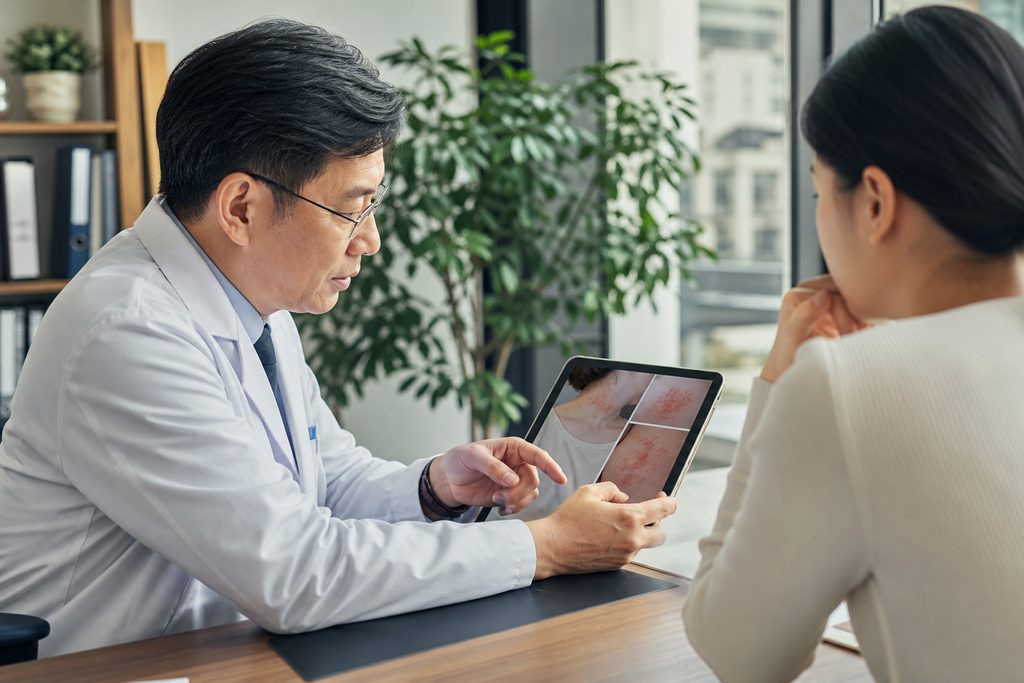
Tumor Patients: A Second Opinion Online from China’s Top Oncology Hospitals
In the United States, a patient with a newly diagnosed thoracic tumor might wait 3 to 6 weeks for an initial consultation at a major academic cancer center. In Shanghai, the same patient’s complete imaging and pathology file can be reviewed by a senior oncologist at a Fudan-ranked cancer hospital within 5 to 7 business days. The second opinion oncology China price for a written review typically starts around $300–500 — a fraction of what many Western patients pay for out-of-network specialist reviews. That gap in time and cost is exactly why international patients are now looking east for answers.
Our team at China Medical Services has coordinated remote tumor consultations for patients from Europe, the Middle East, and North America. We don’t treat cancer. We connect you with the physicians who do — and we make sure your records actually reach the right desk.
How This Actually Works, Step by Step
You don’t fly to Beijing on day one. In fact, you shouldn’t. The remote second opinion exists precisely so you can test the waters before committing to international travel. Here’s the real sequence.
Step 1 — You send us what you already have. That means pathology reports, imaging (CT, MRI, PET-CT), surgical notes, current treatment plans, and a brief summary of your symptoms and goals. Most patients already hold these documents. If they’re not in English, we arrange certified translation into Chinese — this takes 2 to 3 days and is non-negotiable for a meaningful review.
Step 2 — We match your case to the right department. Not just any oncologist. A lung tumor goes to a thoracic oncology team. A glioblastoma goes to neurosurgery and neuro-oncology. We use the Fudan specialty reputation rankings and our department-level hospital database to shortlist 2 to 3 appropriate centers. You see the options before we proceed.
Step 3 — The Chinese team reviews your file. A senior specialist — often the deputy chief or department head — examines your imaging, reads your pathology, and checks your current regimen against Chinese national guidelines and their own clinical experience. This is not a chatbot. It’s a physician reading your actual scans.
Step 4 — You receive a written report. The report covers: diagnosis confirmation or challenge, treatment alternatives available in China, whether your current plan aligns with Chinese practice, and concrete next-step recommendations. Written second opinions run $300–500 depending on hospital tier and case complexity. Video consultations with a top specialist run $500–800.
Step 5 — You decide. Some patients use the report to push their home oncologist for a different approach. Others proceed to an in-person consultation in China. The remote review is not a commitment to travel.
What a Chinese Oncology Second Opinion Actually Includes
Let’s be specific, because the phrase “second opinion” gets thrown around loosely. A written second opinion from a top Chinese cancer hospital is not a one-paragraph email. It’s a structured clinical document.
You should expect: a summary of your submitted records, the reviewing physician’s assessment of the diagnosis, a comparison between your current treatment and what a Chinese guideline-based approach would offer, and a list of treatment options available at that specific hospital. For surgical cases, the report often includes the surgeon’s view on resectability — whether the tumor can be safely removed — based on their own operative volume and experience.
But here’s what it is not: a prescription. The report is for reference only. No physician in China or anywhere else should change your medication based solely on a remote review. Your home oncologist remains your treating physician unless you formally transfer care.
Can I Get a Second Opinion from China Online? Yes — Here’s the Honest Version
The short answer is yes. The honest answer is that the quality of that online second opinion depends entirely on two things: the completeness of your records and the seniority of the physician reviewing them.
Many international patients ask us: “Can I get a second opinion from China online without traveling?” Yes. That’s the standard starting point. You send records, the Chinese team reviews them, you get a written report or a video call. No visa required. No flight. No hospital registration. The remote consultation is the lowest-risk, lowest-cost way to test whether a Chinese hospital has something genuinely different to offer your case.
But a remote review has limits. No physician can feel a mass on physical exam through a PDF. No surgeon can definitively commit to an operative plan without seeing you in person. What a remote review can do is tell you whether your current treatment aligns with what a high-volume Chinese center would do — and whether it’s worth your time to pursue in-person evaluation.
Remote Tumor Consultation Shanghai Cost and Other City Benchmarks
Shanghai hosts several of China’s strongest oncology programs, including Fudan University-affiliated cancer hospitals. The remote tumor consultation Shanghai cost generally falls within the same range as Beijing: $300–500 for a written review, $500–800 for a video consultation with a senior specialist. Private international hospitals in Shanghai, such as those with JCI accreditation, may charge $100–300 for a standard video consultation with an English-speaking physician, but those consultations are typically less specialized than a top-tier public hospital oncology review.
Here’s a realistic cost table based on our coordination experience:
| Service | Typical Cost (USD) | What You Get |
|---|---|---|
| Written second opinion — top public hospital | $300–500 | Senior oncologist’s written review of your records, diagnosis assessment, treatment recommendations |
| Video consultation — top specialist | $500–800 | Live discussion with the reviewing physician, Q&A, visual review of imaging |
| Multidisciplinary team (MDT) review | $1,500–2,000 | Coordinated review by oncology, surgery, radiology, and pathology specialists |
| Standard video consult — international/private hospital | $100–300 | English-speaking physician, general oncology discussion |
These figures are starting points. Final pricing depends on the hospital, the reviewing physician’s seniority, and case complexity. No reputable coordinator quotes a single flat fee for every tumor type.
One key financial mechanism worth knowing: any consultation fee you pay through us is credited in full toward on-the-ground coordination if you later proceed to in-person treatment in China within 90 days. That means the remote second opinion can effectively cost you nothing if you move forward.
How to Get a Second Opinion from Chinese Cancer Hospital: Choosing the Right Center
China has over 35,000 hospitals. The top 5% — roughly 340+ institutions — are ranked by the Fudan University hospital rankings and JCI accreditation. For oncology specifically, the Fudan specialty reputation rankings list the top 10 cancer programs across 45 specialties. That’s your starting filter.
But ranking is not the whole story. A hospital ranked in the top 10 nationally for oncology may still be the wrong fit for your specific tumor. Some centers are renowned for lung cancer surgery. Others lead in liver cancer, nasopharyngeal carcinoma, or gastric cancer. The question is not “which is the best cancer hospital in China” but “which Chinese cancer hospital has the deepest experience with your tumor type and stage.”
Our top hospital database groups Fudan-ranked institutions by city and specialty tier, so you can see which centers carry the A++++ designation and which departments hold specialty reputation rankings. Beijing alone hosts 21 of the Fudan Top 100. Shanghai has 18. Guangzhou has 10. That concentration matters — it means you’re choosing from a deep bench of high-volume oncology programs.
And volume matters in oncology. A thoracic surgeon who performs 400 lung resections a year sees patterns that a surgeon performing 40 does not. That’s not marketing. That’s the reality of surgical learning curves, and it’s one of the strongest arguments for considering a Chinese second opinion.
A Realistic Timeline
People forget the waiting steps. Here’s what a remote second opinion from a Chinese cancer hospital actually looks like on a calendar.
| Stage | Duration | What Happens |
|---|---|---|
| Document collection and translation | 3–5 days | You gather records; we translate them into Chinese for the reviewing team |
| Hospital and specialist matching | 2–4 days | We shortlist appropriate centers and confirm availability with the department |
| File review by Chinese oncology team | 5–7 business days | Senior physician reviews imaging, pathology, and treatment history |
| Written report delivery | Within 2 weeks of submission | You receive the full written second opinion |
| Optional video consultation | 1–2 weeks after written report | Live discussion scheduled around the physician’s clinical duties |
| In-person visit (if you proceed) | 3–6 weeks later | S2 visa processing, travel, and hospital registration |
The total remote process — from sending records to holding the written report — typically runs 10 to 14 days. Video consultations add another week or two. If you decide to travel for in-person evaluation, factor in S2 visa processing time and the hospital’s own scheduling. Public hospitals in China do not allow overseas patients to book outpatient appointments online before arrival. You must be physically present to register and see a doctor. That’s a hard rule of the system, and anyone who tells you otherwise is not being straight with you.
What Can Go Wrong — and What Happens Then
We’d rather tell you now than have you discover it later.
Your records are incomplete. This is the most common failure point. A patient sends a one-page discharge summary and an old CT report, then expects a definitive second opinion. The Chinese team will ask for more. That adds days. Sometimes the missing piece is the pathology slide itself — without it, no oncologist can confirm the diagnosis. What happens then: we go back to your home hospital with you, request the specific missing items, and resubmit. The review clock restarts.
The reviewing physician declines the case. It happens. A top specialist may determine that your case falls outside their subspecialty, or that the records are too fragmented for a meaningful review. What happens then: we rematch to a more appropriate department or a different hospital. You don’t pay for a review that never happened.
The report contradicts your home oncologist. This is not a failure — it’s the point. But it can be uncomfortable. Two senior physicians may disagree on resectability, on chemotherapy sequencing, on whether a clinical trial is appropriate. What happens then: you take both opinions to a third party, or you weigh the evidence yourself. We can facilitate an MDT review if you want a structured, multi-specialist reconciliation.
You expected a definitive answer and got a nuanced one. Oncology is rarely binary. A good second opinion will often say: “Your current treatment is reasonable. Here are two alternatives. Here’s what we would do at our center and why.” That’s not hedging. That’s honesty. If you wanted a single magic answer, no reputable physician anywhere will give you one.
Medical Second Opinion Tumor Package Beijing: What to Look For
Some patients search specifically for a “medical second opinion tumor package Beijing” — a bundled offering that includes record translation, specialist review, and a written report. Packages can be useful. They set expectations and cap costs. But not all packages are equal.
Here’s what to check before you commit to any package, in Beijing or elsewhere:
- Who exactly reviews your case? “A senior oncologist” is vague. Ask for the reviewing physician’s department, title, and subspecialty. A breast cancer case reviewed by a general oncologist is not the same as one reviewed by a breast surgical oncologist.
- What’s included in the written report? Some packages deliver a two-paragraph summary. Others deliver a structured document with diagnosis assessment, treatment comparison, and specific next steps. Ask to see a sample format.
- Is translation included or extra? Certified medical translation into Chinese costs money. If a package price seems too low, translation may be excluded.
- What happens if the physician declines? Is there a rematch process? A refund? Get this in writing.
- Does the package include a video call? Written reports are valuable. But the ability to ask follow-up questions live often changes your understanding of the recommendation.
Beijing’s top oncology programs — concentrated in institutions like the Chinese Academy of Medical Sciences system and Peking University-affiliated hospitals — generally do not sell “packages” directly to international patients. They work through international medical departments or coordination services. That’s where we come in: we handle the hospital communication, document preparation, and scheduling, so you’re not emailing a hospital department in a language you don’t speak.
Best Cancer Hospitals in China for International Patients: The Shortlist Logic
International patients often ask us for a simple ranking: “What are the best cancer hospitals in China for international patients?” The honest answer has two layers.
Layer one is clinical strength. The Fudan specialty reputation rankings identify the top 10 oncology programs nationally. These are almost exclusively public tertiary hospitals — the “3A” grade institutions with the highest patient volumes and the most experienced surgical teams. Fuwai Hospital, for example, performs over 14,000 cardiac surgeries annually. The oncology equivalents handle similarly staggering volumes.
Layer two is international accessibility. Not every clinically excellent hospital is set up to serve foreign patients. Some have dedicated international medical departments with English-speaking coordinators. Others require a local proxy to register and navigate. Private international hospitals like United Family and Jiahui offer English-speaking staff and direct insurance billing, but their oncology departments are generally smaller and less specialized than the top public centers.
The right choice depends on your case. A rare sarcoma may be best served at a high-volume public specialty hospital, even if the process is less polished. A straightforward breast cancer second opinion might be efficiently handled at a private international hospital with JCI accreditation. We help you weigh that trade-off — clinical depth versus administrative ease — before you commit to anything.
For a detailed look at specialty rankings, see our oncology department rankings, which list Fudan-ranked top 10 programs by subspecialty.
Practical Considerations: Records, Visa, Payment, and Follow-Up
This is the unglamorous stuff that determines whether the whole process works.
Records. You need: pathology report (full text, not just the summary line), imaging reports and raw DICOM files, surgical notes if applicable, current treatment regimen with dates and doses, and a concise symptom and treatment-goal summary. If any of this is missing, the review will be delayed.
Visa. For in-person visits, the S2 visa is the applicable short-stay category for medical treatment and private affairs. Family members accompanying you also apply for S2. The M visa is for commercial and trade activities — it is not a medical visa. Requirements vary by embassy, and you’ll need supporting documents from the Chinese hospital. We guide you through this, but we never guarantee approval.
Payment. Remote consultations are paid upfront. Chinese public hospitals require prepayment for services; insurance reimbursement is typically handled after the fact. Private international hospitals often bill insurers directly. Confirm your insurer’s policy on overseas second opinions before you start.
Language. The written report will be in Chinese unless you request translation. We provide English translation as part of our coordination. For video consultations, we arrange a medical interpreter so you can ask questions directly.
Follow-up at home. The Chinese second opinion is a document. Your home oncologist must be willing to read it and discuss it with you. Some are receptive. Some are defensive. We’ve seen both. The report is most useful when your home team is open to considering alternative approaches — and when you’re prepared to advocate for yourself
Frequently Asked Questions
Yes. The hospitals used for international patients are JCI-accredited and follow the same international safety standards as top hospitals in the US and Europe. Surgical teams perform high volumes of procedures — often more than their Western counterparts — which studies show leads to better outcomes.
Costs vary by procedure and hospital, but international patients typically save 40-80% compared to US prices — even when factoring in travel and accommodation. A consultation with our team will give you an exact, all-inclusive quote with no hidden fees.
Send us your existing medical reports to get started. We handle everything from hospital selection and appointment scheduling to visa assistance and post-operative recovery planning. Your medical records are reviewed by the specialist before you even book a flight.
For more medical information and treatment options in China, visit chinamedservices.com (China Medical Services).
