Your Proxy Consultation Report: What It Contains and Why It Matters
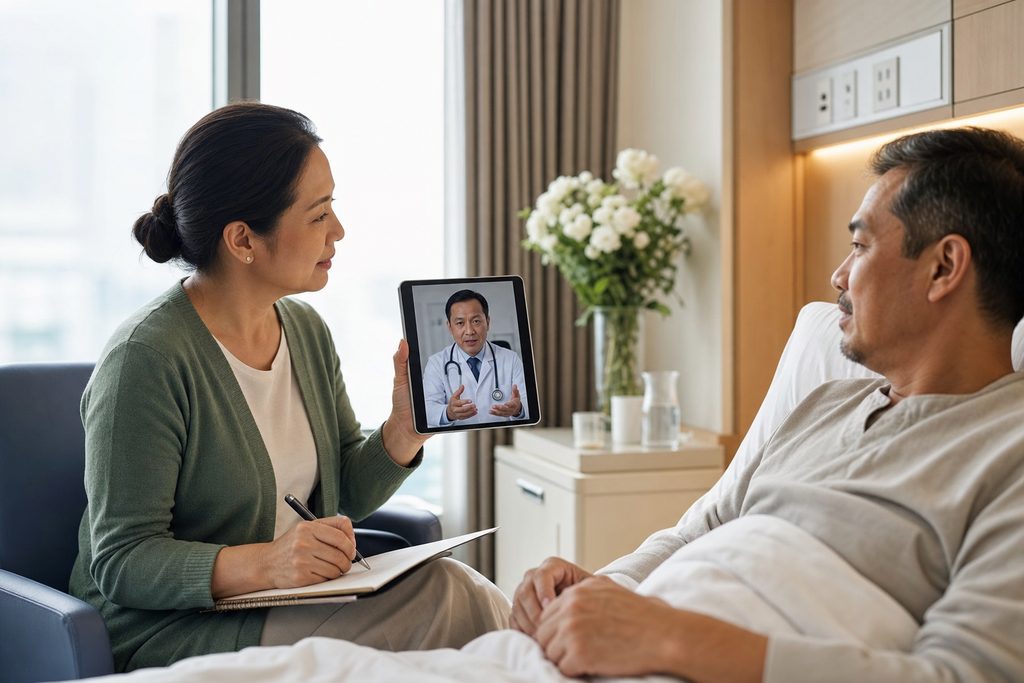
You have probably heard that getting medical advice from a top Chinese hospital means flying to Beijing or Shanghai, waiting in long queues, and struggling with a language barrier. The reality is different. A proxy consultation report lets a senior specialist at a major Chinese hospital review your existing medical records and imaging without you being physically present. You send the documents. A designated person walks them through the hospital system. You receive a written analysis with treatment suggestions and direction. That is the core of the service. And it often costs less than a single specialist visit in the United States.
Our team at China Medical Services has coordinated proxy consultations for patients from over a dozen countries. The process works. But it has limits, and understanding those limits before you pay matters. This article explains exactly what a proxy consultation report contains, how long it takes, what can go wrong, and how to decide whether it is the right first step for your case. We will also address the question many people search for: how to identify the best cancer hospital Shanghai price and what that price actually buys you.
How This Actually Works, Step by Step
The sequence is straightforward, but the details matter. Here is what happens from the moment you decide to pursue a proxy consultation.
First, you collect every relevant medical document. That means pathology reports, imaging studies on CD or via secure link, blood work results, discharge summaries, and a concise timeline of your diagnosis and treatments to date. Incomplete records are the single most common reason a consultation gets delayed or returns with qualified, less useful answers.
Second, we translate the documents into Chinese. This is not machine translation. The terminology must be precise. A mistranslated pathology term can change the entire clinical picture. Our translation team includes people with medical backgrounds who understand how Chinese hospital departments organize and read records.
Third, we identify the appropriate department and, where possible, a specific senior specialist whose subspecialty matches your diagnosis. For oncology cases, this might mean a thoracic surgeon at a hospital known for lung cancer volume. For orthopedic cases, a joint replacement specialist. The match matters more than the hospital’s overall ranking.
Fourth, a representative physically visits the hospital. This is the “proxy” part. In most Chinese public hospitals, you cannot book a specialist consultation purely online from overseas. Someone must create or update a hospital medical card, submit the translated records, pay the registration fee, and often wait in person to present the materials to the specialist or their team. That person is our coordinator.
Fifth, the specialist reviews the materials. In some cases, the doctor reviews them on the spot and dictates findings. In others, especially for complex oncology cases, the review takes several days and may involve discussion with colleagues. The output is a written consultation report.
Sixth, we translate the report back into English and deliver it to you. The report typically includes a summary of the doctor’s understanding of your diagnosis, an assessment of whether the current treatment plan is reasonable, alternative options available in China, and a recommendation on whether an in-person visit would change anything.
What a Proxy Consultation Report Actually Contains
The report is not a prescription. It is a structured medical opinion. Think of it as a second opinion with Chinese clinical context.
A typical report includes four sections. The first is a restatement of your diagnosis as understood by the reviewing specialist. This alone can be valuable. If a Chinese oncologist reads your CT scan differently than your home oncologist did, that discrepancy is worth investigating. The second section addresses your current treatment plan. The specialist may confirm it, suggest modifications, or recommend a different sequencing of therapies. The third section outlines what would be available in China specifically — a particular surgical approach, a targeted therapy approved earlier in China, a clinical trial, or a combination of traditional Chinese medicine with conventional care. The fourth section is a recommendation on next steps, including whether traveling to China for in-person evaluation would be justified.
Not every report contains all four sections in equal depth. A straightforward case might produce a one-page assessment. A complex oncology case might produce three or four pages. The depth depends on the materials you send and the questions you ask. We advise patients to submit specific questions. “Is surgery still an option given my latest PET scan?” produces a more useful answer than “What do you think?”
One thing the report will not do is promise an outcome. No legitimate Chinese hospital will guarantee that a particular treatment will succeed. Any service claiming otherwise is not operating within the rules of China’s top-tier medical institutions.
A Realistic Timeline
The right choice depends on your diagnosis, not on a hospital’s overall ranking. For oncology, we look at the Fudan specialty reputation rankings and the hospital’s case volume in your specific cancer type. For cardiac surgery, a hospital like Fuwai Hospital in Beijing performs over 14,000 cardiac surgeries annually — that volume matters. We make the match based on your records and clinical question, and we explain the reasoning before you commit.
The report gives you information. It does not obligate you to act on it. Some patients use the report to advocate for a different treatment approach at home. Others decide the recommended treatment in China is worth pursuing. The decision is yours. We can provide cost ranges for the recommended treatment if you ask, but those ranges vary by hospital and case complexity.
Cancer second opinions are one of the most common uses of proxy consultations. Oncology is also where the best cancer hospital Shanghai price question comes up most often. A written second opinion from a top Shanghai oncology specialist costs less than a single specialist visit in many Western countries. The value is not just the price — it is access to a specialist who sees a volume of cases that most Western oncologists will never encounter in a lifetime.
Disagreement is normal. A second opinion is not a verdict. You can discuss the report with your local doctor, request a video consultation with the same specialist to clarify points, or seek a third opinion elsewhere. The report is a tool for decision-making, not a command.
Your Next Step
A proxy consultation report is a low-cost, low-commitment way to access Chinese medical expertise without getting on a plane. It gives you a structured written opinion from a senior specialist at a top-tier hospital, translated into English, delivered to your inbox. It is not a substitute for in-person care, and it will not book your surgery. But it can tell you whether traveling to China is worth it before you spend thousands on flights, visas, and accommodation.
We are China Medical Services. We coordinate proxy consultations, video consultations, and in-person treatment journeys for international patients across 340+ top-ranked hospitals in 37 Chinese cities. We do not practice medicine and we do not promise outcomes. What we do is handle the logistics, translation, and hospital communication so you can make an informed decision. If you want to know whether a proxy consultation fits your case, start with a free consultation. Tell us your diagnosis, send what records you have, and we will tell you honestly whether this path makes sense for you.
Frequently Asked Questions
Yes. The hospitals used for international patients are JCI-accredited and follow the same international safety standards as top hospitals in the US and Europe. Surgical teams perform high volumes of procedures — often more than their Western counterparts — which studies show leads to better outcomes.
Costs vary by procedure and hospital, but international patients typically save 40-80% compared to US prices — even when factoring in travel and accommodation. A consultation with our team will give you an exact, all-inclusive quote with no hidden fees.
Send us your existing medical reports to get started. We handle everything from hospital selection and appointment scheduling to visa assistance and post-operative recovery planning. Your medical records are reviewed by the specialist before you even book a flight.
For more medical information and treatment options in China, visit chinamedservices.com (China Medical Services).
