Pathology Second Opinion Service China: Independent Review of Your Tissue Diagnosis
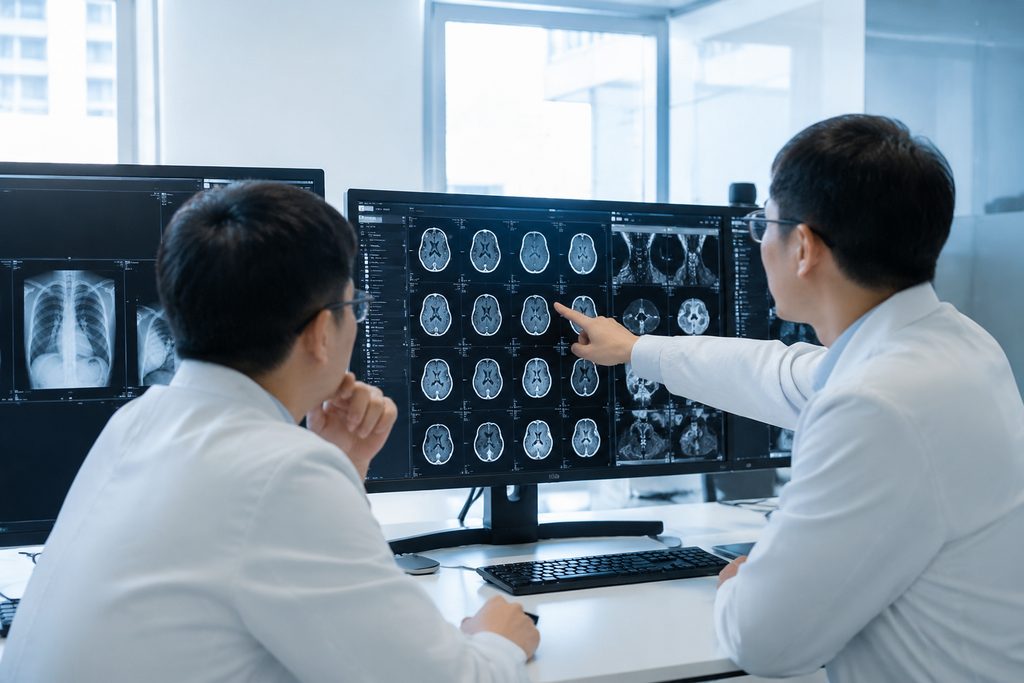
When 54-year-old Elena received her breast biopsy results in Manchester, the diagnosis felt final. Invasive ductal carcinoma. Her oncologist recommended an aggressive chemotherapy regimen. But something nagged at her — a friend’s misdiagnosis years earlier, caught only when slides were sent to another lab. Elena’s husband spent three sleepless nights searching for alternatives. That search led them to a question more patients are asking: can a pathologist on the other side of the world review my tissue sample and potentially change my treatment plan?
The answer is yes. And the infrastructure to make it happen is more established than most Western patients realize.
Key Takeaways
- A pathology second opinion from a top-ranked Chinese hospital can identify diagnostic discrepancies in approximately 5-10% of cases, a rate consistent with major Western studies on second-opinion pathology reviews.
- The second opinion pathology China cost starts around $300 for a written review, compared to $1,500–$3,000 for equivalent services at major US academic medical centers.
- Chinese pathologists at Fudan-ranked hospitals routinely handle case volumes that far exceed typical Western labs — some departments process over 200,000 specimens annually, building diagnostic pattern recognition at a scale few institutions can match.
- Logistical barriers exist: you cannot simply mail slides to a Chinese hospital and expect a report. Proper channels — hospital international departments, certified slide digitization, and bilingual case coordination — are essential.
The Problem: When a Single Pathology Read Determines Everything
Pathology is the foundation of cancer treatment. Every chemotherapy infusion, every surgical margin decision, every radiation field — they all trace back to what a pathologist saw under a microscope. And yet pathology interpretation is not binary. It is a judgment call informed by experience, subspecialty training, and institutional norms.
A 2015 study from Johns Hopkins Hospital published in *JAMA* reviewed pathology second opinions for 6,171 patients referred for treatment. The findings were sobering: 6.4% of cases had a clinically significant diagnostic discrepancy. For some organ systems, the rate was higher. A separate 2019 review in *BMJ Quality & Safety* examining multiple studies found discordance rates between 1.3% and 11.2% depending on tumor type.
These are not trivial numbers. A discrepancy can mean the difference between a lumpectomy and a mastectomy. Between active surveillance and systemic therapy. Between a curative treatment plan and one that misses the target entirely.
Yet most patients never request a second pathology review. Why? Cost is one barrier. At major US centers, an independent pathology second opinion typically runs $1,500 to $3,000, often not fully covered by insurance when sought outside the patient’s primary network. Wait times are another. Some academic pathology departments quote 2-4 weeks for a formal second-opinion report.
And then there is the simple fact that most patients do not know the option exists.
Who We Are
We are not a hospital. We do not employ pathologists, issue medical reports, or make clinical recommendations. Our team at China Medical Services functions as your logistical bridge to China’s top-ranked medical institutions. We coordinate the transfer of pathology materials — slides, blocks, digital scans — to the appropriate subspecialist pathologists at hospitals within our network of 340+ top-ranked facilities across 37 cities. We handle the bilingual case preparation, the hospital international department liaison, and the secure return of your diagnostic report. Think of us as the architects of your second-opinion process, not the clinicians delivering it.
Why a Pathology Second Opinion from China Delivers Results
Case Volume Builds Diagnostic Pattern Recognition
Chinese pathologists at major urban hospitals work in a diagnostic environment that is, by any measure, high-throughput. A single pathology department at a top-tier hospital like Peking Union Medical College Hospital or West China Hospital may process more than 200,000 surgical pathology specimens annually. Subspecialists within these departments see rare tumor variants with a frequency that general pathologists in lower-volume settings may encounter only a handful of times in a career.
This matters. Diagnostic accuracy correlates with exposure. A 2020 study in *Modern Pathology* demonstrated that pathologists with high subspecialty case volumes showed significantly better interobserver agreement on difficult tumor classifications than generalists. The pattern recognition that comes from volume is not a replacement for careful analysis — but it is a meaningful advantage when a case sits at the boundary between two diagnoses.
Subspecialty Depth Matches Western Academic Standards
The Fudan University Hospital Ranking system evaluates clinical departments across 45 specialties. Top-ranked pathology departments in this system maintain subspecialty divisions — hematopathology, neuropathology, dermatopathology, cytopathology — that mirror the structure of leading Western academic departments. Many senior pathologists at these institutions completed fellowship training in the US, Europe, or Japan.
They work with the same immunohistochemical stains, the same molecular pathology platforms, and the same WHO classification systems that guide pathology practice globally. The diagnostic language they use in reports translates directly into the clinical frameworks your treating oncologist already understands.
The Cost Structure Is Fundamentally Different
Let’s address the obvious question: why is the second opinion pathology China cost so much lower than Western equivalents?
It is not because the pathologists are less qualified. It is because the cost of medical services in China operates on a different economic base. Hospital professional fees, laboratory overhead, and administrative costs are structurally lower. A written second opinion from a senior pathologist at a top-ranked Chinese hospital typically falls in the $300–$500 range. A video consultation with that same pathologist to discuss findings runs $500–$800.
Compare that to $1,500–$3,000 for a written second opinion at a major US academic center. The quality of the diagnostic interpretation can be equivalent. The price is not.
| Service | China (via International Dept) | US Academic Medical Center |
|---|---|---|
| Written pathology second opinion | $300–$500 | $1,500–$3,000 |
| Video consultation with pathologist | $500–$800 | Often not offered separately |
| Turnaround time (typical) | 5–10 business days | 10–20 business days |
| Slide digitization support | Coordinated by service | Varies by institution |
Prices vary by hospital and case complexity. The numbers above reflect typical ranges for patients using international department channels.
How to Get a Pathology Second Opinion from China: The Process
Sending biopsy slides across borders is not as simple as dropping a package in the mail. Here is what the process actually requires.
First, you need your original pathology materials. This means the glass slides — hematoxylin and eosin (H&E) stained sections, plus any immunohistochemistry slides — and ideally the formalin-fixed paraffin-embedded (FFPE) tissue block. Your original hospital’s pathology department can release these. They are your property, though hospitals may charge a small administrative fee for slide preparation and shipping.
Second, the materials must reach the reviewing pathologist in a condition suitable for diagnosis. Some Chinese hospitals accept physical glass slides shipped via courier. Others prefer or require digital whole-slide images (WSI), which can be scanned at a facility near you and transmitted electronically. This is faster and eliminates the risk of slide breakage during international shipping.
Third, the case must be prepared properly. The reviewing pathologist needs your clinical history, imaging reports, prior pathology reports, and a specific clinical question to address. A vague request — “please review this case” — yields a vague report. A targeted request — “please confirm the histological subtype and margin status of this breast carcinoma, with attention to HER2 interpretation” — yields a clinically actionable answer.
This is where coordination becomes essential. Most Chinese hospital pathology departments do not accept direct inquiries from individual international patients. They work through their hospital’s international medical department, which manages foreign patient services. Reaching the right subspecialist, preparing the case materials in a format that matches the reviewing pathologist’s workflow, and ensuring the report is issued in clinically useful English — these steps require an intermediary who knows the system.
Can Chinese Pathologists Review My Biopsy Slides? Addressing the Credentials Question
The short answer: yes, and they do so routinely for international patients through hospital international departments.
The longer answer requires understanding how pathology training and practice standards compare. Chinese pathologists at top-ranked hospitals complete a residency training pathway that, since the standardization reforms of the past two decades, broadly aligns with the structure of Western pathology training. Board certification is required for independent practice at tertiary hospitals. Continuing medical education requirements apply.
Immunohistochemistry panels, molecular testing platforms (PCR, FISH, next-generation sequencing), and reporting standards follow international guidelines. A pathologist at a Fudan-ranked hospital writing a second-opinion report will reference the same CAP (College of American Pathologists) cancer protocols and WHO classification criteria that a US-based pathologist would use.
Are there differences? Yes. Some Chinese pathology departments have deeper experience with tumor types that are more prevalent in East Asian populations — nasopharyngeal carcinoma, certain hepatocellular carcinoma subtypes, EGFR-mutant lung adenocarcinomas. For these specific diagnoses, a Chinese pathologist’s interpretive experience may actually exceed that of a Western general pathologist. For other tumor types, the expertise is equivalent. The key is matching your specific case to a pathologist with the right subspecialty focus.
What You Need to Know Before Going Alone
Navigating this process independently presents real obstacles. We want to be direct about what those are.
- Language and medical terminology barriers: Pathology reports use precise, technical language. Nuance matters. A pathologist may write “cannot exclude” or “suggestive of” or “consistent with” — each phrase carries different clinical weight. If your case materials and the resulting report must pass through translation without medical bilingual support, meaning can be lost or distorted. Most top hospital international departments issue English-language reports, but the coordination to get there requires bilingual case management.
- Institutional gatekeeping: You cannot simply email a pathology department and request a review. Chinese public hospitals operate through structured channels. The international medical department is the entry point for foreign patients. Identifying which hospital has the right subspecialist, making contact with the correct department, and navigating the administrative requirements — this is not a DIY process for someone outside the system.
- Slide logistics and customs: Shipping human tissue samples internationally involves customs declarations, possible import permits, and biological material handling requirements. Digital whole-slide imaging bypasses many of these issues, but requires access to a scanning facility and a secure transmission method that meets hospital data security standards. Both pathways need advance coordination with the receiving institution.
- Payment systems: Chinese hospital international departments typically require prepayment via wire transfer or specific payment platforms. Credit card systems common in the West may not be accepted. The payment must be processed before the pathology review begins.
How We Help You Navigate This
These barriers are structural, not intentional. They exist because Chinese hospital systems were built primarily to serve a domestic patient population, and international patient services have been layered on top. Our role is to bridge that gap.
When a patient contacts us about an independent tissue diagnosis review China price inquiry, we start with the clinical question. What diagnosis needs confirmation? What treatment decision hangs in the balance? What specific histopathological question should the reviewing pathologist address? This shapes everything that follows.
We then identify the appropriate subspecialist pathologist within our network. For a hematopathology case, that might mean a pathologist at Ruijin Hospital in Shanghai, which houses one of China’s largest hematology programs. For a neuropathology review, the pathologist might be at Huashan Hospital, a national neurosurgery center. The match is based on subspecialty, not geography.
We coordinate the logistics. If physical slides are being sent, we provide the correct shipping address, customs documentation guidance, and tracking coordination with the receiving hospital. If digital slides are preferred, we arrange scanning through partner facilities and manage the secure file transfer. We prepare the clinical summary in the format the reviewing pathologist expects, ensuring the relevant history, imaging findings, and prior pathology details are clearly presented in English.
The pathologist issues a formal written report. This is a medical document — structured, referenced, and suitable for your treating oncologist to incorporate into clinical decision-making. It is not a casual opinion. It carries the weight of the issuing institution.
For patients who want more than a written report, we can arrange a video consultation with the pathologist. This allows your local oncologist to ask clarifying questions directly. The pathologist can explain why they agreed or disagreed with the original interpretation, what additional testing might be useful, and how their findings should influence treatment planning.
The cost of any second-opinion service — written report or video consultation — is fully credited toward our on-the-ground coordination service if you later decide to pursue treatment in China. This credit applies for 90 days. It is a one-time credit applied to our coordination fee, never to hospital treatment charges.
Frequently Asked Questions
How long does a pathology second opinion from China take?
Typical turnaround is 5 to 10 business days from the time the reviewing pathologist receives the complete case materials. Rush reviews can sometimes be arranged in 3 to 5 business days, depending on the pathologist’s schedule and case complexity. The biggest variable is usually how quickly the original slides or digital scans can be obtained from your primary hospital.
Will my insurance cover a second opinion from a Chinese hospital?
Most US and European health insurance plans do not directly cover pathology second opinions obtained from overseas institutions. However, many patients find that the out-of-pocket second opinion pathology China cost — starting around $300 — is lower than their insurance copay or deductible would be for an in-network second opinion domestically. You receive an itemized receipt suitable for submission to your insurer for possible out-of-network reimbursement, but we cannot guarantee coverage. Check with your specific plan.
What if the Chinese pathologist disagrees with my original diagnosis?
This happens in a meaningful percentage of cases — the 5-10% discrepancy rate cited earlier is consistent with published literature on second-opinion pathology reviews. If a discrepancy is identified, the Chinese pathologist’s report will detail the findings, explain the basis for the differing interpretation, and recommend any additional testing (such as specific immunohistochemical stains or molecular studies) that could help resolve the uncertainty. This report becomes a tool for discussion with your treating oncologist. It does not automatically override your original diagnosis — it provides an independent assessment that your clinical team can weigh alongside all other evidence.
Are digital slides as reliable as glass slides for a second opinion?
For most diagnostic purposes, yes. Whole-slide imaging (WSI) has been validated in numerous studies for primary diagnosis and second-opinion review. The US FDA approved WSI for primary surgical pathology diagnosis in 2017. Image quality depends on the scanning equipment and protocol used. When we coordinate digital slide preparation, we work with facilities that use FDA-approved or equivalent scanners and follow validated scanning protocols. For certain nuanced assessments — like evaluating subtle nuclear features in some hematolymphoid cases — some pathologists still prefer glass slides. We clarify these preferences case by case.
Can you send biopsy slides to China for a second opinion without traveling there?
Absolutely. The entire second-opinion process — from slide transfer to report delivery to video consultation — can be completed without the patient setting foot in China. Physical slides are shipped via international courier with appropriate documentation. Digital slides are transmitted electronically. The report is delivered as a PDF. The video consultation happens over a secure telemedicine platform. Travel is only relevant if the second opinion leads you to pursue treatment in China, which is a separate decision.
Your Next Step
A pathology diagnosis is the pivot point for cancer treatment. Getting it right matters more than almost anything else in the clinical journey. A second opinion from a pathologist who sees high volumes of your specific tumor type — at a cost that does not force difficult financial tradeoffs — is a rational step when the stakes are this high.
If you want to understand what the process would look like for your specific case, reach out for a free consultation. We will walk through the logistics, identify the right subspecialist for your diagnosis, and give you a clear picture of timeline and cost. No pressure. No obligation. Just the information you need to make a sound decision.
For more medical information and treatment options in China, visit chinamedservices.com (China Medical Services).
