Second Opinion Review: How to Confirm Your Images Were Actually Read
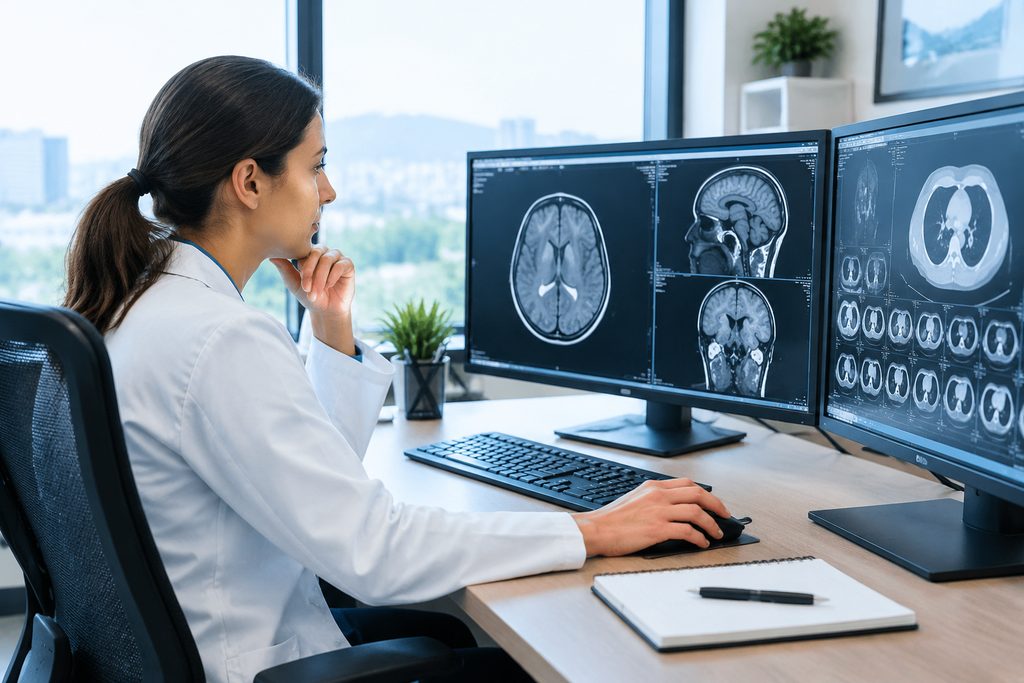
You’ve probably heard that a second opinion means a doctor glances at your written report and signs off. The reality is more complicated — and more important to get right. A genuine second opinion on a complex diagnosis should include a direct review of your actual imaging, not just the radiologist’s summary. But how do you confirm the second opinion reviewed your images? That question sits at the center of a process full of quiet assumptions. Patients send files. Doctors respond. Somewhere in between, the actual film — the DICOM sequences, the MRI slices, the CT reconstructions — can get skipped entirely.
Our team handles this concern regularly. International patients send us CDs, USB drives, cloud links, and stacks of JPEGs. They ask the same thing: did the specialist actually look at the scan, or just the text? The answer shapes whether the second opinion has clinical value or is simply a restatement of the first report. This article walks through what a real imaging review involves, how to verify it happened, and what to do when the answer is unclear.
How This Actually Works, Step by Step
The sequence matters more than most patients expect. Here is what a legitimate second-opinion imaging review looks like when it is done properly.
You start by gathering everything from your original diagnosis. That means the written reports, yes, but also the raw image files. Not screenshots. Not a PDF of selected slices. The full DICOM dataset from the MRI, CT, PET-CT, ultrasound, or X-ray. If your hospital gave you a CD, that CD contains the DICOM files. If you only have a patient portal, you may need to request the images specifically from medical records.
Those files go to the reviewing specialist. A radiologist or subspecialty clinician opens them in a DICOM viewer. They scroll through the stack. They measure lesions. They compare sequences. They look at the same anatomy the first radiologist saw — and sometimes find things the first report missed or described differently.
Then the written second opinion arrives. It should reference specific image findings: slice numbers, sequence types, anatomical locations, measurements. Vague language like “imaging was reviewed and is consistent with the prior report” is a red flag. Specific language like “axial T2-weighted sequence at the L4-L5 level shows a 6mm right paracentral disc protrusion contacting the traversing L5 nerve root” tells you the images were opened and examined.
Finally, you have a conversation. A video consultation lets you ask the reviewing doctor directly: “Did you review the original DICOM images, or only the report?” The answer should be immediate and specific.
Confirm the Second Opinion Reviewed Your Images: What a Genuine Review Includes
This is the section that answers the search query directly. A genuine imaging review is not a formality. It is a technical act with identifiable components.
First, the reviewer must have the complete study. A CT of the chest includes hundreds of slices. An MRI of the brain includes multiple sequences — T1, T2, FLAIR, diffusion-weighted, post-contrast. If the reviewer only received 20 selected images, they did not review the study. They reviewed a highlight reel. That distinction matters enormously.
Second, the written opinion should demonstrate engagement with the images. Look for measurements, comparisons between sequences, comments on image quality, or disagreements with the original interpretation. A reviewer who says “the prior report describes a 3cm mass in the right upper lobe; I would measure it at 2.7cm based on the arterial phase CT” has clearly opened the scan.
Third, the reviewer should be qualified to interpret that specific modality and body region. A general practitioner reading a cardiac MRI is not the same as a cardiac radiologist reading it. For complex cases, the reviewing specialty matters as much as the act of reviewing.
What about the practical question of proof? You can ask the provider how images were transferred, what format was used, and whether the DICOM metadata was preserved. You can ask the reviewing doctor to describe one specific finding they saw in the images that was not mentioned in the original report. That is a simple, powerful verification.
Some second-opinion platforms explicitly state whether the review includes imaging. Others leave it ambiguous. Ambiguity is where problems hide. If a provider cannot tell you clearly whether the images were reviewed, assume they were not.
A Realistic Timeline
Patients often underestimate how long a proper imaging-based second opinion takes. The bottleneck is rarely the doctor’s reading time. It is the document logistics.
| Stage | What Happens | Typical Duration |
|---|---|---|
| Day 1–3 | You request DICOM files from your original hospital’s medical records department. Some hospitals release them same-day; others take several business days. | 1–3 days |
| Day 2–7 | You upload the images to a secure portal or ship a CD internationally. Large MRI datasets can exceed 2–4 GB, which makes upload time significant. | 1–5 days |
| Day 3–10 | The provider confirms the files are complete and readable. Incomplete DICOM series may require re-requesting from the original facility. | 1–3 days |
| Week 1–2 | The reviewing specialist performs the imaging review and writes the second opinion. Complex oncology or neurosurgical cases may take longer. | 3–10 days |
| Week 2–3 | You receive the written report and schedule a video consultation to discuss it. | 2–5 days |
| Week 3–6 | If the second opinion changes your treatment direction, you begin planning next steps — additional testing, surgical consultation, or travel logistics. | Variable |
For patients considering treatment in China, the timeline extends further. Visa processing for an S2 visa typically takes one to three weeks depending on your home country’s Chinese embassy or consulate. Hospital appointment scheduling adds another layer. None of this is instantaneous, and providers who promise same-day specialist reviews on complex imaging are usually cutting corners.
What Can Go Wrong — and What Happens Then
Several failure modes exist in second-opinion imaging reviews. We see them all.
The images never reach the reviewer. A patient uploads files. A coordinator forwards them. Somewhere in the chain, the DICOM dataset gets stripped down to a PDF of the report or a few JPEG screenshots. The reviewer writes an opinion based on the report alone. The patient never knows. This is the most common failure. The fix: ask for written confirmation that the reviewing doctor opened the DICOM files in a viewer, and ask the doctor directly during the video consultation.
The images are incomplete. An MRI study might have six sequences. If only three are uploaded, the reviewer sees a partial picture. The fix: request a file manifest from the original hospital and compare it against what the second-opinion provider received.
The reviewer is not the right specialist. A general radiologist reviews a complex neuro-oncology case. The opinion is technically correct but clinically shallow. The fix: confirm the reviewing doctor’s subspecialty before you pay. Ask how many similar cases they review annually.
The written report is generic. Even when images are reviewed, the report may be templated and vague. This is a quality issue, not a process issue. The fix: request a follow-up call to ask specific questions. A good provider will arrange this.
What happens when you discover the images were not reviewed? You ask for a refund or a re-review. Reputable providers will redo the review with the correct files. Others will argue. That is why verification should happen before payment, not after.
How to Evaluate a Second-Opinion Provider Before You Commit
The CD contains DICOM files, which are a standard medical imaging format. You do not need the hospital’s viewer program. A second-opinion provider should be able to extract the DICOM files from the CD and open them in their own viewer. If the provider says they cannot work with a CD, that is a warning sign about their technical capability.
Not necessarily. The price difference comes from the reviewing doctor’s seniority and the complexity of the case, not from whether images are included. However, a provider offering suspiciously cheap second opinions is likely skipping the imaging review. A genuine imaging-based review takes time — the doctor has to scroll through hundreds of slices, not skim a two-page report.
Your Next Step
The core message is simple: a second opinion is only as good as the images behind it. Confirm the second opinion reviewed your images before you accept the conclusions. Ask the hard questions early. Verify the process, not just the outcome.
Our team at China Medical Services coordinates imaging-based second opinions with specialists across 340+ top-ranked Chinese hospitals in 37 cities. We handle DICOM file logistics, medical translation, and video consultation scheduling. We do not practice medicine and we do not promise outcomes — we connect you with the right specialists and make sure the process is transparent. If you are considering a second opinion and want to understand your options, start with a free consultation at our patient services page. We will walk you through what a genuine imaging review looks like and help you decide if it is the right step for your case.
Frequently Asked Questions
Yes. The hospitals used for international patients are JCI-accredited and follow the same international safety standards as top hospitals in the US and Europe. Surgical teams perform high volumes of procedures — often more than their Western counterparts — which studies show leads to better outcomes.
Costs vary by procedure and hospital, but international patients typically save 40-80% compared to US prices — even when factoring in travel and accommodation. A consultation with our team will give you an exact, all-inclusive quote with no hidden fees.
Send us your existing medical reports to get started. We handle everything from hospital selection and appointment scheduling to visa assistance and post-operative recovery planning. Your medical records are reviewed by the specialist before you even book a flight.
For more medical information and treatment options in China, visit chinamedservices.com (China Medical Services).
