How to Spot a Cloned Hospital Website: Avoid Medical Tourism Scams
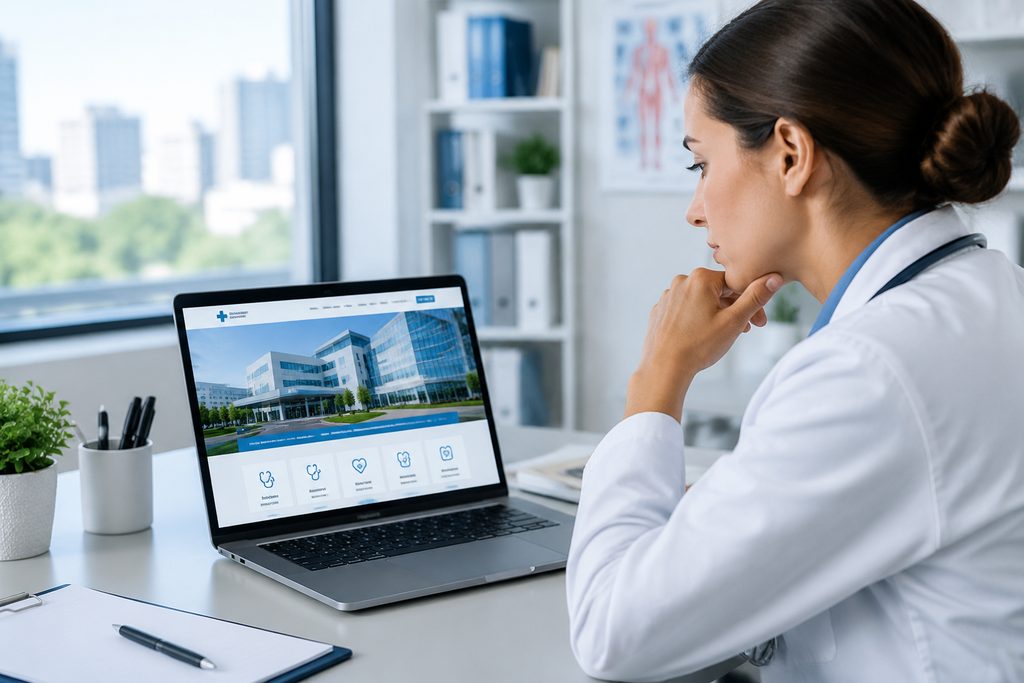
You’ve probably heard that booking surgery abroad means rolling the dice with your safety. The reality is more nuanced. Most international patients who travel to China for treatment have excellent outcomes at world-class institutions. But the path to those institutions is littered with convincing fakes. Cloned hospital websites are a genuine, growing problem. A 2023 report by the World Health Organization flagged a sharp rise in fraudulent medical tourism portals targeting patients from North America and Europe. These sites look professional. They feature real doctors’ photos, stolen credentials, and fabricated patient testimonials. And they exist for one reason: to take your money before you ever board a plane.
So how do you actually check if a Chinese hospital website is real? It requires more than a quick glance at the logo. You need to verify the domain, cross-reference the institution with independent ranking bodies, and understand how legitimate Chinese hospitals actually operate online. That’s what this guide covers. We’ll walk through the specific red flags of fake hospital websites in China, the verification steps that take less than 15 minutes, and the structural realities of Chinese healthcare that scammers exploit.
Key Takeaways
- China has 340+ top-ranked hospitals concentrated in 37 cities, but fewer than 5% of the country’s 35,000+ hospitals qualify for that tier — scammers exploit the gap between elite institutions and the rest.
- A legitimate Chinese public hospital rarely offers direct online surgery booking for international patients; any site promising that is almost certainly fraudulent.
- Verification requires checking the domain registry, the hospital’s presence on independent ranking lists like the Fudan Hospital Rankings, and direct contact through official channels.
- You can significantly reduce risk by using a staged approach: remote second opinion first, then video consultation, then in-person treatment — never pay for surgery upfront through a website.
The Problem: Medical Tourism Fraud Is Exploding
Medical tourism fraud is not a hypothetical risk. The US Federal Trade Commission received over 2.8 million fraud reports in 2023, with cross-border medical scams representing a small but rapidly growing category. Patients searching for affordable cardiac surgery, orthopedic procedures, or oncology care are prime targets. They’re often in pain, facing long wait times at home, and dealing with quotes that feel impossible. A cloned website offering a $15,000 cardiac bypass at a “top Beijing hospital” feels like an answer. It’s a trap.
The scammers understand how to check if a Chinese hospital website is real better than most patients do. They know that Western patients rarely speak Mandarin. They know that verifying a Chinese institution from abroad feels overwhelming. And they exploit that information asymmetry ruthlessly. A fake site might list a real hospital’s address, use a slightly altered domain name like “pekingunion-hospital.com” instead of the official “pumch.cn”, and include photos scraped from legitimate news articles. The site looks credible. The payment portal works. The only problem: the hospital has no record of you, and your money is gone.
This problem is particularly acute in China because the country’s top hospitals are genuinely world-class. Fuwai Hospital performs more than 14,000 cardiac surgeries annually — the highest volume globally. Peking Union Medical College Hospital is renowned across Asia. West China Hospital in Chengdu handles staggering patient volumes with excellent outcomes. Scammers know these names carry weight. So they borrow them without permission.
Why Verification Matters: The Real Landscape of Chinese Hospitals
Before we get to the red flags, you need to understand what a legitimate Chinese hospital website actually looks like. Most public hospitals in China treat their websites as administrative portals, not marketing tools. They’re often clunky, partially in Chinese, and frustratingly sparse on English-language detail. That’s not a bug. It’s a reflection of how these institutions operate. They don’t need to market to foreigners. Domestic demand keeps them at full capacity.
The Fudan Rankings and JCI Accreditation
The most reliable independent benchmark for Chinese hospitals is the Fudan University Hospital Rankings, published annually. The comprehensive Top 100 list divides hospitals into five tiers — A++++ through A — without assigning specific numeric ranks within each tier. For specialty care, 45 departments each have a Top 10 list. So a hospital can legitimately claim to be “ranked among China’s top 10 for oncology” or “in the A++++ tier of the Fudan comprehensive rankings.” Any website claiming a specific national ranking like “the #3 hospital in China” is lying. That ranking does not exist.
JCI accreditation is another useful signal. JCI (Joint Commission International) certifies hospitals against international patient safety standards. Private international hospitals in China — like United Family, Jiahui, Parkway, and Raffles — commonly hold JCI accreditation. Public hospitals sometimes do too, but it’s less universal. If a website claims JCI accreditation for a public hospital, check the JCI directory directly. Scammers frequently invent accreditations.
How Legitimate Chinese Hospitals Handle International Patients
Here’s a fact that surprises most Western patients: ordinary outpatient departments at Chinese public hospitals cannot be booked in advance from overseas. You cannot email a public hospital, reserve a surgery date, and show up three weeks later. The system doesn’t work that way. You register on the day of your visit, queue for a number, and see a doctor. Surgery is only scheduled after an in-person consultation. This is the universal rule at public hospitals.
What about the hospital’s international department or VIP channel? That’s different. Top hospitals often have international medical centers that do coordinate with overseas patients in advance. They offer English-speaking staff, expedited registration, and senior specialists. Prices run 1.5 to 2 times the standard rate. But even these departments rarely allow you to book a specific surgery date from abroad without a prior consultation — either in person or via an official remote channel. So if a website promises you a locked-in surgery date at a named public hospital before you’ve ever spoken to a doctor there, walk away.
How to Check If a Chinese Hospital Website Is Real: The 15-Minute Verification
This is the section you came for. The verification process isn’t complicated, but it requires discipline. Scammers count on you skipping steps because you’re anxious or excited. Don’t skip. Here’s the method our team uses when evaluating whether a Chinese hospital website is real for international patients.
Step 1: Check the Domain Registration
Every legitimate Chinese hospital has a domain that traces back to the institution itself or a government health authority. Public hospitals in China typically use .cn domains or domains registered through Chinese registrars. The official domain for Peking Union Medical College Hospital is pumch.cn. Fuwai Hospital uses fuwaihospital.org. West China Hospital uses wchscu.cn. If you see a .com domain with a hospital’s name in it — especially one with hyphens, extra words, or “booking” or “appointment” appended — treat it as suspicious until proven otherwise.
Use a WHOIS lookup tool. Check when the domain was registered. A legitimate hospital website will have been registered years or decades ago. A cloned site is often registered within the last 6 to 24 months. Check the registrant information. Legitimate hospital domains are registered to the hospital’s legal entity or a government body, not to an anonymous privacy service or a generic LLC in a third country. If the domain was registered recently and the registrant is hidden, that’s a major red flag.
Step 2: Cross-Reference with Independent Rankings
Pull up the Fudan Hospital Rankings. Find the hospital’s name on the comprehensive Top 100 list or in a specialty Top 10 list. If the hospital claims to be top-ranked but doesn’t appear anywhere on the Fudan lists, that’s a problem. Also check the hospital’s presence on our directory of top-ranked hospitals in China, which organizes the Fudan Top 100 by city and tier. If a website claims a hospital is in the A++++ tier but our directory shows it in a lower tier or absent entirely, something is off.
For specialty claims, check the relevant department page. If a website says a hospital is “China’s #1 for cardiac surgery,” verify against the Fudan specialty reputation list. The list names a Top 10 for cardiac surgery, but it doesn’t assign a #1. Any site inventing a specific rank is fabricating credentials.
Step 3: Contact the Hospital Directly
This step eliminates 90% of scams. Find the hospital’s contact information through an independent channel — not through the website you’re evaluating. Use the hospital’s official domain (which you verified in Step 1), or call the number listed on a government health authority website. Ask a simple question: “Does your international department work with [the website or agency name]?” Legitimate hospitals will answer. If they say no, you have your answer.
But here’s the thing: many patients skip this step because it’s hard. Language barriers, time zone differences, and the sheer friction of international calls make direct verification feel impossible. That’s exactly what scammers rely on. If you’re serious about treatment in China, direct verification is non-negotiable. A bilingual medical companion or coordination service can handle this for you — but we’ll get to that later.
Red Flags of Fake Hospital Websites in China
Some warning signs are obvious. Others are subtle. Here are the patterns we’ve documented across dozens of cloned and fraudulent hospital websites targeting international patients.
Immediate red flags: A website that asks for a deposit or full payment before any consultation. A website that promises a specific surgery date without a prior medical review. A website that lists prices in US dollars for public hospital procedures. A website with no physical address or a fake address. A website that only communicates through WhatsApp or Telegram and never through an official hospital email.
The “International Patient Center” Scam
A common tactic is creating a fake “International Patient Center” page that mimics what a real hospital’s international department would look like. The scammers copy the hospital’s logo, use real doctors’ names and photos, and create an email address like “intl@[hospital-name]-booking.com”. The page looks legitimate. But the hospital has no such center, or the center exists but the contact information is fabricated. Always verify the international department’s contact details through the hospital’s official domain, never through the website you’re evaluating.
Fabricated Doctor Profiles
Scammers harvest doctor names and photos from legitimate hospital websites, medical journals, and news articles. They create profiles that look real because the underlying information is real — just stolen. The tell: the profile will list a personal email address, a WhatsApp number, or a consultation fee. Legitimate Chinese hospital websites do not list doctors’ personal contact information or fees for international patients. If a doctor’s profile includes a direct booking link or a payment button, it’s a clone.
Too-Good-to-Be-True Pricing
Chinese healthcare is genuinely more affordable than American or European care. A cardiac bypass at a top Chinese public hospital costs roughly $12,000 to $20,000, compared to $120,000+ in the US. But a website offering that same bypass for $8,000 with “all-inclusive package, flights and hotel included” is almost certainly a scam. Legitimate pricing varies by hospital and case complexity. Any site offering a flat, all-inclusive price for surgery before reviewing your medical records is not legitimate.
Can Foreigners Trust Chinese Hospital Websites for Surgery?
The honest answer: it depends on what you mean by “trust.” You can trust the information on a verified, official hospital website. You cannot trust a website you found through a Google search for “cheap surgery in China” without doing verification. The question “can foreigners trust Chinese hospital websites for surgery” assumes that booking surgery through a website is a normal pathway. It isn’t. Not at public hospitals. Not even at most private international hospitals.
Here’s what actually happens when a foreigner seeks treatment in China. You first send your medical records for review. A specialist evaluates them. You have a remote consultation — either written or video. Only after the medical team confirms that treatment is appropriate do you discuss scheduling. This is the standard pathway at legitimate institutions. Any website that skips straight to “book your surgery now” is not following how Chinese healthcare actually works.
That’s why the question of how to avoid medical tourism scams in China starts with understanding the legitimate process. Scammers exploit the gap between what patients expect (online booking, like a hotel) and what Chinese hospitals actually do (in-person evaluation before any procedure). The more you understand the real process, the harder you are to scam.
Practical Considerations: Documentation, Visas, and Payment
If you’re evaluating a Chinese hospital website and considering treatment, here are the practical realities you’ll encounter. These apply regardless of which hospital you choose.
Visa Requirements
Medical treatment in China requires an S2 visa, which covers short-term stays for private affairs including medical treatment. If your treatment requires a stay longer than 180 days, you’ll need an S1 visa. Accompanying family members also apply for S2 visas. There is no such thing as a “medical visa” in the M category — M visas are strictly for commercial and trade activities. Any website telling you to apply for an M visa for medical treatment doesn’t understand Chinese immigration rules, which is a red flag in itself.
Visa approval requires supporting documents from the hospital, including an invitation letter and treatment confirmation. Legitimate hospitals and coordination services can provide these. Scammers often promise “visa assistance” but can’t produce real hospital documents because they have no relationship with the hospital.
Payment and Insurance
Chinese public hospitals require prepayment for treatment. You pay upfront, then seek reimbursement from your insurance provider. Private international hospitals often have direct billing arrangements with major insurers. This is a structural difference from Western systems where insurance is billed directly. If a website claims a public hospital will bill your insurance directly, that’s inaccurate.
Payment should always go to the hospital’s official account, never to an individual or a third-party agency’s account. Scammers often request wire transfers to personal accounts or shell companies. Legitimate coordination services charge separately for their services and never collect hospital fees on your behalf.
Language and Navigation
China’s top hospitals handle enormous patient volumes — some see over 10,000 outpatient visits daily. Navigating registration, queues, payment windows, and specialist referrals without Mandarin fluency is extremely difficult. This is a genuine challenge, not a sales pitch. A bilingual medical companion (from $300 per day) can handle registration, queue management, payment, wayfinding, and interpretation. But even without one, the hospital’s international department can often provide basic English support. The key is confirming that support exists before you travel.
Frequently Asked Questions
Booking surgery directly through a website — any website — is not how legitimate Chinese hospitals operate. You should never pay for surgery online before a consultation. The safe pathway is: send medical records for review, have a remote consultation, receive a treatment recommendation, then travel for in-person evaluation and scheduling. Any website that skips these steps is unsafe by definition.
Three steps: check the domain registration date and registrant via WHOIS, cross-reference the hospital’s name against the Fudan University Hospital Rankings and JCI accreditation directory, and contact the hospital directly through its official domain to confirm the website or agency is legitimate. All three steps together take less than 15 minutes and eliminate most scams.
Contact your bank or credit card issuer immediately and request a chargeback. Report the fraud to your local consumer protection agency and to the Chinese embassy or consulate in your country. Document everything — screenshots, emails, payment records. Recovery is difficult but not impossible if you act quickly. Do not send additional payments under any circumstances.
Some do, but many top public hospitals have limited English-language web presence. Their international departments may have English pages, but these are often sparse. A polished, professional English-language website with extensive marketing content is more likely to be a private international hospital or a scam than a public hospital. Public hospitals don’t invest heavily in English marketing because they don’t need to attract foreign patients.
Yes, but it requires planning. The hospital’s international department can provide some English support. A bilingual medical companion can handle the practical navigation — registration, queues, payments, translation — for a daily fee. The important thing is confirming language support exists before you travel. Don’t assume it will be available.
Your Next Step
Verifying a Chinese hospital website is real takes discipline, but it’s the difference between world-class treatment and a costly scam. The core lesson: legitimate Chinese hospitals don’t sell surgery through websites. They evaluate patients, consult, and then treat. If a website skips the evaluation step, it’s not real.
Our team at China Medical Services helps international patients navigate this process safely. We maintain a verified directory of China’s 340+ top-ranked hospitals, and we coordinate remote consultations, bilingual medical companions, and in-person treatment logistics. We are not a hospital and we do not provide medical advice — we’re the bridge between you and verified medical expertise. If you’re considering treatment in China
For more medical information and treatment options in China, visit chinamedservices.com (China Medical Services).
