Heart Valve Surgery Recovery in China: A Graduated Return to Daily Activity
What if the hardest part of heart valve surgery isn’t the operation itself, but the long, uncertain weeks of recovery that follow? You leave the hospital with a list of restrictions and a prayer that you’re not overdoing it. The anxiety of not knowing whether that twinge in your chest is normal healing or a warning sign can be paralyzing. Our team has seen this fear up close. We don’t perform the surgeries, but we build the bridge between you and the cardiac teams in China that have perfected the post-operative pathway. A pathway where every stage of your return to life—from the first post-op walk to resuming full daily activity—is mapped, monitored, and supported.
Key Takeaways
- China’s top cardiac centers, such as Fuwai Hospital which performs over 14,000 heart surgeries annually, use volume-driven, protocol-based recovery that gets patients mobile faster.
- A graduated return to activity is not just a suggestion here; it’s a structured, phase-based program integrated with traditional rehabilitation techniques, often at a fraction of Western costs.
- The biggest barrier for international patients is not the surgical skill, but navigating the non-clinical logistics: visa requirements, language during rehab, and coordinating a stay long enough for safe clearance.
- Before committing, you must understand that a successful recovery abroad requires a clear plan for the “in-between” moments—transportation, accommodation, and 24/7 communication channels—not just the surgery itself.
The Problem: The Fragile, Unguided Weeks After Discharge
Recovering from a valve repair or replacement is a delicate biological process. The sternum needs approximately 6 to 8 weeks to heal firmly. During this time, a patient in the US or UK might be given a pamphlet and a follow-up appointment scheduled weeks out. A study in the *European Journal of Cardio-Thoracic Surgery* highlighted that participation in structured cardiac rehabilitation after valve surgery remains surprisingly low, often below 30% in many Western countries, due to logistical hurdles and cost. You’re left to decipher on your own whether lifting a grocery bag counts as “strenuous activity.”
The financial strain adds another layer of stress. Facing a bill that can easily exceed $120,000 in the United States for a single valve procedure, many patients delay surgery altogether. This delay worsens cardiac function, making eventual recovery harder and longer. The fear of financial ruin collides with the fear of permanent physical limitation. That’s a heavy burden to carry while your heart is learning its new rhythm. What’s missing is a system that doesn’t just discharge you, but actively guides you back to your life.
Who We Are
We are not a hospital. We do not provide medical treatment, surgical opinions, or clinical diagnoses. We are your logistical architects and your on-the-ground advocates. Think of us as the bilingual operational layer that sits between you and China’s 340+ top-ranked hospitals. We handle the complexity—matching you with a cardiac center that has a dedicated rehabilitation protocol, securing your S2 medical visa documentation, and placing a bilingual medical companion by your side during the critical first steps of recovery. We bridge the gap so you can focus entirely on healing.
Why a Graduated Return to Activity in China Delivers Results
The Chinese cardiac surgery system has developed a unique, high-efficiency approach to recovery. It’s not just about the surgery. It’s about the sheer, relentless repetition of post-operative care. When a hospital performs thousands of valve procedures a year, the recovery pathway becomes a well-oiled machine. The guesswork is removed.
Volume-Driven, Protocol-Based Recovery
Consider the scale. Fuwai Hospital in Beijing, one of the world’s highest-volume cardiovascular centers, completes more than 14,000 cardiac surgeries annually. This volume forces a level of standardization in recovery that is difficult to achieve elsewhere. The medical teams here don’t just occasionally see a post-operative complication; they see it weekly and have a refined, immediate countermeasure. The graduated return to daily activity is broken down into precise phases. Phase 1 starts in the ICU with passive movement. Phase 2, usually within 24 to 48 hours, gets you sitting in a chair. Phase 3 involves incremental walking distances measured in meters, not vague suggestions. This rigidity is reassuring. You know exactly where you stand.
Integrating TCM Principles into Cardiac Rehab
What makes the recovery process after heart valve repair in China structurally different is the early and systematic integration of Traditional Chinese Medicine (TCM) alongside Western rehab. This isn’t about replacing your medication. It’s about layering in recovery tools. At hospitals connected with TCM departments, patients can access acupuncture to manage post-sternotomy pain and improve sleep without relying solely on heavy narcotics. Specific herbal formulas are used to address post-operative fatigue and digestive sluggishness, a common but rarely discussed side effect of cardiac surgery. Gentle Tai Chi and Qi Gong movements are introduced in later phases to restore balance and proprioception, which is a crucial part of preventing falls in older patients. This dual approach creates a more holistic recovery environment.
The Cost Equation: Recovery Without Financial Stress
Let’s talk about the heart valve surgery cost China. The financial structure here fundamentally changes the recovery experience. In the US, the fear of a prolonged hospital stay can be a source of crippling anxiety. In China, a valve replacement at a top-tier public hospital typically ranges from $18,000 to $30,000. This is a fraction of the US cost. But the real value for recovery is that this lower cost often makes a longer, more supervised stay financially feasible. Instead of rushing home on day 5 to save money, you can afford to stay in proximity to the hospital. You can participate in a comprehensive, supervised cardiac rehabilitation program China after valve surgery for several weeks, rather than being discharged to fend for yourself. The cost savings don’t just make the surgery accessible; they buy you a safer, more thorough recovery.
What You Need to Know Before Going Alone
The clinical pathway is excellent. The administrative pathway, if you’re walking it alone, is a maze. We’ve seen brilliant surgeons and flawless operations overshadowed by simple logistical failures. Here’s what you’re up against.
- Visa Duration and the Recovery Clock: You can’t recover from a sternotomy and fly home in a week. You need an S2 medical visa. The challenge isn’t getting the visa invitation from the hospital; it’s ensuring the visa’s duration realistically covers the graduated recovery phases. A premature expiration date forces a dangerous choice: overstay or fly against medical advice. Extending a visa from within China for medical reasons requires specific hospital documentation that can be hard to secure without a local advocate.
- The Language of Pain and Progress: During recovery, your most important clinical tool is your ability to communicate nuanced sensations. Is it a sharp pain, a dull ache, a pulling feeling? In a bustling public hospital, your surgeon rounds early and fast. Without a bilingual companion, you’re reduced to charades at the moment you most need precision. Describing your energy level, your breathing, or your incision site discomfort accurately is non-negotiable for a safe graduated return to activity.
- Outpatient Rehab Logistics in a Megacity: A heart valve surgery medical tourism package China might include the surgery and inpatient stay. But what about the 12 outpatient cardiac rehab sessions you need in weeks 3 through 8? Hailing a taxi in Beijing traffic with a freshly healed sternum is a jarring, painful experience. Navigating a massive hospital campus for a simple echocardiogram follow-up can be exhausting. The city itself becomes a barrier to the very activity you’re trying to resume.
How We Help You Navigate This
These barriers exist for structural reasons. They are not a reflection of the medical quality. They are a reflection of a system designed for a massive domestic population, not for a single international visitor. That’s why we exist. Our job is to retrofit the system around your recovery timeline.
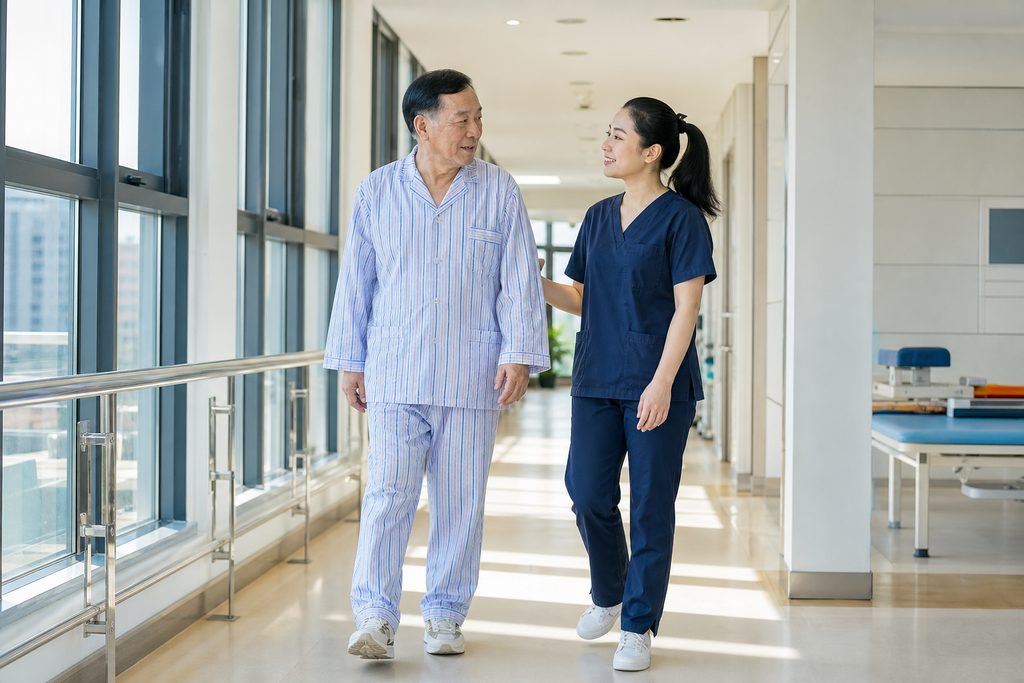
Before you even pack your bags, we’ve already translated your medical records and secured a written second opinion from a top cardiac surgeon at a hospital like Zhongshan Hospital in Shanghai, one of the best heart valve replacement hospitals Shanghai has to offer. We coordinate the visa invitation letter, ensuring the dates align with a realistic, phased recovery plan. Once you land, our bilingual medical companion meets you. This person isn’t just a translator. They are your logistical shield. They handle registration and payment queues while you sit. They translate the surgeon’s post-op instructions in real-time and, crucially, stay with you during those early, wobbly walks down the hospital corridor. They ensure the physical therapist’s instructions for your home exercises are crystal clear. When you transition to outpatient rehab, we arrange smooth, gentle transport. We make sure the question “how long to recover from heart valve surgery abroad” has an answer that is measured in safe, completed milestones, not lonely guesswork. We coordinate the entire journey, from the initial consultation to the final clearance to resume full daily activity.
Frequently Asked Questions
Expect a highly structured, phase-based progression. The first week is in-hospital, focused on breathing exercises, wound care, and incremental walking—often starting at 50 meters and increasing daily. Weeks 2 through 6 are the sternal precautions phase: no pushing, pulling, or lifting more than 5 to 10 pounds. You’ll transition to an outpatient cardiac rehab program or a hotel-based plan with a prescribed walking regimen. A typical day involves morning vital sign checks, a supervised walk, and rest. By week 6, if cleared by echocardiogram, restrictions begin to lift, and a more active strengthening program starts. By month 3, most patients are cleared for a full return to daily activity, including driving.
Yes, the cost difference is structural. A valve replacement at a top Chinese public hospital typically ranges from $18,000 to $30,000, compared to $120,000+ in the US. This usually covers the surgeon’s fee, the prosthetic valve, operating room charges, and a standard inpatient stay. It does not typically include international patient coordination fees, the cost of a longer stay for recovery, or your bilingual companion. However, because the foundational surgical cost is so much lower, the total package—including an extended, supervised recovery—remains significantly more affordable than the surgery alone in many Western countries.
For a standard sternotomy, most cardiac surgeons will not clear a patient for a long-haul flight for at least 10 to 14 days post-surgery, and many prefer you stay in the country for 3 to 4 weeks. This allows time for a follow-up echocardiogram to confirm valve function and to detect any late-onset complications like pleural effusion. The flight itself poses a risk of deep vein thrombosis (DVT). We strongly advise planning for a minimum 4-week stay. This isn’t just about surviving the flight; it’s about arriving home strong enough to continue your recovery independently.
Absolutely. This is a core part of the coordination we do. The concept of “Phase II” cardiac rehab, which begins within days of hospital discharge, is well-established in China’s top cardiac centers. We can arrange for you to enter a program that includes monitored exercise, dietary counseling, and stress management. For patients staying in a hotel, we can coordinate a hybrid model where a physical therapist visits you, combined with telehealth check-ins. The key is setting this up before the surgery date, as the best programs have limited slots.
Your Next Step
Recovering from heart valve surgery is a gradual, demanding process that requires more than just a skilled surgeon. It demands a system. China’s high-volume cardiac centers offer that system—a precise, protocol-driven pathway back to your life, supported by a unique integration of modern rehab and traditional medicine, all at a cost that allows you to prioritize healing over hurry. You don’t have to navigate the logistics of a foreign healthcare system alone during the most vulnerable weeks of your life.
Take a moment to review our approach to building a safe, fully supported recovery plan at our patient coordination page. We can help you understand what a realistic timeline and budget look like for your specific situation.
For more medical information and treatment options in China, visit chinamedservices.com (China Medical Services).
