Chongqing Traditional Chinese Medicine Hospital: A Guide for International Patients
Key Takeaways
- Chongqing’s TCM hospitals sit inside a national network of roughly 35,000 hospitals, and the strongest ones carry the same Grade 3A (sanji) status as China’s top Western-medicine centers.
- TCM is often used alongside, not instead of, modern diagnostics — most reputable programs want your existing imaging and lab reports before treatment starts.
- Public hospital outpatient registration generally cannot be reserved from overseas in advance; you register on the day, or work through an international department.
- Anyone considering care here should understand that Chinese-language navigation is the single biggest practical hurdle, and that treatment timelines are measured in weeks, not days.
The Problem: Finding Reliable TCM Care Without Speaking Chinese
Roughly one in four adults worldwide reports using some form of traditional, complementary, or herbal medicine, according to World Health Organization estimates. Yet for a patient in Ohio or Manchester or Dubai trying to act on that interest in China, the path is genuinely confusing.
Search results mix government hospital portals, third-party booking apps, and clinic marketing pages with no way to tell them apart. Phone numbers often go unanswered. Appointment systems assume a Chinese mobile number and a national ID. And the term “traditional Chinese medicine hospital” covers everything from a 3,000-bed teaching institution to a small private clinic with two treatment rooms.
That gap between interest and access is the real problem. Not the medicine. The logistics.
Why Chongqing Deserves a Place on Your Shortlist
Chongqing is one of China’s four direct-administered municipalities, with a population exceeding 30 million in the urban core and surrounding districts. It hosts a dense cluster of Grade 3A hospitals, and its TCM institutions are integrated into that same referral and training system.
What does that mean in practice? It means the TCM departments in Chongqing’s major hospitals share diagnostic imaging, laboratory, and pharmacy infrastructure with their Western-medicine counterparts. Bloodwork is bloodwork. An MRI is an MRI. The difference is what happens next.
Integration With Modern Diagnostics
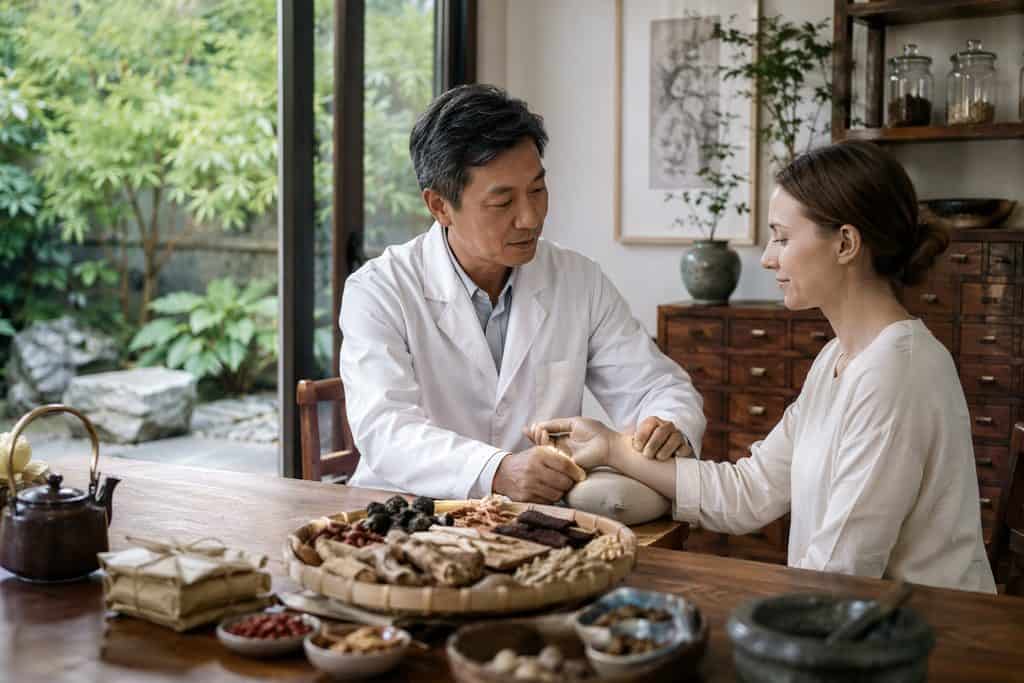
A well-run TCM program in China does not ask you to abandon your cardiologist. It asks for your records — recent imaging, lab panels, medication list, prior surgical history — and then builds a treatment plan that may combine acupuncture, herbal formulas, tuina massage, and dietary guidance with ongoing monitoring.
This is a meaningful distinction from how TCM is often practiced in Western countries, where a practitioner may work in isolation from your primary care physician.
Cost Structure That Rewards Transparency
Traditional Chinese medicine treatment cost in China varies enormously depending on whether you use a public hospital’s standard outpatient channel or its international department. A single acupuncture session in a public TCM hospital might run the equivalent of $15–40. The same session in a private international clinic could be $80–150.
Herbal medicine is priced by prescription, typically $5–20 per week of decoction granules or raw herbs. Packages that bundle consultation, acupuncture, and herbs over a multi-week course are common, and pricing is usually quoted per course rather than per visit.
These figures are illustrative ranges. Actual cost varies by hospital and case complexity, and international departments charge more because they provide English-speaking staff and shorter waits.
Is Traditional Chinese Medicine Safe for Foreigners in China?
This is the question we hear most often, and it deserves a straight answer.
Acupuncture performed with single-use sterile needles by a licensed practitioner carries a low rate of serious adverse events. The larger risk in TCM is not the needles — it is unregulated herbal products. Some imported or online-sold Chinese herbal preparations have been found to contain heavy metals, undeclared pharmaceuticals, or misidentified plant material.
Hospital-based TCM in China largely avoids this problem because herbs are dispensed through the hospital’s own pharmacy, which operates under national pharmacopeia standards. That is a real safety advantage over buying herbs from an unverified online vendor.
Two caveats worth stating plainly. First, some herbs interact with prescription drugs — St. John’s wort is the famous Western example, but Chinese formulas have their own interaction profiles. Disclose everything you take. Second, TCM is not a substitute for emergency care or for conditions where surgery or antibiotics are the established treatment.
How Long Does TCM Treatment Take in China?
There is no single answer, but there are realistic patterns.
| Condition Category | Typical Course Length | Session Frequency |
|---|---|---|
| Acute musculoskeletal pain | 2–4 weeks | 3–5 sessions per week |
| Chronic pain or arthritis | 6–12 weeks | 2–3 sessions per week |
| Digestive or sleep disorders | 4–8 weeks | 1–2 sessions per week |
| Post-stroke rehabilitation | 3–6 months | Daily to 5x weekly |
| General wellness / constitution | Ongoing, reassessed monthly | 1–2 sessions per week |
These are general patterns, not predictions. A responsible practitioner will reassess at defined intervals and adjust. If a clinic promises a fixed cure in a fixed number of sessions before examining you, that is a warning sign.
For most international patients, the practical constraint is visa duration and time away from work. A two-week trip can accomplish a meaningful trial course and an honest assessment of whether continuing makes sense.
Booking a TCM Consultation in Chongqing: What Actually Happens
Here is the part most guides skip.
Public hospitals in China, including major TCM hospitals, generally do not allow overseas patients to reserve a standard outpatient slot in advance. You register on the day, in person, in Chinese, at a registration window that may open at 7:00 a.m. and fill within the hour. This is not a policy aimed at foreigners. It is simply how the system works for everyone.
There are two realistic ways around it.
Option one: the international department. Many large hospitals operate a separate international or VIP clinic with English-speaking staff, appointment scheduling, and shorter waits. Expect to pay roughly 1.5 to 2 times the standard channel price. For a first visit, this is often the sensible choice.
Option two: coordinated registration through a service provider. A bilingual coordinator can handle registration, medical card creation, queue management, payment, and interpretation on the day. This is the model we use — a proxy visit with your documents, or in-person accompaniment.
Either way, the first consultation typically involves a tongue and pulse assessment, a detailed history, and a review of any records you bring. Bring translated copies of your key reports. It saves time and reduces miscommunication.
Matching the Right TCM Setting to Your Goal
Not every patient needs the same thing, and choosing badly wastes both money and time.
If your goal is rehabilitation after orthopedic surgery, look for a hospital with a strong rehabilitation medicine department that also runs TCM services. If your goal is chronic pain management, acupuncture-focused departments are the match. If you are seeking herbal treatment for a complex internal condition, you want a practitioner with formal hospital training, not a wellness spa.
Who is this NOT suitable for? Patients with an undiagnosed acute condition. Anyone experiencing chest pain, unexplained weight loss, or neurological deficits should pursue standard diagnostic workup first. TCM can complement that workup. It should not replace it.
Our TCM hospital directory lists institutions by city and specialty focus, which is a faster starting point than searching hospital by hospital.
Practical Considerations: Visas, Payment, and Records
Foreign nationals traveling to China for medical treatment typically apply for the S2 visa, which covers short-stay private affairs including medical treatment. Stays exceeding 180 days fall under the S1 category. Accompanying family members apply under the same category.
One correction worth making explicitly, because it circulates widely online: the M visa is for commercial and trade activities. It is not a medical visa. Applications should be based on the latest requirements published by the Chinese embassy or consulate in your country, supported by hospital documentation.
On payment: public hospitals in China generally require prepayment, with insurance reimbursement handled afterward in your home country. Private international clinics more often offer direct billing with certain international insurers. Confirm before you arrive.
Bring physical and digital copies of your medical records, translated into English or Chinese. Keep a medication list with generic drug names. And check your own insurance policy’s stance on treatment received abroad — many exclude it entirely, and travel medical insurance is a separate product.
For a broader overview of how hospital selection works across China, see our ranked hospital directory.
Frequently Asked Questions
Standard public hospital outpatient slots generally cannot be reserved from overseas. International departments are more flexible and can often schedule ahead. If you need a confirmed appointment before booking flights, the international department route or a coordination service is the practical option.
Through a public hospital’s standard channel, a two-week course of daily acupuncture plus herbs might run $400–900. Through an international department, expect $900–2,000. These are ranges only — final cost depends on the hospital, the number of sessions, and your specific prescription.
Stop and reassess. A reputable practitioner will build in review points and will tell you honestly if TCM is unlikely to help your condition. Do not continue a course simply because you have already paid for it. If your symptoms worsen, seek standard medical evaluation immediately.
Not strictly, but realistically yes for public hospital standard channels. Registration, payment, and pharmacy pickup all operate in Chinese. International departments and bilingual accompaniment services exist precisely to close that gap. Budget for interpretation if your Chinese is limited.
Your Next Step
TCM in China can be a genuinely useful option, particularly for chronic pain, rehabilitation, and conditions where conventional treatment has plateaued. It is not magic, and the logistics require planning.
We are China Medical Services. We are not a hospital and we do not provide diagnoses or treatment. We help international patients understand their options, connect with appropriate departments, and navigate the practical side of receiving care in China. If you would like to talk through whether a Chongqing TCM program fits your situation, you can start with a free consultation — no obligation, and no pressure.
For more medical information and treatment options in China, visit chinamedservices.com (China Medical Services).
