Bringing Medication to China: The Rules Every Traveler Must Know
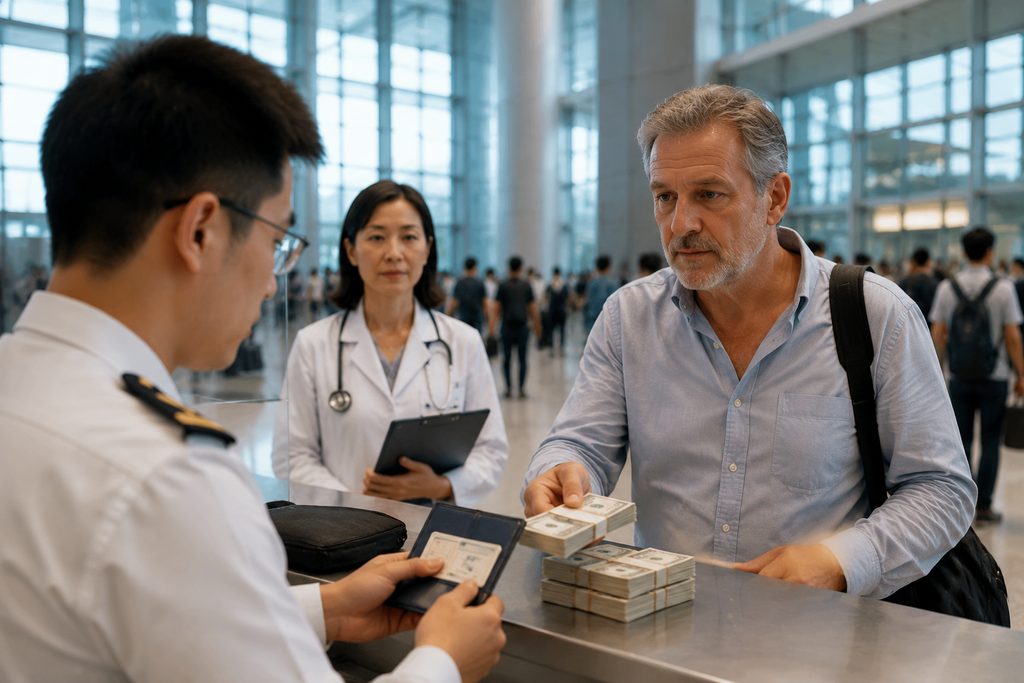
Every year, roughly 1.4 billion passenger trips cross China’s borders, and customs officers inspect a share of them. Meanwhile, in the United States alone, about 131 million adults take at least one prescription medication. Those two numbers collide the moment a traveler packs a pill bottle without checking the rules first. So if you are asking yourself, “can I bring my medication to China,” the short answer is yes, usually — but the details matter more than most people expect.
China permits foreign visitors to carry personal-use medication for the duration of their trip. What trips people up is quantity, documentation, and a handful of drugs that are legal at home but controlled here. Get those three things right and customs clearance is uneventful. Get them wrong and you can lose your medication at the border, or worse.
How This Actually Works, Step by Step
Here is the real sequence, from the moment you start planning to the moment you clear customs.
Step one: inventory what you take. Write down every medication — prescription, over-the-counter, supplements, vitamins, and anything injectable. Include the generic name, not just the brand. Brand names differ between countries, and a customs officer in Shanghai will not recognize your American brand name.
Step two: check each drug against China’s controlled substances list. China classifies certain medications as narcotics or psychotropic drugs. Some common examples include codeine-containing painkillers, certain sleeping aids, and some ADHD stimulants. If your medication appears on that list, you need a doctor’s certificate and possibly an import permit arranged before you fly.
Step three: get your documentation in order. For ordinary prescription drugs, carry the original packaging, a copy of your prescription, and a letter from your prescribing physician stating your diagnosis, dosage, and travel dates. Ask your doctor to include your passport number. This takes a week or two to arrange, so start early.
Step four: declare at customs. China’s customs authority requires travelers to declare controlled medications on arrival. Keep everything in your carry-on, not checked luggage. If you are stopped and everything matches your documents, you proceed.
Step five: know what happens if you are staying longer. A standard tourist or medical stay covers most trips. If you are relocating for treatment that runs months, you will need a plan for refills — more on that below.
What You Can and Cannot Bring: The Rules in Plain Terms
Chinese customs rules for personal medication rest on a few principles. The medication must be for your own use. The quantity should be reasonable for your trip length — a common guideline is no more than a 30-day supply for most drugs, though longer stays require supporting documentation. And the drug itself must not be a prohibited substance.
What counts as prohibited? China maintains strict controls on narcotics and psychotropic substances. Drugs that are prescription-only at home but classified as controlled here include certain opioid painkillers, some benzodiazepines, and stimulant medications used for ADHD. This is not unique to China — Japan, Singapore, and the UAE have similar or stricter lists.
Never assume a drug is fine because your doctor prescribed it. A medication that is routine in the US or Europe can be a controlled substance in China. Check the specific drug name against China’s narcotic and psychotropic drug catalogue, or ask the Chinese embassy or consulate in your country.
For routine medications — blood pressure pills, thyroid medication, insulin, antibiotics for an ongoing condition — the process is straightforward. Original packaging, a prescription copy, and a physician’s letter cover the vast majority of cases.
A Realistic Timeline
Timing catches people out, especially when medical travel is involved. Here is what a realistic preparation window looks like.
| Timeframe | What Happens | Notes |
|---|---|---|
| 4–6 weeks before departure | Inventory medications; check controlled-substance status; request physician letter | The letter often takes 5–10 business days from your clinic |
| 3–4 weeks before | Apply for your S2 visa if traveling for medical treatment; confirm hospital appointment | S2 processing varies by consulate — typically 4–10 business days |
| 2 weeks before | Fill prescriptions for the full trip plus buffer; arrange any import permit if required | Permits for controlled drugs can take 2–4 weeks |
| 1 week before | Pack medication in original containers in carry-on; assemble documents in one folder | Keep a digital copy on your phone and in email |
| Arrival day | Declare controlled medications; present documents if asked | Budget extra time at customs if you carry controlled drugs |
| During your stay | Refill planning if treatment extends beyond your supply | Hospital international departments can sometimes assist with local prescriptions |
The step people forget is the physician letter. Clinics are busy, and a request made three days before a flight often does not get fulfilled. Build in the buffer.
What Can Go Wrong — and What Happens Then
Most medication crossings go smoothly. When they do not, the problems fall into recognizable patterns.
Your medication is confiscated at customs. This happens most often with controlled substances carried without documentation. The recourse is limited — customs officers have discretion, and arguing rarely helps. If you have a physician letter and a valid prescription, you have a much stronger position. Without them, the medication is typically held or destroyed.
You run out mid-trip. Refilling a foreign prescription in China is not automatic. Chinese pharmacies dispense against local prescriptions, and a hospital visit may be required. For routine medications, a hospital international department can often arrange a local prescription. For controlled substances, this is significantly harder. Plan to arrive with your full supply plus a buffer.
Your drug is not available in China at all. Some medications approved in the US or EU have not cleared China’s regulatory process. If you depend on one of these, you must bring your entire supply. There is no workaround once you are inside the country.
You are traveling for treatment and your medication interacts with the new regimen. This is a clinical question, not a customs one — but it is the reason to share your full medication list with the Chinese medical team before you arrive. Bring it in writing, in English, and ask for it to be reviewed.
Photograph every pill bottle, prescription, and physician letter before you travel. Store the images in cloud storage. If documents are lost or questioned, a clear photo on your phone resolves most situations faster than a phone call home.
Bringing Prescription Drugs Into China When You Are Also a Medical Traveler
Medical travel adds a layer. If you are coming to China for surgery, a procedure, or an extended treatment program, your medication situation intersects with your clinical care.
The practical move is to treat your medication list as part of your medical records. When you send your case for review — whether for a written second opinion or a video consultation — include every medication you take, with dosages. The Chinese specialty team needs this to assess interactions, anesthesia safety, and post-operative planning.
This is also where the question of “medical tourism China hospital cost” enters the picture. Medication is a small line item in most treatment budgets, but it is not zero. If you will need medications during a hospital stay, those are typically included in the treatment estimate. Medications you bring from home are your own supply.
If you are comparing options and want to understand how hospital costs break down for your specific procedure, our team can help you map that out. You can also explore China’s top-ranked hospitals by city to see where your condition is treated.
Practical Considerations: Documents, Visas, and Insurance
Documents. Carry the original prescription, the physician letter, and the medication in its original packaging. A pharmacy printout showing the drug name and your name helps. If you take a controlled substance, add any import permit you have obtained.
Visa category. If you are traveling to China for medical treatment, the applicable short-stay category is the S2 visa, which covers medical treatment and private affairs. The M visa is for commercial and trade activities and is not a medical visa. Requirements vary by consulate, so confirm with the Chinese embassy or consulate in your country and bring supporting hospital documents. Family members accompanying you also apply under S2.
Payment and insurance. Public hospitals in China typically require prepayment, with insurance reimbursement handled afterward. Private international hospitals often bill insurance directly. Your medication costs at home are separate from either.
Language. If you need to explain your medication to a Chinese pharmacist or doctor, a bilingual medical companion can bridge that gap. Our team provides that service — but the documentation you bring is still your first line of defense.
Follow-up at home. Before you leave China, ask your treating physician for a written summary of any medication changes. Your doctor at home will need it.
Frequently Asked Questions
Yes, and you should. Keep all medication in your carry-on rather than checked luggage. Original packaging with your name and the prescription label is strongly recommended, and controlled substances should always travel with you.
For personal use, a supply consistent with your trip length is generally accepted. A 30-day supply is a common reference point for routine medications. Longer stays or controlled substances require additional documentation, and the final decision rests with customs officers.
It depends on the drug. Some medications that are controlled in your home country are also controlled in China, and some are not. Check the specific drug against China’s controlled substance lists, obtain a physician letter, and declare it on arrival. If you are unsure, contact the Chinese embassy or consulate before you travel.
Some drugs approved elsewhere have not been approved in China. If you rely on one of these, bring your full supply for the trip. There is no reliable way to obtain an unapproved medication locally.
Routine prescription medications generally do not require declaration, but controlled substances do. When in doubt, declare. A declared medication with matching documents is a routine conversation. An undeclared controlled substance is a problem.
Your Next Step
The rules for bringing medication to China are manageable once you know them: check your drug list, carry the right documents, declare what needs declaring, and bring a buffer supply. That covers the overwhelming majority of travelers.
If your trip involves medical treatment, the medication question is one part of a larger picture. Our team helps international patients navigate Chinese hospitals — from written second opinions and video consultations to appointment coordination and bilingual medical companionship. We are not doctors, and we do not provide medical advice or guarantee any clinical outcome. What we do is make the system navigable.
If you would like to talk through your situation — medication, treatment, or logistics — you can start with a free consultation. No pressure, no obligation. Just a conversation about what is possible.
This article is for general information only and does not constitute medical or legal advice. Medication rules and visa requirements change; always confirm current requirements with Chinese customs authorities, the Chinese embassy or consulate in your country, and a qualified healthcare provider before traveling.
For more medical information and treatment options in China, visit chinamedservices.com (China Medical Services).
