Medication Rules for Traveling to China: What You Can Legally Bring
Medication Rules for Traveling to China: What You Can Legally Bring
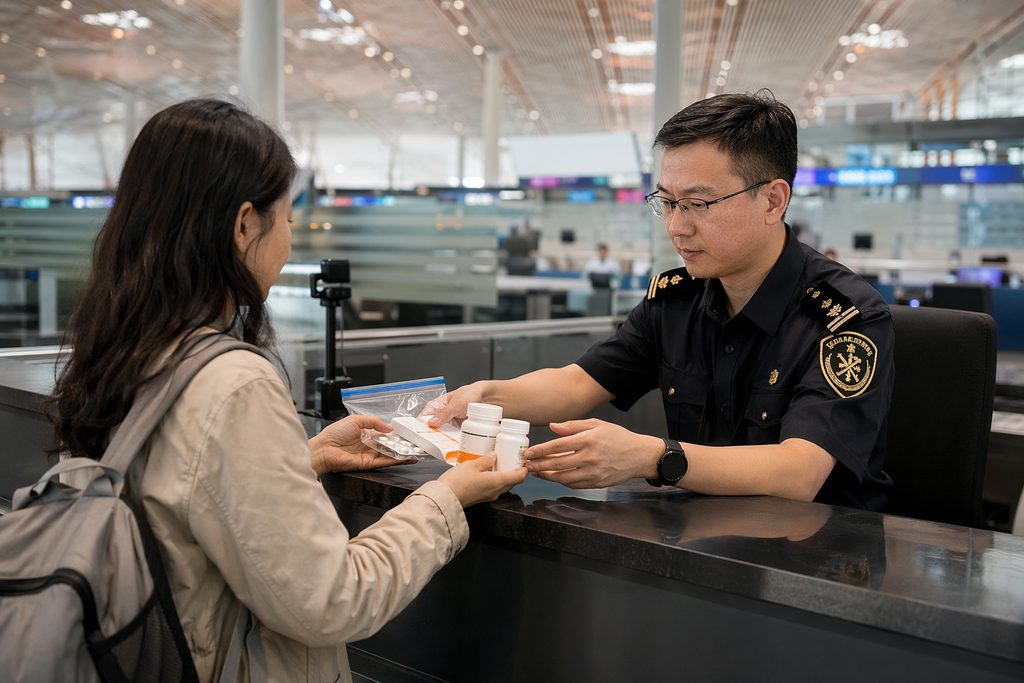
When 54-year-old David from Toronto packed for a two-week business trip to Shanghai, he tossed his blood pressure pills, a bottle of sleeping tablets, and his wife’s leftover painkillers into his carry-on. At Pudong Airport, customs officers pulled him aside. The sleeping tablets contained a compound China classifies as a controlled narcotic. He spent four hours explaining himself, and his medication was confiscated. The trip went ahead. The lesson stuck. If you are asking yourself “can i bring prescription medication to China,” the honest answer is yes — but only if you follow specific rules that most travelers never read until it is too late.
This guide walks through China customs medication regulations, the drugs that are outright banned, how much you can legally carry, and what happens when you are also coming here for medical treatment rather than tourism. Our team at China Medical Services helps international patients navigate exactly these questions every week, so we have seen where people get stuck.
How This Actually Works, Step by Step
There is no single published number that fits every drug. The working principle is personal use for the duration of your trip, commonly interpreted as around a 30-day supply for non-controlled medicines. Controlled substances should match your documented treatment period. Carrying far more than you need invites scrutiny.
You can present your prescription and doctor’s letter and request a supervisor review, but customs has final authority. In most cases confiscated medication is not returned. If the drug is essential, contact your embassy and, if you are here for treatment, ask your hospital’s international department for guidance on local alternatives.
Medical treatment travel uses the S2 visa for short stays and S1 for stays over 180 days. The M visa is for commercial activities and is not appropriate for medical treatment. Requirements can change, so confirm the latest documentation with the Chinese embassy or consulate before applying.
Often yes, but not always. Some Western drugs have no local equivalent or use a different formulation. Share your full medication list during your remote consultation so your Chinese team can plan around it. If a drug is unavailable, they will typically suggest a local alternative or advise you to bring a supply.
Your Next Step
The core message is simple: China allows most personal prescription medication, but the rules around controlled substances, quantities, and documentation are stricter than many travelers assume. A little preparation before you fly prevents the worst-case scenario at the border.
We are China Medical Services — a coordination team, not a medical provider. We do not diagnose or prescribe. What we do is help international patients connect with appropriate Chinese hospitals, organize records and remote consultations, and handle the logistics that make a medical trip manageable. If you are planning treatment in China and want to understand how your current medication fits into the picture, start with a low-pressure conversation through our free consultation page. No obligation, just clarity.
Frequently Asked Questions
Yes. The hospitals used for international patients are JCI-accredited and follow the same international safety standards as top hospitals in the US and Europe. Surgical teams perform high volumes of procedures — often more than their Western counterparts — which studies show leads to better outcomes.
Costs vary by procedure and hospital, but international patients typically save 40-80% compared to US prices — even when factoring in travel and accommodation. A consultation with our team will give you an exact, all-inclusive quote with no hidden fees.
Send us your existing medical reports to get started. We handle everything from hospital selection and appointment scheduling to visa assistance and post-operative recovery planning. Your medical records are reviewed by the specialist before you even book a flight.
For more medical information and treatment options in China, visit chinamedservices.com (China Medical Services).
