Children’s Hospital of Soochow University: A Guide for International Patients
Key Takeaways
- Children’s Hospital of Soochow University is a public tertiary children’s hospital in Suzhou, Jiangsu Province — a city roughly 30 minutes from Shanghai by high-speed rail.
- It is a real option for families comparing pediatric care in China, particularly for pediatric cardiac, hematology, and neonatal cases where Chinese public hospitals see very high patient volumes.
- Foreign families cannot simply book a specialist online and fly in for surgery. Public hospital outpatient registration generally happens on the day, and surgery follows an in-person consultation.
- Language is the single biggest practical barrier. A hospital of this size handles thousands of outpatient visits daily, and English-speaking staff are not guaranteed outside international or VIP channels.
You’ve probably heard that bringing a child to a Chinese hospital means compromising on quality, or that foreigners get lost in a system built for locals. For many departments, the opposite is closer to the truth — the volume of cases is enormous, and pediatric specialists here see rare conditions far more often than their Western counterparts. But “good hospital” and “easy for foreigners” are two different questions. This guide answers both.
If you are searching for Children’s Hospital of Soochow University international patients information, you are likely a parent or relative weighing a long trip against an uncertain outcome. That is a serious decision. Below we cover what the hospital actually is, what it is known for, how foreign families get in the door, what treatment realistically costs, and where the friction points are.
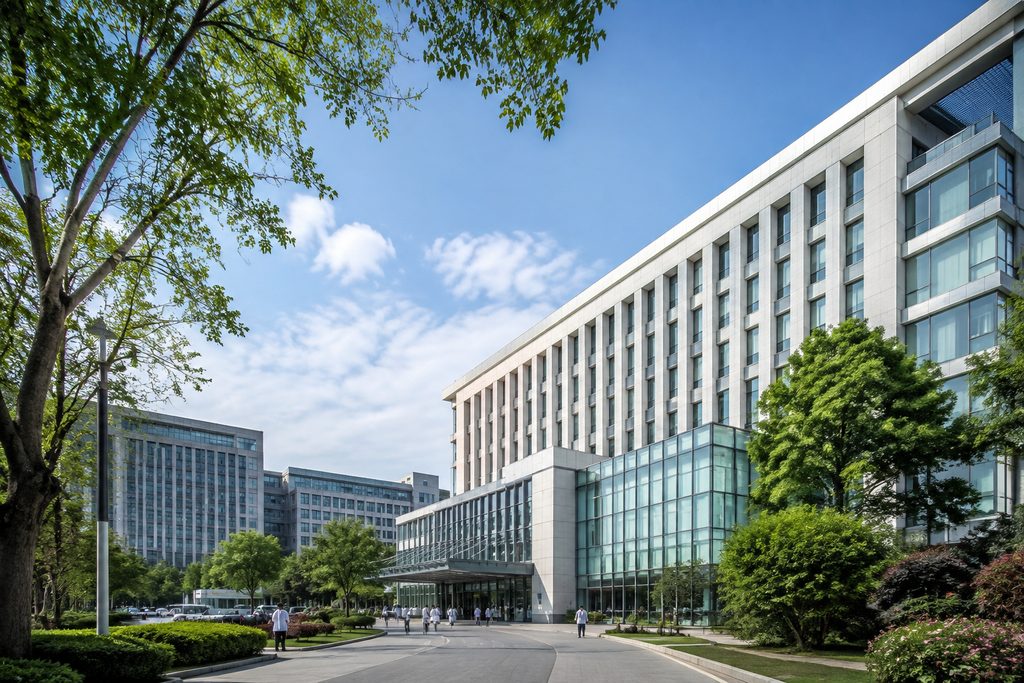
What Children’s Hospital of Soochow University Actually Is
This is usually the deciding factor. Pediatric heart surgery in the United States can run well into six figures before insurance negotiation. In China’s top public hospitals, the same category of procedure typically lands in a fraction of that range. We break down the numbers in the table below, because vague claims about “affordable care” help nobody.
For non-urgent cases, families sometimes find that a Chinese public hospital can schedule diagnostics and a consultation faster than a Western system with long specialist waitlists. For urgent neonatal or cardiac cases, timelines compress further — but only once the hospital has accepted the patient, which requires a real evaluation, not an email.
What Pediatric Treatment in China Costs: A Realistic Range
Prices below are indicative ranges for top-tier public hospitals. They vary by hospital, by city, and heavily by case complexity. A straightforward repair and a complex multi-stage reconstruction are not the same purchase, and no honest provider will quote you a single number before seeing the records.
| Procedure / Service | Typical Range in China (USD) | Comparison Benchmark (US) |
|---|---|---|
| Pediatric cardiac surgery (e.g., VSD/ASD repair) | $12,000 – $25,000 | Often $80,000 – $150,000+ |
| Complex congenital heart repair | $20,000 – $45,000 | Frequently exceeds $150,000 |
| Pediatric oncology (per treatment phase) | Varies widely; often $8,000 – $30,000 | Substantially higher per phase |
| Diagnostic imaging (MRI, CT) | $100 – $500 | $1,000 – $5,000 |
| Inpatient ward bed (per day) | $30 – $150 | $1,500 – $5,000 |
Two caveats. First, these are ranges, not quotes — final figures depend on hospital and case complexity. Second, public hospitals in China generally require prepayment, and international insurance is usually reimbursed after the fact rather than billed directly. Private international hospitals in cities like Shanghai handle direct billing, but at higher prices. For a fuller picture of how the two systems differ, see our overview of private international hospitals with direct insurance billing.
How to Get an Appointment at Soochow University Children’s Hospital
This is where most foreign families hit a wall, so let’s be blunt about how the system works.
Chinese public hospitals do not run on a Western referral-and-scheduling model. For a standard outpatient visit, registration typically happens on the day — you take a number, you queue, you see the doctor. You generally cannot lock in a specific professor weeks in advance through the public channel. And surgery is not scheduled from abroad. It follows an in-person consultation, examination, and the hospital’s own admission process.
There is a second channel: the hospital’s international or VIP department, where senior specialists and English-language support are more available. This channel costs roughly 1.5 to 2 times the standard fee. It is the realistic route for a family that needs predictable scheduling and communication.
For families who want a specialist’s view before committing to flights and hotels, a written second opinion or a video consultation is the sensible first step. Our team coordinates both, and any consultation fee is credited in full toward on-the-ground coordination if you later travel — a one-time credit applied to the coordination fee, never to hospital treatment charges.
Is This Hospital Right for Your Child? Honest Decision Criteria
Not every case belongs here. Here is how to think about it.
Strong fit: congenital heart disease, complex neonatal conditions, pediatric hematology and oncology, and cases where a Western system has quoted an unaffordable price or a long wait. Also strong: families already in Asia for whom Suzhou is a short trip.
Weaker fit: conditions requiring long-term multidisciplinary follow-up across many years, cases where continuity with your home pediatrician is critical, and families with no tolerance for a crowded, Chinese-language environment. A child with a rare metabolic disorder needing lifelong specialist management may be better served closer to home, even at higher cost.
Also worth knowing: Suzhou is not the only option, and for some subspecialties it is not the first. Shanghai’s major pediatric centers are a short train ride away and often carry deeper subspecialty programs. Comparing the two before deciding is not indecision — it is diligence. Our directory of top-ranked Chinese hospitals by city lets you see what else sits within an hour of Suzhou.
Practical Considerations: Visas, Payment, and Language
Foreign patients coming to China for medical treatment typically use the S2 visa, which covers short-stay private affairs including medical treatment, with the purpose noted in the visa. Stays exceeding 180 days fall under the S1 category. Accompanying family members apply under the same S2 category. Requirements shift, so confirm current rules with the nearest Chinese embassy or consulate and bring the hospital’s supporting documents. Note that the M visa is for commercial and trade activity and is not the medical route.
On payment: public hospitals want prepayment, usually by bank transfer or card, and receipts are issued in Chinese. Keep every receipt — you will need them for reimbursement. International insurers rarely settle directly with public hospitals, so plan to pay upfront and claim afterward.
On language: assume you will need interpretation. A hospital handling thousands of daily outpatient visits does not have spare English-speaking staff wandering the corridors. Bilingual medical companions handle registration, queuing, payment, wayfinding, and translation — the unglamorous work that determines whether a trip goes smoothly. Our patient consultation and support services page explains how that works in practice.
On follow-up: arrange it before you leave. Ask the treating team for a written discharge summary in English, imaging copies, and a clear medication plan your home doctor can act on. Handover gaps cause more problems than the surgery itself.
Frequently Asked Questions
Is Children’s Hospital of Soochow University good for foreigners?
It is a capable public tertiary children’s hospital, but it is not designed around foreign patients. English support is limited outside international or VIP channels, and the standard patient flow assumes Chinese literacy. Foreign families generally manage well when they have interpretation and coordination in place, and poorly without it.
Can I book pediatric treatment in China directly from overseas?
Not in the way you would book a Western hospital. Public hospitals typically require an in-person consultation before scheduling surgery or admission, and standard outpatient registration happens on the day. A written second opinion or video consultation is the realistic way to start, and any later admission remains subject to the hospital’s own rules.
How much does pediatric heart surgery cost in China?
For common congenital repairs at top public hospitals, expect roughly $12,000 to $25,000, with complex cases running higher. These are ranges, not quotes — final pricing depends on the hospital and the complexity of your child’s case, and should be confirmed after records are reviewed.
What if the treatment doesn’t work out as hoped?
No hospital anywhere guarantees outcomes, and we do not either. What can be controlled is preparation: getting a real specialist opinion before traveling, understanding the plan and its risks in writing, and having a clear follow-up path at home. If a case looks unsuitable for treatment in China, the honest answer is to say so early rather than after a long flight.
Your Next Step
The takeaway is simple: Children’s Hospital of Soochow University is a legitimate option within China’s public pediatric system, but access — not quality — is what trips foreign families up. China Medical Services is a coordination service, not a hospital; we do not diagnose or treat, and we never promise admission or a specific clinical result. What we do is help you get a real specialist opinion first, translate your child’s records, and coordinate appointments and bilingual support if you decide to travel.
A written second opinion or video consultation is the lowest-risk way to find out whether this path makes sense for your child. If you would like our team to review your situation, start with a free consultation and we will tell you honestly what is realistic.
For more medical information and treatment options in China, visit chinamedservices.com (China Medical Services).
