Zhujiang Hospital Guangzhou: How We Help International Patients
Zhujiang Hospital Guangzhou: The Short Answer
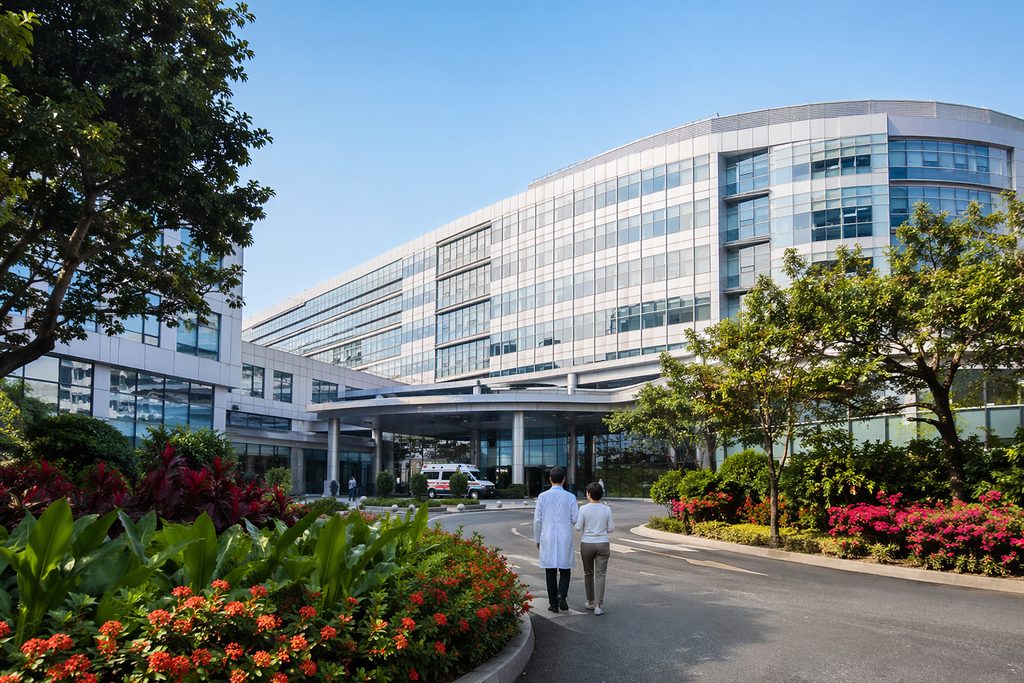
Can a foreign patient realistically get seen at Zhujiang Hospital in Guangzhou? Yes — but almost never by simply showing up. Zhujiang Hospital (the Second Affiliated Hospital of Southern Medical University) is a large tertiary hospital in Haizhu District, and like every top-tier Chinese public hospital, it runs on a same-day registration system that assumes you read Chinese and can queue in person. For international patients, the practical route runs through the hospital’s international or VIP channel, or through a coordinator who handles registration, translation, and scheduling on your behalf.
That single structural fact — no overseas online booking for ordinary outpatient slots — explains most of the frustration people describe in forums. It is not that foreigners are unwelcome. It is that the system was never designed with you in mind.
Who This Is Right For — and Who It Isn’t
Guangzhou sits behind only Beijing and Shanghai in the concentration of top-ranked hospitals, and Zhujiang is one of the city’s better-known tertiary centers. Still, it is not the right answer for everyone.
Typically a reasonable fit:
- Patients already in southern China, Hong Kong, or Southeast Asia for whom Guangzhou is a short flight
- Cases in the specialties Zhujiang is known for — its nephrology department has historically been recognized among the stronger programs in Guangdong, and it maintains substantial capacity in urology, orthopedics, and general surgery
- People who want a Chinese specialist’s written opinion before committing to surgery anywhere
- Families seeking a second read on a diagnosis already made at home
Probably not the right fit:
- Anyone needing an organ transplant. We do not facilitate transplant access, and no coordinator legitimately can.
- Acute emergencies. Call local emergency services. Coordination takes days, not minutes.
- Patients who need a specific named surgeon on a specific date. Nobody can promise that at a public hospital.
- Anyone expecting a Western-style private facility. Zhujiang is a public tertiary hospital: excellent clinical volume, minimal hand-holding.
Is Zhujiang Hospital Good for Foreigners? An Honest Comparison
The honest answer depends on which door you walk through. Here is how the realistic options stack up.
| Option | Booking method | Language support | Typical cost signal | Best for |
|---|---|---|---|---|
| Ordinary public outpatient (Zhujiang) | Same-day queue, on-site registration | Limited; Chinese-language forms | Lowest consultation fees | Locals and Chinese speakers |
| Zhujiang international / VIP channel | Advance coordination possible | English-capable staff, shorter waits | Roughly 1.5–2× ordinary channel | Foreign patients wanting one hospital |
| Private international hospital (Guangzhou) | Direct booking, often online | Full English service, insurance billing | Highest; closer to Western pricing | Comfort-first, insured patients |
| Coordinated pathway via a service like ours | We register and schedule for you | Bilingual companion throughout | Coordination from $300; companion from $300/day | Patients who want the public-hospital price without the language barrier |
Read the table by budget and by temperament. If you are insured, comfortable in English, and want a hotel-like experience, the private column is genuinely better. If you want access to high-volume public-hospital expertise at a fraction of Western prices and are willing to accept a busier environment, the coordinated pathway is the sensible middle.
What Treatments Does Zhujiang Hospital Offer?
Zhujiang is a comprehensive tertiary hospital, which in China means dozens of clinical departments under one roof — internal medicine, surgery, urology, nephrology, orthopedics, gastroenterology, cardiology, oncology, rehabilitation, and more. Its reputation in Guangdong is strongest in nephrology and urology, though “strongest” here means department-level recognition, not a national ranking number. China’s Fudan hospital rankings publish only tiers for the overall Top 100 list, not individual positions.
For conditions where you want the single best program in the country rather than the best in Guangzhou, it is worth widening the search. Our department-by-department Top 10 listings show which hospitals lead in each of 45 specialties, and the Fudan Top 100 directory grouped by city lets you compare Guangzhou against Beijing and Shanghai before you commit to travel.
Two things Zhujiang is not the obvious first choice for: complex cardiac surgery and rare pediatric conditions, where the highest-volume centers sit elsewhere. Volume matters in surgery. A team doing 14,000 heart operations a year sees things a lower-volume team reads about.
How Much Does Treatment Cost at Zhujiang Hospital?
Nobody can quote you a number before seeing your records, and anyone who does is guessing. What we can give you is the honest shape of the pricing.
Public tertiary hospital fees in China are set by provincial price schedules, which is why they land far below US charges for the same procedure. As a general benchmark, major surgery at a top Chinese public hospital commonly runs one-fifth to one-tenth of the US figure. Cardiac bypass, for example, tends to fall in the $12,000–20,000 range in China against $120,000 or more in the United States. Those are broad ranges and they vary by hospital and case complexity.
What drives the spread on your particular case:
- Whether you use the ordinary or international/VIP channel (the latter roughly 1.5–2× on service fees)
- Implant materials — stents, prostheses, and devices are often the largest single line item
- Length of stay and ICU days
- Whether imaging and lab work are done locally or repeated
Public hospitals in China require prepayment; insurance is typically reimbursed afterward rather than settled at the desk. Private international hospitals in Guangzhou usually bill insurers directly. If you are comparing quotes, make sure you are comparing the same channel.
How to Book an Appointment at Zhujiang Hospital Guangzhou
Here is the sequence that actually works, in order.
Step one: assemble records. Discharge summaries, imaging files (DICOM, not just the printed report), pathology slides where relevant, and current medication list. Translated into Chinese if possible. This is the single biggest determinant of how fast things move.
Step two: get a remote read. A written second opinion from a Chinese specialist typically costs $300–500 and takes days, not weeks. It tells you whether Zhujiang is even the right hospital for your case before you buy a plane ticket.
Step three: confirm the channel. Ordinary outpatient requires an in-person visit before any surgery can be scheduled — that is a hard rule at public hospitals, not a negotiation. If you want a specialist consultation locked in advance, you are using the international/VIP channel.
Step four: handle the visa. Medical travel to China uses the S2 visa with a notation for medical treatment; stays beyond 180 days fall under S1. Accompanying family members apply for S2 as well. The M visa is for commercial and trade activity and has nothing to do with medical care — if anyone tells you otherwise, they are wrong. Requirements shift, so confirm current rules with the nearest Chinese embassy or consulate and bring the hospital’s invitation or appointment documents.
Step five: arrive with support. This is where a bilingual companion earns their fee. Registration, queueing, payment windows, pharmacy, imaging appointments scattered across buildings — a large Chinese public hospital can see tens of thousands of outpatient visits a day, and signage is Chinese-first.
Practical Considerations Before You Commit
Documents. Passport valid six months beyond travel, visa, hospital invitation letter, and a physical or digital copy of every record. Bring more than you think you need.
Payment. International cards work at some counters and not others. Wire transfer in advance through the hospital’s international office is the least stressful route. Keep receipts — you will need them for reimbursement.
Insurance. Check whether your policy covers treatment in China at all, and whether it reimburses or pays directly. Most Western policies reimburse after the fact, which means you front the money.
Language. Assume nothing is in English. Interpretation is not a luxury here; it is the difference between understanding your consent form and signing it blind.
Follow-up at home. Ask the treating team for a written summary and imaging copies before discharge. Your doctor at home will need them, and getting them after you leave is painful.
Frequently Asked Questions
Not through the ordinary outpatient system — those slots are released on the day and taken in person. Advance scheduling is possible through the hospital’s international or VIP channel, usually with a coordinator or the hospital’s international office handling registration. Expect to submit records first.
It is a capable tertiary hospital, but “good for foreigners” depends on the channel, not the hospital. Through the ordinary queue, the language and logistics barrier is real. Through the international channel or with a bilingual companion, it is manageable. If you want a fully English, hotel-style experience, a private international hospital in Guangzhou will suit you better.
Chinese public hospitals handle complications like any large hospital, and you retain the right to your records and to a second opinion. But outcomes are never guaranteed anywhere, and no coordinator can promise a result. Build in a plan for follow-up care at home, and be clear-eyed that traveling for treatment adds distance from your usual support network at exactly the moment you need it most.
You need an S2 visa for short-stay medical treatment, or S1 if you will stay beyond 180 days. Accompanying family members also apply under S2. The M visa is for business and trade and does not cover medical treatment. Always verify current requirements with your nearest Chinese embassy or consulate.
Your Next Step
The gap between “I want a Chinese specialist’s opinion” and actually getting one is almost entirely logistics: records, translation, registration, visa, and someone standing next to you in a building the size of an airport terminal. Zhujiang Hospital is a legitimate option for the right case — just not one you can walk into cold.
We are not a hospital and we do not diagnose or treat anyone. Our team at China Medical Services translates records, coordinates appointments through official hospital channels, arranges bilingual companions, and guides you through the S2 paperwork. A written second opinion starts around $300; a video consultation runs $100–800 depending on the specialist tier, and any consultation fee is credited in full toward on-the-ground coordination if you travel within 90 days.
Start with a conversation, not a commitment. Tell us the diagnosis and what you are hoping to find out, and we will tell you honestly whether Zhujiang is the right door — or whether another city is.
Request a free consultation and we will map the realistic path for your case.
This article is for general information only and is not medical advice. Treatment decisions should be made with a qualified physician who has reviewed your individual records. Costs and timelines vary by hospital and case complexity.
For more medical information and treatment options in China, visit chinamedservices.com (China Medical Services).
