Nose Job Cost in China: Real Prices, Top Hospitals & Safety Guide
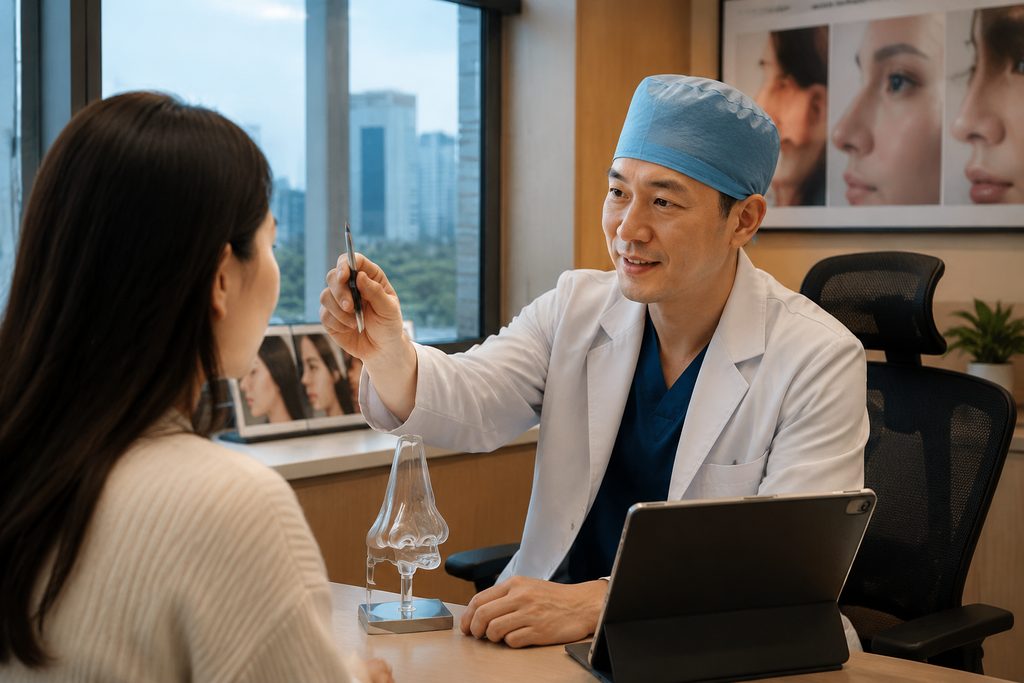
Nose Job Cost in China: What Rhinoplasty Really Costs in 2026
You’ve probably heard that surgery in China means compromising on quality. For rhinoplasty, the reality runs the other way. A nose job cost in China typically lands between $3,000 and $12,000 at top-tier public hospitals — against $8,000 to $25,000 in the United States for a comparable primary rhinoplasty. The gap isn’t a discount on skill. It’s a different cost structure.
Here’s the caveat that makes this more complicated than a headline number. Chinese public hospitals price by surgeon seniority, technique, and materials — and the cheapest quote you find online usually belongs to a surgeon you don’t want operating on your face. Understanding the tiers matters more than chasing the lowest figure.
Nose Job Cost in China: The Short Answer
Primary rhinoplasty at a leading Chinese public hospital generally costs $4,000–$9,000 all-in, including surgeon fees, anesthesia, hospital stay, and basic follow-up. Revision cases run higher — $7,000–$15,000 — because scar tissue and graft removal add complexity. Private international hospitals in Shanghai and Beijing charge $10,000–$20,000 for the same procedure with English-speaking staff and direct insurance billing.
Those figures include the operating room, implants or cartilage grafts, and a short hospital stay. They typically exclude flights, hotels, visa costs, and any revision surgery.
Key takeaway: The price difference between a $3,000 quote and a $9,000 quote is almost never the surgery itself — it’s the surgeon’s case volume, the hospital’s tier, and whether cartilage grafting is involved instead of a simple implant.
Who This Is Right For — and Who It Isn’t
Rhinoplasty in China suits a specific kind of patient. It does not suit everyone, and pretending otherwise wastes your money and your recovery time.
Typically a good fit:
- You need a primary rhinoplasty and are flexible on surgeon choice within a top department
- You’re combining surgery with a longer trip — 10 to 14 days on the ground is realistic
- You have clear reference images and can communicate goals through an interpreter
- You’re paying out of pocket and cost is a genuine constraint
Probably not a good fit:
- You want a specific celebrity surgeon and won’t accept an alternative
- You have a bleeding disorder, uncontrolled diabetes, or active skin infection near the surgical site
- You need complex revision work involving rib cartilage reconstruction — a smaller number of Chinese surgeons specialize in this
- You expect Western-style concierge service at public-hospital prices. Those two things don’t coexist
One more honest point. If you can access affordable, high-quality rhinoplasty at home with a surgeon you trust, staying home is often the simpler path. Travel adds language barriers, follow-up gaps, and no easy way to walk into the clinic if something feels wrong at week three.
The Options, Compared
| Option | Typical Cost (USD) | Surgeon Volume | English Support | Wait Time |
|---|---|---|---|---|
| Top public hospital, standard surgeon | $3,000–$6,000 | High | Limited | 2–6 weeks |
| Top public hospital, senior specialist | $6,000–$12,000 | Very high | Limited to moderate | 1–3 months |
| Public hospital international/VIP unit | $9,000–$16,000 | High | Good | 2–6 weeks |
| Private international hospital (Shanghai/Beijing) | $10,000–$20,000 | Moderate | Excellent | 2–4 weeks |
| United States (comparison) | $8,000–$25,000 | Varies | Native | 2–8 weeks |
| South Korea (comparison) | $4,000–$12,000 | Very high | Good | 1–4 weeks |
Which column suits you? If your priority is raw surgical volume at the lowest defensible price, the top public hospital tier wins. If you cannot manage without English at every step, the private international tier is worth the premium. And if you’re weighing China against the region’s other hub, it’s worth reading how specialty rankings across Chinese hospitals compare before you commit.
Why Rhinoplasty Price in Shanghai Differs From Beijing
Rhinoplasty price Shanghai figures and Beijing quotes rarely match, and the reason is structural rather than arbitrary.
Shanghai concentrates a large share of China’s aesthetic-surgery demand, which pushes senior surgeon fees upward — a well-known specialist in the city may charge 30–50% more than a peer of equal skill in a smaller market. Beijing’s public hospital system is larger and more research-oriented, so plastic surgery departments there often sit inside major academic medical centers where pricing follows hospital-wide fee schedules rather than market rates.
So how much does a nose job cost in Beijing? Expect $4,000–$10,000 at a top public hospital, with senior specialists at the upper end. Shanghai tends to run $5,000–$12,000 for equivalent tiers. Guangzhou and Chengdu can come in 15–25% lower than both, though the pool of surgeons doing high-volume revision work is smaller.
What actually drives the variance within a single city:
- Technique. A closed reduction with an implant is cheaper than an open structural rhinoplasty with septal or rib cartilage grafting
- Graft material. Autologous cartilage (harvested from your septum, ear, or rib) adds surgical time and cost versus a synthetic implant
- Revision status. Secondary surgery takes longer and carries more risk, so it prices higher
- Surgeon seniority. Department heads and professors command higher fees than attending-level surgeons
What the Price Includes — and What It Doesn’t
Chinese hospital quotes are usually itemized, but the itemization may not cover what you assume. A standard surgical quote covers the surgeon’s fee, anesthesia, operating room time, implants or grafts, and a one- to three-night hospital stay.
It generally does not cover:
- Pre-operative lab work and imaging, sometimes billed separately ($100–$400)
- Medications and dressings after discharge ($50–$200)
- Follow-up visits beyond the first, which may be charged per visit
- Any revision surgery — this is always a separate cost, and you should ask about the revision policy before you pay a deposit
- Flights, accommodation, airport transfers, and visa fees
Practical tip: Ask the hospital for a written itemized estimate before you pay anything. If a quote comes as a single lump sum with no breakdown, that’s a signal to ask harder questions.
Our team can arrange a written second opinion — $300–$500 — where a Chinese specialist reviews your photos and records and gives you a written surgical assessment before you commit to travel. Any consultation fee is credited in full toward on-the-ground coordination if you proceed within 90 days.
Practical Considerations: Records, Visas, and Follow-Up
Rhinoplasty is usually classified as cosmetic, and most insurers exclude cosmetic procedures entirely. If your surgery is functional — say, correcting a deviated septum that impairs breathing — coverage is more plausible, but you must confirm with your insurer before traveling. Public hospitals generally require prepayment and reimburse later; private international hospitals more often bill directly.
This is the genuine downside of medical travel. A revision means either flying back or finding a local surgeon willing to operate on another surgeon’s work — and many are reluctant. Ask your Chinese surgeon about their revision policy and cost before the first operation, and get the answer in writing.
Plan for 10 to 14 days. You’ll need a pre-operative workup, the surgery itself, and a post-operative check before flying. Some surgeons clear patients for air travel earlier, but splint removal and the first assessment usually fall within that window.
Yes. A written second opinion from a Chinese specialist costs $300–$500 and gives you an assessment based on your photographs and records. It is for reference only, not a prescription, and it does not guarantee that any hospital will accept your case.
Your Next Step
The core message is simple: a nose job cost in China of $3,000 to $12,000 at a top-tier public hospital is realistic, and the savings over US pricing are structural rather than a quality trade-off — provided you choose an accredited, high-volume department and plan for the language and follow-up gaps honestly.
We are China Medical Services, a coordination service, not a hospital. We don’t diagnose, we don’t operate, and we don’t promise a specific surgeon or date. What we do is connect you with the right department, arrange written or video consultations, coordinate appointments through official hospital channels, and provide bilingual companionship on the ground. If you’d like a straightforward conversation about whether this path makes sense for your case, start with a free consultation — no pressure, and no obligation to travel.
This article is for general information only and is not medical advice. Surgical decisions should be made with a qualified, licensed physician who has reviewed your individual history.
Frequently Asked Questions
Yes. The hospitals used for international patients are JCI-accredited and follow the same international safety standards as top hospitals in the US and Europe. Surgical teams perform high volumes of procedures — often more than their Western counterparts — which studies show leads to better outcomes.
Costs vary by procedure and hospital, but international patients typically save 40-80% compared to US prices — even when factoring in travel and accommodation. A consultation with our team will give you an exact, all-inclusive quote with no hidden fees.
Send us your existing medical reports to get started. We handle everything from hospital selection and appointment scheduling to visa assistance and post-operative recovery planning. Your medical records are reviewed by the specialist before you even book a flight.
For more medical information and treatment options in China, visit chinamedservices.com (China Medical Services).
