Breast MRI in China for Screening: A Complete Guide for International Patients
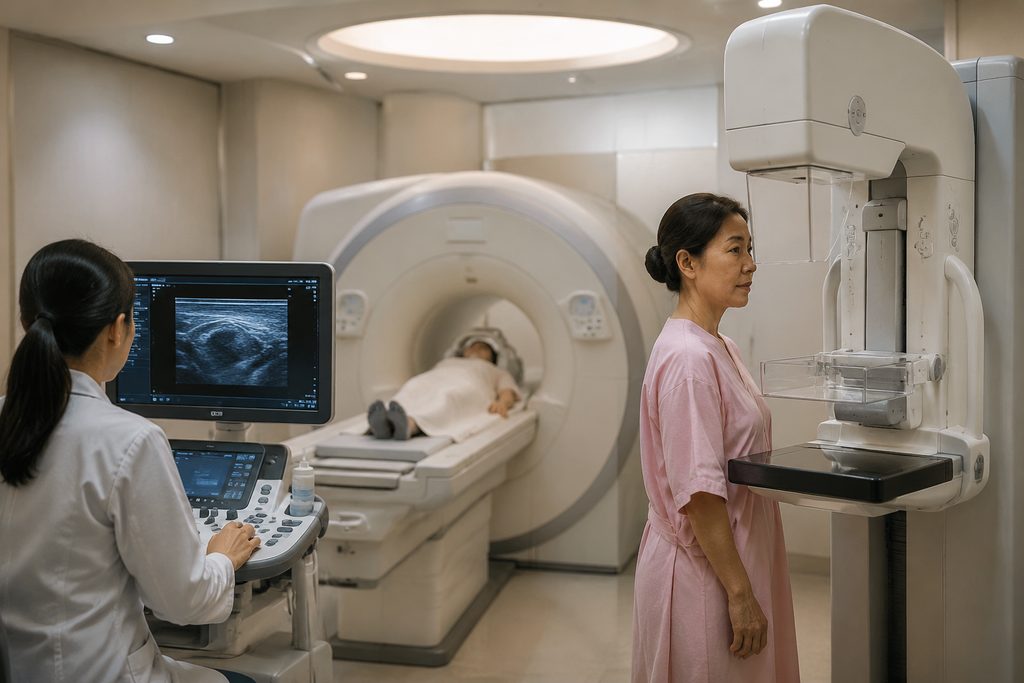
A screening mammogram in the United States averages around $250 to $400 before insurance, and a diagnostic breast MRI can push past $3,000 at a private imaging center. In China, that same breast MRI screening cost China patients pay at a top-tier public hospital typically lands between $400 and $1,200 — equipment, contrast, and radiologist read included. The gap is real. But the gap is not the whole story, and anyone treating it as the whole story is going to be disappointed.
What follows is a practical, honest guide to getting a breast MRI in China as a foreign patient. We cover who this makes sense for, who it does not, what the actual numbers look like, and the logistics nobody warns you about until you are standing in a hospital lobby in Shanghai with a paper slip in Mandarin.
Breast MRI Screening in China: The Short Answer
Yes, you can get a breast MRI in China as an international patient. A 3.0 Tesla scanner with breast-specific coils and a full radiologist report costs roughly $400 to $1,200 at a public tertiary hospital, and $800 to $2,500 at a private international hospital. Appointments can often be arranged within one to two weeks of confirmed booking, depending on the hospital and city.
The caveat: China’s public hospital system was not built for foreign walk-ins. Most public hospitals do not accept advance online booking from overseas for standard outpatient imaging. You either go through the hospital’s international department, work with a coordination service, or accept that you may spend a day navigating registration in person. That single logistical fact shapes everything else in this article.
Key takeaway: The scan itself is fast — usually 30 to 45 minutes. The hard part is getting registered, getting the right protocol ordered, and getting a report you can actually use afterward. Plan for the logistics, not the scan.
Who This Is Right For — and Who It Isn’t
Breast MRI is a powerful tool, but it is not a general screening test for everyone. The American Cancer Society and most major guidelines reserve it for specific higher-risk groups. If you are an average-risk woman over 40, a mammogram remains the standard first step — not MRI.
You may be a reasonable candidate if you:
- Carry a known BRCA1 or BRCA2 mutation, or have a strong family history of breast and ovarian cancer
- Have a lifetime risk assessed at roughly 20% or higher by a validated model
- Received chest radiation therapy between ages 10 and 30 (for example, for Hodgkin lymphoma)
- Have dense breast tissue that makes mammography hard to read, as advised by your physician
- Need pre-operative staging or surveillance after breast cancer treatment
- Are facing a long wait at home and want a timely, well-equipped scan
You should probably not pursue this if you:
- Are pregnant, or may be pregnant — gadolinium contrast is generally avoided in pregnancy
- Have severe kidney impairment; contrast agents carry a small risk of nephrogenic systemic fibrosis
- Have a pacemaker, certain implants, or metal fragments that are not MRI-safe
- Are claustrophobic to a degree that makes 30+ minutes in a closed bore impossible without sedation
- Are seeking MRI as a first-line test without any clinical indication — no reputable radiologist will encourage that
Being honest about the last point matters. A breast MRI finds things. Sometimes it finds things that turn out to be nothing, and then you are booked for a biopsy you did not need. That is called a false positive, and it happens more often in low-risk women. Screening is a decision to make with a physician, not a decision to make because a scan is affordable.
The Options, Compared
Cost is only one column. Here is how the realistic alternatives stack up for an international patient considering breast imaging.
| Option | Typical Cost (USD) | Wait Time | Language Support | Best For |
|---|---|---|---|---|
| Breast MRI — China public tertiary hospital | $400–$1,200 | 1–3 weeks | Limited; interpreter often needed | Cost-conscious patients with flexible logistics |
| Breast MRI — China private international hospital | $800–$2,500 | 3–10 days | English-speaking staff | Patients prioritizing comfort and speed |
| Breast MRI — United States (private imaging center) | $1,500–$4,000+ | Days to weeks | English | Patients with full insurance coverage |
| Breast MRI — United Kingdom (private) | £600–£1,200 (~$750–$1,500) | 1–3 weeks | English | Patients already in the UK system |
| Screening mammogram — China public hospital | $50–$150 | Same day to 1 week | Limited | Average-risk routine screening |
| Screening mammogram — United States | $100–$400 | Days to weeks | English | Average-risk routine screening |
Read the table by priority, not by price. If your main concern is a specific number on a bill, the public-hospital MRI in China wins clearly. If your main concern is walking into a calm, English-speaking facility where someone explains every step, the private international hospital column is worth the premium. And if you are average-risk with no symptoms, the mammogram rows are the honest answer — MRI is not the upgrade you think it is.
Finding the Best Hospitals in China for Breast MRI
Equipment matters more than brand name here. A breast MRI is only as good as three things: a 3.0T or higher magnet, a dedicated breast coil, and a radiologist who reads breast studies every week. A famous hospital with an older 1.5T scanner and a general radiologist is a worse choice than a mid-tier hospital with modern breast-dedicated imaging.
China has genuine depth in this area. The Fudan-ranked top 100 hospitals are concentrated in 23 cities, with Beijing hosting 21 and Shanghai 18. Several of these institutions run dedicated breast centers that see hundreds of cases monthly — volume that builds real interpretive skill. For a specialty-level view of which departments rank highest, our department rankings by specialty break down the top programs across 45 fields.
City choice usually comes down to three practical factors: flight connections, visa timing, and whether you want a public or private setting. Beijing and Shanghai offer the deepest bench of both. Guangzhou, Chengdu, and Hangzhou are strong alternatives with shorter queues at some facilities.
One thing worth saying plainly: you do not need the single most famous hospital in the country for a screening MRI. You need a good scanner, a competent reader, and a report you can hand to your doctor back home. Chasing prestige adds cost and waiting without adding much for a routine screening study.
What It Costs and What Drives the Variance
The breast MRI screening cost China figure depends on four variables, and understanding them lets you predict your own bill.
- Hospital tier. Public tertiary vs. private international is the single biggest swing — often a 2x difference.
- Contrast or no contrast. A full diagnostic breast MRI with gadolinium costs more than a non-contrast study. Screening protocols almost always use contrast.
- Scanner strength. 3.0T machines cost more to run than 1.5T and are generally preferred for breast work.
- Report language. An English-language radiology report may carry a surcharge or require an outside translation, typically $50–$150.
What is usually included: the scan itself, IV contrast, the radiologist’s written report, and a CD or digital copy of the images. What is usually not included: the initial consultation, any follow-up biopsy if something is found, translation, and travel. Budget separately for those.
Tip: Ask for the images in DICOM format on a USB drive, not just a PDF report. Your doctor at home can open DICOM files directly; a PDF alone often forces a repeat scan.
Practical Considerations: Records, Visa, Payment, and Follow-Up
Records first. Bring your prior mammograms, ultrasound reports, biopsy results if any, and your genetic testing report if you have one. Chinese radiologists compare against prior studies, and without them the interpretation is weaker. Have everything translated into English or Chinese in advance — do not rely on doing it on arrival.
Visa category. For a short medical trip, the applicable category is the S2 visa, which covers short-stay visits for medical treatment and private affairs, subject to the latest embassy or consulate requirements and supporting hospital documents. Accompanying family members apply under the same category. If a stay beyond 180 days is expected, S1 applies instead. Note that the M visa is for commercial and trade activities and is not the medical route — a detail that trips up a surprising number of travelers.
Payment. Public hospitals generally require prepayment, with insurance reimbursement handled afterward by you. Most Western insurers will not direct-bill a Chinese public hospital. Private international hospitals more often offer direct billing with selected international insurers, but you must confirm this with your insurer before you travel, not after.
Language. This is the part people underestimate. A large Chinese tertiary hospital may see over 10,000 outpatients on a single day. Signage, registration slips, and queue systems are in Chinese. Without support, a simple scan can consume an entire day. A bilingual companion — someone who handles registration, payment, wayfinding, and translation — turns that day into a couple of hours.
Follow-up. Get your images and report before you leave the hospital. Once you fly home, retrieving them remotely is slow and sometimes impossible. Plan the handoff to your home physician while you are still in China.
If you would like to understand how the broader system works before committing, our guide to medical treatment in China for international patients walks through hospital tiers, appointment realities, and cost expectations.
Frequently Asked Questions
Yes. The scanners at major Chinese hospitals are the same Siemens, GE, and Philips machines used in Europe and North America, and the contrast agent is standard gadolinium. The realistic risks are the same as anywhere: a small chance of a false positive leading to unnecessary biopsy, and rare reactions to contrast. Safety is not the differentiator — logistics and communication are.
At a top public hospital in Shanghai, expect roughly $500 to $1,200 for a contrast-enhanced breast MRI with a written report. Private international hospitals in the city run higher, typically $900 to $2,500. Prices vary by hospital and case complexity, and a formal quote requires your specific clinical details.
Direct advance booking from overseas is generally not available at public hospitals — registration happens on the day, and imaging is scheduled after an in-person consult. Private international hospitals in Beijing are more flexible and often accept advance appointments. Working through a coordination service is the middle path that most international patients choose.
Some coordination services bundle imaging with interpretation, translation, and companion support. What matters is checking exactly what is included: scan, contrast, radiologist report, English translation, and follow-up. A low headline price that excludes the report or translation is not a bargain.
You would be referred for a biopsy, which most large Chinese hospitals can perform within days. This is where having a plan matters. A biopsy result changes your treatment path, and you may want to return home for that decision rather than making it in a foreign system under time pressure. Decide your threshold for that scenario before you travel, not after.
Your Next Step
A breast MRI in China is affordable, technically excellent, and genuinely accessible — provided you plan the logistics as carefully as you plan the scan. The imaging itself is the easy part. Registration, language, payment, and getting a usable report into your home doctor’s hands are where trips succeed or stall.
We are China Medical Services, a coordination service — not a hospital, and we do not diagnose or treat anyone. What we do is help you understand your options, connect you with appropriate facilities, and handle the on-the-ground details so the day runs smoothly. If you would like to talk through whether this makes sense for your situation, start with a free consultation. No pressure, no obligation — just a clearer picture of what is possible.
This article is for general information only and is not medical advice. Breast MRI screening decisions should be made with a qualified physician who knows your personal and family history.
For more medical information and treatment options in China, visit chinamedservices.com (China Medical Services).
