Cancer Screening in China: A Guide for Smokers and Ex-Smokers
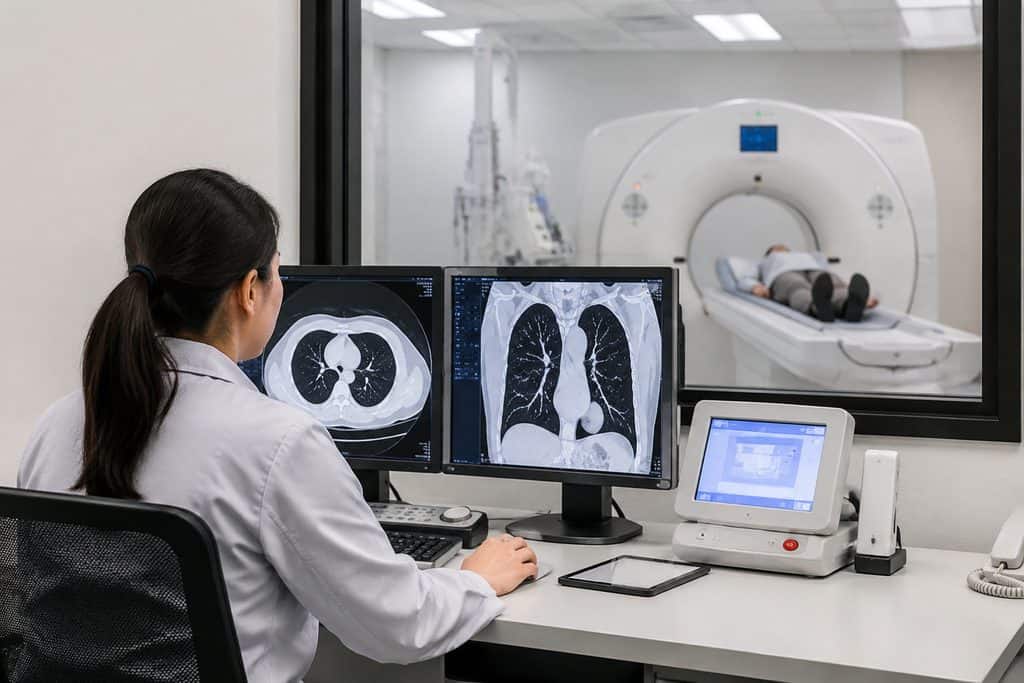
Key Takeaways
- Low-dose CT lung screening at a top-tier Chinese hospital typically runs $150–$400 out of pocket — a fraction of the $1,000+ common in the US without insurance.
- China’s highest-volume cancer centers read thousands of screening scans every week, which means radiologists see far more early-stage nodules than most Western counterparts.
- Public hospitals generally do not let you book a standard outpatient slot from overseas in advance. International departments and VIP channels are the realistic path for a scheduled package.
- No screening test is risk-free or definitive. A scan that finds something does not automatically mean cancer — and a normal scan does not guarantee you are clear.
The Problem: Screening Costs and Wait Times Keep Smokers Away
Lung cancer kills more people worldwide than any other cancer. The World Health Organization attributes roughly 1.8 million deaths a year to it, and tobacco use remains the single largest driver. For a long-time smoker or someone who quit five years ago, the question is not whether screening matters. It is whether they can actually get it without a fight.
In the United States, a low-dose computed tomography (LDCT) scan without insurance can run $1,000 or more. In the UK, NHS lung screening programs are still rolling out regionally, so access depends heavily on where you live. And in many systems, the eligible age window is narrow — usually 50 to 80, with a specific pack-year history.
That leaves a large group of people in the gap. Too young for a program. Not sick enough for a diagnostic scan. Willing to pay, but unsure where to go.
This is where the cancer screening cost China question becomes practical rather than academic.
Why China Delivers Results for High-Risk Screening
China carries a heavy lung cancer burden of its own, which has pushed hospitals to build serious screening infrastructure. That scale works in a patient’s favor.
Volume Means Radiologists See More Nodules
A senior thoracic radiologist at a major Chinese cancer center may review 60 to 100 chest CTs in a single day. Over a year, that is tens of thousands of scans. Reading volume correlates with detection accuracy for small pulmonary nodules — the 4mm to 8mm findings that are easy to miss and easy to over-call. The Fudan University hospital rankings place several Chinese centers among the country’s top 10 for oncology, and their imaging departments handle case volumes that most Western hospitals simply do not see.
Technology Without the Queue
Most top-tier Chinese hospitals run 256-slice or 320-slice CT scanners, plus low-dose protocols specifically designed for screening. A scan takes under ten minutes. The bottleneck in the US or Canada is rarely the machine — it is the scheduling pipeline. In China, a private international department can often complete a full screening package, including bloodwork and a specialist read, within one to three days of arrival.
Cost Structure, Not Cost Cutting
Lower prices in China do not come from cheaper equipment or less qualified staff. They come from labor economics, high patient throughput, and shorter administrative overhead. A CT scan that bills at $1,200 in a US hospital may bill at $200 in a Chinese tertiary hospital — same machine generation, comparable resolution. The savings are structural, not a sign of corner-cutting.
What a Screening Package Actually Includes
For a smoker or ex-smoker, a sensible package is not a generic “full body check.” It should be targeted. Here is what a well-constructed lung-focused screening typically contains at a Chinese international department:
- Low-dose chest CT (the core test — this is the one that matters most)
- Blood tumor markers, including CEA, CYFRA 21-1, and NSE
- Pulmonary function testing
- A consultation with a respiratory or thoracic oncology specialist to review the images
- Optional add-ons: abdominal ultrasound, carotid ultrasound, gastroscopy (China has high rates of gastric and esophageal cancer, so some patients add these)
Prices vary by hospital and case complexity. As a rough guide, a basic lung-focused package runs from $300 to $800 at a top public hospital’s international department, and from $800 to $1,500 at a private international hospital. If you want a broader package with endoscopy, expect the upper end.
| Screening Component | Typical China Price (USD) | Typical US Price (USD) |
|---|---|---|
| Low-dose chest CT | $150–$400 | $300–$1,200 |
| Blood tumor markers panel | $80–$200 | $200–$600 |
| Pulmonary function test | $40–$100 | $150–$400 |
| Specialist consultation | $50–$150 | $250–$500 |
| Full lung screening package | $300–$800 | $900–$2,700 |
These are reference ranges only. Final pricing depends on the hospital, the specific protocol, and whether you use a standard or VIP channel.
How Much Does Lung Cancer Screening Cost in Shanghai vs. Beijing?
Costs are broadly similar across China’s tier-one cities, though Beijing and Shanghai tend to sit at the higher end because demand is highest. A low-dose CT at a Shanghai tertiary hospital’s international clinic generally falls between $180 and $350. The same scan in Beijing runs $200 to $400. Cities like Chengdu or Wuhan may be 15–25% cheaper.
The bigger variable is not the city. It is the channel. Standard outpatient pricing is lower but harder to schedule from abroad. International department or VIP pricing is roughly 1.5 to 2 times the standard rate, but it comes with English-speaking staff, appointment coordination, and a much smoother process.
For patients flying in specifically for screening, the VIP channel usually makes more sense — the time saved is worth more than the price difference.
Is Cancer Screening in China Safe for Ex-Smokers?
This is a fair question, and the honest answer has two parts.
First, the procedure itself. Low-dose CT delivers roughly 1.5 mSv of radiation — about the same as six months of natural background exposure. For a high-risk smoker, the benefit of early detection outweighs that risk. This is the consensus position of major guidelines, including those from the National Comprehensive Cancer Network (NCCN) and the American Cancer Society.
Second, the system. Chinese tertiary hospitals follow international imaging protocols, and the equipment is current-generation. The real risk is not the scan. It is what happens after — specifically, whether a small nodule gets over-treated or under-monitored. That is why the specialist read matters as much as the image itself.
If you have a history of lung disease, recent respiratory infection, or known nodules, bring your prior imaging on disc or as DICOM files. Comparison with earlier scans is often more valuable than the new scan alone.
Booking a Cancer Screening Package in China: What the Process Looks Like
Here is the part most guides skip. You cannot simply walk into a top Chinese public hospital and book a standard outpatient screening slot from overseas. Public hospital registration is typically same-day, in person, in Chinese. That is the reality.
What you can do is work through the hospital’s international department or a coordination service. The realistic sequence looks like this:
- Step 1 — Records review. You send your smoking history, age, any prior scans, and current symptoms.
- Step 2 — Hospital and package selection. Based on your profile, a specific hospital and screening protocol is proposed.
- Step 3 — Appointment coordination. The international department schedules your slot. This usually takes 3 to 10 business days.
- Step 4 — Travel. You apply for an S2 visa (the category used for short-stay medical treatment and private affairs), which requires supporting documents from the hospital. The M visa is for commercial and trade activities — it is not the right category for medical travel.
- Step 5 — On-site. Screening is typically completed in one to two days, with results and a specialist consultation before you leave.
If you want to explore hospital options by specialty, the oncology department rankings page lists China’s top 10 hospitals for cancer care, and the top hospitals directory groups them by city.
Practical Considerations Before You Book
Documentation matters more than most people expect. Bring prior imaging as DICOM files, not just printed reports. Bring a medication list in English. If you have a family history of cancer, write it down with ages at diagnosis.
Payment at public hospitals is upfront — you pay before the service, and insurance reimbursement happens afterward, if at all. Private international hospitals often bill insurance directly, which is simpler but pricier. Check with your insurer before you travel.
Language is the other practical barrier. Top Chinese hospitals see 10,000 or more outpatients a day. Signage is in Chinese. Even with a translated package, navigating registration, payment, and the imaging floor without help is genuinely difficult. Bilingual medical companions exist for exactly this reason — they handle queueing, payment, wayfinding, and translation, typically from $300 per day.
Follow-up is worth planning too. If a nodule is found that needs monitoring in six months, you will want your images stored somewhere you can access from home. Ask for a digital copy before you leave the hospital.
Frequently Asked Questions
No. Chinese hospitals do not require a GP referral for screening packages. You can book directly through an international department. That said, having your prior medical records ready speeds up the process considerably.
Rarely for screening specifically — most Western insurers cover screening only within their own networks. Some international health plans do reimburse overseas diagnostic costs, but you should confirm in writing before booking. Public hospitals require upfront payment; private international hospitals may bill directly if your insurer has a partnership.
This is the scenario worth planning for. If a nodule or lesion is identified, the specialist will typically recommend either a short-interval follow-up scan or a biopsy. Chinese tertiary hospitals can perform CT-guided biopsy and PET-CT on-site, often within days. Nothing is guaranteed, and any treatment decision should follow a full evaluation. But the diagnostic pathway is available without the multi-month waits common elsewhere.
Public hospital international departments offer top-tier expertise at moderate prices, with some English support. Private international hospitals offer a Western-style experience, full English service, and direct insurance billing — at roughly double the cost. For a straightforward screening, public is usually the better value. For complex cases or patients who want a hotel-like experience, private may suit better.
Your Next Step
Screening is one of the few cancer interventions where early detection genuinely changes outcomes — and cost should not be the reason you skip it. China offers a credible, well-equipped, and affordable option for smokers and ex-smokers who want a thorough lung-focused check without a six-month wait.
We are China Medical Services, a coordination service that connects international patients with top-ranked Chinese hospitals. We are not a hospital and we do not provide diagnoses or medical advice. What we do is help you understand your options, get your records reviewed, and navigate the logistics if you decide to travel. If you would like a clearer picture of what screening would cost and involve for your specific situation, you can start with a free consultation — no pressure, no obligation.
This article is for informational purposes only and does not constitute medical advice. Screening decisions should be made in consultation with a qualified physician who knows your full medical history.
For more medical information and treatment options in China, visit chinamedservices.com (China Medical Services).
