Spinal Cord Stimulator Implant in China: Full Journey Pain Relief Support
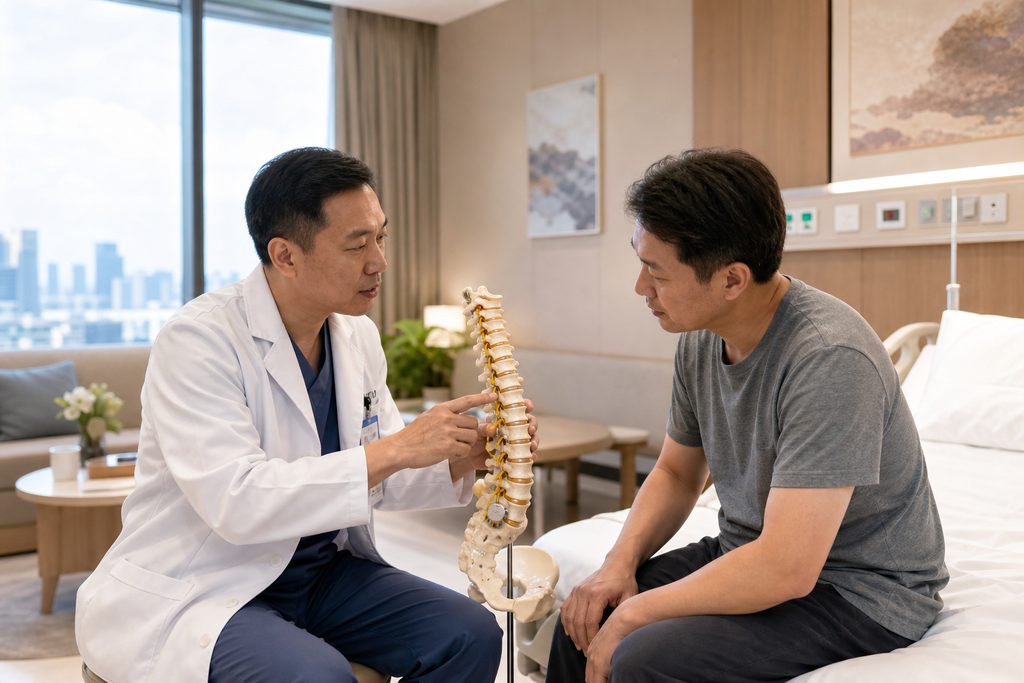
You have probably heard that seeking surgery abroad means gambling with quality. The reality for a spinal cord stimulator implant in China is exactly the opposite. Our team has spent years mapping the intersection where world-class neurosurgical expertise meets a cost structure that does not require mortgaging your future. Approximately 1 in 5 adults globally lives with chronic pain, and for many, that pain persists long after conventional treatments have failed. The financial burden is staggering. In the United States, the all-in cost for a spinal cord stimulator trial and implant can soar past $50,000 to $100,000, depending on the facility and device. In the United Kingdom or Canada, the clinical criteria are so restrictive that waiting lists stretch beyond 18 months. Patients are left in limbo.
That is where we enter the picture. We do not perform the implant. We are not clinicians. We are the logistical architects who ensure that when you decide to take control of your chronic pain, the path is clear, safe, and free of administrative chaos. This article explains how the spinal cord stimulator cost China compares globally, which hospitals lead in neuromodulation, and what a full-support medical journey actually looks like from the first email to the final follow-up.
Key Takeaways
- The spinal cord stimulator cost China typically ranges from $25,000 to $45,000 for the full implant procedure, representing a 50-70% reduction compared to US cash-pay rates without sacrificing device quality or surgical precision.
- China’s top-tier neurosurgery departments perform high volumes of neuromodulation cases annually; procedural repetition at this scale is directly linked to lower complication rates.
- Navigating a Chinese public hospital independently is extremely difficult without Mandarin fluency; a dedicated bilingual medical companion transforms a fragmented system into a seamless experience.
- You must understand the S2 visa requirements and the “face-to-face consultation first” rule before booking any flights—we handle both, but skipping these steps can derail the entire trip.
The Problem: When Chronic Pain Becomes a Financial Prison
Failed back surgery syndrome, complex regional pain syndrome, and refractory neuropathic pain do not just hurt. They erase careers and drain savings. A 2023 study published in The Journal of Pain Research noted that the economic burden of chronic pain in the US eclipses $635 billion annually when factoring in lost productivity and direct medical costs. Spinal cord stimulation is a proven intervention. The SENZA-RCT trial and multiple long-term follow-ups confirm that high-frequency stimulation provides sustained relief for a significant percentage of patients who have exhausted other options.
But access is the crisis. In many Western systems, you must first fail a rigid ladder of cheaper interventions. Then you face a gatekeeper panel that decides if your suffering is severe enough. Even with approval, the device and facility fees for a spinal cord stimulator implant remain catastrophically high for the underinsured. Many patients simply give up. That is a failure of the system, not a failure of the available technology.
Who We Are
We are a medical concierge team connecting international patients with China’s top 5% of hospitals—a curated network of over 340 institutions across 37 cities, ranked by the Fudan University hospital authority and international JCI standards. We are not a treatment provider. We do not give medical advice or sell hospital beds. We are the operational layer that handles visa guidance, hospital matching, appointment coordination, bilingual medical companion services, and post-operative logistics. We bridge the gap between your need for advanced pain management and China’s clinical capacity.
Why a Spinal Cord Stimulator Implant in China Delivers Results
Western patients often ask if the lower spinal cord stimulator cost China means a trade-off in safety or technology. The question is fair. The data says the fear is misplaced. China’s top neurosurgery centers use the same FDA-approved or CE-marked devices available in the US and Europe—Medtronic, Abbott, Boston Scientific. The difference is structural efficiency, not clinical shortcuts.
Clinical Volume Drives Precision
A senior neurosurgeon at a high-volume Chinese university hospital may implant 100 to 150 neuromodulation devices per year. Compare that to a busy US center where a surgeon might perform 30 to 50 annually. Volume is not everything. But in spinal cord stimulator implant surgery, lead placement accuracy is a physical skill. The more you do, the more precise your hand becomes. The complication rates for lead migration and infection in China’s top-tier hospitals are consistently in the low single digits, aligning with international benchmarks published by the Neuromodulation Society.
Technology Without the Markup
When you pay for a spinal cord stimulator implant in China, you are not paying for a hospital’s multi-million-dollar marketing budget or an administrative layer designed to fight insurance denials. You pay for the device, the surgeon’s time, and the operating theater. The device itself costs roughly the same globally. The facility fee and professional fee are where the spinal cord stimulator cost China diverges sharply. A private operating suite in Shanghai or Beijing costs a fraction of what a US hospital charges, not because it is inferior, but because the labor and operational overhead in China are structurally lower.
No Waiting for “Failure”
This is the most jarring difference. In many public health systems, you wait. You wait to prove the pain is bad enough. In China’s private and VIP international departments, once a neurosurgeon confirms you are a candidate through imaging and psychological screening, the trial implant can often be scheduled within two to three weeks. You do not lose another year of your life to administrative delay. That speed does not mean recklessness. It means the system is designed to treat, not to ration.
What You Need to Know Before Going Alone
We have seen patients try to arrange a spinal cord stimulator implant in China independently. Some succeed. Most hit walls they did not anticipate. The barriers are real, and they are not about medical quality. They are about navigation.
- Visa Requirements Are Specific: You cannot enter China on a tourist visa for surgery. The correct visa is an S2 visa with a medical treatment annotation. Your accompanying family member also needs an S2. The M visa is strictly for business and will be rejected at the hospital registration desk. Getting the invitation letter from the hospital to support your S2 application requires an established relationship with the international medical center—something we secure before you book a flight.
- The “Face-to-Face First” Rule: China’s public hospitals operate on a strict rule: no remote booking for surgery. You must have an in-person consultation before a surgery date is locked. You cannot email an MRI and get a surgery slot. Our team arranges that initial consultation with the right specialist so your trip is diagnostic and procedural, not exploratory and wasted.
- Payment Systems Are Not Western: Hospitals require upfront payment, typically via a deposit that covers the estimated procedure cost. International credit cards sometimes fail at hospital cashier desks. WeChat Pay and Alipay dominate. We guide you through setting up payment methods or arranging a wire transfer that the hospital’s finance office can actually reconcile, avoiding the nightmare of arriving with funds that cannot be accepted.
How We Help You Navigate This
These barriers exist for structural reasons, not because anyone wants to make it hard for you. Our job is to dissolve them. The process begins with a free consultation where we review your medical records, imaging, and pain history. We match your case to the neurosurgery and pain management departments best suited to your condition—often in Beijing or Shanghai, where the concentration of neuromodulation expertise is highest.
We translate and format your medical history for Chinese clinical review. We coordinate a video consultation with the specialist so you can discuss candidacy before traveling. Once the specialist confirms you are a candidate, we lock in the in-person consultation date and guide you through the S2 visa invitation letter process. When you land, a bilingual medical companion meets you. This person handles registration, payment queues, translation during the psychological evaluation, and the trial implant procedure. They are with you through the observation period. If the trial succeeds and you proceed to the permanent implant, we manage the inpatient admission and discharge paperwork. You focus on recovery. We handle the friction.
For those considering broader medical tourism packages China pain management options, we also coordinate post-operative rehabilitation, including TCM-based acupuncture for adjunctive pain relief, all within the same coordinated journey.
Frequently Asked Questions
When performed at a Fudan-ranked or JCI-accredited hospital, the safety profile is equivalent to top Western centers. Infection rates are tightly controlled, and the devices used are identical to those implanted in the US and Europe. The key is choosing the right hospital. We only work with departments that have dedicated neuromodulation programs and published outcome data.
The all-in cost for the trial, permanent implant, device, surgeon fees, and hospital stay typically falls between $25,000 and $45,000. This varies by device manufacturer and hospital tier. In the US, the same procedure often ranges from $50,000 to over $100,000 for cash-pay patients. The savings are structural, not a reflection of lower care quality.
You do not simply fly in and have surgery the next day. The process requires a pre-travel video consultation, an S2 medical visa, an in-person consultation and psychological screening, a trial implant (usually a 5-7 day observation period), and then the permanent implant if the trial is successful. The total time in China is typically two to three weeks. We coordinate every step so you are never standing alone at a hospital counter wondering where to go.
You can book the consultation, the visa support, the companion, and the hospital slot for the trial implant before you leave. What you cannot do is book the permanent implant surgery without the in-person consultation and successful trial. That is a clinical safety requirement, not a logistical limitation. We lock in everything that can be locked in, so your trip is efficient and your surgery date is prioritized once the trial succeeds.
Your Next Step
Chronic pain narrows your world. A spinal cord stimulator implant can widen it again. The technology exists. The surgical skill exists. What has been missing is a bridge that makes accessing that skill in China straightforward and safe. That bridge is what we have built. If you want to understand whether you are a candidate and what your specific journey would look like, the next step is a conversation, not a commitment. Our team is ready to review your case and give you a clear, honest picture of what is possible.
For more medical information and treatment options in China, visit chinamedservices.com (China Medical Services).
