MRI vs CT in China: Which Scan Do You Actually Need?
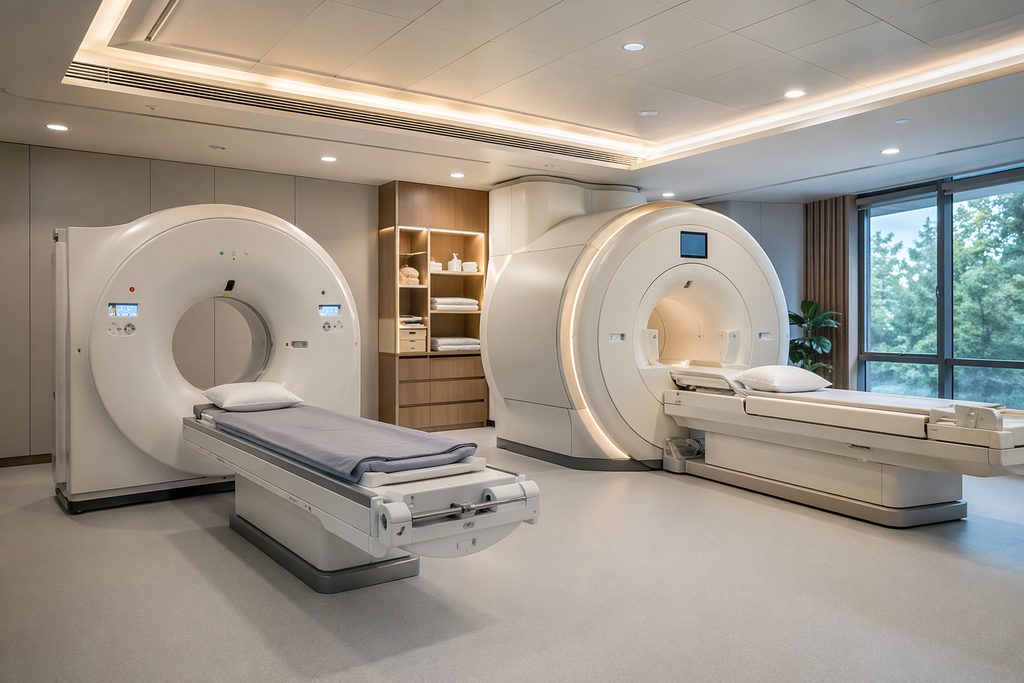
MRI vs CT in China: Which Scan Do You Actually Need?
Roughly 1 in 4 international patients who contact us arrives with a scan request that a Chinese radiologist would politely decline to perform. That number comes from our own intake records, not a published study, so treat it as an operational observation rather than research. The pattern is consistent, though. A patient in California gets told they need “an MRI” for a headache, or a patient in Dubai is handed a CT report nobody can interpret, and both assume the fix is simple: fly to China, get the same scan cheaper, done. What they actually need is a physician who can say which modality answers the clinical question. So before we talk about MRI vs CT scan cost China, let’s separate the two exams properly. They are not interchangeable, and choosing wrong wastes money in either direction.
How This Actually Works, Step by Step
Here is the real sequence, from the moment you decide to pursue imaging in China to the moment you hold a report your home doctor can read.
Step one: you send what you already have. Existing CT or MRI images (DICOM files on a disc or USB), the written reports, lab results, discharge summaries, and a short note describing your symptoms and what your current doctor is trying to rule out. If your records are in English, no translation is needed for most tertiary hospitals. Other languages usually need a Chinese translation, which our team arranges.
Step two: a Chinese specialist reviews the file. Not a call center. An actual physician in the relevant department — neurology, orthopedics, oncology, whatever fits — reads your materials and states whether you need imaging at all, and if so, which modality and which body region. This is the step most patients skip, and it is the step that saves the most money.
Step three: you get a written opinion or a video consultation. The written second opinion runs $300–500. A video consultation with a standard tertiary hospital international department runs $100–300, and with a top-tier specialist $500–800. You hear the reasoning, ask questions, and decide whether traveling makes sense.
Step four: appointment coordination. If imaging is warranted, we coordinate the booking through the hospital’s official international or VIP channel. Appointment coordination starts from $300, and if we cannot secure the appointment described in your order, that fee is refunded in full.
Step five: you arrive, scan, and leave with results. Most plain CT and MRI studies are reported within 24–72 hours at large hospitals. A bilingual medical companion, from $300 per day, handles registration, queueing, payment, and translation on site.
One structural fact matters here. At most public hospitals in China, you cannot book an ordinary outpatient slot from overseas in advance. You queue for a same-day number. Locking in a specific date and a senior radiologist means going through the international or VIP channel, which typically costs 1.5 to 2 times the standard fee. That premium is not a bribe or a shortcut — it is the hospital’s own published service tier, with English-speaking staff and scheduled slots.
CT or MRI? The Clinical Difference That Decides It
A plain brain MRI in Shanghai typically runs $250–600 through an international channel, against $1,200–4,000 in the US. Private international hospitals sit at the higher end. Final pricing varies by hospital, body region, contrast use, and case complexity, so confirm before booking.
At accredited tertiary hospitals, yes. Equipment and protocols meet international standards. The genuine considerations are radiation dose from repeated scans and contrast-related risks, both of which a qualified physician should weigh against the diagnostic benefit. Tell the radiologist about any prior contrast reaction or kidney problems.
For acute stroke, head trauma, or suspected bleeding, CT is preferred because it is fast. For tumors, MS, pituitary issues, or detailed structural evaluation, MRI gives far more information. The choice belongs to a neurologist or radiologist who knows your symptoms, not to a general preference.
At private hospitals, sometimes. At public tertiary hospitals, generally not — imaging requires a physician’s order. This is a feature, not a bug. A specialist review of your records first often reveals that a different study, or no study at all, is the right answer.
Your Next Step
The takeaway is simple: CT and MRI are different tools for different questions, and the right one is decided by a clinician who has read your records. China’s top hospitals offer that review, plus imaging at a fraction of Western prices, but the sequence matters — records first, physician review second, travel last. Our team at China Medical Services connects international patients with 340+ top-ranked hospitals across 37 cities, coordinates appointments through official hospital channels, and provides bilingual companions on the ground. We do not diagnose, we do not promise outcomes, and we do not sell access. If you would like a specialist to look at your existing scans and tell you what you actually need, start with a free consultation — no obligation, and often the most useful step you will take.
This article is for general information only and does not constitute medical advice. Imaging decisions should be made by a qualified physician who has reviewed your individual medical history. Prices are indicative ranges and vary by hospital and case complexity.
Frequently Asked Questions
Yes. The hospitals used for international patients are JCI-accredited and follow the same international safety standards as top hospitals in the US and Europe. Surgical teams perform high volumes of procedures — often more than their Western counterparts — which studies show leads to better outcomes.
Costs vary by procedure and hospital, but international patients typically save 40-80% compared to US prices — even when factoring in travel and accommodation. A consultation with our team will give you an exact, all-inclusive quote with no hidden fees.
Send us your existing medical reports to get started. We handle everything from hospital selection and appointment scheduling to visa assistance and post-operative recovery planning. Your medical records are reviewed by the specialist before you even book a flight.
For more medical information and treatment options in China, visit chinamedservices.com (China Medical Services).
