Coagulation Tests in China: How It Works, Costs, and Timelines
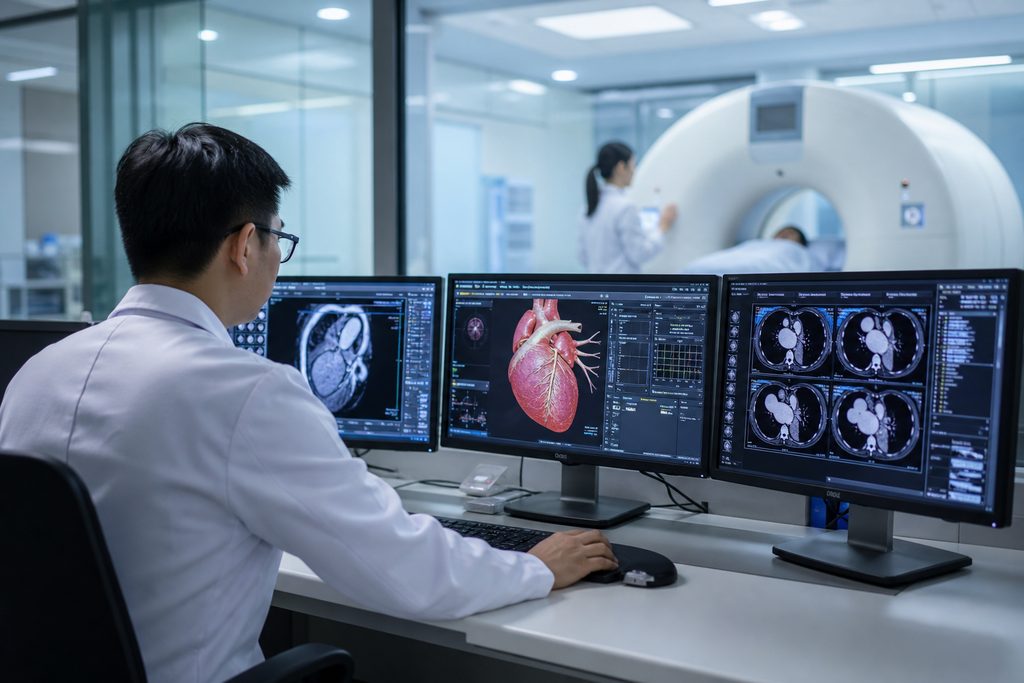
A complete coagulation panel at a top-tier Chinese public hospital typically runs $15 to $60 out of pocket. The same panel in the United States, billed through insurance, often carries a list price above $200. That gap is the first thing most international patients notice when they start comparing. The second thing they notice is that knowing the coagulation tests cost China is easy — figuring out how to actually get one is harder.
This guide walks through the real process: what a coagulation test measures, how foreigners book one, how long results take, and where the friction points sit.
How This Actually Works, Step by Step
Here is the sequence, from the moment you decide to get tested to the moment you hold a result your home doctor can read.
Step 1: Clarify what you need. A standard coagulation panel usually includes PT (prothrombin time), INR, APTT (activated partial thromboplastin time), fibrinogen, and sometimes D-dimer or thrombin time. If you are on warfarin, you likely need PT/INR monitoring. If you are being screened before surgery, the panel is broader. If you have a suspected clotting disorder, you may need specialized assays that not every hospital runs.
Step 2: Choose the hospital tier. Public tertiary hospitals (the “3A” tier) run these tests in-house, often thousands per day. Private international hospitals run them too, with English-speaking staff and shorter queues. The trade-off is price and speed versus cost.
Step 3: Book. This is where most foreign patients hit a wall. General outpatient registration at public hospitals in China is same-day, walk-in, queue-based. You cannot reserve a standard outpatient slot from overseas. What you can do is go through the hospital’s international department or VIP channel, which allows advance coordination.
Step 4: Attend, register, and pay. You will need your passport, a hospital medical card (created on arrival or in advance through coordination), and prepayment. Public hospitals generally require payment upfront; insurance reimbursement happens later, at home.
Step 5: Get results. Most routine coagulation panels return within hours. Complex or send-out assays take longer.
What a Coagulation Panel Actually Measures — and Why It Matters Abroad
Coagulation testing answers a narrow but critical question: does your blood clot too slowly, too quickly, or normally? That question matters enormously before surgery, during pregnancy, for anyone on anticoagulants, and for patients with unexplained bruising or bleeding.
The tests themselves are not exotic. PT and APTT have been standard since the mid-twentieth century. What differs between countries is calibration, reference ranges, and reporting conventions. A Chinese hospital’s INR result is directly comparable to a Western one because INR is standardized by design. APTT is less portable — reference ranges vary by reagent and analyzer, which is why your home physician should interpret the number against the reporting lab’s own range, not a remembered one.
For patients considering surgery in China, this matters. Chinese surgical teams will typically require a fresh coagulation panel as part of pre-operative workup, often within 7 to 14 days of the procedure. Bringing an old result from home rarely satisfies this requirement.
Specialized testing is where hospital choice starts to matter. Thrombophilia panels, factor assays, and platelet function studies are not available at every facility. If your case is complex, look at the hematology departments ranked in the Fudan specialist reputation list, which you can browse by specialty on our departments directory.
A Realistic Timeline
Timelines depend heavily on whether you are already in China or planning from abroad. Here is a realistic range.
| Stage | If You Are Already in China | If You Are Planning from Abroad |
|---|---|---|
| Deciding what test you need | Same day | 1–3 days (often via written second opinion) |
| Choosing a hospital | Same day | 2–7 days |
| Booking / coordination | Same day to 2 days | 3–10 days for international department channel |
| Document translation (if needed) | Not usually required | 2–5 days |
| Visa (S2, if traveling specifically) | N/A | 4–15 business days, varies by consulate |
| Attending the appointment | 1–3 hours including queue | Add travel time |
| Routine results | 2–6 hours | Same day once tested |
| Specialized results | 1–5 business days | 1–5 business days |
| English translation of report | 1–2 days | 1–2 days |
The step people forget is the last one. A Chinese lab report is issued in Chinese. If your home physician needs to act on it, you will want a certified translation. Budget two days for that, not two hours.
What Can Go Wrong — and What Happens Then
Most coagulation testing goes smoothly. But there are real failure modes, and pretending otherwise does not help anyone.
You cannot get an advance appointment at a standard public outpatient clinic. This is not a service gap — it is how the system works. Registration is same-day. The recourse is the international department or VIP channel, which costs roughly 1.5 to 2 times the standard fee but allows prior coordination.
Your result needs a specialist to interpret it, not just a lab. A lab report with an abnormal APTT is not a diagnosis. If you need interpretation, that is a separate consultation — and often a separate fee. This is one reason a written second opinion is worth considering before you travel: a Chinese specialist reviews your existing reports and tells you what testing is actually necessary.
Your insurance may not reimburse a Chinese lab report without translation and coding. Check with your insurer before you travel. Some international health policies cover treatment abroad; many do not cover routine diagnostics.
Turnaround promises can slip. If a test is send-out — meaning the sample goes to a reference lab — the “same day” estimate does not apply. Ask upfront whether the assay is run in-house.
Choosing the Best Hospital for Blood Clotting Tests in China
For a routine panel, hospital choice barely matters. Any tertiary hospital can run PT, INR, and APTT accurately. For anything more complex, it matters a great deal.
Three practical criteria:
- Does the hospital run the assay in-house? Send-out testing adds days and occasionally adds error.
- Is there an international department? This determines whether you can coordinate ahead of arrival. Our overview of top-ranked Chinese hospitals groups facilities by city so you can see which have international patient infrastructure.
- Does the hematology team have depth? For suspected bleeding disorders or thrombophilia, you want a department that sees these cases regularly, not occasionally.
Private international hospitals such as United Family, Jiahui, and Parkway offer a different trade-off: English-speaking staff, direct insurance billing in many cases, and short waits — at two to four times the public hospital price. For a simple panel, that premium buys convenience. For complex workup, the public tertiary hospitals generally have deeper subspecialty expertise.
One more consideration: if your testing is part of a broader diagnostic picture — pre-surgical clearance, a pregnancy workup, a cardiac evaluation — the coagulation panel should be ordered by the team managing the larger case, not in isolation. Fragmented testing produces fragmented answers.
Practical Considerations: Records, Visa, Payment, and Follow-Up
Records. Bring your medication list, prior lab results, and any relevant imaging. If you are on warfarin, heparin, or a direct oral anticoagulant, say so explicitly at registration. This is not optional information.
Visa. If you are traveling to China specifically for medical testing or treatment, the applicable short-stay category is the S2 visa, which covers medical treatment and private affairs. It requires supporting documents, typically including a hospital invitation or appointment confirmation. Family members accompanying you apply under the same category. Processing takes roughly 4 to 15 business days depending on the consulate, so build that into your timeline. Note that the M visa is for commercial and trade activities and is not the correct category for medical travel.
Payment. Public hospitals require prepayment. Private international hospitals often bill your insurer directly if you have a qualifying policy. Bring a card that works internationally, and confirm payment methods in advance.
Language. This is the single biggest practical barrier. A Chinese tertiary hospital may see more than 10,000 outpatients in a day. Signage, registration systems, and lab instructions are in Chinese. Bilingual medical companion services exist precisely for this — someone who handles registration, queueing, payment, wayfinding, and translation while you focus on the appointment itself.
Follow-up at home. Ask for a printed, translated report before you leave the hospital. Getting documents after you have flown home is slow and sometimes impossible.
If your testing is part of a larger treatment plan, the same logic applies at every stage. Our medical coordination team works with 340+ top-ranked hospitals across 37 cities, covering both public tertiary centers and private international facilities.
Frequently Asked Questions
A routine panel at a public tertiary hospital generally runs $15 to $60 out of pocket. Private international hospitals charge more, often $80 to $200 for the same panel plus a consultation fee. Specialized assays cost more, and prices vary by hospital and case complexity.
Yes. Routine coagulation testing is a standard, low-risk blood draw performed millions of times annually across Chinese hospitals. The main risks are not clinical — they are logistical: language barriers, queueing, and difficulty obtaining translated reports. Quality at top-tier hospitals meets international standards, and many are JCI-accredited.
Routine panels typically return within 2 to 6 hours at large hospitals. Specialized or send-out assays take 1 to 5 business days. If you need a translated report for your home physician, add another 1 to 2 days.
Not through standard public outpatient registration, which is same-day and queue-based. You can coordinate ahead through a hospital’s international department or VIP channel, which is designed for exactly this purpose. Advance booking through these channels is possible with proper coordination.
Yes. Many private international hospitals and health screening centers offer packaged check-ups that bundle blood work, imaging, and specialist consultation. These packages vary widely in scope and price, so compare what is actually included rather than the headline number.
Your Next Step
Coagulation testing in China is fast, accurate, and inexpensive. The hard part is not the test — it is navigating the registration system, the language, and the paperwork without wasting days. Understanding the process in advance removes most of that friction.
China Medical Services helps international patients coordinate hospital appointments, written second opinions, video consultations, and bilingual medical companionship. We do not provide medical advice or guarantee clinical outcomes. If you are weighing whether testing in China makes sense for your situation, a free consultation is a reasonable place to start — no commitment, just a conversation about what is actually possible.
This article is for informational purposes only and does not constitute medical advice. Always consult a qualified physician regarding your health, and never adjust medication based on lab results without professional guidance.
For more medical information and treatment options in China, visit chinamedservices.com (China Medical Services).
