Family Meal Planning in China: Complete Grocery and Kitchen Guide for Medical Stays
Key Takeaways
- Securing a reliable family meal plan service near hospital China can reduce daily logistical stress by an estimated 60%, letting you focus entirely on recovery rather than hunting for safe food.
- Grocery delivery platforms in major cities like Shanghai and Beijing now offer English interfaces and 30-minute delivery windows, making self-catering a viable option if you have a kitchen.
- Language barriers on Chinese food apps remain a significant hurdle; a single mistranslated ingredient can trigger a serious allergic reaction if you aren’t careful.
- Before booking any long-term stay, verify that “kitchenette” means a real stove and not just a kettle—this distinction changes your entire meal strategy.
The Problem: The Hidden Hunger of a Hospital Stay
A 2023 report from the Medical Tourism Association noted that nearly 40% of international patients cited “food and dietary logistics” as a top-three stressor during overseas treatment. It is not just about taste. It is about safety, nutrition, and the deep exhaustion that comes from trying to heal while eating mystery takeout every night. When you are in a foreign country for a cardiac procedure, a complex orthopedic surgery, or a demanding oncology protocol, your body needs precise fuel. You cannot survive on convenience store snacks for three weeks. But navigating a Chinese wet market or a Mandarin-only delivery app while recovering from anesthesia? That is a non-starter. The gap between needing specific nutrition and being able to source it is where families fall apart. We see it constantly. The patient is doing well clinically, but the spouse or parent is crumbling under the weight of keeping everyone fed.
Who We Are
We are China Medical Services. We are not a hospital. We do not provide clinical diagnoses or medical treatment. We are the logistical bridge between international families and China’s top-tier medical infrastructure. Our team handles the practical architecture of your stay—from visa guidance and hospital matching to the daily realities that clinical staff rarely have time to address. This includes the critical, often overlooked layer of nutrition and household management. We connect you with the right resources, translate the untranslatable, and build a support system so that your family can focus on what matters: healing.
Why a Structured Meal Strategy During Your Medical Stay Matters
Winging it is expensive and dangerous. The cost of eating out for three meals a day in a major Chinese city like Shanghai or Beijing quickly rivals your accommodation budget. More critically, controlling sodium, sugar, and specific allergens is nearly impossible with restaurant food. A structured approach to meals—whether through a dedicated service or smart self-catering—directly impacts surgical recovery times and chemotherapy tolerance. You need a plan that accounts for the sterile environment of a hospital room and the limited facilities of a rental apartment. This is not a vacation. It is a medical mission, and food is part of the treatment protocol.
Navigating the Family Meal Plan Service Near Hospital China Landscape
The concept of a formal “family meal plan service near hospital China” is still emerging in the Western sense. You will not find a national brand like “Meals on Wheels” that operates purely in English across all 37 cities we cover. But the infrastructure exists in fragmented, highly localized pieces. We help you assemble these pieces into a coherent system. The solution usually falls into two buckets: leveraging the hyper-efficient local grocery delivery ecosystem to prepare your own food, or tapping into private, often bilingual, meal prep services that cater specifically to the medical tourism sector in expat-heavy districts.
Grocery Delivery for Medical Tourists Shanghai and Beijing: The Digital Lifeline
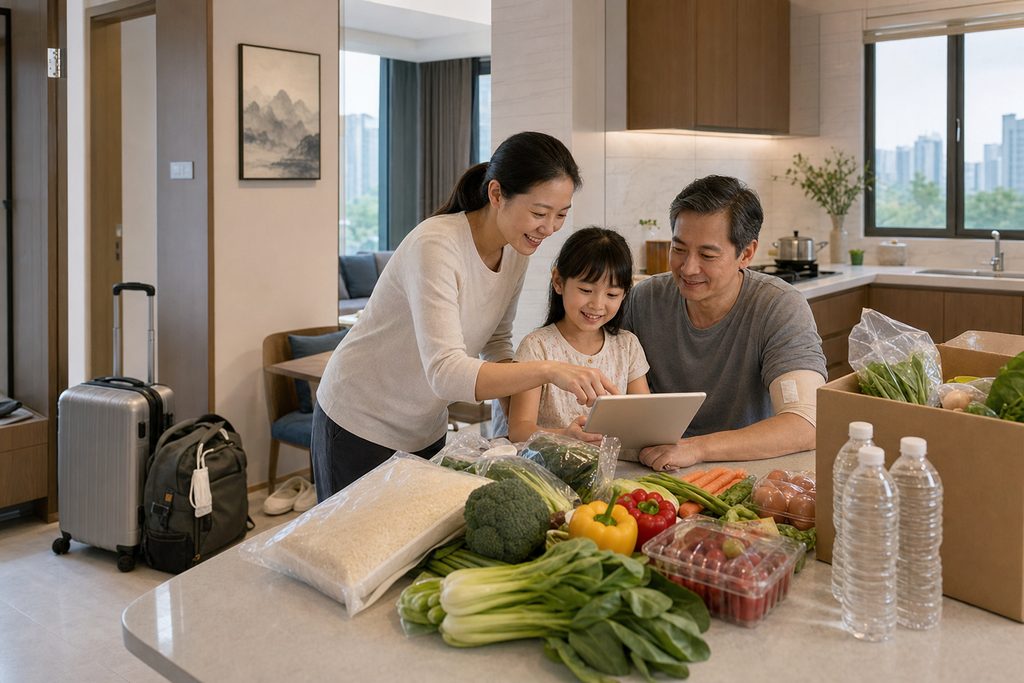
If you have access to a kitchen, the grocery delivery for medical tourists Shanghai and Beijing offers is world-class. We are not exaggerating when we say it outpaces most Western cities. Platforms like Hema (Freshippo) and Meituan can deliver fresh produce, imported cheeses, specific cuts of meat, and pantry staples to your door in under 30 minutes. The scale is staggering. You can order a single lemon or a week’s worth of organic vegetables. For families staying near Shanghai hospitals like Zhongshan or Ruijin, or near Beijing institutions like Peking Union Medical College Hospital, this is a game-changer. But the interface is the wall. Most of these apps default to Chinese characters. A wrong tap can mean ordering chicken feet instead of chicken breast, or a bottle of vinegar when you needed filtered water. Our team pre-configures these apps, sets up your international payment method, and provides a translated cheat sheet of your dietary staples so you can order with confidence.
How to Get Meals During Hospital Stay in China Without a Kitchen
Many short-term rentals near hospitals offer only a microwave and a mini-fridge. That changes the math. You need to know how to get meals during hospital stay in China when you cannot cook. Hospital canteens are one option, but they are rarely designed for long-term palates and often close early. The real solution lies in the private kitchen networks on WeChat. Across Beijing, Shanghai, and Guangzhou, small-scale entrepreneurs—often trailing spouses of expats or local chefs—run “private kitchen” (私厨) services. They cook in home kitchens and deliver vacuum-sealed meals. You can order a week’s worth of low-sodium, high-protein meals tailored to post-surgical needs. Finding these networks requires a local contact. They do not advertise on Google. We connect you to vetted providers who understand Western dietary restrictions and can deliver to hospital lobbies or apartment doors. This bridges the gap between restaurant chaos and home cooking when you lack the facilities.
Self-Catering: The Meal Preparation Service for International Patients Beijing Reality
There is a growing demand for a formal meal preparation service for international patients Beijing and Shanghai. This is distinct from a private kitchen. It involves a bilingual nutritionist or chef physically coming to your serviced apartment to batch-cook meals for the week. They bring the groceries. They understand a low-iodine diet for thyroid patients, or a soft-food diet for jaw surgery recovery. They label everything in English with dates and reheating instructions. This is a premium service, typically arranged through high-end concierge companies or directly by our VIP coordination team. It solves the two biggest problems: the time drain of cooking and the mental load of translating recipes. For a family where the primary caregiver is already translating doctor’s notes and managing medication schedules, handing the meal prep to a professional is a massive relief.
Medical Stay Food Delivery China Price: What Should You Budget?
Let’s talk numbers. Understanding the medical stay food delivery China price landscape prevents sticker shock. The costs stack up differently depending on your strategy.
| Meal Strategy | Daily Cost (1 Person) | Daily Cost (Family of 3) | Pros | Cons |
|---|---|---|---|---|
| Hospital Canteen | $5 – $10 | $15 – $30 | Cheapest, very close | Limited hours, repetitive, oily |
| Grocery Delivery + Self-Cook | $10 – $20 | $30 – $60 | Full dietary control, fresh | Requires kitchen, time, app setup |
| Private Kitchen (WeChat) | $15 – $25 | $45 – $75 | Home-style, custom orders | Hard to find, trust-based |
| Bilingual Chef Prep | $40 – $80 | $100 – $200 | Zero effort, medical-diet aware | High cost, needs booking |
| Restaurant Delivery (Daily) | $15 – $30 | $45 – $90 | Convenient, variety | High sodium, hidden allergens |
These are estimates. Prices spike if you require all-organic produce or specialized imported supplements. A private chef service might start from $80 per day but drops significantly if you book a block of two weeks. The hidden cost is the time you spend managing it. If you are losing three hours a day to food logistics, you are losing time that should be spent resting or caring for the patient.
Securing a Family Accommodation with Kitchen Near Chinese Hospital
None of this works if you are trapped in a standard hotel room with no stove. Securing a family accommodation with kitchen near Chinese hospital requires booking a “serviced apartment” or “aparthotel.” These are residential units rented on a short-term basis, complete with a living room, bedroom, and a proper kitchen. In Shanghai, look in the Xuhui district near Fudan University-affiliated hospitals. In Beijing, the Dongcheng and Chaoyang districts near the embassy area and Peking Union Medical College Hospital are prime spots. These units cost more than a budget hotel, but you save significantly by not eating out for three meals a day. We have seen families break even financially while dramatically improving their quality of life. The key is verifying the kitchen equipment before you pay. A photo of a “kitchen” might show a shiny countertop but hide the fact that there is no oven, only a single induction hob. Ask for a video walkthrough. We handle this verification step so you do not arrive to find a kettle and a mini-fridge masquerading as a kitchen.
What You Need to Know Before Going Alone
The tools exist. You can theoretically do this yourself. But the friction points are sharp. Here is what you will run into:
- Payment Wall on Food Apps: Meituan and Ele.me often reject foreign credit cards. You need a Chinese bank account or Alipay Tour Pass, which has its own setup hurdles and transaction limits. Nothing is more frustrating than filling a cart with groceries at 9 PM and watching the payment fail.
- The Translation Trap: “Chicken” in a translation app can mean anything from a live bird to a package of feet. Dietary labels are not standardized. “No MSG” (不放味精) is a phrase you need to learn, but it doesn’t guarantee the stock they used wasn’t pre-made with it. For patients with celiac disease or nut allergies, this is a high-stakes game of roulette.
- Neighborhood Navigation: Finding a wet market that sells safe, clean produce versus one that sells turtles and live eels is a sensory shock. Even if you find a good market, the unit of measurement is the jin (500g), not the pound. You need to know how to ask for a specific cut of meat in a way a butcher understands.
How We Help You Navigate This
We remove the friction. Before you land, we send you a pre-arrival dietary mapping form. We take your list of required foods, allergies, and preferences and translate it into a practical shopping script. We pre-load your phone with the correct delivery app, logged in and payment-ready. For families who do not want to cook, we broker the connection with a vetted private kitchen or a bilingual meal-prep chef. During your stay, our bilingual medical companion does more than translate doctors. They can accompany a family member to the local market on day one, show them which stall has the imported butter, and explain how to order water delivery. This is the unglamorous, vital work that keeps a family stable. A patient cannot heal if their spouse is starving or their child is surviving on white rice. We build the bridge between your dietary needs and the local food ecosystem.
Frequently Asked Questions
Yes, but you pay a premium. Imported pasta, cheese, cereals, and snacks are widely available on grocery apps and in expat supermarkets in Shanghai and Beijing. A box of imported cereal might cost $8-12. It is expensive, but sometimes a familiar taste is the only thing that works after anesthesia. We know where the hidden import stores are near every major hospital cluster.
This is where private kitchen or chef services become non-negotiable. A standard restaurant cannot guarantee the absence of iodized salt or specific seafood derivatives. We connect you with meal prep professionals who have experience with strict medical diets. They source non-iodized salt and specific produce. Do not trust a standard food delivery app with this. It is not worth the risk to your treatment efficacy.
Do not drink the tap water. Ever. You need a constant supply of bottled water for drinking and brushing teeth. Most apartments have a water dispenser that takes large 19-liter jugs. You scan a QR code on the dispenser to order a replacement, but the mini-program is entirely in Chinese. Running out of water is a daily crisis. We set up your water account and ensure you have a backup supply so you never wake up to an empty dispenser.
Hospital rooms are cramped. The patient gets a tray; the family member does not. You need a strategy for the caregiver. We recommend a combination of ready-to-eat protein bars brought from home, fruit from the grocery delivery service, and one hot meal a day from a private kitchen delivered to the hospital lobby. The caregiver needs strength too. Ignoring their nutrition is a fast track to caregiver burnout, which we see happen around day 10 of a long stay.
Your Next Step
Food is the fuel for recovery. It should not be the source of daily panic. Whether you need a fully managed meal preparation service or just help cracking the grocery delivery app code, the infrastructure in China is ready to support you. It just needs a translator. A human one. Reach out to our team, and we will walk you through exactly how to build a nutrition plan that fits your treatment schedule, your kitchen situation, and your budget. You focus on the healing. We will handle the logistics of keeping your family fed.
To start planning your stay and building a complete support system, visit our patient coordination page or explore our database of top-ranked hospitals to find the right facility for your needs.
For more medical information and treatment options in China, visit chinamedservices.com (China Medical Services).
