Pacemaker Replacement Cost in China: 2026 Prices, Top Hospitals & Safety
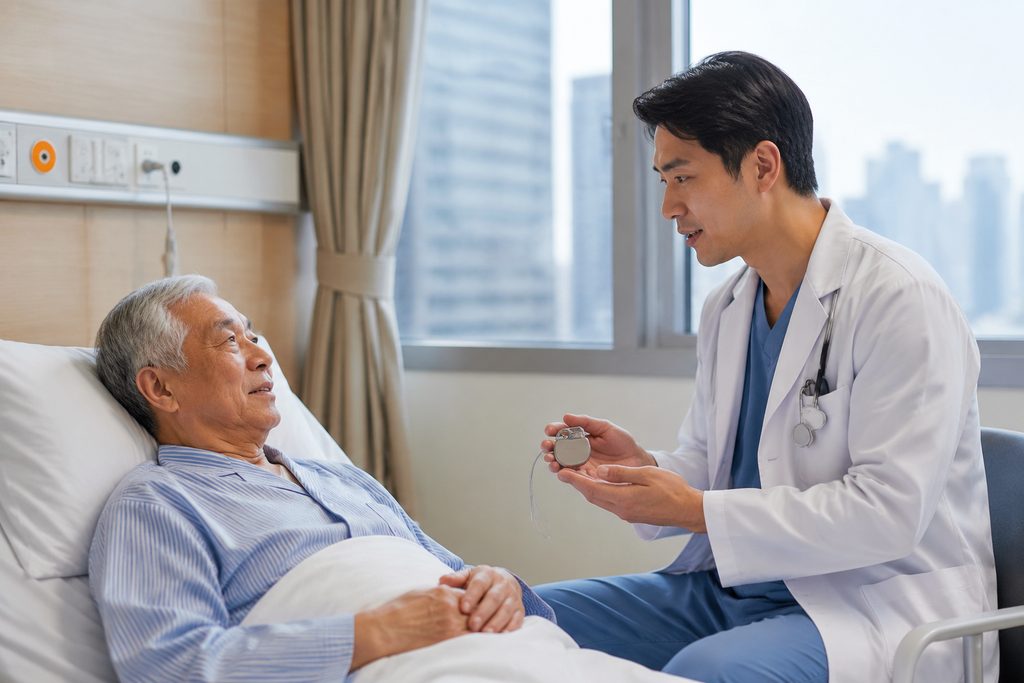
A pacemaker replacement sounds like a heavy procedure, but the concept is simple: the battery inside your existing device is running low, and the generator — the small metal can under your collarbone — gets swapped for a new one. In most cases, the leads that run to your heart stay exactly where they are. The whole thing often takes under an hour.
So what does that swap cost in China? For international patients at top-tier public hospitals, pacemaker replacement cost in China typically falls between $8,000 and $18,000, depending on the device, the hospital, and whether you use a standard or international department. The same procedure in the United States frequently lands between $25,000 and $60,000 before insurance. That gap is why this page exists.
One caveat before we go further. A replacement is not automatically simpler than a first implant. If your leads have degraded, if you have an infection, or if your device is more than a decade old, the plan changes. Only an electrophysiologist can tell you which scenario you’re in.
Pacemaker Replacement Cost China: The Short Answer
Expect $8,000–$18,000 for a standard generator replacement at a major Chinese public hospital, and $20,000–$35,000 at a private international hospital in Shanghai or Beijing. Those ranges cover the device, the procedure, a short hospital stay, and basic follow-up. They do not cover travel, lodging, or complications.
The reason the range is wide is that “pacemaker” covers a lot of ground. A basic single-chamber unit costs a fraction of a dual-chamber or biventricular device. A pacemaker is not the same product as an implantable cardioverter-defibrillator (ICD) or a cardiac resynchronization device (CRT), and the price ladder reflects that.
Key takeaway: The device itself — not the surgeon’s fee — drives most of the bill. Ask for a quote that separates the generator model from the procedure and hospital charges. That single request tells you more than any headline price.
Who This Is Right For — and Who It Isn’t
Medical travel is not for everyone, and pretending otherwise wastes your time. Here is an honest split.
Typically a reasonable fit:
- You have a confirmed battery-depletion reading (ERI — elective replacement indicator) from your cardiologist at home
- Your device model is one still manufactured or reliably sourced, so a compatible generator exists
- You are medically stable enough to fly, with no active infection or uncontrolled arrhythmia
- You are paying out of pocket or your insurer offers limited overseas coverage, and the price difference genuinely matters to you
- You can stay in China for roughly 10–14 days for pre-op checks, the procedure, and a wound review before flying home
Probably not a good fit:
- You are pacemaker-dependent with severe symptoms — do not board a long-haul flight to save money on an urgent procedure
- You have an active device infection, pocket erosion, or exposed hardware. Those cases need complex extraction, and continuity of care matters more than price
- Your leads are failing and the plan may require extraction and re-implantation — a much bigger operation with real risk
- You need your original implanting team for legal, insurance, or device-registry reasons
- You cannot travel with a companion or manage a 12-hour flight with a heart condition
If you fall into the second list, staying home is the better call. We would rather tell you that now than after you’ve booked a ticket.
The Options, Compared
Prices below are typical ranges for a generator replacement, not a first implant, and they exclude travel. Everything varies by hospital and case complexity.
| Setting | Typical Cost (USD) | Wait Time | English Support | Insurance |
|---|---|---|---|---|
| US hospital | $25,000–$60,000 | Weeks to months | Native | Direct billing |
| Western Europe (private) | $18,000–$35,000 | Weeks | Good | Varies |
| China — top public hospital, standard channel | $8,000–$14,000 | Days to weeks | Limited | Pay first, claim later |
| China — public hospital international/VIP unit | $14,000–$22,000 | Days | Strong | Pay first, claim later |
| China — private international hospital | $20,000–$35,000 | Days | Native-level | Often direct billing |
Which column fits you? If English-language support and insurance paperwork are your priority, the private international tier is built for exactly that. If cost is the main driver and you can travel with a bilingual companion, the standard public channel delivers the same device at roughly half the price. The middle option — a public hospital’s international department — is where most of our patients land.
Is Pacemaker Surgery Safe in China? What the Data Actually Shows
This is the question that decides the trip, so let’s answer it without spin.
China performs a very high volume of cardiac device procedures. Fuwai Hospital in Beijing, for example, is widely cited as handling more cardiac surgeries than any other single center in the world, with well over 14,000 cardiac operations a year. High volume matters in device work. Teams that implant and replace hundreds of generators annually tend to be fast, predictable, and good at handling the odd anatomy.
China also maintains a national device registry and mandatory reporting for implantable cardiac devices, which means the generators used in its major hospitals are traceable products, not gray-market imports. Major centers use devices from the same global manufacturers you’d find in a US or German cath lab.
What is genuinely different is not surgical skill. It is the system around you. A top Chinese public hospital may see more than 10,000 outpatients in a single day. Corridors are crowded, signage is in Chinese, and the registration desk will not speak English. For a patient arriving alone with a heart condition, that environment is the real risk factor — not the operator’s hands.
So the honest answer to “is pacemaker surgery safe in China” is: the procedure is safe at accredited high-volume centers, and the logistics are not safe to improvise. Bring language support or arrange it in advance.
How Much Does a Pacemaker Replacement Cost in Shanghai Specifically?
Shanghai deserves its own section because it is the most common first choice for international patients, and its pricing sits slightly above the national average.
At a major Shanghai public hospital — think Zhongshan Hospital or Ruijin Hospital, both consistently ranked in the top tier of China’s Fudan hospital rankings — a generator replacement through the standard channel typically runs $9,000–$15,000. Through the same hospital’s international department, expect $15,000–$22,000. At a private international hospital in the city, such as Shanghai United Family or Jiahui Health, the figure climbs to $22,000–$35,000, but you get English-speaking staff, JCI-accredited processes, and often direct insurance billing.
Beijing prices track Shanghai closely. Guangzhou and Chengdu run 10–20% lower. The device model remains the single largest variable in every city.
If you want to compare cardiac programs city by city, our department rankings by specialty list the top centers for cardiac surgery and cardiology, and the Fudan Top 100 hospital directory groups them by city with tier labels.
What’s Included — and What Isn’t
A quoted price in China usually bundles the generator, the procedure, anesthesia, a hospital stay of two to four days, and routine post-op imaging. Confirm each item in writing before you commit.
What typically sits outside the quote:
- Pre-operative tests if they’re done at a different facility
- Lead revision or extraction, if the surgeon finds a problem mid-procedure
- Extended ICU or hospital days beyond the standard package
- Device programming and remote monitoring setup after discharge
- Your flights, visa costs, hotel, and meals
- Any complication management after you leave the country
Ask for the complication policy in writing. A hospital that answers that question clearly is a hospital worth trusting.
Practical Considerations: Records, Visa, and Payment
Records. You need three things before any Chinese electrophysiologist will schedule you: your device interrogation report showing the battery status, the original implant record listing the lead models, and a recent ECG. Without the lead information, no one can confirm a compatible generator exists.
Visa. Foreign patients coming to China for medical treatment apply for the S2 visa, annotated for medical purposes. Stays beyond 180 days use the S1 category. Accompanying family members apply for S2 as well. Note that the M visa is a commercial and trade visa and has nothing to do with medical treatment — if a service tells you otherwise, walk away. Requirements shift, so confirm current rules with the nearest Chinese embassy or consulate.
Appointments. Standard outpatient registration at Chinese public hospitals cannot be booked from overseas in advance. You register on the day. Surgery follows an in-person consultation, always. The route that lets you lock in a date ahead of travel is the hospital’s international or VIP department, which typically costs 1.5 to 2 times the standard channel.
Payment. Public hospitals require prepayment; you claim reimbursement from your insurer afterward. Private international hospitals frequently bill your insurer directly. Bring a card that works internationally and confirm the hospital’s accepted payment methods in advance.
Follow-up at home. Arrange a cardiologist in your home country before you travel. Ask the Chinese team for a full discharge summary and device interrogation printout in English. Your local clinic will need both.
Tip: Photograph your device card and the front page of your implant record. Keep digital copies on your phone. If anything goes wrong at an airport security checkpoint or a foreign clinic, those two images answer most questions.
Frequently Asked Questions
Not through the standard public channel — you register in person and surgery is scheduled only after an in-person consultation. You can secure a date in advance through a hospital’s international or VIP department. Alternatively, a written second opinion or video consultation lets a Chinese specialist review your device reports remotely and confirm whether a replacement is even needed yet, which often saves an unnecessary trip.
It depends entirely on your policy. Many Western insurers cover emergency treatment abroad but exclude planned procedures. Some international health plans reimburse overseas care at a reduced rate. Call your insurer before you do anything else and ask two questions: is a planned device replacement covered outside my home country, and what documentation do you require? Get the answer in writing.
This is the real risk of medical travel, and no one should downplay it. A pocket infection or lead dislodgement appearing two weeks after you return home means your local hospital manages it, often without the operating team’s notes. Mitigate it by staying in China until your wound check clears, typically 10 to 14 days, and by leaving with complete English-language records. Budget for the possibility; don’t assume it away.
Plan on 10 to 14 days. That covers arrival, pre-operative testing, the procedure itself, a two-to-four-day hospital stay, and a wound review before your flight. Some patients compress this to eight days at a private hospital. Rushing the final check is a false economy.
At major Chinese cardiac centers, generally yes — the leading global manufacturers supply these hospitals. Availability of a specific model is not guaranteed, so send your implant record ahead and ask the hospital to confirm compatibility before you book flights.
Your Next Step
Pacemaker replacement cost in China is genuinely lower — often 50% to 70% below US list prices — but the number is the easy part. The hard part is matching your specific device and lead configuration to a hospital that can source a compatible generator and schedule you without a wasted trip.
We are China Medical Services. We are not a hospital and we do not diagnose or treat anyone. What we do is connect international patients with 340+ top-ranked hospitals across 37 cities, arrange written second opinions and video consultations so you can get a real answer before you fly, coordinate appointments through official international departments, and provide bilingual medical companions who handle registration, queues, payment, and translation on the ground.
If you’d like to know what your specific case would cost at a specific hospital, send us your device interrogation report and implant record through our free consultation page. We’ll tell you honestly whether traveling to China makes sense for you — and if it doesn’t, we’ll say so.
This article is for general information only and is not medical advice. Device replacement decisions must be made with a qualified cardiologist or electrophysiologist who has reviewed your individual records. Prices vary by hospital and case complexity and are subject to change.
For more medical information and treatment options in China, visit chinamedservices.com (China Medical Services).
