Pacemaker Cost China: Your Complete Implant Budget Guide
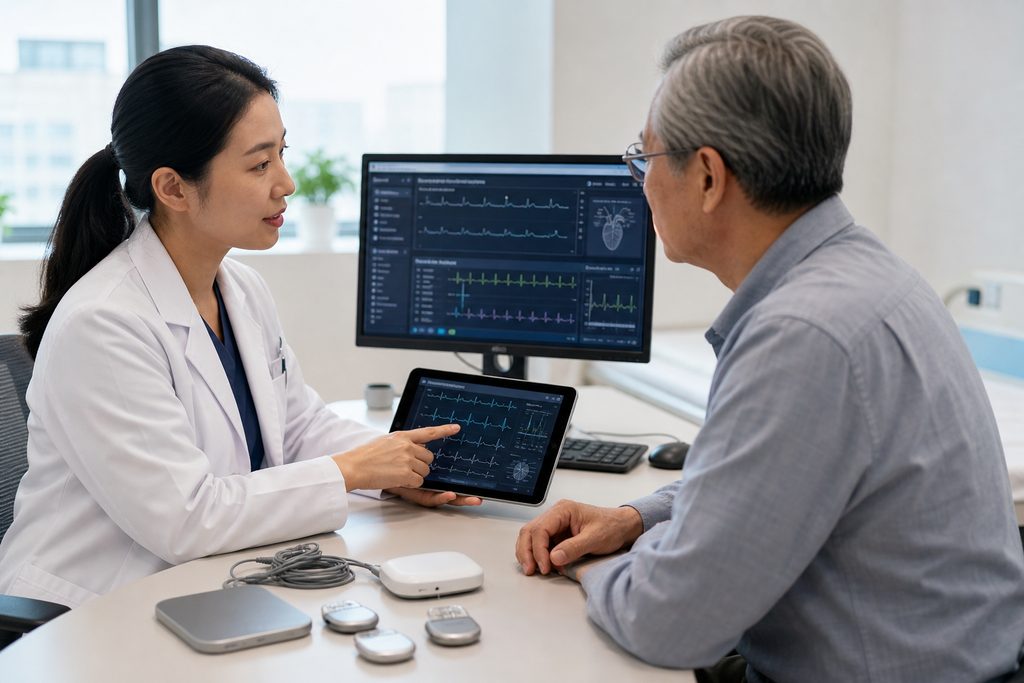
Pacemaker Cost China: Your Complete Implant Budget Guide
A pacemaker is a small, battery-powered device implanted under the skin of your chest. It sends electrical pulses to keep your heart beating at a normal rhythm when your natural electrical system fails. The procedure sounds intimidating. But in simple terms, it is a routine surgery that takes one to two hours, often requiring only local anesthesia and a short hospital stay. The question you searched for has a direct answer: pacemaker cost China typically ranges from $8,000 to $25,000 USD, depending on the device type and hospital tier. That figure covers the device itself, surgeon fees, hospital charges, and a standard 2-4 day stay. For comparison, the same procedure in the United States runs between $30,000 and $80,000. The gap is real. But the final number depends on variables most patients do not consider until they are already in the process.
What drives the range? Device sophistication, first. A basic single-chamber pacemaker costs far less than a biventricular or MRI-compatible model. Hospital tier matters equally. A public top-tier hospital in Shanghai charges differently than a private international hospital with English-speaking staff and direct insurance billing. And your clinical situation — whether this is a first implant, a replacement, or a complex case with infection management — shifts the total. We will walk through each variable so you can budget with confidence, not guesswork.
Pacemaker Cost China: The Short Answer
A pacemaker implant in China costs between $8,000 and $25,000 USD at reputable hospitals. The median lands around $12,000 to $15,000 for a standard dual-chamber device at a top public hospital. That is roughly one-fifth to one-third of the U.S. price. But the caveat: this is not a fixed menu price. Your actual quote will shift based on device brand, hospital classification, and whether you go through the public international department or a private facility. Also, if you are traveling from abroad, you must factor in flights, visa fees, accommodation, and post-operative follow-up. The implant itself is affordable. The total journey costs more than the surgery line item.
One more thing before we go deeper. The Chinese healthcare system does not operate like a walk-in clinic for international patients. You cannot simply book a pacemaker surgery online and show up. The process requires medical records review, a consultation, and a treatment plan. We will explain how that works — and what it costs in time, not just money.
Who This Is Right For — and Who It Isn’t
Traveling to China for a pacemaker implant makes sense for specific patient profiles. It is not for everyone. Here is the honest breakdown.
Good candidates typically include:
- Patients with a confirmed bradycardia, heart block, or sick sinus syndrome diagnosis who already have a recommendation for a pacemaker from their home cardiologist
- Uninsured or underinsured patients facing a $40,000+ bill in the United States, Canada, or Western Europe
- Patients who are clinically stable enough to fly — your cardiologist must clear you for long-haul travel
- Expatriates already living in China or Southeast Asia who want treatment close to home
- Patients who need a device replacement and want to avoid another high-cost procedure at home
Who should not pursue this:
- Patients in acute heart failure or unstable arrhythmia requiring immediate intervention — do not board a plane
- Anyone whose cardiologist has not formally recommended a pacemaker. This is not an elective wellness procedure
- Patients with complex comorbidities requiring intensive post-operative management that would be difficult to coordinate remotely
- Those who cannot commit to at least 7-10 days in China for pre-op evaluation, surgery, and initial recovery
- Patients whose primary concern is a specific Western brand device that may not be available or approved in China
If you fall into the second list, staying home is genuinely better. The cost savings never outweigh clinical risk.
The Options, Compared
When planning a pacemaker implant in China, you are not choosing between identical services. You are choosing between three distinct hospital models, each with different pricing, language support, and patient experience.
| Factor | Public Top-Tier Hospital (International Dept.) | Public Hospital (Standard Dept.) | Private International Hospital |
|---|---|---|---|
| Total Cost (USD) | $10,000 – $18,000 | $8,000 – $14,000 | $18,000 – $25,000 |
| English-speaking staff | Yes, in international department | Rarely | Yes, throughout |
| Insurance direct billing | Sometimes | No | Yes, for major insurers |
| Wait time for surgery | 1-2 weeks after consultation | Variable, often 2-4 weeks | 3-7 days after consultation |
| Device brands available | Medtronic, Abbott, Biotronik, MicroPort | Same, but limited selection | Western brands primarily |
| Post-op follow-up support | Structured, but may require return visits | Basic | Comprehensive, remote monitoring available |
Which column fits you? If budget is the priority and you have a bilingual companion or coordinator, the public top-tier hospital international department offers the best balance of clinical quality and cost. If you want zero language friction and direct insurance billing, the private international hospital is worth the premium. The standard public department is cheapest but nearly impossible to navigate without Chinese language skills — we do not recommend it for most international patients.
How Much Is a Pacemaker Implant in China: Breaking Down the Bill
You cannot budget properly without understanding where the money goes. A pacemaker implant in China involves four distinct cost components. Here is what each one looks like at a top-tier public hospital international department.
Device cost: $3,000 – $12,000. This is the single largest variable. A basic single-chamber pacemaker from a domestic Chinese brand like MicroPort runs lower. A dual-chamber device from Medtronic or Abbott costs more. A biventricular pacemaker for cardiac resynchronization therapy (CRT) sits at the top of the range. MRI-compatible models add a premium of 20-40% over non-MRI versions. Ask your cardiologist which device class you actually need before comparing prices.
Surgeon and procedure fees: $2,000 – $4,000. This covers the implanting physician, the anesthesiologist, and the operating room time. At top cardiac centers like Fuwai Hospital in Beijing or Zhongshan Hospital in Shanghai, these fees reflect the seniority of the surgical team. A more experienced electrophysiologist commands a higher fee. That is not a markup — it is the market rate for expertise.
Hospital stay and nursing: $1,500 – $3,500. A standard pacemaker implant requires a 2-4 day admission. This includes the ward bed, nursing care, post-operative monitoring, and basic medications. International department wards cost more than standard wards but include English-speaking nursing staff and better amenities.
Pre-operative evaluation: $500 – $1,500. Before any implant, you need an ECG, echocardiogram, blood work, and possibly a Holter monitor study. Some patients also require a coronary angiogram to rule out ischemic causes. These diagnostic tests are billed separately from the surgery itself.
Add those four lines together and you land in the $8,000 to $25,000 range we quoted earlier. The variance is not mysterious. It is driven by device selection and hospital tier.
Best Hospital for Pacemaker Surgery Shanghai: Where Patients Actually Go
Shanghai is the most common entry point for international cardiac patients. The city has two hospitals that dominate pacemaker implant volumes for foreigners.
Zhongshan Hospital, Fudan University is the reference center. Its cardiac surgery and cardiology departments consistently rank among China’s top tier in the Fudan national hospital rankings. The hospital performs thousands of device implants annually. Its international medical center handles foreign patients with English-speaking coordinators and streamlined admission. Expect to pay in the $12,000 to $18,000 range for a dual-chamber implant here.
Ruijin Hospital, Shanghai Jiao Tong University School of Medicine is the second major option. Its cardiology department has strong electrophysiology expertise, and the hospital’s international department is experienced with overseas patients. Pricing is comparable to Zhongshan, with slightly more flexibility on scheduling.
For patients who prefer a private setting, Jiahui International Hospital and Shanghai United Family Hospital both offer pacemaker implantation with Western-trained cardiologists and direct insurance billing. These facilities run $20,000 to $25,000 for the same procedure. The premium buys convenience, not better clinical outcomes.
Beijing offers alternatives. Fuwai Hospital is the highest-volume cardiac center in the world, performing over 14,000 cardiac surgeries annually. Its pacemaker program is among the largest globally. For patients who want the absolute peak of Chinese cardiac expertise, Fuwai is the destination. You can explore our full database of top-ranked Chinese hospitals by city to compare options beyond Shanghai.
Is Pacemaker Surgery Safe in China? The Evidence
Safety is the question every patient asks before booking a flight. The short answer: yes, at top-tier hospitals, pacemaker implantation in China carries complication rates comparable to Western centers. The longer answer requires context.
Chinese cardiac centers perform enormous volumes. Fuwai Hospital alone implants thousands of pacemakers each year. Volume matters because device implantation is a technical skill — complication rates drop as operator experience rises. Studies published in international cardiology journals have documented Chinese centers achieving infection rates below 1% and lead displacement rates under 2% for standard implants. Those numbers align with U.S. and European benchmarks.
But safety is not uniform across all 35,000+ Chinese hospitals. The quality gap between a top-tier Fudan-ranked hospital and a small regional facility is significant. This is why hospital selection matters more than country selection. When you ask “is pacemaker surgery safe in China,” the honest answer is: at the right hospital, yes. At the wrong one, no. Our specialty department rankings help you identify which hospitals actually have the cardiac electrophysiology expertise you need.
Infection control is the other variable. Top-tier Chinese hospitals follow international sterilization protocols and use antibiotic prophylaxis before implantation. Private international hospitals follow JCI standards. If you are concerned, request the hospital’s infection rate data during your consultation. Reputable institutions will share it.
Medical Tourism Packages for Pacemaker China: What Is Actually Included
You will see the phrase “medical tourism package” used loosely online. In China, there is no standardized package for pacemaker surgery. What exists instead is a coordinated service model. Here is what a legitimate coordinator should provide — and what you should be wary of.
A legitimate package typically includes:
- Medical records translation and pre-review by the receiving hospital
- Appointment scheduling with the cardiology or electrophysiology department
- Visa support documentation (S2 visa, which we explain below)
- Airport pickup and hospital transfer
- Bilingual medical companion for the consultation, admission, and discharge process
- Coordination of the surgery date and device selection
- Post-operative follow-up scheduling and medication instructions
What it does not include — and should not claim to include:
- Guaranteed surgery with a specific named surgeon on a specific date
- Guaranteed admission without prior in-person consultation
- Any promise of clinical outcome or zero complications
- The hospital’s treatment charges themselves — coordination fees are separate from medical bills
The coordination service fee for this level of support typically starts around $300 for basic appointment coordination and runs to $5,000-$8,000 for full end-to-end management of a complex international patient journey. That fee is separate from the hospital bill. If someone quotes you a single “all-inclusive package” price that seems too good to be true, it probably is.
Book Pacemaker Surgery Abroad: The Step-by-Step Process
Booking pacemaker surgery in China from abroad follows a specific sequence. Skipping steps leads to wasted flights and frustrated calls. Here is the realistic timeline.
Step 1: Remote records review (1-2 weeks). You send your existing ECG, echocardiogram, Holter monitor results, and your cardiologist’s recommendation to the Chinese hospital or a coordination service. A Chinese cardiologist reviews the records and confirms whether a pacemaker is indicated and which device class is appropriate. This written second opinion costs $300-$500 at top hospitals and is the smartest money you will spend.
Step 2: Video consultation (optional but recommended). For $100-$800 depending on the specialist’s seniority, you speak directly with the implanting team. You discuss device options, surgical approach, and recovery expectations. This is also where you ask about the hospital’s complication rates and device availability.
Step 3: Visa application (1-3 weeks). Medical treatment in China requires an S2 visa for stays under 180 days. Your supporting documents include the hospital’s invitation letter, treatment plan, and proof of financial means. Family members accompanying you also apply for S2 visas. The M visa is for commercial trade — it is not appropriate for medical treatment. Do not let anyone tell you otherwise.
Step 4: Travel and in-person consultation (2-3 days). You arrive in China and meet the cardiologist in person. The hospital repeats key diagnostic tests to confirm the treatment plan. This is non-negotiable — no reputable Chinese hospital will implant a pacemaker based solely on foreign records.
Step 5: Surgery and recovery (4-7 days). The implant itself takes one to two hours. You stay in the hospital for 2-4 days for monitoring. Most patients are cleared to fly home 7-10 days after surgery, provided there are no complications.
Step 6: Remote follow-up. Modern pacemakers support remote monitoring. Your device can transmit data to your home cardiologist. The Chinese hospital will provide a full discharge summary and device settings report for your local physician.
Practical Considerations: Records, Payment, and Follow-Up
Three logistics catch most international patients off guard. Address them before you book anything.
Medical records must be in English or Chinese. If your records are in another language, you need certified translation. Most coordination services include this. Without complete records — ECG tracings, echo images, medication list — the Chinese hospital will delay your consultation. Gather everything before you start.
Payment is upfront and out-of-pocket. Chinese public hospitals require prepayment before admission. You pay the estimated treatment cost as a deposit, and the hospital bills against it. Any remainder is refunded at discharge. Private international hospitals may bill your insurer directly if they have a direct billing agreement — check with your insurer before assuming. If you are paying out of pocket, budget for the full amount plus a 20% buffer for unexpected diagnostic findings.
Follow-up after returning home is your responsibility. The Chinese hospital will not chase you for wound checks or device interrogations. You must arrange follow-up with your home cardiologist before you travel. Bring the device manual, the implant card, and the discharge summary. Your home cardiologist will need all three.
Language is the other practical barrier. Top-tier public hospitals have English-speaking staff in their international departments. But the moment you leave that department — to the lab, the imaging center, the pharmacy — English disappears. A bilingual medical companion from $300 per day solves this. It is not a luxury. It is the difference between a smooth admission and a confusing maze.
Frequently Asked Questions
Without insurance, expect to pay $8,000 to $25,000 USD out of pocket. The lower end reflects a basic single-chamber device at a public hospital standard department. The upper end reflects a biventricular or MRI-compatible device at a private international hospital. Most international patients pay cash because Chinese public hospitals do not bill foreign insurers directly. Your home insurer may reimburse you after the fact — check your policy’s out-of-network international coverage before committing.
No. Chinese hospitals require an in-person consultation before scheduling surgery. You can complete the records review and video consultation remotely. You can receive a treatment plan and a cost estimate. But the actual surgery date is only confirmed after the implanting cardiologist examines you in person. This is a hard rule at every reputable hospital. Anyone promising you a confirmed surgery date before you arrive is not being honest.
At top-tier hospitals, the infection rate for pacemaker implants is below 1% and lead displacement occurs in under 2% of cases. These figures are comparable to U.S. and European centers. The risk rises at lower-tier hospitals that perform fewer implants. This is why hospital selection is the single most important safety decision you make. Choose a Fudan-ranked cardiac center or a JCI-accredited private hospital, and your risk profile matches Western benchmarks.
Yes. Pacemakers from Medtronic, Abbott, Biotronik, and MicroPort are internationally recognized. The device comes with a patient ID card and technical specifications that any qualified cardiologist can manage. The key is bringing the complete discharge summary and device settings report. Some home cardiologists may prefer to repeat the device interrogation themselves, which is standard practice regardless of where the implant occurred.
Plan for 10-14 days total. That breaks down as: 2-3 days for the in-person consultation and pre-operative tests, 1 day for the surgery itself, 2-4 days for hospital monitoring, and 3-5 days of local recovery before flying. Some patients are cleared to fly earlier if their recovery is uncomplicated and their flight is short. But do not book a return ticket for day 5 — that is optimistic, not realistic.
Your Next Step
The core message is simple: pacemaker cost China offers genuine savings for the right patient, but the savings only materialize if you choose the right hospital and follow the proper sequence. A $12,000 implant at Zhongshan Hospital is not a bargain if you arrive without records, cannot communicate with the nursing staff, and miss your follow-up window.
We are China Medical Services, a coordination team that connects international patients with top-tier Chinese hospitals. We are not a hospital. We do not diagnose, treat, or promise outcomes. What we do is handle the logistics — records translation, hospital matching, appointment coordination, visa documentation, and bilingual companionship on the ground. If you are considering a pacemaker implant in China, start with a free consultation. Tell us your diagnosis, your records, and your timeline. We will help you figure out whether this path makes sense for you — honestly, even if the answer is no.
Ready to explore your options? Request a free consultation and we will review your case with no obligation.
For more medical information and treatment options in China, visit chinamedservices.com (China Medical Services).
