Lung Disease Treatment in China Explained: Costs, Top Hospitals & Safety
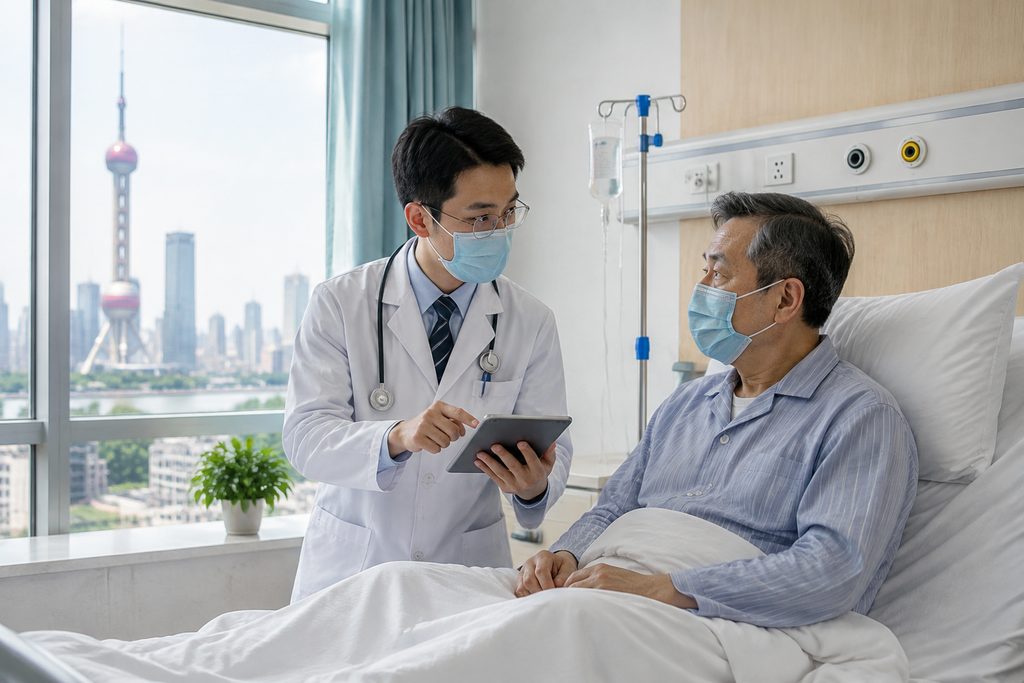
Lung Disease Treatment in China Explained: Costs, Top Hospitals, and What International Patients Should Know
Roughly 1 in 7 deaths worldwide is linked to lung disease — and for patients outside China, the first question is rarely medical. It’s financial. According to publicly reported hospital pricing, a lobectomy for early-stage lung cancer at a top-tier Chinese public hospital typically runs between $8,000 and $18,000, against $60,000 to $150,000 in the United States. That gap is the single biggest reason international patients start searching for lung disease treatment cost China comparisons. This guide walks through what treatment actually involves, which hospitals lead the field, what safety looks like in practice, and how the process works from your first email to your flight home.
Key takeaway: China’s top respiratory centers perform high volumes of complex lung procedures at a fraction of Western prices — but the system runs on Chinese-language workflows and same-day registration. Understanding that structure before you commit is what separates a smooth trip from a stressful one.
How This Actually Works, Step by Step
Here’s the honest sequence. It is not a booking engine. It is a staged process, and each stage exists to protect you from expensive mistakes.
Step one — you send records. Not a summary. Actual files: CT and PET-CT scans in DICOM format, pathology reports, biopsy slides if available, pulmonary function tests, blood work, and a list of current medications. Our team arranges certified medical translation into Chinese, because no Chinese specialist will review untranslated English imaging reports.
Step two — a specialist reviews them. Depending on your case, this is either a written second opinion from a senior physician at a top-ranked hospital, or a video consultation where you speak directly with the respiratory or thoracic surgery team. You hear their read on your diagnosis, whether surgery is appropriate, and what alternatives exist.
Step three — a plan and a rough number. You get a treatment direction and a cost range. Not a quote. Ranges move once the hospital sees you in person.
Step four — visa and logistics. Medical travel to China uses the S2 visa, annotated for medical treatment. Family accompanying you applies for S2 as well. Processing typically takes one to three weeks depending on your consulate. The M visa is for commercial and trade activity and has nothing to do with medical care — if anyone tells you otherwise, walk away.
Step five — arrival and in-person consultation. This is the step most foreign patients don’t expect. At Chinese public hospitals, you generally cannot lock in a surgery date from abroad through the standard outpatient channel. You register on the day, see the specialist in person, and only then does the surgical schedule open. International departments and VIP channels work differently — they allow advance coordination, English-speaking staff, and faster scheduling, at roughly 1.5 to 2 times the standard fee.
Step six — treatment, recovery, follow-up. Surgery or medical management happens, you recover, and you leave with a discharge summary and imaging in a format your home physician can read.
What Lung Disease Treatment Cost in China Actually Looks Like
Prices vary by hospital tier, city, disease stage, and whether you use the standard or international channel. The figures below are representative ranges for top-tier public hospitals. Treat them as orientation, not quotation.
| Procedure or Treatment | Typical Range in China (USD) | Comparable US Range (USD) |
|---|---|---|
| Thoracic CT with contrast | $150 – $400 | $1,200 – $4,000 |
| Bronchoscopy with biopsy | $600 – $1,500 | $3,000 – $8,000 |
| Lobectomy (early-stage lung cancer) | $8,000 – $18,000 | $60,000 – $150,000 |
| Video-assisted thoracoscopic surgery (VATS) | $10,000 – $20,000 | $70,000 – $160,000 |
| Targeted therapy, per month | $800 – $3,500 | $8,000 – $20,000 |
| Immunotherapy infusion cycle | $1,500 – $4,000 | $10,000 – $25,000 |
| Inpatient bed, per day (standard ward) | $40 – $120 | $1,500 – $5,000 |
Two caveats matter here. First, public hospitals require prepayment; insurance reimbursement happens afterward, and most international insurers reimburse rather than pay directly at public institutions. Private international hospitals such as United Family, Jiahui, and Parkway handle direct insurance billing and English-language care, but their prices sit considerably higher than public tiers. Second, drug costs swing widely depending on whether a therapy is domestically manufactured or imported, and whether it appears on China’s national reimbursement list.
Practical tip: Ask for a written cost estimate broken into imaging, surgery, anesthesia, ICU days, pathology, and medications. A single lump-sum number almost always hides something.
A Realistic Timeline
Patients consistently underestimate this. A lung cancer workup and surgery is not a two-week trip. Here’s what the calendar usually looks like.
| Stage | Realistic Duration | What Happens |
|---|---|---|
| Records gathering | 3 – 10 days | You collect scans, pathology, and reports from your home providers |
| Translation and specialist review | 3 – 7 days | Medical translation, then review by the Chinese specialty team |
| Video consultation scheduling | 3 – 10 days | Time-zone coordination and specialist availability |
| Visa application | 1 – 3 weeks | S2 visa with hospital invitation documents, varies by consulate |
| Travel and arrival | 1 – 3 days | Flights, airport transfer, hotel near hospital |
| In-person consultation and pre-op testing | 2 – 5 days | Face-to-face exam, bloodwork, cardiac clearance, anesthesia review |
| Surgery and hospital stay | 5 – 14 days | Shorter for VATS, longer for open thoracotomy or complications |
| Local recovery before flying | 7 – 21 days | Surgeons generally want you stable before long-haul travel |
| Follow-up from home | Ongoing | Imaging at intervals, shared digitally with your Chinese team |
Add buffer. A realistic total for surgical cases is four to eight weeks on the ground, and that assumes no complications and no additional diagnostics. Patients who plan a ten-day window for lung surgery end up rebooking flights at full fare.
What Can Go Wrong — and What Happens Then
This section matters more than the pricing table. Here is where trust gets earned or lost.
The specialist disagrees with your home diagnosis. It happens. Imaging gets reinterpreted, staging shifts, and the recommended plan changes. That’s a good outcome, not a failure — it’s the entire point of a second opinion. But it can also mean surgery is no longer appropriate, and you’ve already paid for flights. Build flexibility into your travel dates.
Surgery gets delayed after arrival. A new infection, an abnormal cardiac clearance, or an unexpected finding on pre-op imaging can push the date. Chinese public hospitals will not operate on an unstable patient. Delays of several days to two weeks are common and not a sign of poor care.
The standard outpatient channel can’t book you in advance. This is the single most common frustration. If advance scheduling is essential — and for most international patients it is — the international department or VIP channel is the realistic route. It costs more. That’s the trade.
Language breaks down at a critical moment. A top Chinese public hospital may handle upward of ten thousand outpatient visits in a single day. Signage, consent forms, pharmacy instructions, and billing are in Chinese. Even fluent Mandarin speakers report difficulty navigating the queue systems. This is precisely where a bilingual medical companion earns their fee.
A complication occurs. Post-operative infection, prolonged air leak, or respiratory failure can extend your stay and your bill. Ask upfront what the hospital’s complication management looks like and what a typical extended ICU stay adds to the cost. Good hospitals answer this directly. Vague answers are a warning sign.
Your insurer refuses to reimburse. Confirm coverage in writing before you travel. Get pre-authorization if your policy requires it. Keep every receipt, translated and itemized.
Choosing the Best Hospital for Lung Disease in China
China has more than 35,000 hospitals. Our database covers 340+ top-ranked institutions across 37 cities — the top 5% by Fudan University rankings and JCI accreditation. For respiratory and thoracic care, a handful of names come up repeatedly.
The Fudan Rankings publish specialty reputation lists covering 45 disciplines, each with a top 10. For respiratory medicine and thoracic surgery, the consistently top-ranked institutions include Peking Union Medical College Hospital in Beijing, Zhongshan Hospital Fudan University and Ruijin Hospital in Shanghai, and West China Hospital in Chengdu. Each of these appears among China’s top 10 for respiratory-related specialties — we don’t quote specific numeric ranks because the Fudan general list uses tier grades (A++++ through A) rather than numbered positions.
Geography matters more than people expect. Beijing hosts 21 of the Fudan Top 100 hospitals; Shanghai has 18; Guangzhou has 10. If you’re traveling from Southeast Asia, Guangzhou or Shenzhen may be closer and equally strong. From Europe or the Middle East, Beijing and Shanghai offer the deepest specialty benches.
Three decision criteria we’d weigh:
- Volume. Hospitals performing hundreds of lung resections annually develop smoother protocols and better complication management than low-volume centers.
- International department infrastructure. Does the hospital have English-speaking coordinators, translated consent forms, and a track record with foreign patients? Not every top-ranked hospital does.
- Multidisciplinary team access. Lung cancer care increasingly involves medical oncology, radiation oncology, and thoracic surgery in one room. Ask whether MDT review is standard or optional.
You can browse ranked institutions by specialty on our department rankings page, or explore hospitals city by city starting with Beijing and Shanghai.
Is Lung Disease Treatment in China Safe?
This is the question behind every other question. The honest answer: at top-tier institutions, yes — with conditions.
China’s leading hospitals operate at volumes that exceed most Western centers. Fuwai Hospital, for example, performs over 14,000 cardiac surgeries annually, the highest volume worldwide. High volume correlates with refined technique and standardized recovery pathways. Surgical outcomes at Fudan A++++ hospitals are published and benchmarked internationally.
But “safe” depends on where you go and how you get there. Three conditions:
Go to a top-ranked hospital. The quality gap between a Fudan Top 100 hospital and an average provincial facility is substantial. This isn’t a subtle distinction — it’s the difference between a center that does 500 lung resections a year and one that does 20.
Use the international channel if you don’t speak Mandarin. Not a luxury. It’s a safety measure. Miscommunication about medication, allergies, and post-operative instructions is a genuine clinical risk.
Have a bilingual companion for the critical days. Admission, consent signing, discharge instructions, and pharmacy pickup are the four moments where language failure causes real harm.
Caution: Be wary of any intermediary promising a guaranteed surgery date with a named professor, or claiming they can “skip the queue.” Legitimate coordination works through hospital international departments and follows hospital rules. No one can promise admission or a clinical outcome.
Also worth noting: China’s regulatory environment for medical devices and pharmaceuticals differs from the FDA and EMA. Some newer targeted therapies approved in the US may not be available, while some domestically developed drugs are. Ask specifically which agents are on the formulary at your chosen hospital.
Practical Considerations: Records, Visa, Payment, and Follow-Up
Medical records. Get your imaging on disc in DICOM format, not just printed reports. Bring pathology slides or blocks if your home lab will release them. Radiologists in China can read English-language reports, but the raw images are what drive surgical decisions.
Visa category and timing. S2 for short-stay medical treatment, S1 if your stay exceeds 180 days. Accompanying family members apply under S2 as well. Requirements shift — confirm current documentation with your nearest Chinese embassy or consulate, and expect to submit a hospital invitation letter. Never assume approval.
Payment. Public hospitals require prepayment in cash or by international card, with reimbursement from your insurer afterward. Private international hospitals often bill insurers directly. Budget a contingency of 20 to 30 percent above the estimate.
Insurance. Call your insurer before you book anything. Ask three questions: Is treatment in China covered? Is pre-authorization required? What documentation do you need for reimbursement?
Language. Assume nothing is in English outside international departments. Arrange interpretation in advance, not on arrival.
Follow-up at home. Request a discharge summary in English, copies of all imaging, and a written follow-up schedule. Your home oncologist or pulmonologist will need these to continue your care. Coordinate the handoff before you leave China.
For a deeper look at the full landscape of Chinese hospitals available to foreign patients, our ranked hospital directory groups institutions by city and tier.
Frequently Asked Questions
For a diagnostic workup alone, plan two to three weeks including travel. For surgical cases, the realistic total is four to eight weeks on the ground: two to five days of pre-operative testing, five to fourteen days in hospital, and one to three weeks of local recovery before your surgeon clears you to fly. Medical management without surgery can be shorter, but chemotherapy or immunotherapy cycles may require extended or repeated stays.
Through the standard public outpatient channel, generally no — you register on the day and surgery is scheduled only after an in-person consultation. Through a hospital’s international department or VIP channel, advance coordination is possible at roughly 1.5 to 2 times the standard fee. No legitimate provider can guarantee a specific surgeon or a specific surgery date in advance.
At top-ranked hospitals, outcomes are benchmarked against international standards and surgical volumes are high. The risks are logistical rather than clinical: language barriers, unfamiliar payment systems, and quality variation between institutions. Choosing a Fudan-ranked hospital, using the international channel, and having bilingual support during admission and discharge addresses most of the practical risk.
Broadly, one-fifth to one-tenth of US prices for equivalent procedures. A lobectomy runs $8,000 to $18,000 in China against $60,000 to $150,000 in the US. Targeted therapy can cost $800 to $3,500 per month versus $8,000 to $20,000. These are ranges — final costs depend on hospital tier, disease complexity, length of stay, and whether complications occur.
Yes. Medical travel uses the S2 visa, annotated for treatment purposes, with S1 for stays exceeding 180 days. Accompanying family members apply under S2. The M visa is for commercial and trade activities and is not applicable to medical treatment. Requirements change, so verify current rules with your nearest Chinese consulate before applying.
Your Next Step
Lung disease treatment in China offers genuine value — top-tier surgical expertise at a fraction of Western costs — but it rewards preparation over improvisation. Get your records organized, understand the visa category, and be realistic about timelines before you commit to anything.
We are China Medical Services, a bilingual coordination team that connects international patients with 340+ top-ranked hospitals across 37 cities. We are not physicians and we do not provide medical advice, diagnose conditions, or promise treatment outcomes. What we do is translate your records, arrange specialist review, coordinate appointments through official hospital channels, and put a bilingual companion beside you during the days that matter most. If you’d like a straightforward conversation about whether China is a sensible option for your situation, start with a free consultation — no pressure, no obligation, just clarity.
This article is for informational purposes only and does not constitute medical advice. Always consult a qualified physician regarding diagnosis and treatment decisions.
For more medical information and treatment options in China, visit chinamedservices.com (China Medical Services).
