Eye Care in Shanghai: A Guide for Foreigners Seeking Treatment
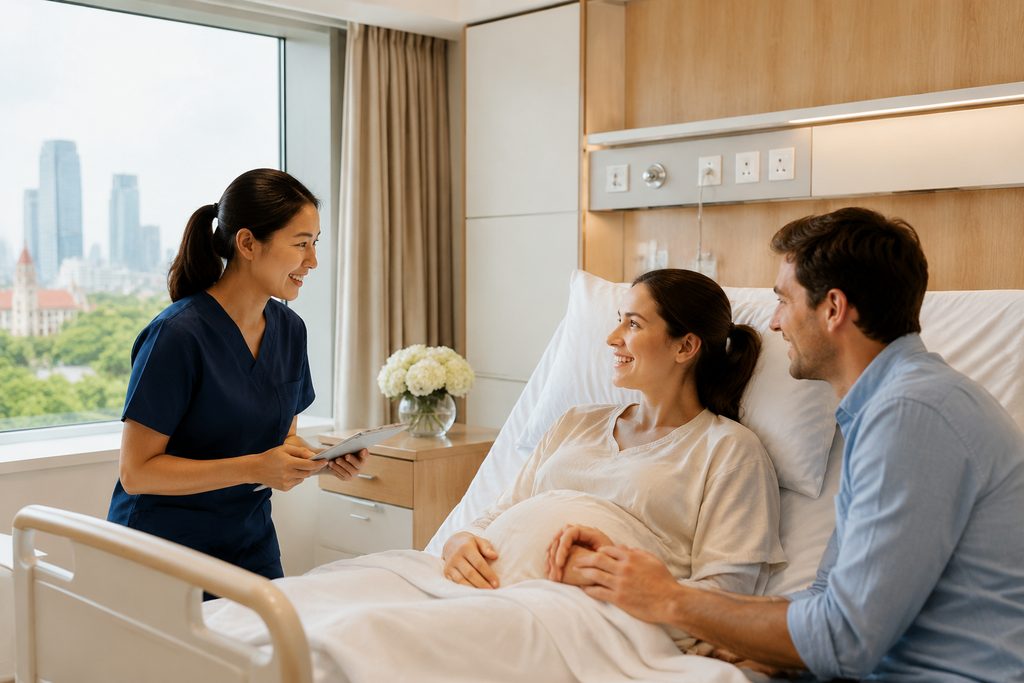
When 42-year-old Daniel from Portland noticed his vision blurring during a business trip to Shanghai, he did what most of us would do — he opened his phone and searched for an eye clinic near his hotel. What he found confused him more than the blurred vision itself. Some listings were private international hospitals with English-speaking staff and prices in the thousands of yuan. Others were public tertiary hospitals with world-class reputations but websites entirely in Chinese. He had no idea which was right for him, what an eye exam cost in Shanghai, or whether he could even walk in without an appointment.
That confusion is common. Shanghai has one of the densest concentrations of ophthalmic expertise in Asia, yet the system is not built for walk-in foreign patients. This guide explains what international visitors can realistically expect — from routine exams to laser surgery — and how to navigate it without wasting days or dollars.
Key Takeaways
- A routine comprehensive eye exam in Shanghai typically runs $50–150 at public hospitals and $150–400 at private international clinics, depending on the facility and tests included.
- LASIK surgery price China-wide often falls between $1,500 and $3,500 per eye — roughly 40–60% below typical U.S. quotes, though final pricing varies by hospital and case complexity.
- The biggest practical barrier is not cost or quality. It is access: most public hospital ophthalmology departments do not accept advance bookings from overseas, and same-day registration can mean long queues.
- Anyone considering surgery abroad should confirm the surgeon’s credentials, the specific laser platform used, and what postoperative follow-up looks like after returning home.
The Problem: Why Eye Care Abroad Feels So Complicated
In the United States, the average wait to see an ophthalmologist in a metropolitan area stretches past three weeks, and a single comprehensive exam without insurance can exceed $250. In the UK, NHS ophthalmology waiting lists have ballooned — tens of thousands of patients wait more than 18 weeks for routine appointments, according to repeated reporting on National Health Service referral data.
So patients start looking elsewhere. Shanghai draws attention because it hosts several hospitals with genuine international standing in ophthalmology, and because the price differential is real. But the moment a foreigner tries to book, the friction appears. Public hospital registration systems are built around same-day, in-person queuing. Specialist slots disappear within minutes of opening. And without Mandarin, even finding the right department becomes a project.
None of this means care is inaccessible. It means the entry point matters enormously.
Why Shanghai Delivers Strong Ophthalmic Outcomes
The city’s eye hospitals are not simply cheaper versions of Western clinics. In several subspecialties they are volume leaders, and volume in surgery correlates with outcomes.
Clinical Volume and Subspecialty Depth
Shanghai’s major ophthalmology departments handle tens of thousands of surgical cases annually across cataract, refractive, retinal, and glaucoma services. That caseload builds institutional experience that smaller clinics cannot replicate. For conditions like diabetic retinopathy or complex retinal detachment, that matters more than a comfortable waiting room.
Technology at Scale
Top-tier Shanghai eye centers operate femtosecond laser platforms, OCT angiography, and advanced phacoemulsification systems comparable to those in Western academic centers. The difference is throughput. A single high-volume public hospital may run multiple surgical theaters simultaneously with dedicated refractive and retinal teams, which compresses scheduling timelines once you are inside the system.
Cost Structure Without Quality Compromise
Lower prices do not come from cutting corners on equipment. They come from labor economics, government hospital subsidies, and sheer procedural volume. A cataract surgeon in Shanghai may perform several times the annual case count of a typical U.S. counterpart, which spreads fixed costs across far more patients. The laser, the lens, and the surgical technique are frequently identical to what you would encounter in Europe or America.
What an Eye Exam Actually Costs in Shanghai
This is the question most readers arrive with. The honest answer is a range, because a basic vision check and a full retinal workup are not the same product.
| Service | Public Hospital (approx.) | Private International Clinic (approx.) |
|---|---|---|
| Basic vision and refraction exam | $30–70 | $100–200 |
| Comprehensive exam with dilation | $50–150 | $150–400 |
| OCT retinal scan | $40–100 | $150–350 |
| LASIK (per eye) | $1,500–2,500 | $2,500–3,500 |
| Cataract surgery (per eye, standard lens) | $1,500–3,000 | $4,000–8,000 |
These figures are indicative only and vary by hospital and case complexity. Premium intraocular lenses, for instance, can add several thousand dollars to a cataract procedure. Always request a written estimate before committing.
How to Book an Eye Exam in Shanghai as a Foreigner
There are three realistic routes, and they suit different people.
Private international clinics are the easiest entry point. Facilities such as United Family, Jiahui, and Parkway-style international departments employ English-speaking ophthalmologists, accept direct insurance billing in many cases, and allow advance online booking. You pay for that convenience — expect the higher end of the ranges above.
Public hospital international or VIP departments offer a middle path. You get access to senior specialists from top-ranked institutions, English-language coordination, and pricing roughly 1.5 to 2 times the standard public rate — still well below private clinic rates for surgery. This is often the sweet spot for anyone considering a procedure rather than a routine check.
Standard public hospital registration is the cheapest option and the hardest to navigate. Appointments generally cannot be secured from abroad in advance. You register on the day, in person, in Chinese, and wait. For a simple exam this is manageable with help. For surgery, it is impractical without a local coordinator, because surgical scheduling requires an in-person consultation first.
Is Eye Surgery Safe in Shanghai? Evaluating the Real Risks
Safety is not a national characteristic. It is a function of the specific hospital, the specific surgeon, and your specific eyes.
Shanghai’s leading eye hospitals are accredited and audited, and their complication rates for standard procedures like LASIK and cataract surgery fall within internationally reported ranges. But “safe” is not the same as “suitable for everyone.” Refractive surgery is inappropriate for patients with certain corneal conditions, unstable prescriptions, or active eye disease. A proper preoperative evaluation — not a sales consultation — is what determines candidacy.
Three things deserve scrutiny before you commit anywhere:
- Who performs the surgery, and how many procedures of this exact type they complete annually
- Which laser or device platform is used, and whether it is current generation
- What follow-up is included, and who manages your care once you return home
Practical Considerations Before You Travel
Visa. Medical treatment in China falls under the S2 visa category for short stays, with S1 for stays exceeding 180 days. Accompanying family members apply under the same category. Note that the M visa is for commercial and trade activities and is not the correct category for medical travel. Requirements shift, so confirm current rules with your nearest Chinese embassy or consulate and bring supporting hospital documentation.
Records. Bring your full ophthalmic history — prior prescriptions, topography scans, surgical reports, and current medication list. Chinese specialists work efficiently but they work from data. Missing records mean repeated testing at your expense.
Payment. Public hospitals generally require prepayment, with insurance reimbursement handled afterward in your home country. Private international clinics frequently bill insurers directly. Confirm which model applies before your visit.
Language. This is the single largest practical obstacle. Registration counters, payment windows, and pharmacy desks operate in Chinese. Bilingual medical accompaniment exists precisely to bridge this — handling registration, queuing, payment, wayfinding, and interpretation so that the clinical conversation is the only thing you need to focus on.
After you go home. Ask your Shanghai surgeon to prepare a written operative report and follow-up plan in English before discharge. Your local ophthalmologist will need it.
Frequently Asked Questions
At most public hospitals, yes — but expect to register on the day and wait, sometimes for hours. Advance booking from overseas is generally not available through standard public channels. Private international clinics do allow advance scheduling and are the simpler option for short visits.
Pricing commonly lands between $1,500 and $3,500 per eye, well below typical U.S. quotes, though it varies by hospital and case complexity. Quality at top-tier Shanghai centers is comparable in equipment and technique. The variable that matters most is surgeon experience, not geography.
This is the question worth asking before surgery, not after. Request a written postoperative plan and ensure your home-country ophthalmologist agrees to handle follow-up in advance. Most post-LASIK issues are manageable locally if records are complete.
Medical treatment typically falls under the S2 short-stay category, with S1 for longer stays. The M visa is for business and trade and does not cover medical treatment. Confirm current requirements with your nearest Chinese consulate.
Your Next Step
Shanghai offers genuine ophthalmic expertise at a fraction of Western prices, but the system rewards preparation over spontaneity. Understanding the cost ranges, the booking routes, and the safety questions puts you in a position to make a clear-eyed decision — literally.
Our team at China Medical Services connects international patients with top-ranked Chinese hospitals across 37 cities. We are not a hospital and we do not provide diagnoses. What we do is coordinate: matching you to the right department, arranging specialist consultations, and providing bilingual accompaniment through every step of the process. If you would like to understand your options, start with a free consultation — no pressure, no obligation.
For more medical information and treatment options in China, visit chinamedservices.com (China Medical Services).
