Orthopedic Care in Shanghai for International Patients: Costs and Top Hospitals
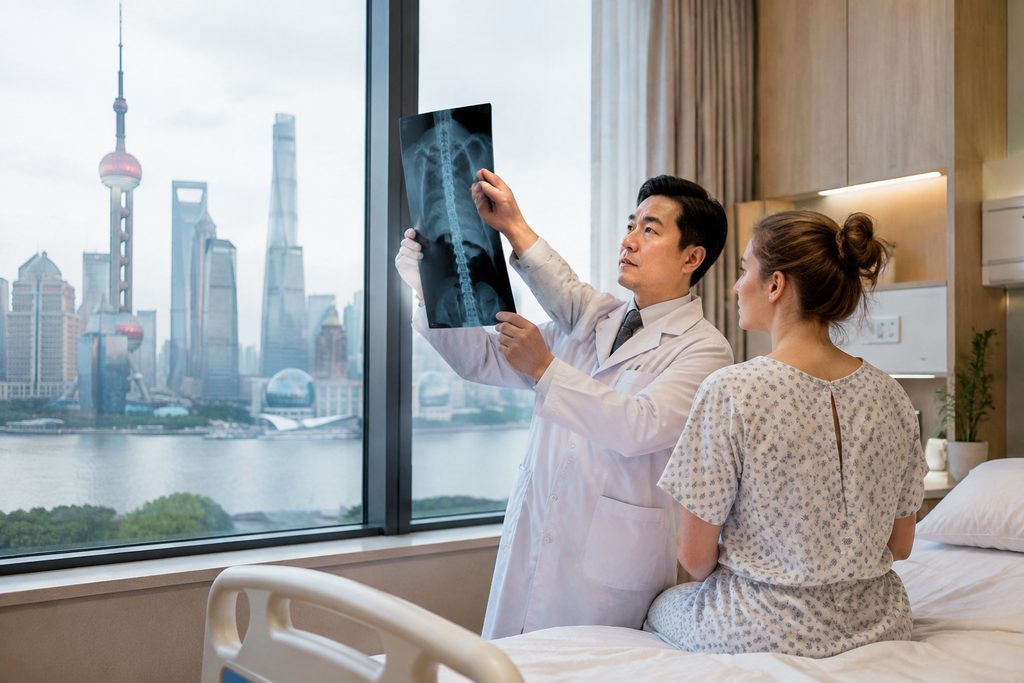
Roughly 12,000 international patients now travel to Shanghai each year for orthopedic procedures, according to hospital international-department figures compiled across the city’s major public and private facilities. That number has grown steadily since 2020, driven by one simple arithmetic problem: a total knee replacement that bills at $35,000–$60,000 in the United States can be performed at a top-tier Shanghai hospital for a fraction of that. For anyone weighing orthopedic surgery cost Shanghai against what they would pay at home, the gap is not marginal. It is often five to ten times.
But cost is the easy part to research. The harder questions — which hospital, which surgeon, how to get an appointment as a foreigner, and whether it is safe — are where most patients get stuck. This guide walks through all of it honestly, including the parts of the Chinese system that are genuinely inconvenient.
Orthopedic Surgery Cost in Shanghai: The Short Answer
At Shanghai’s top public hospitals, a standard total knee replacement typically runs $12,000–$20,000 all-in, including implants, hospital stay, surgery fees, and basic rehabilitation. A total hip replacement lands in a similar range, roughly $11,000–$19,000. Private international hospitals charge more — usually $25,000–$45,000 for the same procedure — but bundle in English-speaking staff, direct insurance billing, and Western-style rooms.
The caveat: these ranges assume a straightforward primary joint replacement. Complex revision surgery, spinal fusion, or procedures requiring custom implants can push costs significantly higher. Final pricing always depends on the hospital, the implant chosen, and the complexity of your case.
Key takeaway: Shanghai’s public hospital pricing for joint replacement is typically 1/5 to 1/8 of US list prices. Private international hospitals cost more but remove most language and payment friction.
Who This Is Right For — and Who It Isn’t
Medical travel is not for everyone, and pretending otherwise does patients a disservice.
Typically a good fit:
- Patients with a confirmed diagnosis (osteoarthritis, avascular necrosis, ligament tear) who already have imaging and want surgery sooner than their home system allows
- Self-pay patients or those with insurance that reimburses internationally after the fact
- Patients willing to travel with a companion or hire a bilingual medical escort
- People seeking a second opinion before committing to surgery at home
- Expats already living in Asia who want treatment without flying to Europe or North America
Probably not a good fit:
- Anyone with an active infection, uncontrolled cardiac condition, or bleeding disorder that makes long-haul travel risky
- Patients who need immediate emergency surgery — you cannot plan medical travel around an acute fracture
- Those who cannot tolerate a 12–14 hour flight in the weeks after a major joint replacement
- Patients expecting a guaranteed appointment with a specific named surgeon on a specific date. Public hospitals do not work that way.
- Anyone whose home country offers the procedure at low cost with short waits. If you are in a system where a knee replacement costs $3,000 and happens within two months, the math rarely favors travel.
The Options, Compared
| Option | Typical Cost (USD) | Wait Time | English Support | Insurance Billing |
|---|---|---|---|---|
| Shanghai public hospital, standard channel | $12,000–$20,000 | Days to weeks after in-person consult | Limited; interpreter needed | Pay upfront, reimburse later |
| Shanghai public hospital, international/VIP department | $18,000–$30,000 | Usually 1–3 weeks | Yes, dedicated staff | Pay upfront, reimburse later |
| Private international hospital (Shanghai) | $25,000–$45,000 | Often under 2 weeks | Full English service | Direct billing with many insurers |
| United States, average | $35,000–$60,000 | 4–12 weeks or longer | Native | Insurance-dependent |
| Western Europe (private) | $18,000–$35,000 | Variable, often months | Yes | Varies by country |
Which column suits you depends on what you value. If price is the dominant factor and you are comfortable navigating a large Chinese hospital with help, the public international department is the sweet spot. If you want a hotel-like environment and direct insurance billing, go private. If your insurer only covers treatment at home, none of this applies.
Finding the Best Orthopedic Hospital in Shanghai for Foreigners
Shanghai has 18 hospitals in the Fudan Ranking Top 100 — the second-highest concentration in China after Beijing. For orthopedics specifically, several names come up repeatedly.
Shanghai Sixth People’s Hospital is widely regarded as one of the country’s leading centers for orthopedic surgery, particularly joint replacement and sports medicine. Its orthopedic department consistently ranks among China’s top ten in the Fudan specialty reputation rankings. Ruijin Hospital, affiliated with Shanghai Jiao Tong University School of Medicine, has a strong orthopedic tradition and a well-established international department. Huashan Hospital is another name that appears on most shortlists, especially for spine and hand surgery.
On the private side, facilities like Shanghai United Family Hospital and Jiahui International Hospital offer English-speaking orthopedic surgeons, JCI accreditation, and direct billing arrangements with major international insurers. These are often the better choice for patients who prioritize communication and comfort over absolute lowest cost.
You can browse the full list of top-ranked Chinese hospitals by city or filter by specialty on the orthopedics department page.
Practical tip: Public hospital outpatient clinics cannot be booked from overseas in advance. You register on the day, in person. If you need a confirmed appointment before you fly, you must go through the hospital’s international or VIP department — expect to pay roughly 1.5–2x standard rates for that access.
How Long to Recover from Hip Replacement — and Knee Replacement
Recovery timelines matter enormously when you are planning a trip across the world. Here is what to realistically expect.
Hip replacement: Most patients stand and take assisted steps within 24 hours of surgery. Hospital discharge is typically day 3 to day 5. You can usually fly home with medical clearance around week 3 to week 4, though some surgeons prefer 6 weeks for long-haul flights due to clot risk. Full recovery — walking without aids, returning to normal activity — takes 3 to 6 months. How long to recover from hip replacement varies with age, fitness, and whether you had a minimally invasive approach.
Knee replacement: Similar early milestones. Standing within a day, discharge around day 3 to day 5. But knee recovery is slower and more painful than hip. Expect 4 to 6 weeks before you can fly comfortably, and 6 to 12 months for full strength and range of motion.
Spinal surgery: Highly variable. A simple discectomy might allow travel in 2 weeks. A fusion may require 6 to 8 weeks before flying is advisable.
The implication for medical travel is straightforward: plan to stay in Shanghai for at least 3 to 4 weeks after a joint replacement, or arrange a longer recovery stay before flying home. Rushing the return flight is one of the most common mistakes international patients make.
Is Knee Replacement Safe in China?
This is the question patients ask most, usually in a slightly anxious tone. The honest answer: at top-tier hospitals, yes — outcomes are broadly comparable to Western centers.
China performs more joint replacements annually than any other country. Fuwai Hospital in Beijing, for instance, handles over 14,000 cardiac surgeries a year, which gives a sense of the surgical volume at China’s apex hospitals. Orthopedic volumes at Shanghai’s major centers are similarly high. High volume correlates with surgical proficiency — this is well established in the literature.
What is different is not the surgery. It is the system around it. Chinese public hospitals are enormous, often seeing 10,000+ outpatients per day. Signage is in Chinese. Queues are long. The registration process is not designed for foreigners. None of this affects the quality of the operation, but it affects your experience of getting to it.
What to verify before committing: Ask directly about the surgeon’s annual case volume for your specific procedure, the implant brand and model, and the hospital’s infection rate. Reputable international departments will answer these questions. If a provider dodges them, walk away.
Also confirm whether the hospital has an international department or a VIP channel. Without one, you will be navigating a system that assumes fluent Mandarin, and that is where most of the friction — and most of the risk of miscommunication — lives.
Practical Considerations: Visas, Records, and Payment
Some international policies reimburse treatment abroad; many do not, or require pre-authorization. You will almost certainly pay upfront and seek reimbursement afterward. Private international hospitals in Shanghai have direct billing arrangements with certain insurers — worth checking before you commit. Call your insurer before you book anything.
This is a legitimate concern. Major complications after joint replacement are uncommon but possible — infection, clot, implant issues. You need a clear plan: a local orthopedic surgeon who agrees to take over your follow-up, your operative notes and imaging in hand, and a way to reach your Shanghai surgeon remotely. Arrange all three before you leave China, not after.
Some are, some are not. The useful ones bundle hospital coordination, interpretation, airport transfer, and accommodation near the hospital. The ones to avoid promise specific surgeons, guaranteed dates, or prices that seem too low — those usually mean a lower-tier facility or hidden fees. Ask what happens if the appointment cannot be secured, and get the refund policy in writing.
Your Next Step
Shanghai offers genuine orthopedic expertise at a fraction of Western prices, but the system rewards preparation. The surgery itself is rarely the hard part. Getting to the right surgeon, with the right records, at the right time, is.
We are not a hospital and we do not provide medical advice or diagnoses. What we do is help international patients navigate the logistics: matching your case to appropriate hospitals, coordinating appointments through official international departments, arranging bilingual medical companions, and advising on visa and travel planning. You can start with a free consultation — no pressure, no obligation, just a conversation about whether China makes sense for your situation. Visit our patient services page to begin, or explore the China Medical Services homepage to see how we work with international patients across 37 cities.
This article is for informational purposes only and does not constitute medical advice. Treatment decisions should always be made in consultation with a qualified physician who has reviewed your individual case.
Frequently Asked Questions
Yes. The hospitals used for international patients are JCI-accredited and follow the same international safety standards as top hospitals in the US and Europe. Surgical teams perform high volumes of procedures — often more than their Western counterparts — which studies show leads to better outcomes.
Costs vary by procedure and hospital, but international patients typically save 40-80% compared to US prices — even when factoring in travel and accommodation. A consultation with our team will give you an exact, all-inclusive quote with no hidden fees.
Send us your existing medical reports to get started. We handle everything from hospital selection and appointment scheduling to visa assistance and post-operative recovery planning. Your medical records are reviewed by the specialist before you even book a flight.
For more medical information and treatment options in China, visit chinamedservices.com (China Medical Services).
