Surgery in China for Patients Traveling Alone: A Complete Guide
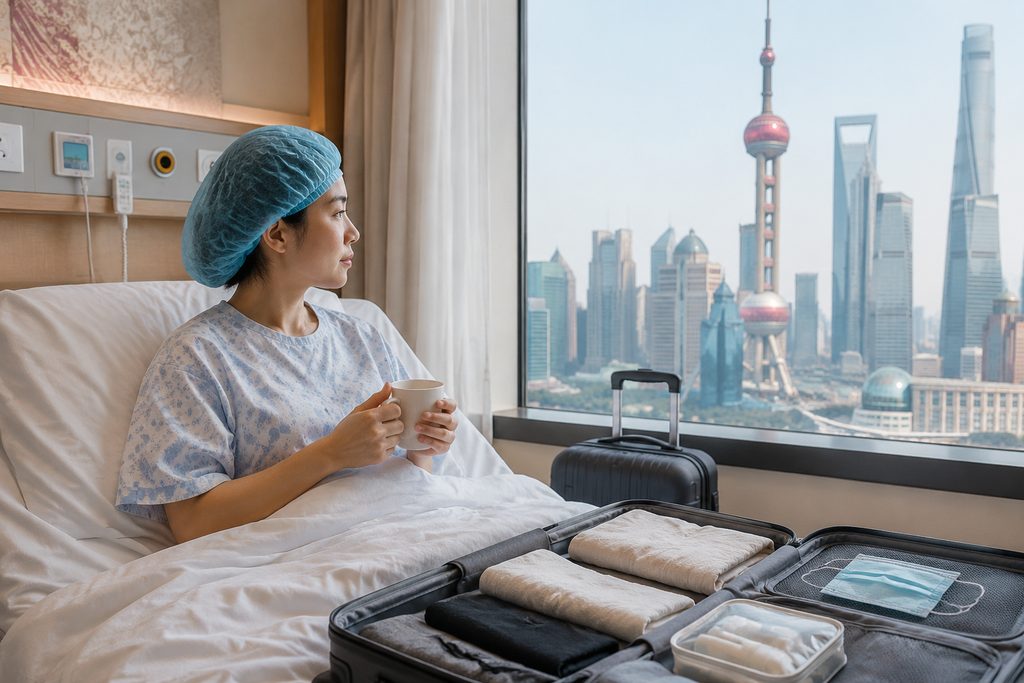
Surgery in China for Patients Traveling Alone: What Nobody Tells You
You have probably heard that going abroad for surgery alone is reckless. The reality is stranger than that. Every year, thousands of international patients fly to China by themselves, have major procedures, and recover in a city where they speak none of the language. The surgery in China cost for international patients is often one-fifth of what they would pay at home. The hard part is not the operating room. It is everything around it — the airport, the hospital gate, the pharmacy, the empty hotel room at 2 a.m.
This guide is about that hard part. We are not doctors. We are the people who meet patients at arrivals, sit through registration lines with them, and translate what the surgeon said into plain English afterward. Here is what traveling alone actually involves, and how to make it work.
How This Actually Works, Step by Step
The sequence matters. Most patients imagine they book a surgery, fly over, and get treated. That is not how Chinese hospitals operate, and misunderstanding this is where solo travelers get stranded.
It starts with your existing records. You send us your imaging, pathology reports, lab results, and a short summary of your condition and goals. A relevant specialist at a Chinese hospital — usually through the international department — reviews the file and returns a written second opinion. That document tells you whether the procedure is feasible here, roughly what it involves, and what it may cost. This is a written second opinion, typically $300–500, and it is for reference only, not a prescription.
If the picture is still unclear, you can add a video consultation with the specialty team, $100–300 at a standard international department or $500–800 with a top specialist. You speak directly with the doctors, ask your questions, and hear their recommendation. No travel yet.
Only after a remote evaluation points to a feasible plan do you commit. That is when appointment coordination begins — registration, medical card creation, scheduling. And it is when you apply for the S2 visa, the short-stay category used for medical treatment, with supporting hospital documents. The M visa is for commercial and trade activity. It has nothing to do with medical care, and using it for treatment is a mistake people make.
Then you fly. A bilingual medical companion meets you, sits with you through the outpatient consultation that must happen before any surgery is scheduled, and stays through admission. The operation follows. Recovery follows that.
Can I Travel Alone for Surgery in China?
There is no separate “medical visa” category in the way people assume. The S2 visa is the short-stay category used for medical treatment and private affairs, and it requires supporting documents from the hospital. Stays beyond 180 days fall under S1. The M visa is for commercial and trade activity only and is not appropriate for treatment. Requirements vary, so verify with the embassy or consulate handling your case.
Plan the recovery before the operation, not after. Book accommodation near the hospital, arrange companion support for the first week, keep a written emergency contact, and schedule your follow-up visit before discharge. Solo recovery works when the logistics are decided in advance and fail when they are improvised.
You do not need one every day. Most solo patients use full-day support for arrival, first consultation, and admission, then half days for follow-up visits. The critical moments are the ones involving instructions you must understand — everything else you can handle from a hotel room.
Your Next Step
Traveling alone for surgery in China is manageable, provided you treat the logistics as seriously as the operation. The clinical care at the country’s leading hospitals is strong; the gap is everything around it, and that gap closes with planning.
We are China Medical Services. We connect international patients with 340+ top-ranked hospitals across 37 cities, coordinate appointments through official international departments, and provide bilingual companions on the ground. We do not practice medicine, we do not promise outcomes, and we do not sell access to named surgeons. We handle the parts that are hard to do alone. If you want to know whether your case is feasible here, start with a free consultation — no commitment, just a clear answer.
Frequently Asked Questions
Yes. The hospitals used for international patients are JCI-accredited and follow the same international safety standards as top hospitals in the US and Europe. Surgical teams perform high volumes of procedures — often more than their Western counterparts — which studies show leads to better outcomes.
Costs vary by procedure and hospital, but international patients typically save 40-80% compared to US prices — even when factoring in travel and accommodation. A consultation with our team will give you an exact, all-inclusive quote with no hidden fees.
Send us your existing medical reports to get started. We handle everything from hospital selection and appointment scheduling to visa assistance and post-operative recovery planning. Your medical records are reviewed by the specialist before you even book a flight.
For more medical information and treatment options in China, visit chinamedservices.com (China Medical Services).
