Medical Tourism in China: Recovery and Return Explained
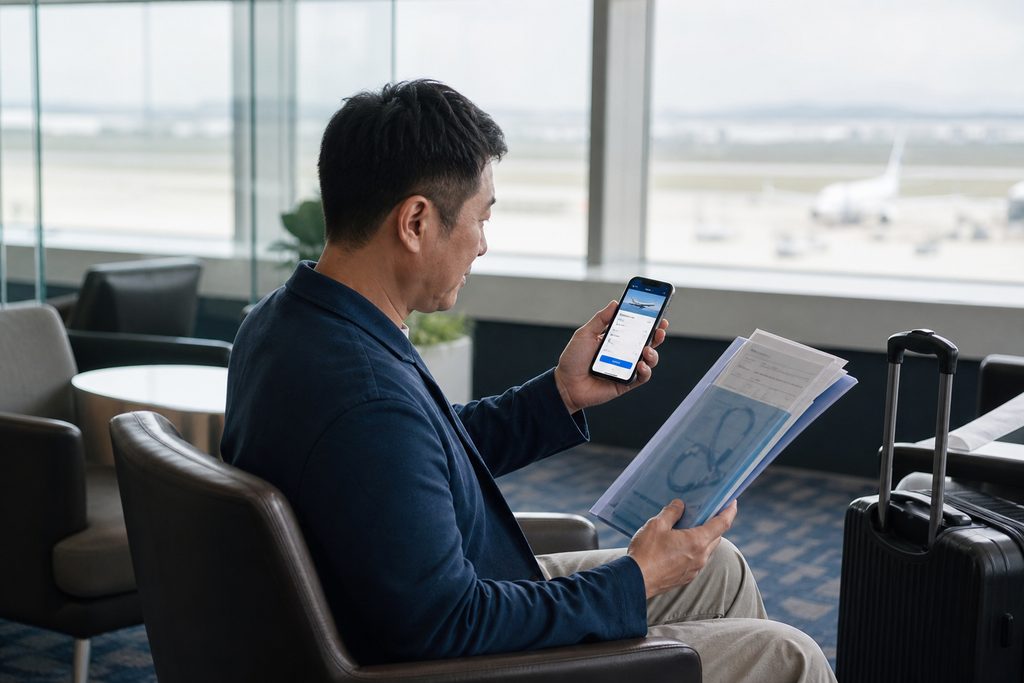
Medical Tourism in China: Recovery and Return
What happens after the surgery is the part most patients think about last — and it is often where medical tourism in China cost, planning, and peace of mind are won or lost. The operation is one day. Recovery and the trip home can stretch across weeks.
Understanding how recovery and return actually work in China changes what you pack, what you book, and how you budget. Here is the honest picture.
How This Actually Works, Step by Step
The sequence rarely starts with a flight. It starts with paperwork.
Most international patients begin by sending existing examination reports — imaging, lab results, prior operative notes, pathology if relevant — to the relevant Chinese specialty through their chosen hospital’s international department. A written second opinion typically comes back within several business days, outlining whether treatment is feasible, what it would involve, and roughly what it would cost.
From there, the path usually looks like this:
- Records reviewed remotely; a written opinion or video consultation clarifies the plan.
- Hospital appointment coordination is arranged through the official international or VIP channel.
- The patient travels to China and attends an in-person consultation. No public hospital schedules surgery without a face-to-face exam first.
- Pre-operative testing, admission, and the procedure itself.
- Inpatient recovery, then discharge with a written recovery plan.
- Follow-up visits in China, or a handover to a physician at home.
That last step is the one patients underestimate. A discharge summary in English, imaging on a USB drive, and clear medication instructions make the difference between a smooth return and a confusing one.
What Recovery in China Actually Looks Like
Recovery time depends entirely on the procedure. A cataract operation may allow travel within days. A cardiac bypass or joint replacement generally requires weeks before flying is advisable. Surgeons typically give a specific clearance window based on your case.
What surprises many patients is the environment. China’s top public hospitals are enormous — some see more than 10,000 outpatient visits a day. Wards are efficient, not hotel-like. If you want a quieter, English-speaking setting, private international hospitals such as United Family, Jiahui, Parkway, and Raffles offer Western-style rooms and direct insurance billing, at higher cost.
Accommodation matters too. Staying within a short drive of the hospital for the first two weeks after discharge is standard advice. Many families book serviced apartments rather than hotels for that stretch.
A Realistic Timeline
Every case differs, but here is a typical shape for a patient traveling to China for a major procedure. Ranges are wide on purpose.
| Stage | Typical Duration | Notes |
|---|---|---|
| Records review and second opinion | 3–10 business days | Depends on how complete your reports are |
| Appointment coordination | 1–3 weeks | Top specialists book out faster |
| Visa application (S2) | 1–4 weeks | Requires hospital invitation documents |
| Travel and pre-op consultation | 2–5 days | Testing may add days |
| Hospital stay | 3–14 days | Procedure-dependent |
| Local recovery before flying | 1–6 weeks | Surgeon clearance required |
| Follow-up at home | Ongoing | Handover documents essential |
Add buffer. Document translation, embassy processing, and specialist availability all introduce delay that no one controls.
What Can Go Wrong — and What Happens Then
Honest planning means naming the failure modes.
The surgeon declines to operate. This happens. After in-person examination, the plan may change — a different procedure, further testing, or a recommendation against surgery. You have traveled for nothing, but you have also avoided an operation you did not need. Budget for this possibility.
Complications extend the stay. Infection, delayed healing, or an unexpected finding can add days or weeks. Travel insurance that covers medical extensions is not optional.
The flight home is refused. Airlines can decline boarding if you appear unfit to fly without documentation. Get the clearance letter.
Follow-up falls through. Your local physician may not accept foreign records or may want to repeat tests. Request a translated discharge summary and imaging before you leave China.
Is It Safe to Have Surgery in China?
This is the question families ask most, and it deserves a direct answer.
China’s leading hospitals perform extraordinary volumes. Fuwai Hospital in Beijing, for example, handles more than 14,000 cardiac surgeries a year — among the highest anywhere. Facilities ranked in the Fudan Top 100 sit within the top 5% of China’s 35,000+ hospitals by reputation and capability. Many private international hospitals hold JCI accreditation.
Safety, though, is not only about the operating room. It is about communication. If you cannot describe your symptoms, understand your medication instructions, or ask a nurse a question at 2 a.m., risk rises. That gap is why bilingual medical companions exist — not to replace clinicians, but to make sure nothing is lost between languages.
The realistic answer: outcomes at top-tier Chinese hospitals for common major procedures are well documented, and cost is a fraction of U.S. pricing. The variable you control is preparation.
What Medical Tourism in China Cost Actually Includes
Patients searching for medical tourism in China cost usually find the surgery price and stop there. The full number is bigger.
| Cost Category | Typical Range (USD) |
|---|---|
| Procedure (varies by hospital and case complexity) | $12,000–20,000 for cardiac bypass at a top public hospital; far less for minor procedures |
| Private international hospital premium | Roughly 1.5–2× public VIP pricing |
| Bilingual medical companion | from $300/day |
| Airport transfer | $200 round-trip |
| Written second opinion | $300–500 |
| Video consultation | $100–300 |
| Hospital appointment coordination | from $300 |
| Accommodation and meals | Varies widely by city and length of stay |
The comparison most patients make is with the United States, where the same cardiac bypass can exceed $120,000. That gap is real. But add recovery time, a companion’s flight, extended lodging, and follow-up, and the total rises. Plan the whole arc, not just the operating room.
Practical Considerations: Records, Visas, Payment, and Follow-Up
Records. Bring originals and translations. Imaging on physical media, not just cloud links.
Visa. Medical travel to China uses the S2 visa, with a notation for medical treatment; stays beyond 180 days use S1. Accompanying family members apply for S2 as well. Requirements shift, so confirm current rules with the nearest Chinese embassy or consulate and rely on hospital-issued supporting documents. Note that the M visa is for commercial and trade activity and is not a medical visa.
Payment. Public hospitals generally require prepayment, with insurance reimbursement handled afterward. Private international hospitals often bill insurers directly.
Language. Assume you will need help. Hospital signage, forms, and pharmacy instructions are predominantly in Chinese.
Follow-up at home. Arrange it before you leave. A brief letter to your local physician, translated, prevents weeks of confusion.
If you want to compare hospitals before committing, our Fudan-ranked hospital directory groups facilities by city, and the specialty rankings show which centers lead in your condition.
Frequently Asked Questions
For minor procedures, a few days. For major surgery such as joint replacement or cardiac bypass, plan on two to six weeks before you are cleared to fly. Your surgeon sets the actual date, and it can move.
You can arrange consultations, appointments, and companion services ahead of time. What you cannot do is lock in a surgery date before an in-person examination — public hospitals require face-to-face assessment first. Anyone promising a guaranteed surgical slot before you arrive is overstating what is possible.
At top-ranked hospitals and JCI-accredited private facilities, yes, for many common procedures. The main risk is not surgical quality but communication and continuity of care. Plan for interpretation and for follow-up once you are home.
Some international policies reimburse care abroad; many do not. Check before you travel. Public hospitals typically require upfront payment, while private international hospitals more often bill insurers directly.
It happens, and it is manageable. Extend your accommodation, notify your airline, and confirm your visa status allows the longer stay. Travel insurance with medical extension coverage is the safeguard here.
Your Next Step
Recovery and return are not afterthoughts — they are half the plan. Get the timeline, the documents, and the cost picture right before you commit to anything.
China Medical Services helps international patients navigate this process: matching you with appropriate hospitals, coordinating appointments through official channels, providing bilingual medical companions, and guiding you on visa logistics. We are not physicians and we do not provide medical advice or guarantee outcomes. We handle the coordination so you can focus on getting well.
When you are ready, start with a free consultation at our patient services page — no pressure, just a conversation about whether China makes sense for your case.
For more medical information and treatment options in China, visit chinamedservices.com (China Medical Services).
