Medical Treatment in Nanjing China: Jiangsu Province Top Hospital Access with Your Companion
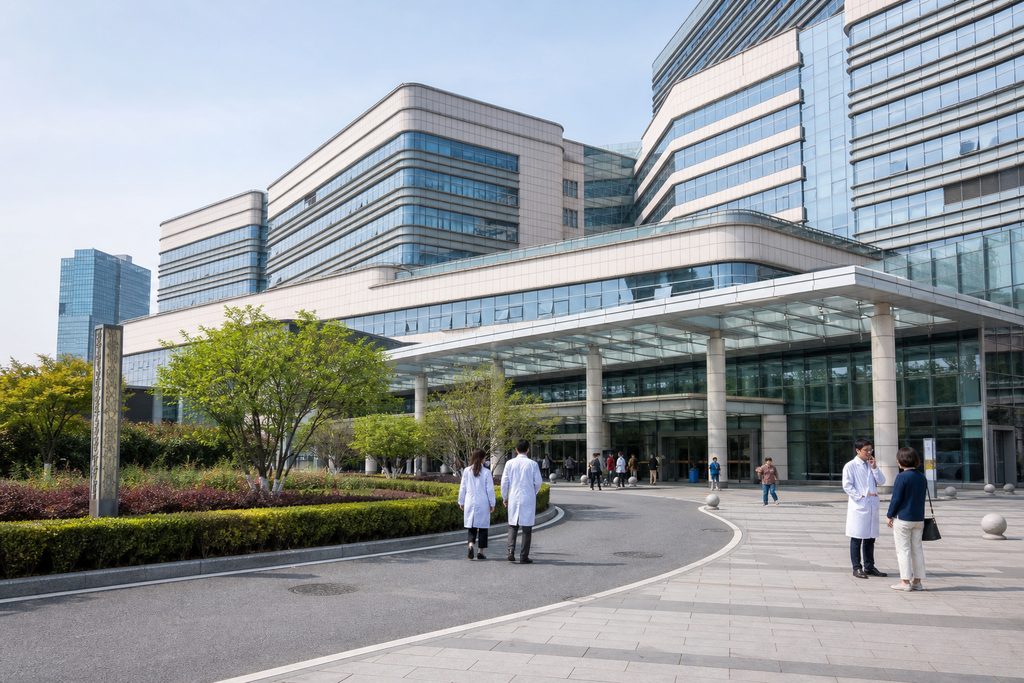
Have you ever stared at a hospital directory in a foreign language, realizing that getting the right specialist is entirely up to you and a series of opaque bureaucratic steps? That moment of paralysis is what brings most international patients to our team. Finding the best hospital in Nanjing for foreigners is not simply a matter of rankings. It involves matching a specific clinical need to a specific department, in a system that processes over 35,000 hospitals nationwide. We do that matching every day.
Key Takeaways
- Jiangsu Province Hospital and Nanjing Drum Tower Hospital rank among China’s top-tier institutions, with clinical volumes that dwarf most Western centers — Drum Tower’s orthopedics department alone handles over 12,000 surgeries annually.
- Accessing the best hospital in Nanjing for foreigners requires navigating the international patient departments, not the standard public queuing system, which cannot be pre-booked from overseas.
- Without a local companion, a single missed payment window in a Chinese public hospital can reset your entire admission timeline — a structural friction point, not a reflection of care quality.
- Treatment costs in Nanjing, even through VIP international channels, remain roughly 1/5th to 1/8th of equivalent US private-pay rates, with no compromise on the technology or surgical expertise being deployed.
The Problem: A World-Class Medical System That Was Not Designed for You
China’s hospital system is a paradox. On one hand, it delivers clinical outcomes in cardiac surgery, orthopedics, and oncology that are studied by medical journals globally. On the other hand, its patient-facing infrastructure assumes you speak Mandarin, understand a prepaid card system, and can physically navigate a campus that sees 20,000 outpatient visits on a single Monday.
For a foreign patient, this is not an inconvenience. It is a barrier. You cannot walk into Jiangsu Province Hospital’s main lobby, passport in hand, and register at a kiosk. The kiosk requires a Chinese ID number. The cashier window requires a local payment app. The directional signage is in characters. None of this is malicious. The system was simply built for a domestic population of 1.4 billion people. It was never rearchitected for a visitor from Manchester or Muscat.
We see the consequences in our intake calls. A patient’s family member flew to Nanjing, spent three days trying to locate the correct department for a spinal consultation, and left without seeing a doctor. They had the funds. They had the medical records. They lacked the interface. That is the gap we fill. Not with shortcuts, but with navigation.
Who We Are
We are China Medical Services, a medical concierge organization connecting international patients with over 340 top-ranked hospitals across 37 cities in China. We are not a hospital. We do not employ doctors, provide clinical diagnoses, or influence medical decisions. Our team functions as logistical architects — we translate medical records into clinical Chinese, coordinate with hospital international departments, schedule consultations, and place a bilingual companion at your side from the moment you land in Nanjing until the moment you are cleared to fly home. We work within the existing hospital system. We do not bypass it. But we make it legible, navigable, and humane for someone who does not speak the language or know the rules.
Why Nanjing’s Top Hospitals Deliver Results That Rival Any Western Center
Clinical Volume Creates a Diagnostic Speed That Few Systems Can Match
There is a blunt metric in medicine that polite conversations avoid: a surgeon who performs a procedure 400 times a year sees patterns that a surgeon performing it 40 times a year may miss. This is not a critique of individual skill. It is a recognition that pattern recognition in complex cases is built on volume. Nanjing’s top-tier hospitals operate at volumes that are difficult to comprehend from outside the system.
Jiangsu Province Hospital, known formally as the First Affiliated Hospital of Nanjing Medical University, runs one of the largest cardiovascular programs in eastern China. Its interventional cardiology labs handle complex PCI procedures daily that might be scheduled once a week at a regional European center. Nanjing Drum Tower Hospital, meanwhile, has built a hepatobiliary surgery department that attracts patients from across Southeast Asia, precisely because its surgeons have managed complications that a lower-volume center would only encounter in textbooks.
For a foreign patient, this volume translates into something practical: shorter diagnostic windows. A complex imaging workup that might take three weeks to schedule in a strained public system abroad can be completed in two days here. The machines are the same — Siemens, GE, Philips. The difference is throughput, and throughput is a structural advantage, not a marketing claim.
Technology Deployed at Scale, Not in Pilot Programs
Walk into the robotic surgery suite at Nanjing Drum Tower Hospital and you will see a da Vinci Xi system that logs more cases per quarter than many US academic centers log in a year. This is not because the technology is newer. It is because the surgical teams are larger, the operating rooms run longer hours, and the patient pipeline is deeper.
What matters for an international patient considering Jiangsu Province hospital international patient services is that the technology you read about in medical journals — minimally invasive spine surgery, laparoscopic liver resection, transcatheter aortic valve replacement — is not experimental here. It is routine. The learning curve has already been climbed. The complication rates have already been driven down. You are not an early adopter. You are a beneficiary of a mature, high-volume deployment.
The Cost Differential Is Structural, Not a Signal of Quality
A knee replacement in the United States can cost $35,000 to $50,000 for a patient paying out of pocket. In Nanjing, through the international VIP department of a top-tier hospital, that same procedure using the same implant systems typically ranges from $12,000 to $18,000, inclusive of hospital stay and rehabilitation. A cardiac bypass that would run $120,000 or more in the US is priced between $15,000 and $22,000 here.
These numbers make some patients nervous. Our team addresses this directly: the cost difference is not explained by inferior implants, less experienced surgeons, or lower safety standards. It is explained by labor economics, hospital efficiency, and a medical device pricing environment that does not carry the same administrative overhead as the US system. The implants are the same Zimmer, Stryker, or Medtronic devices you would receive in Munich or Melbourne. The sterilization protocols meet JCI standards in the international departments. The surgeons have often completed fellowships in the US or Europe.
The question to ask is not “why is it so cheap?” but “what am I actually paying for in my home country?” In many cases, you are paying for a system’s administrative complexity, not its clinical superiority.
What You Need to Know Before Going Alone
We have watched patients attempt to navigate this system independently. Some succeed. Most encounter at least one of these barriers and lose days, money, or momentum in their treatment timeline.
- Visa Classification: Medical treatment in China requires an S2 visa, annotated for medical purposes. Accompanying family members also need S2 visas. The M visa is strictly for commercial business and will be rejected if presented at a hospital’s international department for admission. Getting the invitation letter from the hospital — which is required for the visa application — is itself a process that requires a confirmed appointment and a point of contact inside the hospital’s international office. Without an intermediary, this can take weeks of emailing generic hospital addresses that may not respond in English.
- Payment Architecture: Chinese public hospitals operate on a prepaid deposit system. You load money onto a hospital account, and services are deducted as they are rendered. The deposit must be topped up before it runs out, or services pause. The top-up window has hours. It may not accept international credit cards. It may require a Chinese bank card or WeChat Pay with a China-linked account. A companion who understands this system can handle it in minutes. A patient alone can spend an afternoon in a queue only to be told their card was declined.
- Medical Records and Translation: A hospital will not schedule a surgery based on English-language records alone. They require translated summaries, formatted to Chinese clinical standards, with specific imaging uploads. A missing MRI sequence or an improperly translated pathology report can delay a surgical consultation by a week. This is not bureaucracy for its own sake. It is a clinical safety requirement. But it is a requirement that assumes local administrative support.
How We Help You Navigate This
Our process begins with a free consultation. You tell us your diagnosis, your goals, and your constraints. We match your case against our database of 340+ hospitals, cross-referencing the Fudan University hospital rankings — which tier China’s top 100 hospitals by specialty — with the practical availability of Jiangsu Province hospital international patient services and similar departments across the country.
Once a hospital and department are identified, we handle the invitation letter, the appointment coordination, and the medical records translation. This is not a concierge service that hands you a phone number and wishes you luck. We place a bilingual medical companion with you in Nanjing. That companion handles registration, payment queues, pharmacy runs, and real-time translation during consultations. They are not a doctor. They are a bridge — ensuring that when a surgeon explains a procedure in Mandarin, you understand every word in English.
For patients who need a family member present — and we are often asked, “can my family member come with me to hospital in China?” — the answer is yes. The S2 visa covers accompanying relatives. Our team guides both the patient and the companion through the visa process, coordinates accommodation near the hospital, and ensures that the companion is not left stranded in a foreign city while the patient is in surgery. The companion has a point of contact. They have logistical support. They are not an afterthought.
After discharge, we remain engaged. Follow-up appointments, medication refills, and rehabilitation coordination are part of the service. If a patient needs to return for a six-month checkup, we handle the scheduling so that the visit is a single, efficient trip, not a repeat of the initial navigation challenge.
When patients inquire about Nanjing top hospital medical treatment packages, what they are usually asking is whether the hospital bundles surgery, stay, and aftercare into a single fixed price. Some international departments do offer package pricing for defined procedures — joint replacements, certain cardiac interventions, and comprehensive health screenings. These packages typically include the surgeon’s fee, hospital bed charges, standard medications, and basic rehabilitation. They do not cover complications, extended stays, or non-standard implants. Our role is to clarify exactly what a package includes, obtain a written breakdown in English, and ensure there are no surprises when the final invoice arrives.
The cost of hospital treatment in Nanjing with companion stay varies by procedure and hospital tier. A mid-range estimate for a major surgery with a two-week hospital stay and a companion’s accommodation in a nearby serviced apartment typically falls between $18,000 and $35,000, all-inclusive of the medical bill, companion service, translation, and local logistics. That figure would cover the surgery alone in many Western private hospitals. We provide a detailed, line-by-line estimate before any commitment is made. There is no obligation attached to the initial consultation.
Frequently Asked Questions
The answer depends on the specialty. For cardiology and general surgery, Jiangsu Province Hospital’s international department is the most established pathway, with dedicated English-speaking coordinators and a track record of managing overseas patients. For orthopedics and hepatobiliary surgery, Nanjing Drum Tower Hospital is often the stronger clinical match. The best hospital in Nanjing for foreigners is not a single institution — it is the hospital whose department chair has the deepest experience with your specific condition. We make that match based on your medical records, not a generic ranking list.
Your companion applies for an S2 visa alongside you, supported by the same hospital invitation letter. They are permitted in the hospital during visiting hours and, in the international VIP wards, often have more flexible access. The companion is not permitted in the operating room, but they will have a waiting area and a direct line of communication through our team. When patients ask how to bring a companion for surgery in China, the logistical answer is straightforward. The emotional reassurance — that someone will be there when you wake up — requires a companion who is also supported logistically. We handle both sides of that equation.
Yes, your family member can accompany you. The question “can my family member come with me to hospital in China?” is one we answer in nearly every initial consultation. There are no restrictions on a family member being present as a caregiver, provided they have the correct visa and comply with hospital visitation policies. In practice, the international departments are accustomed to family accompaniment and often provide larger rooms or adjacent accommodation specifically for this purpose. The limitation is not policy. It is logistics — and logistics is what we manage.
The cost of hospital treatment in Nanjing with companion stay typically breaks into three categories: the hospital’s own charges (surgeon, anesthesia, implants, bed, medications), our coordination and companion service fee, and the companion’s accommodation and living expenses. Hospital charges vary by procedure and whether you use the standard international department or a VIP suite. Our coordination fees are quoted upfront and are applied as a credit if you proceed to treatment within 90 days of an initial remote consultation. The companion’s accommodation near Jiangsu Province Hospital or Drum Tower Hospital typically runs $60 to $120 per night for a serviced apartment within walking distance. We provide a consolidated estimate before you commit to travel.
We are not a clinical provider, so we do not intervene in medical decisions. What we do is ensure that if a complication arises, you are not also fighting a language barrier while navigating it. Your companion remains with you. We facilitate communication between you, your family, and the medical team. If a transfer to a different facility is clinically indicated, we coordinate it. If an extended stay is required, we handle the visa extension paperwork. Our commitment is to ensure that a difficult clinical moment is not compounded by logistical chaos. We do not over-promise outcomes. We do promise presence.
Your Next Step
Nanjing’s top hospitals offer a combination of clinical volume, technological sophistication, and cost efficiency that makes them a rational choice for international patients facing high out-of-pocket costs or long wait times at home. The system works. But it works best when you have someone who speaks its language — literally and operationally. If you are considering treatment in China, start with a conversation. Tell us your diagnosis and what you are hoping to achieve. We will tell you honestly whether Nanjing is the right destination, which department is the right fit, and what the path looks like from where you sit now to the moment you are discharged, healthy, and heading home. No pressure. Just clarity.
Request a free consultation with our team to discuss your case and learn whether Jiangsu Province’s top hospitals are the right option for your treatment.
Medical Disclaimer: This article is for informational purposes only and does not constitute medical advice. Always consult a qualified healthcare provider about your specific condition and treatment options. China Medical Services does not provide clinical care or guarantee specific medical outcomes.
For more medical information and treatment options in China, visit chinamedservices.com (China Medical Services).
