Ablation for Liver Tumor in China: Zhongshan Hospital Guide
Key Takeaways
- Percutaneous ablation for small liver tumors typically runs $3,000–$8,000 in China’s top public hospitals — a fraction of U.S. pricing that often exceeds $30,000.
- Zhongshan Hospital, affiliated with Fudan University, is consistently ranked among China’s top centers for liver cancer care and performs high volumes of hepatic procedures each year.
- The hard part is not the procedure. It is access. Public hospitals rarely let overseas patients pre-book a specialist slot from abroad, so most international patients route through international departments or a coordination service.
- No ablation plan should be chosen before a qualified physician reviews your imaging and confirms you are a candidate. This article is educational, not medical advice.
The Problem: Liver Cancer Diagnoses Rarely Wait for Convenient Timelines
Liver cancer is the sixth most common cancer worldwide and the third leading cause of cancer death, according to the World Health Organization’s GLOBOCAN estimates. Roughly 900,000 new cases are diagnosed globally each year. For a patient sitting in a consultation room in another country, those numbers collapse into one urgent question: how fast can something be done, and at what cost?
In the United States, a single percutaneous radiofrequency ablation session can bill out between $15,000 and $40,000 depending on the hospital system, the number of lesions treated, and imaging guidance. In the UK and parts of Western Europe, public wait times for interventional oncology slots can stretch weeks or months. Private pathways move faster but carry private price tags.
That gap — between what a patient needs and what their local system can deliver on time — is exactly why growing numbers of international patients look toward China. And when they search, one name keeps surfacing for liver disease: Zhongshan Hospital.
Why Ablation for Liver Tumor in China at Zhongshan Hospital Draws International Attention
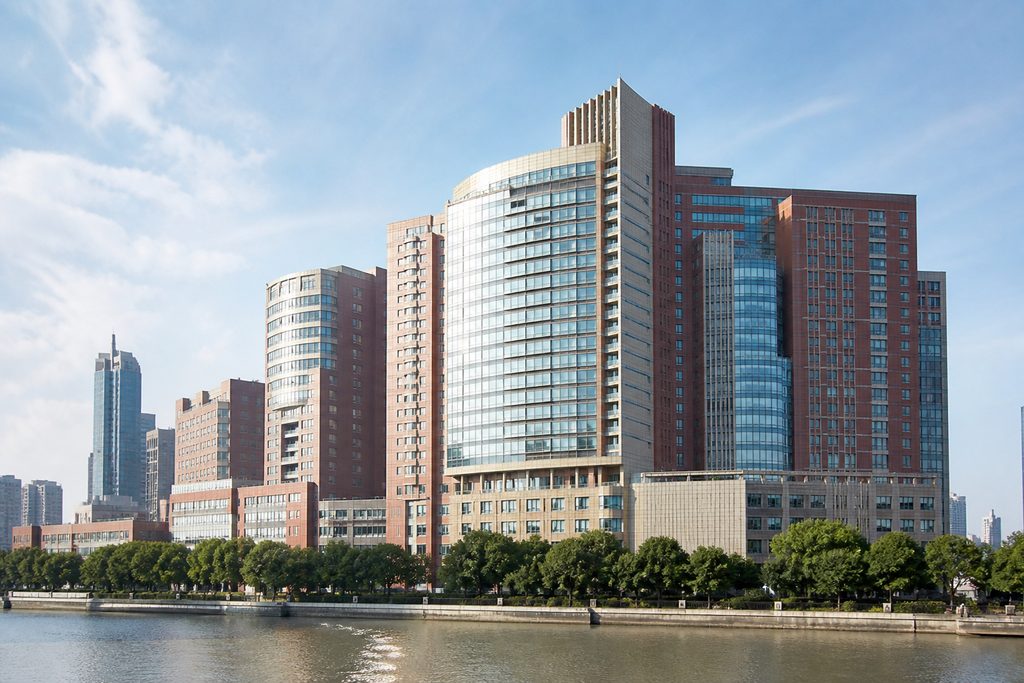
Zhongshan Hospital, Fudan University, sits in Shanghai and is one of the flagship institutions in China’s tertiary hospital system. It appears in the Fudan University Hospital Rankings — the closest thing China has to a national league table — and its hepatobiliary and oncology specialties are widely recognized among the country’s strongest. That reputation matters less than what it represents operationally: volume, subspecialization, and infrastructure built around liver disease.
Clinical Volume and Subspecialization
China carries a disproportionate share of the global liver cancer burden, largely tied to historical hepatitis B prevalence. That burden produced something Western systems rarely have at scale: dedicated hepatobiliary units where interventional radiologists, hepatologists, and surgeons work on the same floor, reviewing the same scans, in the same weekly meetings. High-volume centers in China treat liver tumors in numbers that most individual U.S. hospitals simply do not see.
Volume is not a guarantee of quality on its own. But in interventional oncology, where needle placement accuracy and complication management are learned skills, operator experience correlates with outcomes. That is a general principle, not a claim about any single institution.
Technology and Procedure Range
Ablation is not one technique. It is a family: radiofrequency ablation (RFA), microwave ablation (MWA), and irreversible electroporation (IRE) among them. Microwave ablation has become increasingly common in Chinese centers because it heats faster and is less affected by blood flow near large vessels. Zhongshan’s interventional teams work within a full spectrum of liver-directed therapies — ablation, transarterial chemoembolization (TACE), and surgical resection — which matters because the right choice depends on tumor size, number, location, and underlying liver function.
Cost Structure Without the Western Markup
Here is the part that surprises most patients. A percutaneous ablation procedure at a top Chinese public hospital typically falls in the $3,000–$8,000 range, including hospital stay, imaging, and follow-up scans. Even at the higher end, that is a fraction of U.S. pricing. The reasons are structural: lower physician and staff compensation relative to the U.S., hospital efficiency at scale, and government-influenced pricing on many procedures. Lower cost here does not automatically mean lower quality — but it does mean you should verify the specific team and plan rather than assume.
How the Ablation Procedure Actually Works, Step by Step
Understanding the workflow reduces fear. Here is what a typical percutaneous liver ablation looks like at a major Chinese center.
- Pre-procedure imaging review. Contrast-enhanced CT or MRI is used to map lesion size, count, and proximity to vessels, bile ducts, and the diaphragm.
- Anesthesia planning. Most ablations use conscious sedation plus local anesthesia. Some centers use general anesthesia for lesions near the diaphragm.
- Image-guided needle placement. Under ultrasound or CT guidance, a thin electrode is advanced through the skin into the tumor.
- Thermal destruction. Energy is applied for several minutes until the target zone reaches lethal temperature. Larger tumors may need multiple overlapping applications.
- Immediate assessment. A post-procedure scan checks for technical success and rules out bleeding.
- Short observation. Many patients are discharged within 24–72 hours if there are no complications.
Recovery is usually faster than open surgery. Most patients experience some pain at the puncture site and mild fever for a day or two. Serious complications — bleeding, infection, bile duct injury — occur in a minority of cases, and rates depend heavily on tumor location and operator experience.
Who Is a Candidate — and Who Is Not
Ablation is generally considered for early-stage hepatocellular carcinoma, typically single tumors up to about 3 cm or up to three tumors each under 3 cm, in patients who are not surgical candidates or who choose ablation after discussion. It is also used for selected colorectal liver metastases and as a bridge to transplant in some cases.
Ablation is usually a poor fit when:
- Tumors are large or numerous and extend beyond what a single or staged session can cover.
- Lesions sit directly against major vessels, where blood flow cools the tissue and reduces effectiveness.
- Liver function is severely compromised, such as advanced cirrhosis with poor synthetic function.
- There is significant extrahepatic disease that changes the overall treatment goal.
These are general criteria drawn from standard interventional oncology practice. Your own case requires individualized assessment. No article, including this one, can determine candidacy.
Important: Do not book travel or commit to a procedure before a qualified physician has reviewed your actual imaging and labs. Tumor size on a report and tumor size on a scan can tell different stories.
Practical Considerations for International Patients
This is where most guides get vague. Let’s be specific.
Visa
Foreign patients traveling to China for medical treatment typically apply for an S2 visa, which covers short-stay private affairs including medical treatment. Stays exceeding 180 days generally require an S1 visa. Accompanying family members apply under the same S2 category. Note carefully: the M visa is for commercial and trade activities and is not a medical visa. Requirements shift, so confirm current rules with the nearest Chinese embassy or consulate and prepare supporting hospital documentation.
Appointment Reality
China’s public hospitals generally do not allow overseas patients to pre-book a standard outpatient specialist slot from abroad. Same-day registration and in-person consultation are the norm, and surgery is scheduled only after that face-to-face assessment. If you want a confirmed specialist appointment before flying, the practical route is the hospital’s international or VIP department — which typically costs 1.5 to 2 times the standard channel. This is a structural feature of the system, not a workaround anyone can magic away.
Payment and Insurance
Public hospitals require upfront payment; you then seek reimbursement from your insurer afterward. Private international hospitals more often offer direct billing. Bring your policy details and confirm coverage in writing before treatment.
Language
Top Chinese hospitals can see tens of thousands of outpatients daily. Signage, registration systems, and most staff operate in Chinese. Without language support, navigation is genuinely difficult — this is an honest description, not a sales pitch.
Frequently Asked Questions
It is possible through the international department, which provides English-speaking staff, but availability varies and slots are limited. Many patients use a bilingual medical companion to handle registration, payment, and interpretation. Expect the process to require more patience than a Western private clinic.
Most percutaneous ablation procedures at leading public hospitals fall between $3,000 and $8,000, including the hospital stay and imaging. Final pricing varies by hospital, lesion complexity, and length of stay. Always request a written estimate after your imaging has been reviewed.
Incomplete ablation is a recognized risk, particularly with larger or vessel-adjacent lesions. Follow-up imaging is standard, and residual disease may be addressed with repeat ablation, TACE, or surgery. This is precisely why choosing a high-volume center with a full range of liver-directed therapies matters.
Your Next Step
The takeaway is simple: ablation for liver tumors in China can be fast, technically strong, and dramatically more affordable than Western alternatives — but access, not the procedure itself, is the real obstacle. Our team at China Medical Services connects international patients with 340+ top-ranked hospitals across 37 cities, including Shanghai’s leading medical centers. We are not a hospital and we do not provide diagnoses. We coordinate written second opinions, video consultations, and on-the-ground support — so you can make an informed decision before committing to travel. Start with a free consultation and let us help you understand your options.
For more medical information and treatment options in China, visit chinamedservices.com (China Medical Services).
