Colonoscopy in China: Biopsy Explained for International Patients
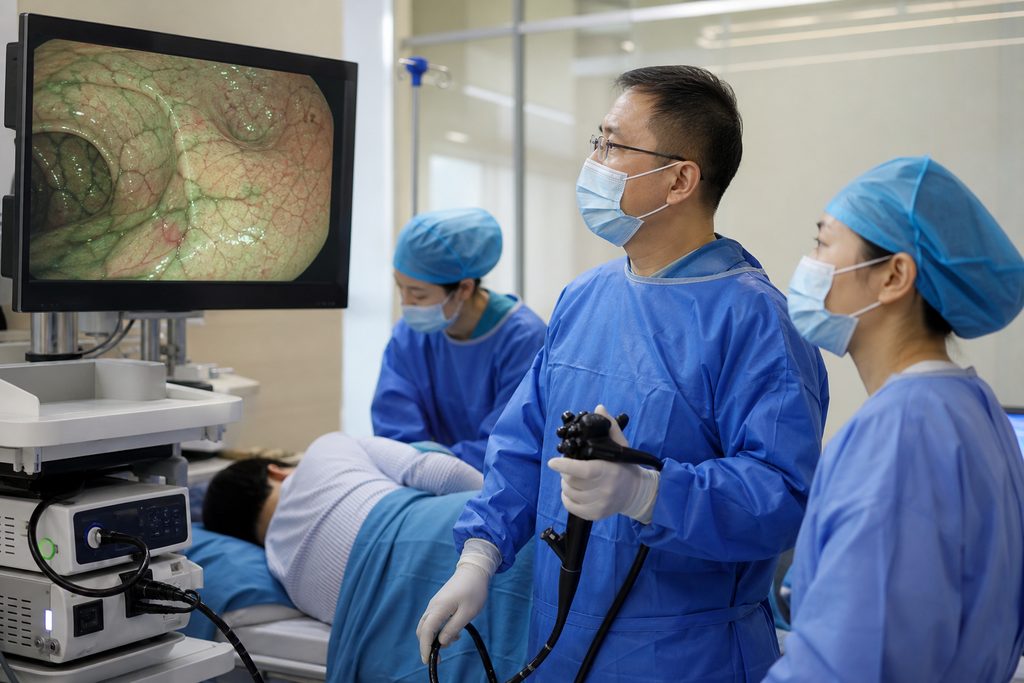
Colonoscopy in China: Biopsy Explained for International Patients
When 54-year-old David from Melbourne was told he needed a colonoscopy with biopsy, his first reaction was to book it back home. Then he saw the quote: $3,800 at a private clinic, with a six-week wait for the procedure itself. A colleague mentioned that a colonoscopy cost China patients a fraction of that — and that top-tier hospitals in Beijing and Shanghai run gastroenterology units seeing thousands of cases a year. David’s question, and probably yours, is simple: what actually happens when a polyp or suspicious tissue gets sent to the lab in a Chinese hospital?
Here is the short version. A colonoscopy with biopsy in China typically costs between $300 and $1,200 at a top public hospital, depending on whether sedation and polyp removal are involved. Biopsy results usually come back in three to seven working days. The procedure is performed to international standards at the hospitals we work with, and the pathology report can be translated into English for your home doctor.
That is the headline. The details matter more.
Colonoscopy Cost China: The Short Answer
Cost is the first thing most international patients ask about, so let us answer it directly. A diagnostic colonoscopy at a major Chinese public hospital — the kind ranked in the Fudan Top 100 — generally runs from $300 to $600. Add sedation, and you are looking at the upper end of that range. If the doctor removes a polyp during the same session, the biopsy and pathology fees push the total to roughly $500 to $1,200.
Private international hospitals in cities like Beijing and Shanghai charge more — often $1,500 to $3,000 — but they offer English-speaking staff, direct insurance billing, and shorter waits. Same procedure, different service layer.
The key takeaway: A colonoscopy with biopsy in China costs roughly one-fifth to one-tenth of the equivalent procedure in the United States, where a diagnostic colonoscopy averages $2,500 to $4,500 before insurance.
Why the gap? It is not a quality gap. It is a volume and pricing-structure gap. China’s top hospitals handle enormous patient loads, which spreads equipment and pathology costs across far more procedures. The trade-off is bureaucracy, queues, and a system that assumes you speak Chinese. That last point is where most foreign patients hit a wall.
Who This Is Right For — and Who It Isn’t
Not every patient should fly to China for a colonoscopy. Honestly, most should not. This is a routine screening and diagnostic procedure, and if you can get it done at home within a reasonable timeframe and cost, that is almost always the better path. But there are situations where China makes genuine sense.
You may be a good candidate if:
- You are facing a six-month wait for a diagnostic colonoscopy at home and have symptoms that worry you
- You need a biopsy result quickly — days, not months — to guide treatment decisions
- You are already traveling in Asia for work or family reasons
- You are uninsured or underinsured in your home country, and the out-of-pocket cost is prohibitive
- You want a second pathology opinion on a previous biopsy
You should probably stay home if:
- You have a known bleeding disorder or are on blood thinners that cannot be safely paused
- You have severe heart or lung disease that makes sedation risky and your home team knows your history
- You need urgent intervention — active GI bleeding, suspected perforation — because that is an emergency, not a travel plan
- You cannot manage a week abroad for recovery and follow-up
Age matters too. Standard screening guidelines in most countries start at 45. If you are younger with no symptoms and no family history, a colonoscopy may not be indicated at all — in China or anywhere else.
The Options, Compared
Here is how the realistic choices stack up. Prices are in USD and reflect 2026 ranges at the hospital tiers we work with.
| Option | Typical Cost | Wait Time | English Support | Biopsy Result Turnaround |
|---|---|---|---|---|
| China — top public hospital (Fudan Top 100) | $300–$1,200 | Days to 2 weeks | Limited without assistance | 3–7 working days |
| China — private international hospital | $1,500–$3,000 | Days to 1 week | Full | 3–5 working days |
| United States — outpatient center | $2,500–$4,500 | 2–8 weeks | Full | 5–10 working days |
| United Kingdom — NHS | Free at point of care | 4–18 weeks | Full | 2–4 weeks |
| United Kingdom — private | $2,000–$3,500 | 1–3 weeks | Full | 5–7 working days |
Which column suits you? If cost is the binding constraint and you are willing to navigate a complex system with help, the top public hospital route delivers the best value. If you want a Western-style experience with English at every step and direct insurance billing, the private international tier is worth the premium. And if you have good insurance and a short wait at home, stay home. Really.
Is Colonoscopy Safe in China? What the Biopsy Process Actually Involves
This is the question that keeps people up at night, and it deserves a straight answer.
The colonoscopy itself is the same procedure everywhere. A flexible tube with a camera examines the lining of your colon. If the doctor sees something suspicious — a polyp, an ulcer, an area of abnormal tissue — they take a small sample. That sample is the biopsy. It is painless; you are sedated or at least comfortably medicated during the procedure.
What happens next is where quality varies, and where China’s top hospitals genuinely shine. The tissue sample goes to a pathology department, where it is fixed, sliced into microscopic sections, stained, and examined by a pathologist. That pathologist writes a report describing what the cells look like — benign, inflammatory, precancerous, or malignant — and stages any cancer found.
At the hospitals in our network, pathology departments process tens of thousands of specimens annually. Volume builds expertise. A pathologist who reads 50 colon biopsies a week catches things a low-volume lab might miss.
Is colonoscopy safe in China? At accredited top-tier hospitals, yes — complication rates for diagnostic colonoscopy are comparable to Western standards, and perforation risk sits well under 1% for routine procedures. But “China” is not one thing. A county-level clinic and a Fudan Top 100 hospital are not the same universe. The safety question is really a hospital-selection question.
Important: We do not guarantee outcomes, and no responsible coordinator should. What we can do is help you identify hospitals with strong gastroenterology and pathology departments, and make sure your records reach the right desk.
How Long Do Biopsy Results Take After Colonoscopy?
At the Chinese hospitals we work with, biopsy results typically return in three to seven working days. Private international hospitals often deliver in three to five. Complex cases — multiple samples, special staining, or a need for a second pathologist’s review — can take up to ten days.
Compare that to the UK NHS, where biopsy results after a colonoscopy commonly take two to four weeks. In the US, five to ten working days is typical. China’s turnaround is competitive, sometimes faster.
The bottleneck is rarely the lab. It is the paperwork. Reports are issued in Chinese. If you need an English version for your home doctor, that translation takes additional time — usually one to three days through a medical translation service. Our team arranges this as part of coordination, and we make sure the translated report matches the original line by line.
One more thing worth knowing: you often do not need to be physically present to collect results. If you have returned home, the report can be sent digitally. Plan for that possibility when you book your flights.
What It Costs and What Drives the Variance
Let us break down where the money actually goes at a top public hospital.
- Consultation and pre-procedure assessment: $30–$80
- The colonoscopy itself: $150–$350
- Sedation (if chosen): $80–$200
- Biopsy and pathology: $50–$200 per sample
- Polyp removal (if needed): $100–$400
What drives the variance? Sedation choice, number of biopsies taken, whether polyps are removed, and hospital tier. A simple diagnostic scope with one biopsy sits at the low end. A full screening with sedation, three polyps removed, and four pathology samples lands at the high end.
For patients specifically comparing regional pricing, colonoscopy biopsy price Shanghai tends to run slightly higher than Beijing at the private tier but similar at the public tier. Both cities have deep gastroenterology benches. If you are weighing cities, our Fudan-ranked hospital directory by city shows which institutions carry the strongest departmental reputations.
And for those asking about the best hospitals for colonoscopy in Beijing, the answer usually points to the major teaching hospitals with dedicated gastroenterology and endoscopy centers. We list them by specialty so you can see departmental rankings rather than guessing.
Practical Considerations: Records, Visa, Payment, and Follow-Up
Getting a colonoscopy in China as a foreigner involves logistics that have nothing to do with medicine. Here is what genuinely matters.
Records first. Bring your prior colonoscopy reports, pathology slides if you have them, medication list, and any relevant imaging. Chinese specialists work fast but they work from documents. Missing records mean repeated tests.
The visa question. Medical travel to China uses the S2 visa, which covers short-stay private affairs including medical treatment. Accompanying family members apply under the same category. Note clearly: the M visa is for commercial and trade activities and has nothing to do with medical treatment. Requirements shift, so confirm current documentation with your nearest Chinese embassy or consulate, and expect to submit a hospital invitation or appointment letter.
Payment. Public hospitals require prepayment, and you settle insurance afterward. Private international hospitals often bill insurers directly. Bring a card that works internationally, and expect to pay deposits before procedures.
Language. This is the real barrier. Top Chinese hospitals see tens of thousands of outpatients daily. Signage, forms, and staff conversations are in Chinese. Without a bilingual companion, a straightforward colonoscopy can become a full-day navigation exercise. That is precisely the gap our bilingual medical companion service fills — queuing, registration, payment, wayfinding, and translation, from arrival to discharge.
Follow-up at home. Before you leave China, get the full pathology report, translated, plus the endoscopy images. Your home gastroenterologist needs both to plan surveillance intervals. A clean report today does not mean no follow-up in five years.
Frequently Asked Questions
Not directly at a standard public outpatient clinic — those work on same-day registration, and procedures require an in-person consultation first. What you can do is arrange a written second opinion or video consultation in advance, then have our team coordinate the appointment through the hospital’s international office. That route lets you lock in timing without standing in a queue at 6 a.m.
Usually yes, with a certified English translation. Most Western physicians accept foreign pathology reports, though some will request a slide review by their own lab. Ask your home doctor in advance whether they want the physical slides shipped — that is easier to arrange before you leave China than after.
Then you need a treatment plan, not just a report. Chinese top-tier hospitals have oncology departments ranked among the country’s best, and multidisciplinary teams that review cases together. But you should also consult your home oncology team. We can help you gather the pathology, imaging, and specialist opinions needed to make that decision — we do not make it for you, and no coordinator should.
Roughly $300–$1,200 in China versus $2,500–$4,500 in the US for a comparable diagnostic procedure with pathology. The exact figure depends on sedation, polyp removal, and hospital tier. Final quotes always vary by hospital and case complexity.
If you speak Mandarin and know the hospital layout, you can manage alone. Most international patients cannot, and the friction is real — registration windows, payment counters, and endoscopy scheduling are separate stops in separate buildings. A companion costs from $300 per day and removes most of that friction.
Your Next Step
A colonoscopy with biopsy in China is a practical, affordable option for international patients who need fast answers — provided you choose the right hospital and prepare properly. The procedure is routine, the pathology is reliable at top-tier institutions, and the cost advantage is genuine. The variable is navigation.
We are China Medical Services, a coordination team, not a hospital. We do not diagnose, treat, or promise outcomes. What we do is connect you with the right department, translate your records, arrange appointments through official international offices, and put a bilingual companion beside you on the day. If you are weighing whether this path makes sense for your situation, start with a free consultation — no pressure, no obligation, just a clear conversation about your options.
This article is for general information only and is not medical advice. Colonoscopy and biopsy decisions should be made with a qualified physician who knows your history. Prices are estimates and vary by hospital and case complexity.
For more medical information and treatment options in China, visit chinamedservices.com (China Medical Services).
