China-Japan Friendship Hospital Beijing: Integrated Medicine Center Costs & How It Works
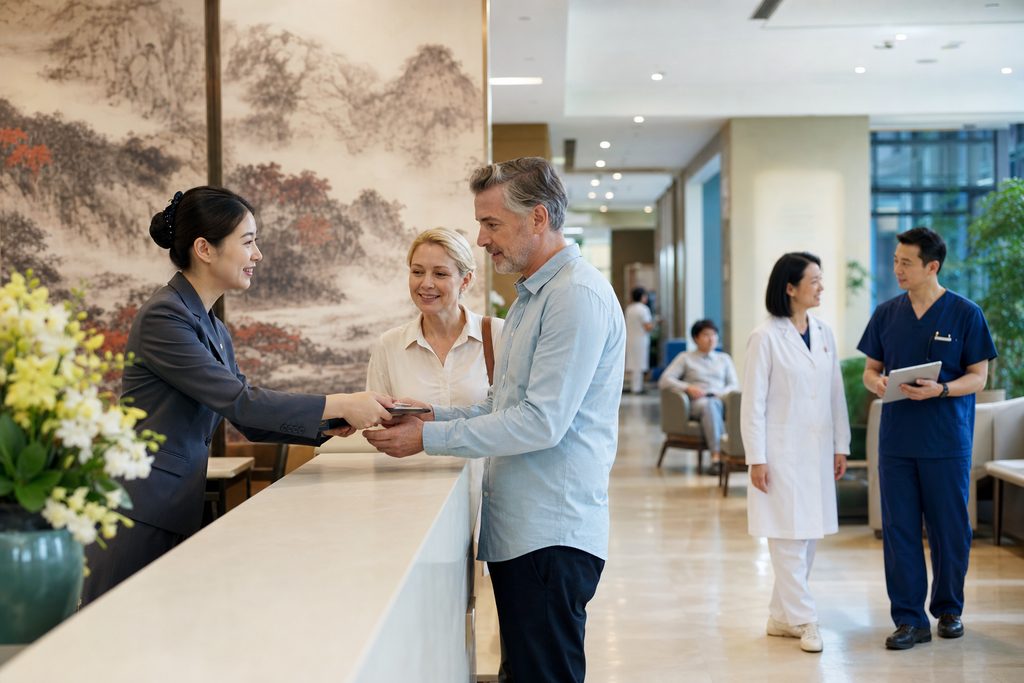
When 42-year-old Michael first heard the diagnosis — rheumatoid arthritis, aggressive onset, both hands already showing visible joint changes — he had no idea where to start looking for treatment. He had cycled through two rheumatologists in London. The first prescribed methotrexate alone. The second added a biologic. The pain dulled but never really stopped. His mornings still started with 45 minutes of stiffness. He started searching for something else. Not alternative medicine in place of his treatment. Something alongside it. That search eventually led him to a phrase he had never encountered before: integrated Chinese and Western medicine. And one hospital name kept appearing in every serious discussion: the China-Japan Friendship Hospital in Beijing.
We understand that journey. Our team has guided patients from over 37 cities through China’s hospital system — a network of 340+ top-ranked institutions drawn from the top 5% of China’s 35,000+ hospitals. We do not provide medical treatment. We are not clinicians. We handle the logistics that make treatment possible: hospital matching, appointment coordination, bilingual medical companions, visa guidance, and the thousand small details that turn a daunting international medical trip into a clear, manageable plan.
Key Takeaways
- The China-Japan Friendship Hospital runs one of China’s few nationally designated Integrated Chinese and Western Medicine Centers, treating over 300,000 outpatients annually with combined protocols.
- Integrated treatment packages for chronic conditions typically range from $2,500 to $8,000 for a 2-4 week inpatient program — a fraction of comparable long-term management costs in the US or Europe.
- International patients cannot simply walk into the general outpatient department. Booking requires going through the hospital’s International Medical Center, and independent scheduling without local representation is extremely difficult.
- Integrated medicine here is not a wellness retreat. It is a hospital-based clinical discipline with evidence-backed protocols for specific conditions — and it is not suitable for every patient or every diagnosis.
The Problem: Chronic Disease Management Keeps Failing Patients Who Need More Options
Approximately 133 million Americans — roughly 1 in 2 adults — live with at least one chronic disease. The numbers from Europe tell a similar story. The European Chronic Disease Alliance reports that chronic conditions account for 86% of all deaths in the WHO European region. These are not just statistics. They represent millions of people cycling through treatment protocols that control symptoms without restoring function. People like Michael.
The standard Western biomedical model excels at acute care. It is less effective for the slow, grinding reality of chronic illness. A patient with rheumatoid arthritis might see their rheumatologist four times a year for 20-minute appointments. Between visits, they manage pain, fatigue, and progressive disability largely on their own. The system is not broken. It is simply built for a different problem than the one chronic disease patients actually face. That gap — between what the system offers and what patients need — is where integrated medicine has been quietly building evidence for decades.
Who We Are
We are China Medical Services. We are not a hospital, and we do not provide medical treatment or clinical diagnoses. We are your logistical architects — the bridge between you and China’s top-tier medical expertise. Our team handles hospital matching based on your specific diagnosis, coordinates appointments through official international departments, provides bilingual medical companions who translate not just language but medical context, and manages the visa and travel logistics that make treatment possible. We work across 37 cities with access to 340+ hospitals ranked by the Fudan University hospital rankings and JCI accreditation standards. We do not promise miracles. We promise competence, transparency, and the logistical infrastructure to connect you with the right care.
Why the China-Japan Friendship Hospital Integrated Medicine Center Delivers Results
The China-Japan Friendship Hospital is not experimenting with integrated medicine. It has been building this discipline since 1984, when the hospital was established under direct cooperation between the Chinese and Japanese governments. The National Integrated Chinese and Western Medicine Center here is one of only a handful of such centers given official national designation by China’s National Health Commission. That designation matters. It means the center receives dedicated research funding, trains physicians in both systems, and operates under clinical protocols that have been studied and standardized — not improvised.
Clinical Volume Creates Pattern Recognition No Textbook Can Teach
The Integrated Medicine Center treats over 300,000 outpatients and manages more than 8,000 inpatient admissions annually. For a physician treating rheumatoid arthritis with combined protocols, that means seeing more complex inflammatory arthritis cases in a single month than many Western rheumatologists see in a year. Volume alone does not guarantee quality. But in medicine, pattern recognition — the ability to spot what is unusual because you have seen so much of what is usual — comes from repetition. A physician who has managed 5,000 cases of a condition using combined Chinese-Western protocols develops clinical instincts that cannot be learned from a journal article.
This is not abstract. Studies published in journals like the Journal of Integrative Medicine and Chinese Journal of Integrative Medicine have documented specific protocols — for conditions ranging from diabetic nephropathy to post-stroke rehabilitation — where combined approaches showed measurable improvements over conventional treatment alone. The research is not always published in English-language journals, which is part of why Western patients often do not encounter it. But the clinical experience is real and accumulating.
How Does Integrated Chinese Western Medicine Work in Practice
This is the question we hear most often from patients considering treatment. The answer is less mysterious than many expect. Integrated medicine at this level is not about replacing one system with another. It is about layering therapeutic tools based on evidence of where each system has the most to offer.
A typical inpatient protocol for a chronic inflammatory condition might look like this: The Western medicine foundation — disease-modifying antirheumatic drugs, biologics where indicated, standardized pain management — remains in place. No one is suggesting you stop your methotrexate. Layered on top of that foundation, Traditional Chinese Medicine (TCM) interventions are added based on the patient’s specific pattern presentation. That might include customized herbal decoctions prepared daily by the hospital pharmacy, acupuncture sessions targeting specific meridians associated with the patient’s symptom pattern, and external therapies like herbal compresses or moxibustion applied to affected joints.
The key word is “customized.” TCM diagnosis does not treat “rheumatoid arthritis” as a single disease entity. It differentiates between wind-damp-heat obstruction, cold-damp obstruction, liver-kidney deficiency, and other pattern diagnoses — each of which gets a different herbal formula and acupuncture protocol even though the Western diagnosis is identical. Two patients with the same Western diagnosis may receive entirely different TCM treatments. That individualization is either the system’s greatest strength or its most maddening feature, depending on your perspective.
Cost Structure That Makes Long-Term Management Financially Viable
Let us address the question that brings many international patients to our door: what does the China-Japan Friendship Hospital integrated medicine price list actually look like? We need to be direct here. We cannot publish a fixed, itemized price list because costs vary substantially by diagnosis, treatment duration, and the specific protocols prescribed. What we can share — based on coordination experience with international patients — are realistic ranges.
A 2-week integrated inpatient program for a chronic condition typically runs between $2,500 and $5,000 for the hospital portion. A more intensive 4-week program ranges from $5,000 to $8,000. These figures include the hospital bed, nursing care, physician consultations from both Western medicine and TCM specialists, daily herbal medicines prepared by the hospital pharmacy, acupuncture sessions, and relevant external therapies. They do not include advanced imaging, specialized laboratory workups, or biologic medications, which are billed separately.
Compare this to the long-term cost of managing a chronic inflammatory condition in the United States. Biologic medications alone can cost $30,000 to $60,000 annually. Repeated specialist visits, physical therapy, and pain management add thousands more. The integrated medicine approach in Beijing is not a substitute for ongoing medication management. But for patients seeking to interrupt a cycle of progressive decline — to hit reset on their condition through an intensive, multi-modal intervention — the cost equation is compelling. One patient described it to us as “the cost of a used car for a chance to change the trajectory.”
| Treatment Component | Estimated Cost Range (USD) | Notes |
|---|---|---|
| 2-week integrated inpatient program | $2,500 – $5,000 | Includes bed, nursing, consultations, daily herbs, acupuncture |
| 4-week integrated inpatient program | $5,000 – $8,000 | Extended protocol for complex chronic conditions |
| Specialist consultation (International Medical Center) | $150 – $350 | Initial consultation with integrated medicine specialist |
| Acupuncture session (standalone) | $40 – $80 | Per session when not part of inpatient package |
| Custom herbal medicine (daily) | $15 – $40 | Varies by formula complexity and ingredients |
| Advanced imaging (MRI/CT) | $200 – $600 | Per scan, when clinically indicated |
These are reference ranges. Final costs depend on your specific diagnosis, the treatment plan prescribed by your attending physician, and the hospital’s current pricing schedule. We provide detailed cost estimates during the consultation process once we have your medical records and the hospital has reviewed your case.
Can Integrated Medicine Treat Chronic Disease in China? The Evidence by Condition
The short answer is yes — for specific conditions with established protocols. The longer answer requires honesty about where the evidence is strongest and where it is still developing.
The strongest clinical evidence supports integrated protocols for inflammatory and autoimmune conditions — rheumatoid arthritis, ankylosing spondylitis, systemic lupus erythematosus, and inflammatory bowel disease. Multiple randomized controlled trials published in Chinese and international journals have demonstrated that adding TCM herbal formulas and acupuncture to standard Western treatment improves outcomes for these conditions. A 2021 systematic review in Frontiers in Pharmacology analyzed 28 RCTs involving over 2,400 patients with rheumatoid arthritis and found that integrated treatment groups showed significantly better clinical response rates and lower inflammatory markers compared to Western medicine alone.
Neurological rehabilitation is another area of established strength. Post-stroke recovery protocols at the China-Japan Friendship Hospital combine standard physical and occupational therapy with acupuncture, tuina massage, and herbal medicine. The volume here is staggering — China treats over 2 million new stroke patients annually, and integrated rehabilitation is standard practice in top hospitals, not an experimental add-on.
Metabolic conditions — type 2 diabetes, metabolic syndrome, non-alcoholic fatty liver disease — also show promising results with integrated approaches. The mechanisms are better understood than many Western patients assume. Berberine, a compound found in several Chinese herbs, has been shown in multiple studies to improve insulin sensitivity through AMPK pathway activation — the same pathway targeted by metformin. This is not mysterious energy work. It is pharmacology from natural compounds, studied with modern research methods.
Where the evidence is weaker: acute infections, surgical recovery (beyond pain management and ileus prevention), and advanced cancers. Integrated medicine can play a supportive role in these contexts — managing treatment side effects, improving quality of life — but it is not a primary treatment modality. We say this clearly because honest expectation-setting is the foundation of trust.
What You Need to Know Before Going Alone
The China-Japan Friendship Hospital is a massive public institution. Its main campus in Beijing’s Chaoyang District handles over 7,000 outpatient visits daily. Navigating this system without Chinese language ability and without understanding how Chinese hospitals operate is not merely inconvenient. It is functionally impossible for most international patients. Here are the specific barriers:
- Appointment Booking at the International Medical Center: The general outpatient department does not accept self-booked international patients. You must go through the hospital’s International Medical Center, which has its own scheduling system, its own physician roster, and its own fee structure. Calling the hospital’s main switchboard will not work. The International Medical Center’s phone lines are answered in Chinese during business hours, and email inquiries often go unanswered for weeks. This is not negligence. It is a public hospital serving an enormous domestic patient load, and international patient coordination is a small fraction of their operations.
- Medical Records Must Be Translated Before You Arrive: The integrated medicine specialists need to review your full medical history before accepting your case. This means imaging reports, lab results, medication lists, and specialist notes — all translated into Chinese. Google Translate will not suffice for medical documentation. A rheumatoid factor result or an MRI report with technical terminology requires professional medical translation. Without it, your first consultation will be unproductive at best and clinically misleading at worst.
- Visa Requirements Are Specific and Unforgiving: Medical treatment in China requires an S2 visa with the specific purpose of medical treatment annotated. This is not the same as a tourist visa, and it is absolutely not an M visa — the M visa is for commercial and trade activities and cannot be used for medical purposes. The S2 visa application requires an invitation letter from the hospital confirming your treatment arrangement. The hospital will only issue this letter after confirming your appointment and treatment plan. This creates a chicken-and-egg problem for patients trying to arrange everything independently.
- Payment Is Upfront and Insurance Reimbursement Is Retroactive: Chinese public hospitals, including the International Medical Center, require payment before treatment. You pay the estimated costs at admission, and any balance is settled at discharge. Most international health insurance plans operate on a reimbursement model — you pay, then submit claims. The hospital does not directly bill your insurance. If you need prior authorization from your insurer, you must secure it before arriving. We have seen patients arrive assuming their insurance would handle everything and end up scrambling to arrange wire transfers from overseas.
How We Help You Navigate This
These barriers exist for structural reasons, not because anyone is trying to make things difficult. Chinese public hospitals are built to serve enormous domestic patient volumes efficiently. The systems work well for that purpose. They were simply not designed with independent international patients in mind. That is where we fit.
Our process starts with your medical records. You send us what you have — in English, in French, in Arabic, whatever language they are in. We arrange professional medical translation into Chinese, formatted to the specifications that Chinese specialists expect. We then submit your case to the International Medical Center at the China-Japan Friendship Hospital for review. The integrated medicine department will assess whether your condition falls within their areas of clinical strength and whether they can offer meaningful treatment. If they accept your case, we coordinate the appointment schedule, secure the hospital invitation letter needed for your S2 visa application, and guide you through the visa process step by step.
Before you travel, you will know exactly where you are going, who you are seeing, what the estimated costs are, and what to expect on your first day. When you land in Beijing, a bilingual medical companion meets you. This person is not a translator hired from a general agency. They are trained in medical terminology and familiar with the specific workflows of the China-Japan Friendship Hospital. They handle registration, payment queues, pharmacy pickups, and the endless small navigational tasks that consume hours in a Chinese hospital. More importantly, they sit with you during consultations and ensure that what the physician says is accurately communicated — both the clinical content and the nuance.
During your inpatient stay, your companion visits daily to check on logistics, relay any questions to nursing staff, and troubleshoot issues. After discharge, we coordinate follow-up appointments if needed and ensure you leave with a clear understanding of your ongoing treatment plan, including translated medication instructions and herbal formulas with pinyin transliterations and ingredient lists your home physician can review.
For patients considering integrated medicine but not yet ready to travel, we also coordinate remote video consultations with specialists at the International Medical Center. These sessions allow you to discuss your case, understand what treatment would involve, and make an informed decision before committing to travel. The consultation fee — typically $150 to $350 — is fully credited toward our coordination service if you proceed with treatment within 90 days.
Frequently Asked Questions
This is a fair question, and the answer varies by condition. For inflammatory and autoimmune diseases, post-stroke rehabilitation, and certain metabolic disorders, the evidence base is substantial — randomized controlled trials, systematic reviews, and meta-analyses published in peer-reviewed journals. For other conditions, the evidence is thinner. The China-Japan Friendship Hospital’s National Integrated Medicine Center follows protocol-based treatment, meaning the interventions used have been studied and standardized. This is clinical medicine, not a wellness spa. That said, the research is predominantly published in Chinese-language journals, which creates an accessibility gap for Western patients and physicians. We encourage patients to request specific evidence for their condition during the initial consultation.
No medical treatment works for everyone. The integrated medicine specialists at the China-Japan Friendship Hospital are physicians first — they will assess your response to treatment objectively. If the combined protocol is not producing meaningful improvement within the expected timeframe, they will adjust the approach or recommend alternative treatment pathways. The Western medicine foundation of your treatment remains in place throughout, so you are not abandoning conventional care. You are adding to it. If the additions do not help, they can be discontinued without losing the baseline treatment effect. The hospital’s International Medical Center can also facilitate referrals to other specialist departments within the same institution if your case requires a different approach.
The International Medical Center accepts appointment requests through several channels: direct phone contact during business hours (Chinese-speaking staff), email inquiry, or through a coordination service like ours. The most reliable path is to have your medical records reviewed before scheduling — the center needs to confirm that your case falls within their treatment scope before booking a consultation. Unsolicited walk-in attempts are not recommended. The center is not a walk-in clinic, and integrated medicine specialists typically have full schedules. We handle the entire booking process: records translation, case submission, appointment confirmation, and all follow-up coordination. Our hospital appointment coordination service starts from $300, and we only charge if we successfully secure your appointment.
Some TCM clinics in Europe, North America, and Southeast Asia offer combined treatment approaches, but the depth of integration varies enormously. What distinguishes the China-Japan Friendship Hospital is that both the Western medicine specialists and TCM practitioners are on the same medical staff, working from shared patient records, collaborating on treatment plans daily. This is not a Western doctor who “also offers acupuncture” or a TCM practitioner who “coordinates with your regular doctor.” It is a single clinical department with physicians trained in both systems, supported by an on-site herbal pharmacy, acupuncture treatment rooms, and full hospital infrastructure including imaging, laboratory, and emergency services. That level of integration is difficult to replicate outside of China’s major hospital centers. For patients who cannot travel, remote consultation with the center is available and can provide treatment guidance that your local practitioners can implement.
Your Next Step
Michael spent three weeks at the China-Japan Friendship Hospital’s Integrated Medicine Center. He continued his biologic medication throughout. He also received daily acupuncture, a customized herbal formula adjusted weekly based on his response, and tuina massage for his hands and wrists. Six months after returning to London, his morning stiffness had dropped from 45 minutes to under 10. His rheumatologist was skeptical but intrigued by the lab results. Michael is not cured — rheumatoid arthritis does not work that way. But his trajectory changed.
Not every patient’s story follows that arc. Integrated medicine is not a guarantee. It is an option — one with a growing evidence base, delivered at a hospital with decades of experience and a clinical volume that creates genuine expertise. If you have been managing a chronic condition and feeling like the current approach is not enough, this is worth understanding better.
We are here to help you do that. Contact our team for a free initial consultation about whether the China-Japan Friendship Hospital’s integrated medicine program might be appropriate for your case. No pressure. No hard sell. Just honest information and, if you decide to proceed, the logistical support to make it happen.
For more medical information and treatment options in China, visit chinamedservices.com (China Medical Services).
