Acupuncture Cost in China: Public Hospital and Private Clinic Prices
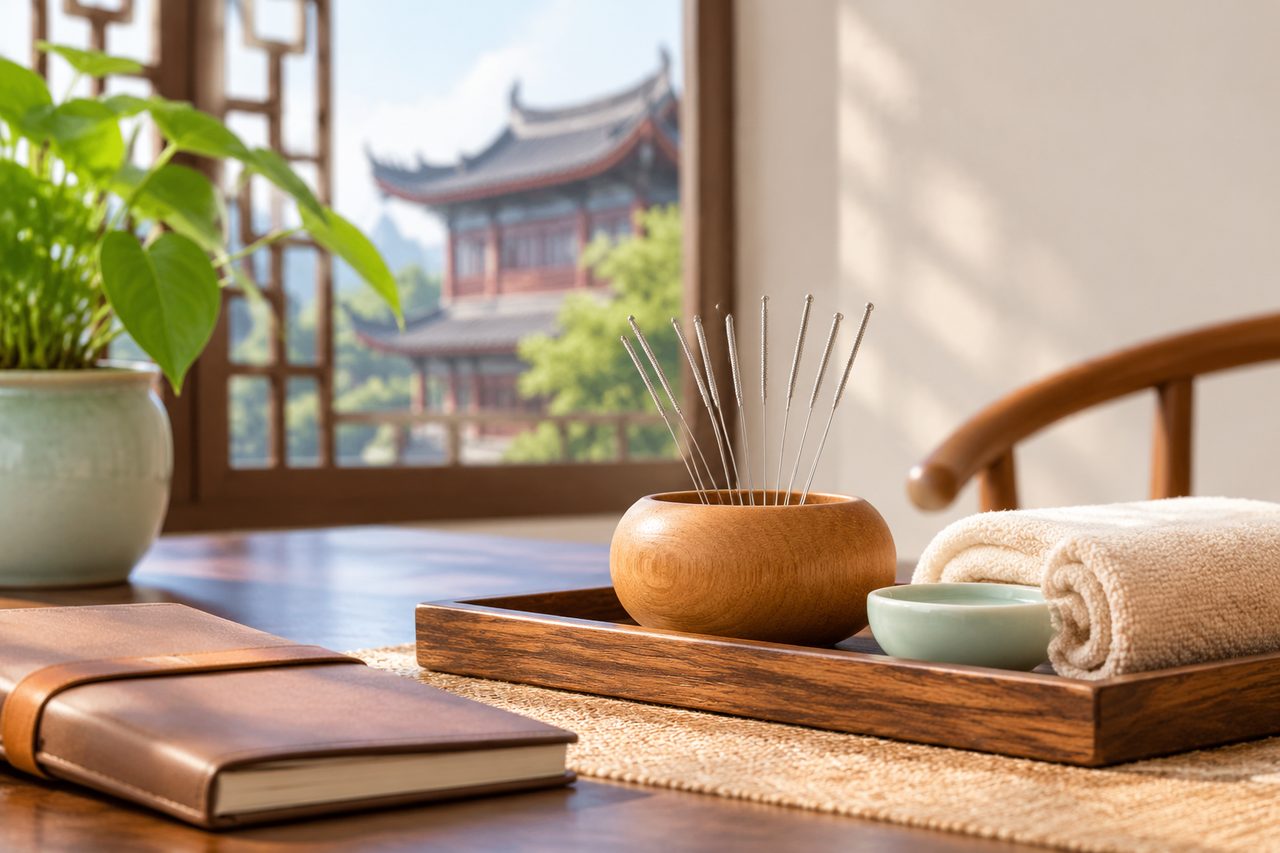
Acupuncture cost China patients pay varies widely by setting: at a public hospital’s Traditional Chinese Medicine (TCM) department you will typically see roughly $10–$40 per session, while private international clinics in cities like Beijing and Shanghai commonly charge $50–$150. A full course of ten sessions therefore lands somewhere between about $100 and $1,500 depending on where you go and how the treatment is structured.
Those figures are ranges, not quotes. What you actually pay depends on the hospital tier, the seniority of the practitioner, whether electroacupuncture or adjunct therapies such as cupping and moxibustion are added, and whether you are seen in a standard outpatient department or a VIP and international wing. This guide explains what sits inside each price band, how to judge whether a clinic is safe, and what to arrange before you travel.
Acupuncture in China: The Short Answer
Acupuncture is one of the oldest branches of Traditional Chinese Medicine and, in plain terms, involves inserting very fine sterile needles at specific points on the body to influence pain, nausea, sleep and other symptoms. In China it is delivered both inside large public hospitals with dedicated TCM departments and in standalone private clinics. The cost is low by Western standards, the volume of experienced practitioners is high, and the treatment is usually offered as a course rather than a single visit.
The caveat: cheap does not automatically mean appropriate. Acupuncture is not a substitute for diagnosis of a serious condition, and a course that is right for chronic lower-back pain is not the same as one for chemotherapy-related nausea or migraine prophylaxis. Pricing also tells you very little about quality; the setting and the practitioner’s training matter more than the number on the receipt.
Who This Is Right For — and Who It Isn’t
Acupuncture tends to suit people seeking support for conditions where evidence and clinical practice overlap, and who are willing to commit to several sessions rather than expect a single-visit fix.
- Typically a reasonable fit: adults with chronic musculoskeletal pain, tension-type headache or migraine, nausea (including post-operative and chemotherapy-related), and stress-related sleep disturbance who want a non-drug adjunct alongside their existing care.
- Often a good fit: patients already coming to China for another reason — a check-up, a specialist consultation, or rehabilitation — who want to add a short supervised course of TCM treatment to their trip.
- Not appropriate without medical clearance: people who are pregnant, have a bleeding disorder or are on anticoagulants, have an implanted cardiac device or compromised immunity, or have an uninvestigated symptom (unexplained weight loss, new neurological deficit, chest pain) that needs diagnosis first, not needles.
- Genuinely better managed at home: anyone seeking acupuncture as an alternative to proven treatment for a serious disease, or who cannot commit to follow-up. A single session abroad rarely delivers lasting benefit.
The Options, Compared
Most international patients choose between four settings. The table below shows typical per-session price bands and what each setting generally includes; all figures are indicative and vary by hospital and case complexity.
| Setting | Typical cost per session (USD) | English support | Best for |
|---|---|---|---|
| Public TCM hospital, standard outpatient | approx. $10–$40 | Limited; interpreter usually needed | Budget-conscious patients comfortable navigating a busy Chinese hospital |
| Public hospital TCM department, international/VIP wing | approx. $40–$90 | Usually available | Patients who want senior practitioners and a smoother booking process |
| Private international clinic (Beijing, Shanghai, Guangzhou) | approx. $50–$150 | Yes, English-speaking staff | Short visits, direct insurance billing, Western-style scheduling |
| Destination TCM and wellness centers | approx. $30–$120, often packaged | Varies | Patients combining treatment with a short recuperative stay |
If your priority is cost, the public hospital route is dramatically cheaper but requires patience and language support. If your priority is convenience and English communication, the private clinic column is the realistic choice. The VIP wing sits in between and is often the sweet spot for a first visit.
Acupuncture Treatment Price in Beijing and Other Major Cities
Acupuncture treatment price Beijing visitors encounter is broadly similar to Shanghai and Guangzhou at the top end, but Beijing’s concentration of nationally ranked TCM hospitals means the public-sector floor is very low. A standard outpatient session at a large public TCM hospital in Beijing can sit near the bottom of the $10–$40 band, while a private international clinic in the same city may charge several times that for a comparable session length.
City matters less than setting. Chengdu, Hangzhou and Nanjing all have strong TCM traditions and public hospitals offering acupuncture at similar public-sector rates. Where prices rise is in the international wings and private clinics that cater to foreign patients, because you are paying for English-language service, shorter waits and administrative support as much as for the needles themselves.
What the Price Actually Covers — and What It Doesn’t
A quoted session fee usually covers the practitioner’s time, sterile single-use needles and basic aftercare advice. It frequently does not cover the initial TCM consultation (sometimes billed separately), adjunct therapies such as moxibustion, cupping or herbal prescriptions, and any diagnostic tests a responsible practitioner orders before treating you.
For a realistic ten-session course, budget for the consultation plus the sessions plus a margin for add-ons. At public-hospital rates that might total a few hundred dollars; at private-clinic rates it can exceed $1,000. Neither figure includes travel, accommodation or interpretation, which for most international patients are the larger line items.
Is Acupuncture Safe in China?
The question “is acupuncture safe in China” deserves a direct answer: in licensed hospitals and clinics, yes, the risks are low and well understood — but the setting determines the standard. Public hospitals and JCI-accredited private facilities use single-use sterile needles, trained practitioners and clear infection-control procedures. Unlicensed storefront operations may not.
Common side effects are minor: small bruises, slight bleeding at needle sites, and occasional light-headedness during treatment. Serious complications are rare and are almost always linked to unsterile needles or treatment by untrained hands. The practical safeguard is to choose a licensed institution — a public hospital TCM department or an accredited private clinic — rather than a walk-in spa. If you are on blood thinners, pregnant, or have a bleeding disorder, tell the practitioner and your own doctor before booking.
Practical Considerations Before You Book
Records and documentation. Bring any relevant imaging, blood results and a list of your medications in English. A Chinese practitioner can work from these, but the consultation will be smoother with a translated summary.
Visa category and timing. For medical treatment in China, the applicable short-stay category is the S2 visa, which covers medical treatment and private affairs; stays beyond 180 days use S1, and accompanying family members also apply under S2. Requirements are set by the latest embassy or consulate guidance and depend on supporting hospital documents, so confirm current rules before applying. Approval is never guaranteed.
Payment and insurance. Public hospitals generally require prepayment, with insurance reimbursement handled afterward; some private international clinics offer direct billing. Check your policy’s stance on TCM and acupuncture specifically, as coverage varies.
Language. Large Chinese hospitals see thousands of outpatients daily, and English is not universal. If you do not speak Mandarin, plan for interpretation or a bilingual companion.
Follow-up at home. Ask for a written summary of points used and the treatment rationale so a practitioner in your home country can continue safely.
Frequently Asked Questions
Expect roughly $10–$40 at a public hospital TCM department and $50–$150 at a private international clinic, with VIP hospital wings in between. The final figure depends on the hospital, the practitioner’s seniority and any add-on therapies.
Not at private international clinics, which typically have English-speaking staff. At public hospitals, English support is limited and you will usually need an interpreter or a bilingual companion to handle registration, payment and the consultation itself.
At licensed hospitals and accredited clinics, yes — single-use sterile needles and trained practitioners keep risks low. Avoid unlicensed walk-in operations, and disclose pregnancy, anticoagulant use or bleeding disorders before treatment.
Standard outpatient appointments at public hospitals generally cannot be reserved from abroad in advance; you register on the day. International and VIP wings, and private clinics, are more likely to offer advance scheduling, subject to the hospital’s own rules.
Your Next Step
Acupuncture in China is affordable and widely available, but the price you pay reflects the setting far more than the needles. Choose a licensed institution, confirm what a session includes, and treat any course as an adjunct to proper diagnosis rather than a replacement for it.
China Medical Services is not a hospital and does not provide diagnoses or treatment. We help international patients understand their options, connect with appropriate hospitals and TCM departments across our network of 340+ top-ranked hospitals in 37 cities, and arrange bilingual support, appointment coordination and visa guidance. If you would like to talk through whether a short course of acupuncture fits your trip, you can request a free consultation, or explore our Traditional Chinese Medicine hospital guide and ranked hospital directory to see what is available in the city you plan to visit.
For more medical information and treatment options in China, visit chinamedservices.com (China Medical Services).
