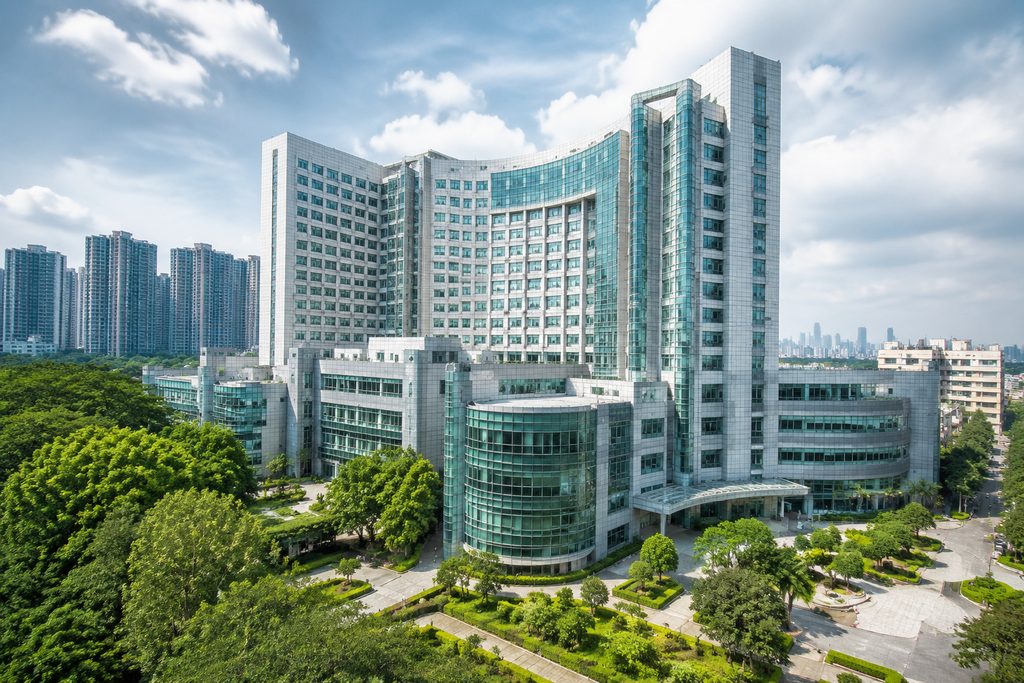
Guangdong Provincial People’s Hospital: China’s #6 Cardiovascular Center for International Patients
Key Takeaways
- Guangdong Provincial People’s Hospital performs over 7,000 cardiac surgeries annually, ranking it as China’s #6 cardiovascular center by Fudan University‘s specialist reputation rankings.
- Heart surgery costs here range from $12,000 to $25,000 USD — roughly one-fifth to one-tenth of comparable procedures in the United States or Western Europe.
- The hospital’s public outpatient system cannot be booked from overseas. Accessing scheduled cardiac surgery requires coordination through the hospital’s International Medical Center or VIP channel.
- Language barriers, payment systems, and visa requirements make independent navigation extremely difficult. Professional coordination transforms a fragmented process into a clear pathway.
The Problem: Cardiac Surgery Costs Are Breaking People — And Wait Times Are Killing Them
The average cost of coronary artery bypass grafting in the United States now exceeds $120,000. In the United Kingdom, NHS wait times for non-emergency cardiac surgery stretch past 18 weeks in many trusts, with some patients waiting over a year. For someone without comprehensive insurance, or someone in a public system watching their condition deteriorate while they queue, the math is brutal. You need world-class cardiac care. You need it soon. And you need it at a price that does not bankrupt your family. That combination — speed, quality, affordability — feels impossible to find in one place. So people compromise. They drain retirement accounts. They wait, and they worry.
Approximately 1 in 4 deaths in the United States is caused by heart disease. Globally, cardiovascular diseases claim roughly 17.9 million lives each year. The need for surgical intervention is not rare — it is staggeringly common. And for many, the barrier is not the availability of medical expertise. It is the system wrapped around it.
Who We Are
We are not a hospital. We do not provide medical treatment or clinical diagnoses. Our team functions as your logistical architects — we bridge the gap between you and China’s top-tier medical expertise. We maintain relationships with over 340 top-ranked hospitals across 37 Chinese cities, including Guangdong Provincial People’s Hospital. We handle hospital matching, appointment coordination, bilingual medical companionship, visa guidance, and travel logistics. Our job is to make sure you arrive at the right hospital, see the right specialist, and understand every step of the process. Nothing more, nothing less.
Why Guangdong Provincial People’s Hospital Delivers Results
Clinical Volume That Builds Surgical Mastery
Guangdong Provincial People’s Hospital — also known as Guangdong General Hospital — is not a small cardiac unit. The cardiovascular surgery department handles more than 7,000 procedures each year. That volume places it firmly among the highest-output heart centers in Asia. Fudan University’s Hospital Specialist Reputation Rankings, the most authoritative hospital evaluation system in China, ranks this hospital’s cardiovascular surgery department among the nation’s top 10 — specifically as the sixth-ranked cardiovascular center in the country. This is not a marketing claim. It is a peer-assessed ranking based on clinical capability, research output, and specialist reputation across 45 medical specialties.
Volume matters in cardiac surgery. A surgeon who performs 300 valve replacements annually sees complications, variations, and edge cases that a surgeon performing 50 simply does not encounter. The team at Guangdong Provincial People’s Hospital operates at a scale that builds deep, intuitive expertise. And that expertise translates directly into patient outcomes.
Technology and Efficiency at Scale
The hospital operates one of the largest hybrid operating suites in southern China, combining surgical capability with advanced imaging in a single room. This means complex procedures — combined valve and bypass surgeries, aortic arch reconstructions — can be performed with real-time imaging guidance without moving the patient between departments. The cardiovascular intensive care unit is staffed 24 hours by intensivists who manage post-operative recovery for thousands of cardiac patients annually. This is high-throughput, high-precision medicine. The kind that Western academic medical centers aspire to but often cannot match in sheer repetition.
What does this mean for you? Shorter procedure times. Lower complication rates. Faster recovery. The hospital’s published data shows mortality rates for common cardiac procedures that are statistically comparable to top-ranked centers in the United States and Europe. The difference is the volume behind those numbers.
Cost Advantage Without Quality Compromise
Let us address the elephant in the room directly. Guangdong Provincial People’s Hospital heart surgery cost is significantly lower than Western benchmarks. Coronary artery bypass grafting typically ranges from $12,000 to $20,000. Valve replacement surgery falls between $15,000 and $25,000. Complex aortic procedures may reach $30,000. These are total procedure costs — not just surgeon fees, but hospital stay, operating room time, anesthesia, and standard post-operative care.
Compare this to the United States, where bypass surgery averages $120,000 or more, or to the United Kingdom’s private sector, where cardiac surgery packages start around £25,000. The question patients ask is obvious: does lower cost mean lower quality?
It does not. The cost difference is structural. Chinese hospital systems operate on vastly lower administrative overhead. Physician salaries, while competitive within China, are a fraction of Western equivalents. Malpractice insurance costs are minimal. Pharmaceutical and device pricing is government-negotiated. The clinical outcomes — the actual results that matter to patients — are driven by surgical volume and institutional expertise, not by how much the hospital charges. Guangdong Provincial People’s Hospital delivers outcomes comparable to any major Western heart center at a price point that makes treatment accessible to people who would otherwise be priced out entirely.
What Is the Top Heart Hospital in Guangzhou?
If you search for what is the top heart hospital in Guangzhou, the answer is unambiguous. Guangdong Provincial People’s Hospital holds the highest-ranked cardiovascular surgery department in the city. It is one of 10 hospitals in Guangzhou that appear on the Fudan Top 100 Hospital list, and its cardiac program is the flagship specialty. The hospital is a provincial-level key hospital — a designation reserved for institutions that meet the highest standards for clinical care, medical education, and research output in Guangdong province.
Other strong cardiac programs exist in Guangzhou — the First Affiliated Hospital of Sun Yat-sen University has a respected cardiology department, and Nanfang Hospital handles significant cardiac volume. But for surgical intervention specifically, Guangdong Provincial People’s Hospital is the recognized leader. The hospital’s cardiovascular team includes specialists trained in Europe, Japan, and the United States, and the department maintains active research collaborations with institutions in Germany and Australia.
How to Book Cardiac Surgery at Guangdong Provincial People’s Hospital
This is where things get complicated. The question of how to book cardiac surgery at Guangdong Provincial People’s Hospital has no simple answer if you are approaching it from overseas. The hospital’s public outpatient system operates on a same-day registration model. You cannot call from London or Dubai and reserve a surgery slot. You cannot email the cardiac surgery department and get a confirmed date. The system is designed for domestic patients who physically present at the hospital, register at 7 a.m., and wait their turn.
For international patients, the pathway runs through the hospital’s International Medical Center. This is a separate channel with dedicated coordinators, English-speaking staff, and the ability to schedule consultations and procedures in advance. Accessing this channel requires proper medical documentation — translated records, imaging studies, a clear clinical summary — and someone on the ground who can navigate the intake process. The International Medical Center can arrange specialist consultations, schedule diagnostic workups, and coordinate surgical admissions. But you need to be connected to it properly.
This is precisely where professional coordination becomes essential. Our team handles the entire pre-arrival workflow: medical record translation by bilingual specialists, submission to the International Medical Center, confirmation of specialist availability, scheduling of initial consultation, and coordination of pre-operative testing. We do not promise to secure a specific surgeon on a specific date — no honest service can make that promise. We do promise to connect you through the correct channel, with complete documentation, and to confirm your consultation before you book a flight.
China Number Six Cardiovascular Center Price: What You Actually Pay
The China number six cardiovascular center price structure reflects the tiered nature of Chinese hospital services. There is the public pathway — inexpensive but inaccessible to international patients without local residency and language ability. There is the International Medical Center pathway — more expensive than the public rate but still dramatically below Western prices, with English-speaking coordination and preferential scheduling. And there is the VIP/special needs pathway, which provides the highest level of service and the most direct access to senior specialists.
Here is a realistic breakdown of what international patients can expect at Guangdong Provincial People’s Hospital:
| Procedure | Estimated Cost (USD) | Comparable US Cost (USD) |
|---|---|---|
| Coronary Artery Bypass Grafting | $12,000 – $20,000 | $120,000+ |
| Aortic Valve Replacement | $15,000 – $25,000 | $150,000+ |
| Mitral Valve Repair | $15,000 – $22,000 | $130,000+ |
| Combined Valve + Bypass | $20,000 – $30,000 | $180,000+ |
| Atrial Septal Defect Repair | $8,000 – $12,000 | $60,000+ |
These figures include surgeon fees, anesthesia, operating room costs, standard hospital stay, and routine post-operative monitoring. They do not include travel, accommodation, visa fees, coordination services, or extended rehabilitation. Actual costs vary by case complexity, implant selection (mechanical vs. biological valve, for instance), and length of ICU stay. Always obtain a formal quotation based on your specific medical records before making financial decisions.
Guangdong Provincial People’s Hospital Medical Tourism Package: What to Expect
The phrase Guangdong Provincial People’s Hospital medical tourism package suggests something tidy — a pre-bundled deal with a fixed price and a clear itinerary. Reality is more nuanced. The hospital itself does not sell “packages” in the way a dental clinic in Bangkok might offer a whitening-and-veneer bundle. Cardiac surgery is too variable, too patient-specific, for off-the-shelf pricing.
What does exist is a coordinated care pathway. When you work through a medical concierge organization, the “package” is a custom-assembled sequence: initial video consultation with a cardiologist, medical record review, pre-arrival diagnostic planning, surgical scheduling, hospital admission, procedure, post-operative monitoring, discharge, and follow-up. Accommodation near the hospital can be arranged. Airport transfers are coordinated. A bilingual medical companion stays with you through registration, consultation, admission, and discharge. This is not a tourist package. It is a medically supervised journey with logistical support at every stage.
Guangzhou itself makes the recovery period more bearable. The city is warm year-round, green, and well-connected. Direct flights from Europe, the Middle East, Southeast Asia, and North America make access straightforward. The hospital is located in the Yuexiu district, central and reachable. Patients often stay in nearby serviced apartments during pre-operative testing and initial recovery, with family members able to remain close throughout.
What You Need to Know Before Going Alone
We have seen patients attempt to navigate this independently. Some succeed. Most encounter barriers they did not anticipate. Here is what you face if you try to go alone:
- Visa Requirements: Medical treatment in China requires an S2 visa, specifically annotated for medical purposes. This requires an invitation letter from the treating hospital — a document the hospital will only issue after confirming your consultation and treatment plan. Applying without proper documentation leads to rejection. Applying under an M (business) visa for medical treatment is a visa category violation and can result in denial of entry. The visa process alone takes 2-4 weeks and demands precise paperwork.
- Payment Systems: Chinese hospitals operate on a pre-payment model. You deposit funds at admission, and the hospital draws down against that deposit as services are rendered. International credit cards are not universally accepted at public hospital counters. WeChat Pay and Alipay dominate, and linking a foreign card to these platforms is not always straightforward. Large transactions may trigger fraud alerts on your home bank account. Without local payment infrastructure, you can find yourself unable to pay a deposit when the hospital requires it.
- Language and Navigation: Guangdong Provincial People’s Hospital sees thousands of patients daily. Signage in English is limited. Registration counters, testing centers, and consultation rooms are spread across multiple buildings. A cardiac workup typically requires blood tests, echocardiography, possibly a CT angiogram, and specialist consultation — each in a different location. Without Chinese language ability and familiarity with hospital workflow, a process that should take two days can stretch into a week of confusion and frustration.
How We Help You Navigate This
These barriers exist for structural reasons — Chinese public hospitals were built to serve a domestic population at massive scale. They were not designed with international patient flow in mind. That does not mean international patients cannot access them. It means you need a bridge.
Our process begins before you leave home. We collect your medical records, have them translated by bilingual medical specialists, and submit them to the International Medical Center at Guangdong Provincial People’s Hospital. We confirm which specialist will review your case and schedule an initial consultation — either remotely via video or in person upon your arrival. We provide the hospital invitation letter required for your S2 visa application. We advise on travel dates, accommodation near the hospital, and what to expect during your first week in Guangzhou.
Once you arrive, a bilingual medical companion meets you. This person handles registration, payment deposits, queue management, and navigation between departments. They translate in real time during your consultations — not just the words, but the clinical nuance. They ensure you understand your diagnosis, your surgical plan, your risks, and your recovery timeline. During hospitalization, they remain available for communication between you, your family, and the medical team. After discharge, they coordinate follow-up appointments and medication instructions. You focus on your health. We handle everything around it.
For patients considering this path, we also encourage reviewing our resources on medical care in Guangzhou and our overview of China’s top-ranked hospitals. Understanding the broader landscape helps you make an informed decision.
Frequently Asked Questions
Yes. The Fudan University Hospital Specialist Reputation Rankings — the most authoritative hospital ranking system in China — places Guangdong Provincial People’s Hospital’s cardiovascular surgery department in the nation’s top 10, specifically ranked sixth. This ranking is based on peer assessment, clinical volume, and research output across 45 specialties. It is updated annually and widely referenced within China’s medical community.
You can receive a preliminary estimate based on your medical records, but a final fixed quote requires in-person consultation and diagnostic workup at the hospital. Cardiac surgery costs depend on too many variables — the specific procedure, implant selection, length of ICU stay, and any complications that arise during treatment. Any service offering a guaranteed all-inclusive price before the hospital has evaluated you is being dishonest. We provide realistic cost ranges based on historical data for international patients, and we help you obtain a formal hospital quotation after your initial consultation.
Guangdong Provincial People’s Hospital operates a fully equipped cardiovascular intensive care unit staffed 24 hours by cardiac intensivists. Complication rates for standard procedures are statistically comparable to major Western centers. In the rare event of a serious complication, the hospital has the resources to manage it — this is a high-volume center that has seen and handled the full spectrum of cardiac surgical outcomes. From a logistical standpoint, we remain engaged throughout your hospitalization and recovery. If extended care is needed, we coordinate it. If follow-up procedures are required, we schedule them. We do not disappear after your surgery is booked.
Plan for a minimum of three to four weeks. This includes pre-operative consultation and testing (3-5 days), the procedure and hospital stay (7-10 days for most cardiac surgeries), and initial post-discharge recovery before you are cleared to fly. Some patients stay longer if their procedure was complex or if they prefer to complete more recovery locally before traveling. Your surgeon will provide specific guidance based on your case.
Most international insurance plans operate on a reimbursement model for treatment in China. The hospital requires pre-payment — you pay the deposit upfront, and you claim reimbursement from your insurer afterward. We provide the itemized invoices and medical documentation your insurer requires. Some premium international plans have direct billing arrangements with specific hospitals, but this is not common at Chinese public hospitals, including their international departments. Check with your insurer before committing, and be prepared for the reimbursement timeline.
Your Next Step
Guangdong Provincial People’s Hospital represents a genuine option for cardiac patients who need world-class surgery at a fraction of Western costs. The clinical outcomes are real. The cost savings are substantial. But the pathway is not a straight line — it requires coordination, documentation, and local expertise that most international patients do not have on their own.
If you are considering cardiac surgery in China, start with a conversation. Tell us about your diagnosis, your timeline, and your concerns. We will tell you honestly whether Guangdong Provincial People’s Hospital — or another top-ranked Chinese heart center — is a good fit for your situation. No pressure. No hard sell. Just clarity on what is possible and what it will take to get there. Reach out for a free consultation and let us help you map the path forward.
For more medical information and treatment options in China, visit chinamedservices.com (China Medical Services).
