Satellite Remote Surgery China: World First Lhasa to Beijing Liver Tumor Resection
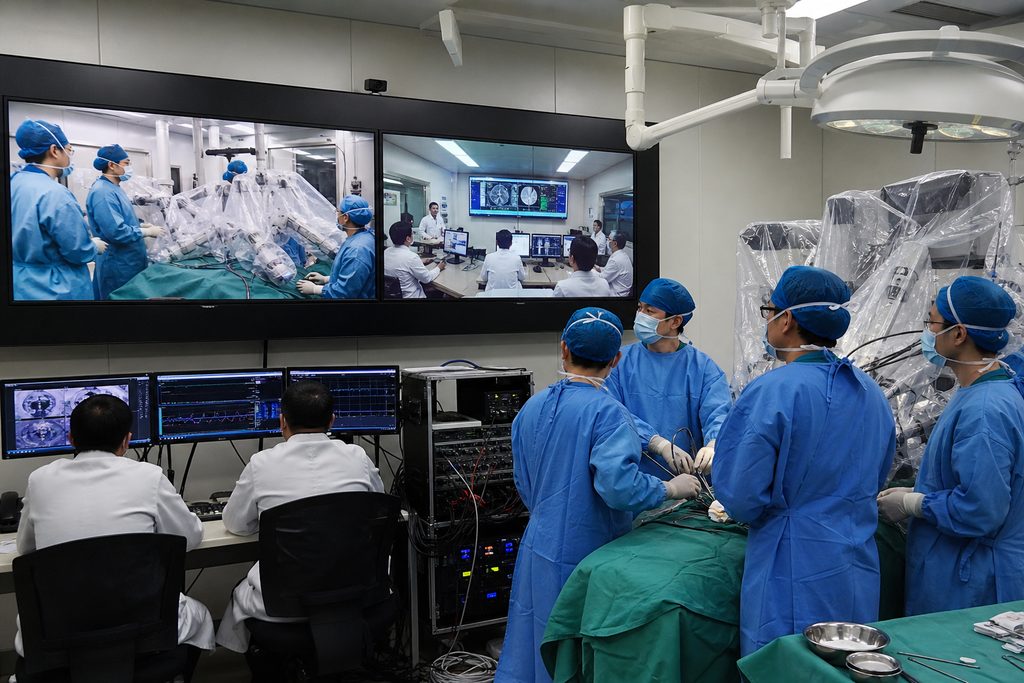
While a patient in a remote high-altitude city faces a multi-day overland journey just to reach a specialist, a surgeon 3,000 kilometers away can now remove a liver tumor with sub-millimeter precision. On June 7, 2024, a surgical team at PLA General Hospital in Beijing performed a complete liver tumor resection on a patient in Lhasa, Tibet — using a domestically developed surgical robot and China’s APSTAR-6D broadband satellite. The latency was 35 milliseconds. The margin was clean. The patient was discharged days later.
This was not a simulation. It was not a test on animal tissue. It was a human surgery — and it rewrites what is possible for patients who live far from top-tier surgical care.
Key Takeaways
- China completed the world’s first inter-provincial satellite remote liver tumor resection in June 2024 — from Beijing to Lhasa, approximately 3,000 kilometers apart, with a signal latency of just 35 milliseconds.
- Satellite telesurgery eliminates geographic barriers for patients who cannot travel — but the technology is currently limited to a handful of top-tier Chinese hospitals with dedicated robotic systems and satellite infrastructure.
- For international patients, the real near-term value is not remote surgery from your home country — it is accessing the same elite surgical teams in person, often at a remote surgery China cost that is a fraction of Western prices.
- Regulatory frameworks, device approvals, and liability standards for cross-border telesurgery are still evolving — anyone exploring this option needs expert coordination, not just a hospital appointment.
The Problem: Geography Still Decides Who Lives
Liver cancer kills approximately 830,000 people globally each year, according to the World Health Organization. It is the third leading cause of cancer death worldwide. Survival depends overwhelmingly on one factor: how fast you can get to a surgeon who performs high-volume liver resections. For patients in remote regions — the Tibetan Plateau, parts of Central Asia, island nations in the Pacific, rural areas of North America — that access simply does not exist. A patient in Ngari Prefecture, western Tibet, might need five days of overland travel just to reach a tertiary hospital capable of a complex hepatectomy. Some do not survive the journey.
Telemedicine helped with diagnosis. Video consults bridged the gap for opinions. But surgery — the actual removal of a tumor — required hands on instruments. Until now. The Lhasa-to-Beijing procedure proved that the last barrier is falling. The question for international patients is no longer “can it be done?” It is “how do I access this, and what will it cost?”
Who We Are
We are not a hospital. We do not provide medical treatment, perform surgeries, or offer clinical diagnoses. China Medical Services is a medical concierge organization — your logistical bridge to China’s top-tier healthcare system. Our team connects international patients with over 340 top-ranked hospitals across 37 cities in China. We handle the complexity: hospital matching based on your specific condition, appointment coordination through official international departments, bilingual medical companions who stay with you through every step, visa guidance, and post-operative recovery planning. We translate medical records, not just language. We navigate the system so you do not have to.
How the Lhasa-to-Beijing Satellite Surgery Actually Worked
The procedure was not magic. It was the convergence of three mature technologies, each pushed to an extreme performance threshold. Understanding the architecture matters — because it tells you what is real and what is still experimental.
The Robot: A Domestic System with 5G and Satellite Redundancy
The surgical robot used in the procedure was developed by a Chinese medical technology company — a master-slave system where the surgeon in Beijing manipulated haptic hand controls while robotic arms in Lhasa replicated every movement. The system already had regulatory approval for urological and abdominal surgeries. It had logged hundreds of cases over standard 5G ground networks. What made June 7 different was the switch from terrestrial 5G to satellite communication — a much harder engineering problem.
Ground-based 5G offers latency under 10 milliseconds over short distances. That is near-instantaneous. But 5G towers do not cover the Tibetan Plateau. Satellite signals must travel approximately 36,000 kilometers up to a geostationary satellite and back down — twice. The APSTAR-6D broadband satellite, launched in 2020, was designed for high-throughput data links across China’s western regions. The engineering team achieved a round-trip signal delay of 35 milliseconds. For context, the human blink takes 100 to 150 milliseconds. The surgeon’s hand movement registered in Lhasa before the patient’s nervous system could process the next heartbeat.
The Communication Chain: Why Latency Is Everything
Telesurgery lives or dies on latency. If the delay between the surgeon’s hand movement and the robot’s response exceeds roughly 200 milliseconds, the operation becomes dangerous — the surgeon overcorrects, the visual feedback loop breaks, and tissue damage becomes probable. At 35 milliseconds, the Beijing team reported that the sensation was nearly indistinguishable from operating in the same room. The satellite link carried three simultaneous data streams: high-definition 3D video of the surgical field, haptic feedback data from the instruments, and control signals to the robotic arms. No single stream could drop. The redundancy architecture included a backup terrestrial fiber link — but it was never needed.
The Clinical Result: Clean Margins, Routine Recovery
The patient had a localized liver tumor. The Beijing-based surgical team performed a complete resection with negative margins — meaning no cancer cells were detected at the edges of the removed tissue. That is the gold standard for curative liver cancer surgery. Post-operative recovery followed standard protocols. The patient was discharged within the expected timeframe. There were no complications attributable to the remote nature of the procedure. This was not a proof-of-concept demonstration on a phantom model. It was a real surgery on a real patient with a real cancer — and it worked.
What This Means for the Satellite Surgery China Price Equation
International patients searching for “remote surgery China cost” or “satellite surgery China price” are asking a forward-looking question. Right now, cross-border telesurgery — a surgeon in Beijing operating on a patient in Dubai or Nairobi — is not commercially available. Regulatory approvals, liability frameworks, and device certifications across jurisdictions have not caught up to the technology. But the cost structure is already taking shape, and it tells a compelling story.
| Cost Component | Estimated Range (USD) | Notes |
|---|---|---|
| Robotic surgical system usage fee | $8,000 – $15,000 | Includes disposable instruments, system amortization |
| Satellite link time (per hour) | $3,000 – $6,000 | Bandwidth reservation on high-throughput satellites |
| Surgeon and surgical team fees | $5,000 – $12,000 | Varies by specialist seniority and hospital tier |
| On-site surgical support team | $3,000 – $5,000 | Backup surgeon, anesthesiologist, nurses at patient site |
| Hospital facility and post-op care | $5,000 – $10,000 | Depends on length of stay and ICU requirements |
| Estimated total procedure cost | $24,000 – $48,000 | For a complex robotic liver resection via satellite |
Compare this to a standard robotic liver resection performed in the United States: the procedure alone often exceeds $100,000, not including pre-operative workup or post-surgical care. The satellite surgery China price, even with the added cost of space-based communication links, remains substantially lower. Why? The structural cost advantages of China’s hospital system — lower labor costs, higher surgical volumes that amortize equipment faster, and state investment in satellite infrastructure — offset the technology premium.
But here is the honest reality for 2025. If you are an international patient, you are far more likely to benefit from traveling to China for in-person robotic surgery than from receiving remote surgery in your home country. The same surgical teams. The same robotic platforms. Proven regulatory pathways. And the cost is even lower because you eliminate the satellite link expense entirely. A top-tier robotic liver resection at a hospital like PLA General Hospital or Zhongshan Hospital Fudan University typically ranges from $20,000 to $40,000 for international patients through their international medical departments. That is the number that matters for most readers right now.
Is Telesurgery Safe in China? The Evidence So Far
This is the question every patient asks first — and it deserves a direct answer. The safety record of telesurgery in China rests on three pillars: the underlying robotic platform, the communication protocol, and the surgical team’s experience.
The robotic system used in the Lhasa-Beijing procedure had already completed hundreds of on-site surgeries before attempting a satellite-linked operation. It holds regulatory approval from China’s National Medical Products Administration (NMPA) for abdominal and urological procedures. The system includes multiple safety overrides: if latency exceeds a preset threshold, the robot freezes in place. If the signal drops entirely, the on-site backup surgical team — required for every remote procedure — takes over immediately. No remote surgery in China has been performed without a fully qualified surgical team standing by in the operating room.
The satellite link itself was not improvised. APSTAR-6D is a commercial broadband satellite operated by APT Satellite Holdings, a Hong Kong-listed company. The communication protocol was tested extensively on animal models and simulated procedures before the human case. The 35-millisecond latency was not a lucky achievement — it was a design requirement verified over months of testing.
Does this mean telesurgery carries zero risk? No surgery carries zero risk. But the specific risks of remote surgery — signal interruption, latency spikes, robotic malfunction — were systematically mitigated in this case. The broader question of whether telesurgery is safe in China will require more data. One landmark procedure does not constitute a body of evidence. What it does is open the door to larger clinical trials and expanded indications. For now, the safest path for international patients is to access the same surgical expertise in person, at the same hospitals, with the same robotic systems — and let the remote surgery technology mature under controlled conditions.
How Does Long-Distance Satellite Surgery Work? A Step-by-Step Breakdown
The question “how does long-distance satellite surgery work” deserves a clear, non-sensational answer. Here is the actual workflow, stripped of hype.
Pre-operative phase. The patient undergoes standard pre-surgical imaging and workup at the local hospital — in the Lhasa case, this was the General Hospital of Tibet Military Command. CT scans, MRI, and lab work are transmitted digitally to the surgical team in Beijing. The surgeons review the case, plan the resection margins, and simulate the procedure on a 3D reconstruction of the patient’s anatomy. Nothing about this phase differs from conventional surgery, except the distance between the planning team and the patient.
Day of surgery. The patient is anesthetized by an on-site team. Trocars — the small ports through which robotic instruments enter the abdomen — are placed by the local surgical team under the remote surgeon’s guidance via video. Once access is established, the robotic arms are docked. Control is transferred to the Beijing console. The surgeon sees a high-definition 3D image of the surgical field. Their hand movements are captured by the master console, encoded into digital signals, beamed to the satellite, relayed to a ground station in Lhasa, and executed by the robotic arms — all in 35 milliseconds. The on-site team monitors for bleeding, adjusts retraction as needed, and stands ready to convert to open surgery if any complication arises.
Post-operative phase. Once the resection is complete and hemostasis is confirmed, control transfers back to the on-site team for closure. The patient recovers in the local hospital under standard protocols. The remote team reviews post-operative imaging and consults with the local team during rounds via standard video conferencing — no satellite link needed for follow-up care.
What You Need to Know Before Exploring This Path
The technology is real. The barriers to accessing it — especially as an international patient — are also real. Anyone considering China for advanced surgical care, whether remote or in-person, should understand these structural challenges.
- Regulatory approval across borders: China’s NMPA has approved domestic robotic surgical systems for use within China. These approvals do not automatically extend to other countries. A patient in another nation cannot simply book a satellite surgery from a Chinese hospital — the receiving country’s medical device regulator must also approve the robotic system, and the local hospital must be credentialed. This is a bilateral negotiation, not a consumer transaction.
- Visa requirements for in-person care: If you travel to China for surgery — the most realistic option today — you need an S2 visa with a medical treatment annotation. This requires an invitation letter from the Chinese hospital confirming your treatment arrangement. The process is straightforward when coordinated properly, but attempting it independently often leads to rejections or delays. Your accompanying family members also need S2 visas.
- Payment and insurance: Chinese public hospitals require pre-payment for international patients through their international medical departments. Most do not bill foreign insurance companies directly — you pay upfront and seek reimbursement from your insurer. Some private international hospitals in China, such as those listed on our private hospitals page, offer direct insurance billing, but they may not have the specific robotic surgery expertise you need.
- Language and navigation: A top-tier Chinese hospital sees over 10,000 outpatients per day. Signage, forms, and verbal communication are overwhelmingly in Mandarin. Even the international departments — which provide English-speaking staff — require navigation through a massive hospital campus. Without a bilingual companion who knows the system, a simple pre-operative blood draw can consume an entire day.
How We Help You Navigate This
These barriers exist for structural reasons, not because the system is hostile to foreigners. China’s top hospitals are extraordinarily capable — but they were built to serve a domestic population of 1.4 billion people. Adapting them for international patients requires a dedicated intermediary. That is what we do.
Before you travel, we translate and format your medical records according to the receiving hospital’s requirements. We match your specific diagnosis — whether it is hepatocellular carcinoma, colorectal liver metastasis, or another liver pathology — to the surgical team with the highest relevant case volume. For liver surgery, that often means hospitals like Zhongshan Hospital Fudan University, which performs over 4,000 liver resections annually, or PLA General Hospital, the institution behind the landmark satellite surgery. We coordinate your appointment through the official international medical department channel — not through backdoors or personal connections, but through the legitimate pathway designed for overseas patients. We handle the invitation letter for your S2 visa application.
During your treatment, a bilingual medical companion stays with you. This person manages registration, queues, payment counters, pharmacy pickups, and real-time translation during consultations. They know which floor of which building houses the CT scanner, which window processes international patient payments, and which pre-operative tests must be completed in what order. This is not luxury concierge service. It is operational necessity in a hospital system where a single misstep can cost hours.
After discharge, we coordinate follow-up imaging reviews, help arrange accommodations for your recovery period, and maintain communication with your home physician to ensure continuity of care. If you choose to explore a remote consultation before committing to travel — a video second opinion with the same surgical team — we arrange that too. The consultation fee is credited in full toward any subsequent in-person coordination service within 90 days.
China Remote Liver Tumor Surgery Packages: What to Expect
The phrase “China remote liver tumor surgery packages” reflects what many international patients are searching for — a bundled, predictable cost for a complex procedure. While no hospital offers a fixed-price “package” in the tourism sense, the international medical departments of major Chinese hospitals do provide bundled estimates that include the surgery, hospital stay, and standard post-operative care. A typical estimate for a robotic liver resection at a top-tier hospital ranges from $20,000 to $40,000, depending on tumor complexity, length of stay, and the specific robotic system used.
What this does not include: airfare, visa fees, accommodation for family members, extended recovery stays beyond the standard discharge window, or treatment for unexpected complications. Those variables are why we never quote a single fixed price — and why any organization that does is not being honest with you. The final cost varies by hospital and case complexity. What we do provide is a realistic range based on your specific medical records, reviewed by the receiving hospital’s international department before you commit to travel.
And for those asking “can I book satellite remote surgery consultation China” — the answer is nuanced. You can book a video consultation with the surgical teams who performed the landmark telesurgery procedures. These are the same experts. The consultation can help you understand whether your case is suitable for robotic surgery, what the in-person treatment pathway looks like, and what outcomes are realistic. The consultation itself costs from $500 to $800 for a top-specialist video session. It is the most efficient way to get an authoritative answer about your specific situation without first traveling to China.
Frequently Asked Questions
Not yet. The Lhasa-Beijing procedure was conducted entirely within China’s borders — both the surgeon and the patient were in Chinese territory, under Chinese regulatory jurisdiction. Cross-border telesurgery requires bilateral agreements between national medical device regulators, hospital credentialing in both countries, and liability frameworks that do not currently exist in most jurisdictions. This will change — the technology is ready — but the legal and regulatory infrastructure lags behind. For now, traveling to China for in-person surgery is the viable path.
If you are asking about receiving surgery remotely in your home country via satellite link, there is no commercial price because the service is not yet offered across borders. If you are asking about traveling to China for robotic liver surgery by the same teams that pioneered the telesurgery program, the estimated range is $20,000 to $40,000 for the procedure and hospital stay. This compares to $100,000 or more for equivalent robotic liver surgery in the United States. A detailed estimate requires review of your medical records by the receiving hospital.
The single landmark case demonstrated safety equivalence under highly controlled conditions — experienced surgical team, redundant communication links, on-site backup surgeon, and extensive pre-procedure simulation. But one case is not a safety record. The robotic platform itself has a strong safety history from hundreds of on-site procedures. The satellite link performed within design specifications. For the broader question to be answered definitively, larger clinical series are needed. The technology is promising but not yet routine.
You can book a video consultation with the surgical teams at hospitals like PLA General Hospital or other top-tier liver surgery centers. This is not a remote surgery booking — it is a pre-travel assessment where a specialist reviews your imaging and medical history, discusses treatment options, and determines whether you are a candidate for robotic resection. Our team handles the coordination: medical record translation, appointment scheduling through the hospital’s international department, and interpreter support during the video call. The consultation fee ranges from $500 to $800 and is credited toward any subsequent in-person treatment coordination within 90 days.
Zhongshan Hospital Fudan University in Shanghai is widely regarded as China’s top center for liver surgery, performing over 4,000 liver resections annually. PLA General Hospital in Beijing — the institution behind the satellite surgery milestone — has deep expertise in both robotic surgery and complex hepatobiliary cases. Other leading centers include West China Hospital in Chengdu and Renji Hospital in Shanghai. The best choice depends on your specific tumor characteristics, prior treatments, and overall health status. We match patients to hospitals based on case-specific factors, not generic rankings.
Your Next Step
The Lhasa-to-Beijing satellite surgery was a genuine milestone — not a press release gimmick, but a working demonstration that geography no longer determines access to elite surgical skill. The technology works. The cost structure, even with satellite links, undercuts Western prices substantially. What lags behind is the regulatory framework for cross-border application and the practical infrastructure for international patients to navigate China’s hospital system smoothly.
If you or someone you care about is facing a liver tumor diagnosis and exploring options beyond your home country’s healthcare system, start with information — not commitment. A specialist video consultation gives you an authoritative assessment of your case, a realistic cost estimate, and a clear treatment pathway. You lose nothing by asking. And you might gain something that was impossible just a few years ago: access to surgical expertise that was once out of reach.
For more medical information and treatment options in China, visit chinamedservices.com (China Medical Services).
