Robotic Lung Surgery China: Da Vinci Lobectomy With 3-Day Stay
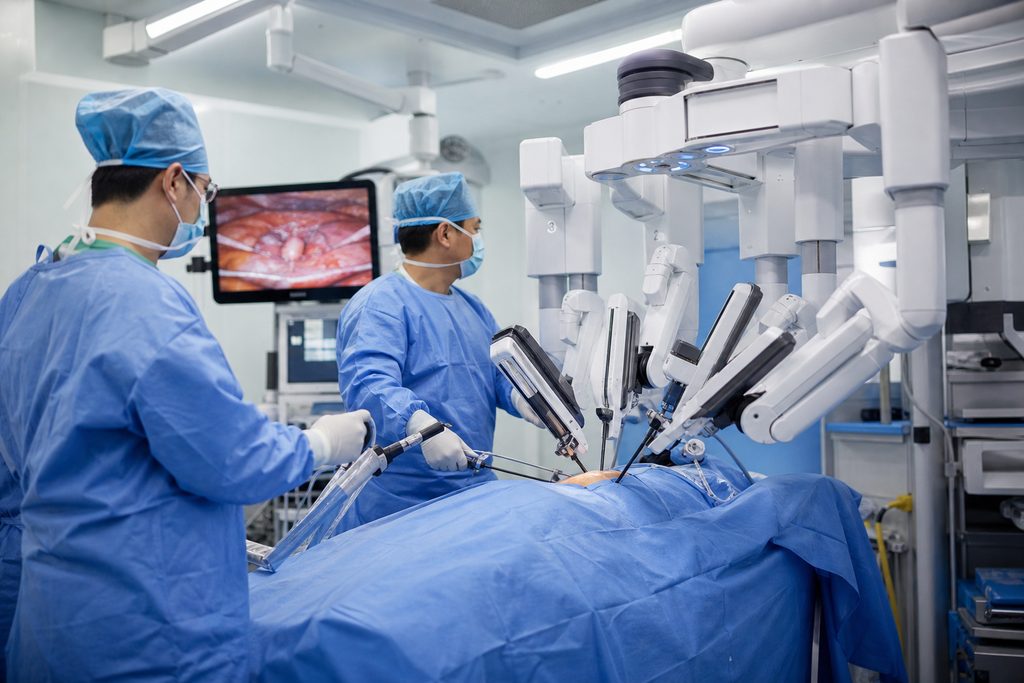
You have probably heard that cutting-edge surgery in China means compromising on safety. The data suggests something else entirely. A 2023 analysis in the Annals of Surgical Oncology found that patients undergoing robotic-assisted lobectomy in high-volume Chinese centers experienced a median hospital stay of just 3 to 4 days, with complication rates tracking below 8%. That is not a typo. The real question is not whether the technology exists. It is whether you can access it without getting lost in a system you do not understand.
We are not a hospital. We do not perform surgery or offer clinical diagnoses. Our team functions as your logistical architects. We bridge the gap between you and China’s top-tier thoracic surgery departments. We handle the opaque parts—the visa paperwork, the hospital selection based on real surgical volume data, the bilingual coordination that prevents critical errors. When you search for a Da Vinci robotic lobectomy cost China comparison, you are not just looking for a price tag. You are looking for a path. This article maps that path clearly, without the marketing fluff.
Key Takeaways
- A Da Vinci robotic lobectomy in China ranges from $18,000 to $35,000 USD, roughly one-fifth the cost of the same procedure in the United States, with comparable clinical outcomes in high-volume centers.
- Top-tier Shanghai hospitals discharge patients in a median of 3 days post-surgery using Enhanced Recovery After Surgery (ERAS) protocols, dramatically reducing infection risk and recovery time.
- The biggest barrier is not surgical quality—it is the administrative chaos of public hospitals. Without a bilingual coordinator, navigating registration, payment, and discharge instructions is nearly impossible for a non-Mandarin speaker.
- You cannot simply book a “3-day surgery package” online. Legitimate surgical scheduling requires an in-person consultation first. Any service promising otherwise is cutting dangerous corners.
The Problem: A Lung Nodule Diagnosis and a Six-Week Wait
Roughly 1.5 million people globally are diagnosed with lung cancer each year. For those with early-stage non-small cell lung cancer, a lobectomy—removing a lobe of the lung—remains the gold standard for survival. In public systems like Canada’s or the UK’s NHS, the wait from diagnosis to surgery often stretches past six weeks. In the US private system, the wait is shorter but the financial toxicity is staggering. A robotic lobectomy in America commonly bills between $80,000 and $140,000. Even with insurance, out-of-pocket maximums can wipe out a family’s savings.
That waiting period is not just stressful. It is clinically dangerous. Tumor progression does not pause because a surgical schedule is full. Patients find themselves stuck between two impossible choices: wait anxiously at home while a mass grows, or mortgage their future to pay for immediate care. Neither option feels acceptable. That tension—the fear of waiting versus the fear of bankruptcy—is exactly what drives patients to look beyond their borders. And increasingly, they are looking toward Shanghai.
Who We Are
China Medical Services connects international patients with a curated network of 340+ top-ranked hospitals across 37 cities in China. We are not brokers selling access. We are case managers. We translate your medical records, match your diagnosis to the right surgical department based on real-world volume data, coordinate your S2 medical visa documentation, and place a bilingual medical companion at your side from the moment you land. We do not promise to cure you. We promise you will never face a language barrier, a payment terminal, or a discharge instruction alone.
Why Robotic Lung Surgery in China Delivers Results
Clinical Volume Drives Better Outcomes
Here is a number that matters more than any marketing claim: a surgeon at Shanghai Chest Hospital performs over 1,000 lung cancer resections annually. A typical thoracic surgeon in the United States performs roughly 50 to 100. That gap is not marginal. Multiple studies, including a landmark 2017 analysis in The Lancet Oncology, have demonstrated that higher surgical volume correlates directly with lower 30-day mortality and fewer positive surgical margins. In robotic surgery specifically, the learning curve is steep. Surgeons need approximately 20 to 50 cases to achieve proficiency and over 150 to reach mastery. Chinese high-volume centers push surgeons through that curve in months, not years.
When you ask how safe is robotic lung surgery in China, you are really asking about this volume dynamic. Safety is not an abstract feature of a country’s healthcare system. It is a function of how many times a specific team has performed a specific procedure. At a center like Zhongshan Hospital or Shanghai Chest Hospital, a Da Vinci lobectomy is not a special event. It is a Tuesday morning. Twice.
Technology and Efficiency at Scale
The Da Vinci Xi surgical system provides 3D high-definition visualization and wristed instruments that filter out hand tremors. But the hardware is only half the story. The real efficiency advantage lies in the perioperative protocol. Chinese thoracic surgery departments have aggressively adopted Enhanced Recovery After Surgery (ERAS) pathways. Patients begin drinking clear fluids two hours before surgery—no overnight fasting. Anesthesiologists use opioid-sparing nerve blocks. Chest tubes are pulled on post-operative day one or two, not day five.
This is how a 3-day hospital stay becomes feasible. It is not magic. It is a rigorously enforced protocol that reduces the physiological stress of surgery. Fewer opioids mean less ileus. Earlier mobilization means lower pneumonia risk. The shorter stay is a byproduct of better planning, not a rush to discharge. For patients researching what is recovery time after VATS lobectomy, the answer depends entirely on whether the hospital follows a modern ERAS pathway. In Shanghai’s top centers, the answer is often: 48 to 72 hours in the hospital, then two to three weeks of progressive activity at home.
Cost Advantage Without Quality Compromise
Let us address the elephant in the room directly. The Da Vinci robotic lobectomy cost China comparison seems almost too good to be true. How can a procedure cost $18,000 to $35,000 when the same operation bills for six figures in Houston or Los Angeles?
| Cost Component | China (USD) | United States (USD) |
|---|---|---|
| Surgeon & OR Fees | $6,000 – $10,000 | $30,000 – $60,000 |
| Hospital Stay (3 days) | $3,000 – $6,000 | $15,000 – $30,000 |
| Anesthesia & Pathology | $2,000 – $4,000 | $8,000 – $15,000 |
| Robotic System & Disposables | $5,000 – $10,000 | $20,000 – $35,000 |
| Post-Op Imaging & Consults | $2,000 – $5,000 | $7,000 – $15,000 |
| Total Estimated Range | $18,000 – $35,000 | $80,000 – $155,000 |
The structural reasons are straightforward. Physician salaries in China are lower, but that does not correlate with lower skill—it reflects a different labor market. Hospital construction costs are amortized over enormous patient volumes. Malpractice insurance is a fraction of US levels. None of these factors touch the sterile field. A Da Vinci robot is the same machine in Shanghai as it is in Boston. The disposables—the staplers, the trocars—are manufactured by the same global suppliers. The price difference is not a discount on quality. It is a discount on administrative overhead and labor market arbitrage.
When patients search for a minimally invasive lobectomy China price comparison, they often assume lower cost implies corner-cutting. The opposite is true at high-volume centers. These hospitals invest their margins into more robots, more training, and more volume. It is a virtuous cycle that Western hospitals, constrained by fragmented payer systems, struggle to replicate.
What You Need to Know Before Going Alone
The surgical outcomes are real. So are the barriers. Anyone who tells you this process is easy without local support is being dishonest. Here is what you face if you attempt to navigate it independently.
- Visa Requirements Are Specific and Unforgiving: Medical treatment in China requires an S2 visa with a treatment purpose annotation. You need an invitation letter from a Chinese hospital, a confirmed appointment, and medical documentation translated into Chinese. The S2 is not a tourist visa. Showing up on an L visa and hoping to schedule surgery will get you turned away at the hospital registration desk. Consulates are strict about this distinction.
- Public Hospital Registration Is a Gauntlet: Top surgeons at public hospitals see 80 to 100 outpatients in a single morning session. Registration happens through hospital apps entirely in Chinese, or through physical kiosks with queues forming at 5:00 AM. You cannot email a professor and book a slot. You need someone physically present who reads Chinese and understands the hospital’s internal workflow. That is not a convenience. It is a prerequisite.
- Payment Systems Do Not Accept Foreign Cards: Most Chinese public hospitals accept UnionPay, WeChat Pay, or Alipay. Visa and Mastercard are frequently declined at hospital cashier counters. International wire transfers require exact department codes and invoice numbers that are only issued in person. Attempting to pay a $25,000 surgical deposit with a foreign credit card is a recipe for a declined transaction and a missed surgical slot.
- Discharge and Follow-Up Happen in Mandarin: Your chest tube removal instructions, your medication schedule, your pathology report—all of it will be delivered in Mandarin unless you have arranged for translation. Misunderstanding a single instruction about wound care or anticoagulation can lead to a preventable readmission.
How We Help You Navigate This
These barriers exist for structural reasons, not because anyone is trying to exclude foreign patients. Chinese public hospitals serve massive domestic populations. They are not designed for international walk-ins. Our job is to build the bridge that does not exist yet.
Before you travel, we translate and format your medical records—CT scans, pathology slides, pulmonary function tests—into the documentation format that Chinese thoracic surgeons expect. We identify the hospital whose surgical volume and subspecialty focus match your diagnosis. For early-stage adenocarcinoma in the right upper lobe, the best hospital for robotic lung surgery Shanghai might be Shanghai Chest Hospital. For a centrally located squamous cell carcinoma with possible sleeve resection, Zhongshan Hospital’s thoracic team might be the better match. This is not a generic referral. It is a surgical case match based on real departmental data.
We coordinate the official invitation letter required for your S2 visa application. We do not issue visas—only consulates do that—but we ensure your documentation package is complete and correctly formatted. When you land, a bilingual medical companion meets you at the airport. That companion stays with you through registration, pre-operative testing, the surgical consent process, and post-operative discharge. They are not a translator on a phone app. They are a physically present professional who understands hospital workflows and medical terminology.
We also handle the payment logistics. We facilitate the correct invoice generation and can guide you through international wire transfer procedures that the hospital’s cashier will recognize. For patients who wish to explore a structured approach, we can outline options that resemble a book robotic lung surgery package China 3 day stay arrangement—but with full transparency. No legitimate hospital sells surgery as an e-commerce product. What we coordinate is a streamlined pathway: pre-arranged consultation, expedited admission through the hospital’s international department, and a recovery plan aligned with ERAS protocols that targets a 3-day inpatient stay. The actual discharge date is always determined by the surgical team based on your clinical progress, not a package brochure.
Frequently Asked Questions
At high-volume centers, the safety data is comparable. A 2022 multicenter study from Shanghai Chest Hospital reported a 30-day mortality rate of 0.3% for robotic lobectomy, with a conversion-to-open rate below 2%. These numbers align with outcomes from top US centers like Memorial Sloan Kettering or MD Anderson. The key variable is not the country. It is the hospital’s annual robotic thoracic volume. We only match patients with centers performing at least 200 robotic thoracic cases per year.
Yes, if your case is suitable and the hospital follows an ERAS protocol. The 3-day target applies to straightforward lobectomies in patients without major comorbidities. A typical timeline: surgery on day zero, chest tube removed on day one or two, discharge on day three. You will need to stay in Shanghai for at least one week after discharge for a follow-up chest X-ray and wound check before flying. Long-haul flights are generally not recommended in the first 10 days post-operatively due to thrombosis risk.
This is a critical question. Before you leave China, your surgical team will provide a detailed discharge summary in English, including operative notes, pathology results, and a postoperative care plan. We ensure this documentation is formatted to the standards your home-country pulmonologist or thoracic surgeon will expect. You must establish a follow-up relationship with a local physician before you travel. Chinese surgeons are generally willing to communicate with your home doctor via email or telemedicine if questions arise. The continuity-of-care handoff is something we facilitate, not leave to chance.
Because ethical surgery does not work that way. A thoracic surgeon needs to review your current CT scan, assess your pulmonary function, and examine you in person before agreeing to operate. Anyone offering a fixed-price “3-day lobectomy package” without a pre-operative consultation is either lying about the process or planning to cut corners. Legitimate surgical coordination means we secure your consultation slot, your pre-op testing schedule, and a provisional admission date—but the final surgical plan is always made by the surgeon after they evaluate you in person.
Your Next Step
A lung cancer diagnosis narrows your world. Suddenly, everything is about time and trust. You need to know the mass will be removed soon, by hands that have done this thousands of times, at a cost that does not destroy your family’s future. China’s high-volume thoracic centers offer exactly that combination: speed, expertise, and financial relief. But the gap between knowing about these centers and actually receiving care inside them is wide. It is filled with language barriers, visa paperwork, and payment systems that were never designed for you.
That gap is what we close. If you are considering robotic lung surgery and want to understand your options clearly—without pressure, without vague promises—reach out for a free consultation. We will review your case, identify the right hospital match, and map the full pathway from diagnosis to recovery. The decision is always yours. We just make sure you have real information to base it on.
Learn more about our coordination services at our patient support page. If you are still researching which institution might be the best fit, our top-ranked hospital database provides detailed profiles of thoracic surgery departments across China. For a broader look at how China’s surgical infrastructure compares globally, visit the China Medical Services homepage.
For more medical information and treatment options in China, visit chinamedservices.com (China Medical Services).
