Cancer Hospital CAMS Beijing: International Patient Oncology Coordination
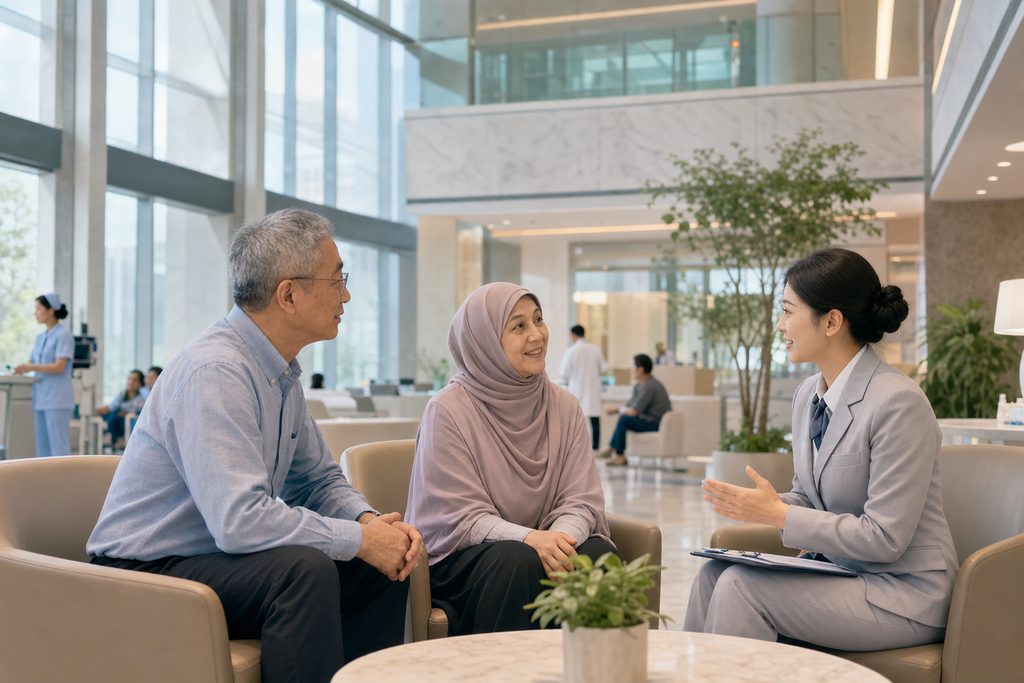
Cancer Hospital CAMS Beijing: International Patient Oncology Coordination
Walking into a cancer diagnosis feels like the ground shifting beneath your feet. The questions come fast. What stage is it? What are my options? Can I afford treatment? For many international patients, a new question surfaces: should I travel for care? The Cancer Hospital Chinese Academy of Medical Sciences (CAMS) in Beijing handles over 800,000 outpatient visits annually. It is not just China’s largest cancer center. It is a national hub where complex oncology cases arrive daily. Understanding the CAMS Beijing cancer treatment cost for international patients — and the coordination required to access it — is the first practical step toward deciding if this path makes sense for you.
Key Takeaways
- CAMS Beijing performs more cancer surgeries annually than most Western cancer centers see in a decade — surgical volume that translates directly to clinical precision.
- Treatment costs for international patients typically range from 40% to 70% less than equivalent care in the United States, with full pricing transparency before you commit.
- Public hospital systems in China do not allow overseas patients to pre-book surgeries online — you must navigate an in-person consultation pathway that requires local coordination.
- Oncology treatment coordination through a hospital’s international department is the only reliable way to secure a confirmed treatment timeline before you board a flight.
The Problem: Cancer Care Costs Are Breaking Families
Volume drives competence. This is not speculation — it is one of the most replicated findings in surgical outcomes research. A 2017 study in The Lancet Oncology demonstrated that hospitals performing more than 20 esophagectomies annually had significantly lower 30-day mortality rates than lower-volume centers. CAMS thoracic surgeons perform hundreds of esophageal cancer resections each year. The hospital’s lung cancer surgery program is among the world’s largest. For rare thoracic tumors that a general oncologist might see twice in a career, specialists here see them monthly.
This matters for international patients considering oncology treatment coordination China hospital services. You are not just accessing lower costs. You are accessing deep, repetitive clinical experience concentrated in a single institution.
Technology Deployed at Scale
CAMS operates 11 linear accelerators for radiation therapy. That is more radiotherapy capacity than most European cancer centers. The hospital runs multiple Da Vinci surgical robotic systems. Its pathology labs process immunohistochemistry and genetic sequencing panels in-house — no shipping samples to external labs and waiting two weeks for results. PET-CT, SPECT, and advanced MRI imaging happen under one roof.
The operational tempo is different too. A patient needing a CT scan, blood work, and a specialist consultation can often complete all three in a single day. The hospital is designed for throughput. For an international patient traveling on a limited timeline, that efficiency means fewer hotel nights and a faster path from diagnosis to treatment plan.
Cost Structure That Makes Treatment Accessible
Let us address the question directly: what is the price of chemotherapy in Beijing for foreigners? A standard chemotherapy cycle at CAMS through the international patient department typically ranges from $2,000 to $6,000, depending on the drug regimen. Equivalent cycles in the United States often run $10,000 to $30,000 or more. Radiation therapy courses range from $8,000 to $20,000 at CAMS — compared to $40,000 to $100,000+ in American facilities.
These prices reflect structural economics, not quality compromises. Chinese hospital systems operate on lower labor costs. Pharmaceutical pricing is negotiated differently. Hospital administrative overhead runs leaner. The clinical protocols — the chemotherapy drugs, the radiation techniques, the surgical approaches — are the same evidence-based standards used globally. CAMS oncologists attend international conferences. They publish in the same journals. The cost difference is about economics, not medicine.
| Treatment Type | CAMS Beijing (International Patient) | United States (Average) |
|---|---|---|
| Chemotherapy (per cycle) | $2,000 – $6,000 | $10,000 – $30,000 |
| Radiation Therapy (full course) | $8,000 – $20,000 | $40,000 – $100,000+ |
| Lung Cancer Surgery | $15,000 – $25,000 | $50,000 – $90,000 |
| PET-CT Scan | $500 – $900 | $2,500 – $5,000 |
All prices are estimates in USD. Final costs vary by hospital and case complexity. International department pricing typically runs 1.5–2× standard public rates.
What You Need to Know Before Going Alone
Honesty matters here. The Chinese public hospital system was not designed with international patients in mind. Navigating it independently presents real barriers that can derail a treatment plan before it begins.
- Visa Requirements Are Specific: Medical treatment in China requires an S2 visa with a notation specifying the treatment purpose. This is not a tourist visa. It is not an M business visa. The application requires an invitation letter from the treating hospital — a document that CAMS will only issue after you have been formally accepted as a patient. Getting that acceptance requires an in-person consultation first. This circular requirement is exactly where coordination support becomes essential.
- No Online Pre-Booking for Surgery: Chinese public hospitals, including CAMS, do not allow overseas patients to book surgeries remotely through a website or email. You cannot send medical records and receive a confirmed surgery date in return. The system requires an initial outpatient consultation — in person — after which the attending physician determines the treatment plan and schedules the procedure. Anyone promising to book cancer surgery at CAMS Beijing international patient service without an in-person consultation is not being truthful about how the system works.
- Language Barriers Are Absolute: CAMS is a Chinese-language institution. Registration forms, consent documents, pharmacy instructions, billing statements — all in Chinese. The international patient department provides some English support, but it is limited. Navigating a hospital that sees over 2,000 outpatient visits daily without Mandarin capability is not just inconvenient. It is functionally impossible for complex oncology care.
How We Help You Navigate This
These barriers exist for structural reasons. They are not designed to exclude international patients — they simply reflect a system built primarily for China’s domestic population of 1.4 billion. Our role is to bridge that structural gap.
Before you travel, we handle document preparation: translating your medical records into Chinese, organizing imaging files in formats Chinese hospital systems can read, and submitting your case through the hospital’s international patient channel for preliminary review. This does not guarantee acceptance — no one can guarantee that — but it ensures your case is reviewed by the right department before you book a flight.
When you arrive, our bilingual medical companions meet you at the hospital. They handle registration, queue management, payment processing, and real-time translation during consultations. You speak directly with your oncologist through a trained interpreter who understands medical terminology — not a translation app. We coordinate your diagnostic schedule so that tests happen in a logical sequence, minimizing wasted days.
After your treatment plan is established, we support logistics: follow-up appointment scheduling, pharmacy visits, accommodation extensions if treatment timelines shift. The goal is straightforward: you focus on your health, and we handle everything that surrounds it.
For those asking how to get cancer treatment at CAMS hospital Beijing, the answer is methodical: prepare your records, submit through the international channel, secure your S2 visa with the hospital invitation, travel for your initial consultation, and proceed from there. Each step has dependencies. Missing one can reset the entire timeline.
Frequently Asked Questions
Is CAMS really the best cancer hospital in China for overseas patients?
CAMS consistently ranks among China’s top oncology institutions in the Fudan University hospital rankings — a widely referenced assessment of Chinese hospital quality. Its cancer program is ranked among the top tier nationally for multiple specialties including thoracic surgery, head and neck oncology, and gynecologic oncology. International patients seeking the best cancer hospital in China for overseas patients reviews will find that CAMS appears repeatedly in discussions of high-volume, research-active cancer centers. That said, “best” depends on your specific diagnosis. Another hospital might have deeper expertise in your particular cancer subtype. Hospital matching based on your exact pathology is part of what we assess during initial consultation.
What happens if my treatment plan changes after I arrive?
Treatment plan adjustments happen. A scan reveals something unexpected. A biopsy result shifts the staging. This is oncology, not engineering — plans evolve. When changes occur, we handle the logistical ripple effects: rescheduling procedures, extending accommodation, updating your visa documentation if your stay extends beyond the original timeline. Our coordination fee structure accounts for this reality. We are not clocking hours and billing for every adjustment. The case management model assumes things will shift, and we built our service around that assumption.
Can I get a second opinion from CAMS before committing to travel?
Yes. Written second opinions from CAMS specialists are available through the international department. The process involves submitting your complete medical records, imaging files, pathology slides, and a structured clinical summary. A relevant specialist reviews the materials and provides a written assessment — treatment recommendations, prognosis discussion, and whether your case is appropriate for treatment at CAMS. This written second opinion typically costs $300–500 and takes 7–14 business days. It is a practical first step before committing to international travel.
Does CAMS accept my health insurance?
Most international health insurance plans operate on a reimbursement model in China. You pay the hospital directly, obtain detailed invoices and medical reports, and submit claims to your insurer. CAMS does not directly bill international insurance companies. Some premium international plans have direct settlement arrangements with specific hospital international departments — but you must verify this with your insurer before traveling. We can provide the documentation formats your insurer requires, but we do not handle insurance claims or guarantee reimbursement.
What if I need emergency care during treatment?
CAMS has an emergency department equipped to handle oncology-related emergencies: febrile neutropenia, post-surgical complications, acute pain crises. For patients undergoing active treatment at the hospital, emergency protocols exist to fast-track you back to your treating department. Our team maintains contact throughout your treatment period — if an emergency arises at 2 a.m., you have a number to call for immediate interpretation support and hospital navigation assistance.
Your Next Step
Cancer forces decisions under pressure. The question of where to seek treatment — and how to afford it — deserves clear information, not marketing language. CAMS Beijing offers world-class oncology care at costs that make treatment accessible to families who would otherwise face financial devastation. Accessing that care requires navigating a system that was not built for you. That is not a judgment on the system — it is simply the reality of cross-border medical travel.
If you are considering cancer treatment in China, start with information. A written second opinion from a CAMS specialist gives you a clinical perspective without requiring a flight. From there, decisions become clearer. Our team is available to discuss your specific situation and help you understand whether this path makes sense for your diagnosis, your timeline, and your budget. Reach out when you are ready.
Get a free consultation to discuss your case and explore whether CAMS Beijing is the right option for your oncology treatment.
For more medical information and treatment options in China, visit chinamedservices.com (China Medical Services).
