Renmin Hospital Wuhan Cardiology: Heart Failure and Interventional Program
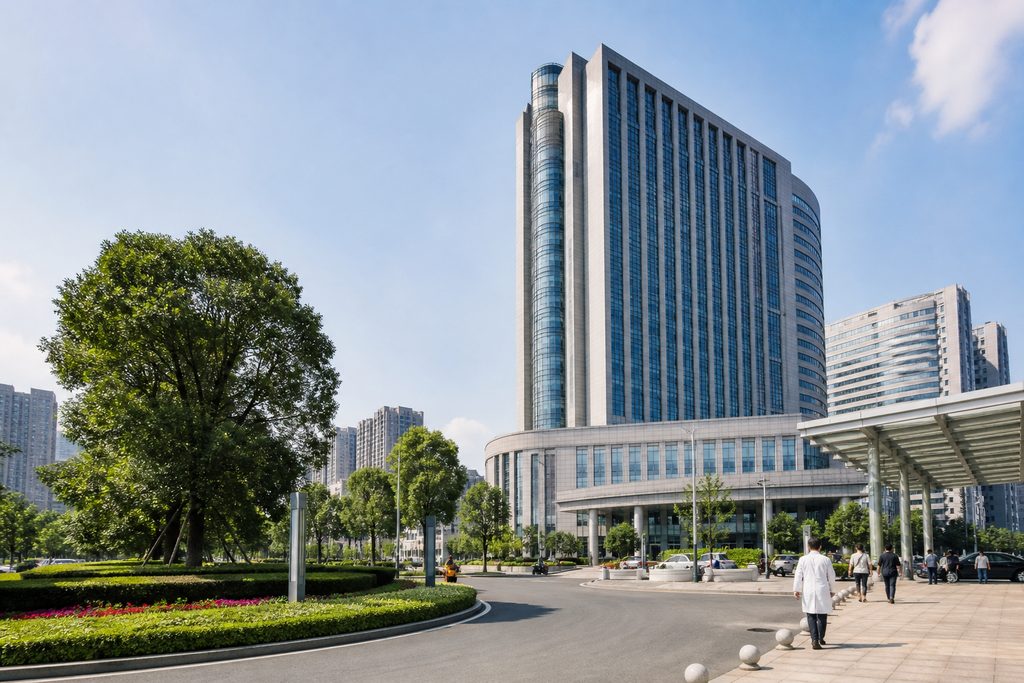
A patient in the United States diagnosed with advanced heart failure faces an average hospital bill exceeding $80,000 for a device implant, often after weeks of insurance deliberation. At Renmin Hospital of Wuhan University, the same procedure—a cardiac resynchronization therapy defibrillator, or CRT-D—is performed by specialists who collectively implant over 500 such devices annually, at roughly one-fifth of the cost. The disparity is not a reflection of quality. It is a reflection of structural economics and clinical volume.
For a patient whose ejection fraction is dropping and whose breath grows short climbing a single flight of stairs, the math becomes painfully simple. Wait too long, and the window for intervention narrows. Pay the local price, and financial recovery may take longer than physical healing. Our team exists because that equation does not have to be zero-sum. We connect you with programs like the one at Renmin Hospital Wuhan, where high-volume interventional cardiology meets a cost structure that keeps treatment accessible.
Key Takeaways
- Renmin Hospital of Wuhan University performs more than 6,000 percutaneous coronary interventions annually, placing it among China’s highest-volume cardiac centers.
- The cardiology department operates a dedicated Heart Failure Center with standardized CRT-D and left ventricular assist device pathways that significantly reduce in-hospital waiting days.
- International patients cannot simply walk in and book a procedure—visa requirements, hospital registration, and language barriers create genuine logistical friction that requires advance planning.
- Treatment costs for interventional cardiology at Renmin Hospital typically range from $8,000 to $22,000 USD, approximately 70-80% less than comparable US hospital charges before insurance adjustments.
The Problem: Heart Failure Wait Times Are Stealing Eligible Months
Heart failure does not pause while an insurance committee reviews a prior authorization. Approximately 6.7 million Americans over 20 years old have heart failure, according to the American Heart Association’s 2024 statistical update. In Canada, patients with non-urgent cardiac conditions wait a median of 13.4 weeks between specialist consultation and treatment, per the Fraser Institute. In the United Kingdom, the NHS target of 18 weeks from referral to treatment has not been met nationally since 2016. These numbers represent real people sitting at home, their ventricles remodeling, their functional capacity declining, while administrative machinery turns slowly.
The clinical consequences of delay are well-documented. A 2021 analysis in the European Journal of Heart Failure found that each month of delay in guideline-directed device therapy was associated with a measurable increase in all-cause hospitalization risk. The heart does not care about the queue.
And yet, when patients search for alternatives, they encounter a confusing landscape. Some centers advertise fast-track programs but lack the procedural volume to support genuine expertise. Others offer low prices that dissolve upon scrutiny, replaced by itemized charges that rival Western bills. What patients need is a sober, data-backed assessment of where they can receive timely, high-quality care at a cost that does not mortgage their future.
Who We Are
We are not a hospital. We do not provide medical treatment, clinical diagnoses, or surgical referrals. China Medical Services is a patient coordination organization—we build the logistical bridge between international patients and China’s top-tier medical institutions. Our database covers 340+ top-ranked hospitals across 37 cities, each vetted against Fudan University‘s hospital rankings and JCI accreditation standards. We handle appointment coordination, bilingual medical companion services, visa guidance, and post-procedure recovery logistics. We do not promise outcomes. We promise that when a patient decides to pursue treatment at a center like Renmin Hospital Wuhan, the path from decision to admission is as short and smooth as the medical reality allows.
Why Renmin Hospital Wuhan Cardiology Delivers Results
Volume Is the Teacher That Cannot Be Replaced
Renmin Hospital of Wuhan University is not a boutique cardiac center. It is one of the largest cardiovascular programs in central China, with an annual interventional volume exceeding 6,000 PCI procedures and over 500 device implants including pacemakers, ICDs, and CRT-Ds. The hospital’s Heart Failure Center operates under a standardized clinical pathway that integrates diagnosis, medical optimization, device therapy, and post-discharge follow-up within a single administrative structure. For a patient with ischemic cardiomyopathy and a left bundle branch block, the question is not whether CRT is indicated—the guidelines are clear. The question is how many of these procedures the implanting team has done, and what their complication rates look like.
Volume correlates with outcomes in interventional cardiology. A 2020 study in Circulation: Cardiovascular Interventions demonstrated that hospitals performing more than 400 PCIs annually had significantly lower in-hospital mortality rates than low-volume centers. Renmin Hospital’s cardiology department clears that threshold more than ten times over. The cath lab teams work with a rhythm that comes only from repetition. This is not a theoretical advantage—it is visible in door-to-balloon times, in device implant durations, in rates of pocket hematoma and lead dislodgement that fall as the case count rises.
Technology Deployed at Scale, Not as a Marketing Point
The interventional cardiology program at Renmin Hospital is equipped for the full spectrum of coronary and structural interventions. Drug-eluting stents, bioresorbable scaffolds, intravascular ultrasound, optical coherence tomography, rotational atherectomy—these are not special-order items. They are standard tools, available because the volume justifies the inventory. The electrophysiology lab runs atrial fibrillation ablation procedures using three-dimensional electroanatomic mapping as a default, not an upgrade. For heart failure patients, cardiac resynchronization therapy is performed with quadripolar left ventricular leads that allow for multipoint pacing, a technique that improves responder rates compared to traditional bipolar leads.
What distinguishes this program from many Western centers is not the presence of advanced technology but the absence of gatekeeping around it. When a patient meets clinical criteria for a device or intervention, the pathway to receiving it is shorter. Fewer administrative layers. Less friction between the decision and the cath lab schedule.
The Heart Failure Treatment Cost at Renmin Hospital Wuhan Reflects Structural Economics, Not Quality Compromise
This is where skepticism is healthy. A CRT-D implant that costs $8,000 to $15,000 at Renmin Hospital Wuhan versus $40,000 to $80,000 in the United States inevitably raises the question: what is being sacrificed? The answer, most often, is nothing clinical. The cost difference reflects three structural factors. First, Chinese physician compensation is a fraction of American levels—a senior interventional cardiologist in Wuhan earns perhaps $80,000 to $120,000 annually, compared to $400,000-plus in the US. Second, hospital administrative overhead in China’s public system is leaner, without the billing and coding infrastructure that consumes an estimated 25% of US hospital expenditures. Third, device manufacturers price differently across markets—the same CRT-D device from a multinational manufacturer costs less in China than in the US, not because it is a different product, but because the market will not bear American prices.
The clinical outcomes are comparable. A 2023 analysis in the Journal of the American College of Cardiology comparing CRT outcomes across international registries found no significant difference in one-year mortality or hospitalization rates between Chinese and Western cohorts when adjusted for baseline characteristics. The devices are the same. The implant techniques follow the same guidelines. The difference is the price tag, not the product.
What You Need to Know Before Going Alone
None of this is to suggest that a patient can simply book a flight to Wuhan, walk into Renmin Hospital, and receive a stent or a CRT-D the following week. The Chinese public hospital system is not designed for walk-in international patients. The barriers are real, and underestimating them leads to frustration, wasted time, and—worst of all—clinical delays.
- Visa Requirements Are Specific and Non-Negotiable: Medical treatment in China requires an S2 visa, annotated for medical purposes. This is not the same as an M business visa or an L tourist visa. The application requires an invitation letter from the treating hospital, a detailed treatment plan, and proof of financial capacity. Obtaining that invitation letter independently—without a local contact who understands hospital administrative protocols—can take weeks of back-and-forth communication. One missing stamp, and the consulate rejects the application.
- Hospital Registration Does Not Work Like Western Systems: Public Chinese hospitals do not offer online appointment booking for international patients in the way a Western patient might expect. The standard registration system requires a Chinese ID number or a local phone number. The international medical department exists as a separate channel, often with different scheduling rules and a different fee structure. Without knowing which department handles international cardiology cases, a patient can spend days navigating the wrong administrative pathway.
- Language Is Not a Minor Inconvenience: Even in a university hospital where some physicians speak English, the infrastructure around care—registration forms, consent documents, pharmacy instructions, discharge summaries—is almost entirely in Chinese. A cardiac catheterization consent form runs several pages of dense text. Signing it without full comprehension is not acceptable. Having a bilingual medical companion who can translate not just the words but the clinical implications is not a luxury; it is a safety requirement.
How We Help You Navigate This
The barriers described above are not reasons to avoid seeking care at Renmin Hospital Wuhan. They are reasons to approach the process with the right support structure. Our role is to collapse the distance between a patient’s decision to pursue treatment and the moment they are prepped in the cath lab.
We start with the clinical documentation. A patient’s echocardiogram reports, angiograms, medication lists, and prior device records need to be translated into Chinese medical terminology—not conversational Chinese, but the precise clinical language that a cardiologist at Renmin Hospital will review. We handle that translation and deliver the package through the hospital’s international patient channel, not the general registration queue. This alone cuts weeks off the timeline.
Once the hospital reviews the case and confirms they will accept the patient, we coordinate the invitation letter for the S2 visa application. We provide the exact documentation package that the local consulate expects to see. We do not guarantee visa approval—no one can—but we ensure the application is complete and correctly formatted on the first submission. Resubmissions are where timelines unravel.
On the ground in Wuhan, a bilingual medical companion meets the patient at the airport, accompanies them to every appointment, translates every conversation, and handles every administrative step—registration, payment, pharmacy pickup, discharge instructions. The companion is not a doctor and does not offer medical advice. They are the patient’s logistical nervous system, ensuring that nothing is lost in translation and no step is missed. The cost for this service starts from $200 per day, and for patients undergoing device implantation with a typical three-to-five-day inpatient stay, the total coordination expense is a fraction of the savings on the procedure itself.
For patients who want to understand their options before committing to travel, we arrange video consultations with Renmin Hospital cardiologists. The cost ranges from $500 to $800 for a top-specialist video consultation, and that entire amount is credited toward our coordination fee if the patient proceeds with treatment within 90 days. This is not a sales tactic. It is a recognition that a patient should not pay twice for access to the same clinical pathway.
What Is the Success Rate of Heart Stent Procedures in China?
The question is reasonable, and the answer requires precision. Success rate depends on how success is defined. For elective percutaneous coronary intervention with drug-eluting stents in stable coronary artery disease, procedural success—defined as successful stent deployment with residual stenosis under 20% and without in-hospital major adverse cardiac events—exceeds 97% at high-volume Chinese centers, consistent with international benchmarks. A 2022 study in Catheterization and Cardiovascular Interventions analyzing PCI outcomes across 42 Chinese hospitals reported an in-hospital mortality rate of 0.3% for elective procedures, comparable to rates reported in the US National Cardiovascular Data Registry.
For complex interventions—left main stenting, chronic total occlusions, heavily calcified lesions requiring rotational atherectomy—the risk profile rises, but again, the outcomes at centers like Renmin Hospital track with international norms. The variable that matters most is not the country where the procedure is performed. It is the volume of the center and the experience of the operator. A patient asking about stent success rates should be asking about the specific center’s volume and complication data, not national aggregates.
Is Renmin Hospital Wuhan Good for Heart Failure Management?
Renmin Hospital of Wuhan University is ranked among the top cardiology programs in China by the Fudan University hospital ranking system, which evaluates clinical capacity, research output, and reputation among peer specialists. The hospital’s Heart Failure Center is a nationally designated unit that follows the Chinese Heart Failure Diagnosis and Treatment Guidelines, which align closely with ACC/AHA and ESC guidelines. The center manages the full spectrum of heart failure therapy: guideline-directed medical therapy titration, cardiac resynchronization therapy, implantable cardioverter-defibrillators, and left ventricular assist device implantation for advanced cases.
What distinguishes the program is its integration. A heart failure patient at Renmin Hospital is managed by a team that includes heart failure cardiologists, electrophysiologists, interventional cardiologists, and cardiac surgeons, all within the same department. When a patient with ischemic cardiomyopathy needs revascularization before CRT implant, the cath lab and the device team coordinate without inter-departmental referrals. This is not universally true at Western centers, where cardiology and cardiac surgery often operate as separate business units with separate schedules and separate financial incentives.
Frequently Asked Questions
You cannot book a procedure package directly as an international patient through the hospital’s public registration system. The hospital’s international medical department handles overseas patients, but initial contact typically requires a coordinator who understands the internal referral process. Our team manages this coordination—we submit your translated medical records, obtain the pre-approval, and schedule the initial consultation. The hospital itself sets the treatment timeline and fees. We facilitate the connection but do not control the hospital’s scheduling.
For a patient requiring cardiac resynchronization therapy with defibrillator, the all-inclusive hospital charge—device, implant procedure, three-to-five-day inpatient stay, and basic medications—typically ranges from $8,000 to $15,000 USD. Complex cases requiring additional interventions, such as concomitant PCI or lead extraction, can reach $18,000 to $22,000. These figures are estimates based on recent international patient cases. The final cost depends on the specific device selected, the complexity of the implant, and the length of stay, and the hospital provides a formal quotation after reviewing your medical records. Compared to US hospital charges of $40,000 to $80,000 for the same procedure, the savings are structural, not promotional.
Renmin Hospital’s cardiology department maintains a complication rate consistent with international benchmarks for high-volume centers. In the event of a procedural complication—coronary perforation during PCI, lead perforation during device implant, pocket infection—the hospital has in-house cardiac surgery backup and a full intensive care unit. International patients should understand that medical liability and compensation systems in China differ from those in Western countries. We strongly recommend that patients carry medical travel insurance that covers complications and, if necessary, medical evacuation. We assist with insurance documentation but do not provide medical coverage ourselves. This is a serious consideration, and no honest coordinator will minimize it.
For a standard PCI with drug-eluting stent, the typical inpatient stay is two to three days, with an additional three to five days recommended in Wuhan before flying, to allow for follow-up and observation. For a CRT-D implant, the inpatient stay is typically three to five days, with a total recommended stay in Wuhan of seven to ten days. The device requires a wound check and programming confirmation before the patient travels. These timelines assume an uncomplicated procedure and recovery. Patients with multiple comorbidities or complex anatomy should plan for a longer stay. Your treating cardiologist will provide a specific recommendation based on your case.
“Fast-track” is a term that requires careful definition. If it means bypassing proper diagnostic workup, skipping guideline-directed medical therapy, or rushing to an invasive procedure without adequate pre-procedural planning, then fast-track is dangerous. If it means eliminating administrative delays, scheduling inefficiencies, and insurance-driven waiting periods while maintaining full clinical rigor, then it is simply efficient care. The program at Renmin Hospital falls into the second category. Every patient undergoes the same pre-procedural evaluation—echocardiography, angiography review, lab work, anesthesia clearance—that they would receive at any major cardiac center. What is compressed is the administrative timeline, not the clinical one. That compression is safe when the clinical protocols remain intact. Our role is to ensure that the speed comes from efficiency, not from skipped steps.
Your Next Step
The decision to travel abroad for cardiac care is not a simple one. It involves clinical judgment, financial calculation, and a clear-eyed assessment of logistical complexity. What makes it worth considering is the reality that for many patients, the alternative is not a perfect local option. It is a waiting list. It is a bill that exceeds their lifetime savings. It is a device that could improve their functional capacity sitting unapproved in an insurance queue while their myocardium continues to remodel.
If you are evaluating whether the cardiology program at Renmin Hospital Wuhan is right for your specific case, the next step is a conversation. Not a commitment. Not a payment. A conversation about your diagnosis, your records, and what the hospital’s team needs to see to determine if they can help. You can reach us through our free consultation page. We will review your situation, explain the coordination process, and provide a clear picture of what treatment at Renmin Hospital would involve—costs, timelines, and the support we provide at every stage. You deserve to make this decision with full information. That is what we deliver.
For more medical information and treatment options in China, visit chinamedservices.com (China Medical Services).
