Tongji Hospital Wuhan International Patient Service: Central China Largest Hospital Access
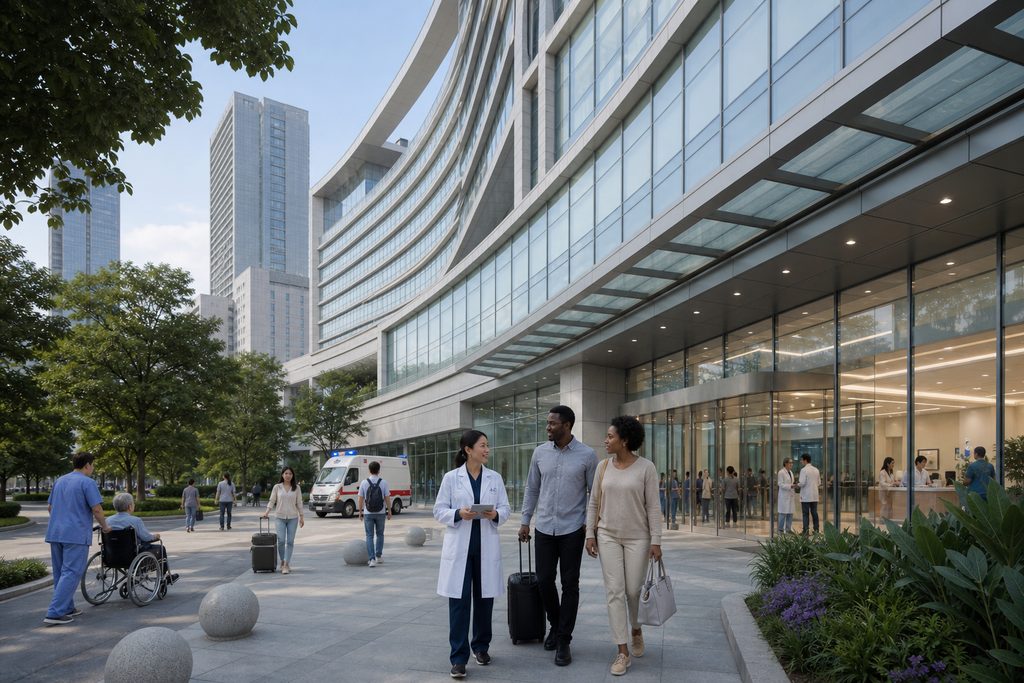
You have probably heard that accessing a massive Chinese public hospital as a foreigner is a logistical nightmare. The stories about endless queues, language barriers, and impenetrable registration systems are not exaggerations—they are the daily reality for millions. But the assumption that this chaos means lower quality care is dangerously wrong. Tongji Hospital in Wuhan, affiliated with Huazhong University of Science and Technology, performs over 7 million outpatient consultations annually. It is the undisputed heavyweight of Central China’s medical infrastructure. The complexity is not a sign of failure; it is a byproduct of scale and clinical density that Western private clinics simply cannot replicate. The trick is not avoiding the system. It is navigating it with the right key.
Key Takeaways
- Tongji Hospital serves over 7 million patients yearly, making it Central China’s largest hospital with clinical volumes that directly correlate to superior surgical outcomes in complex procedures.
- International patients cannot bypass the system, but the hospital’s dedicated International Patient Department offers a structured pathway that eliminates the chaos of the general outpatient halls.
- Without a bilingual coordinator, the deposit and registration process is a hard stop—local payment platforms and Chinese-language kiosks are non-negotiable for standard access.
- The published Tongji Hospital Wuhan international patient price list is a starting point, but final costs hinge on your specific diagnosis, implant choices, and ward class, all of which require an in-person specialist assessment before a binding quote is issued.
The Problem: You Are Shut Out Before You Even Arrive
Let’s be blunt. If you are searching for a “Tongji Hospital Wuhan international patient price list,” you have likely already hit a wall. You have emailed the hospital. Maybe you called. Silence. Or a brief reply in Mandarin that Google Translate renders into gibberish. This is not negligence. China’s top-tier public hospitals operate on a scale that is hard to fathom. Tongji’s main campus in the Qiaokou District handles a daily outpatient volume that exceeds 20,000 visits. The hospital’s internal systems—from registration kiosks to payment portals—are built exclusively for Chinese ID cards and local payment apps like WeChat Pay and Alipay. A foreign passport simply does not compute.
This creates a brutal paradox. You are seeking one of the best hospitals in China for a reason. The institution houses 62 clinical departments, operates over 5,000 beds, and is a national leader in organ transplantation, minimally invasive surgery, and oncology. But the very infrastructure that makes it excellent also makes it impenetrable to anyone outside the domestic ecosystem. Ignoring this barrier is not brave. It is expensive. We have seen patients fly into Wuhan Tianhe International Airport, take a taxi to the hospital, and stand frozen in the lobby, unable to check in at a single terminal. That is not a plan. That is a breakdown waiting to happen.
Who We Are
We are not a hospital. We do not provide medical diagnoses, prescribe medication, or claim to influence clinical outcomes. Our team is the operational bridge between you and China’s most authoritative medical institutions, including Tongji Hospital Wuhan. We are case managers who translate your medical records, coordinate with the hospital’s International Patient Department, secure legitimate appointments through official channels, and place a bilingual medical companion at your side from the moment you land until your post-operative follow-up is complete. We do not sell access. We solve the logistics that allow you to receive care you have already decided to pursue.
Why Tongji Hospital Delivers Results That Smaller Centers Cannot Match
The Tongji Hospital Wuhan international patient price list matters only if the clinical outcomes justify the journey. They do. Tongji is not merely large; it is a high-velocity clinical engine. The sheer repetition of complex procedures creates a proficiency curve that smaller, boutique hospitals cannot replicate, no matter how luxurious their lobbies are.
Clinical Volume Is the Ultimate Safety Net
In surgery, volume predicts outcomes. This is not opinion. It is a statistical law validated across decades of peer-reviewed research. A surgeon who performs 300 kidney transplants a year navigates anatomical anomalies, intraoperative complications, and post-surgical recovery pathways with a fluency that a surgeon performing 30 transplants a year simply cannot match. Tongji Hospital’s Organ Transplantation Institute is one of the largest in Asia. Its cardiac surgery team logs thousands of pump cases annually. For a patient facing a complex Whipple procedure or a revision joint replacement, this volume is not a marketing bullet point. It is the difference between a routine recovery and a cascade of complications.
Technology at a Scale That Redefines Efficiency
The hospital operates a fleet of da Vinci surgical robots, hybrid operating suites, and advanced linear accelerators for precision radiotherapy. But the real technological marvel is less glamorous. It is the integrated inpatient system that moves a patient from pre-op labs to surgical clearance within 48 hours. In Western systems, fragmented insurance approvals and scheduling bottlenecks can stretch this same process across three weeks. Tongji’s internal protocols compress the timeline because the hospital controls every link in the chain—diagnostics, specialist consults, and bed management. For an international patient on a medical visa with a finite window, this compression is priceless.
Cost Reality: The Numbers Behind the Value
Now to the question that brought you here. When patients ask for the Tongji Hospital Wuhan international patient price list, they are really asking: “Will this bankrupt me, or is the savings worth the trip?” The structural answer is clear. Surgical costs at Tongji, even through the International VIP channel, run approximately 60% to 80% lower than equivalent procedures in the United States. A coronary artery bypass graft that costs $120,000 in a US hospital typically lands between $15,000 and $25,000 at Tongji, depending on the number of grafts and the recovery ward class. A total hip replacement using imported implants falls in the $10,000 to $18,000 range.
These numbers are not random. They reflect a fundamental economic reality: China’s hospital pricing is driven by state-regulated fee schedules for medical services, not by opaque chargemaster rates negotiated between insurers and hospital networks. The largest cost variable for international patients is the ward class—a private VIP suite costs significantly more than a shared room in the international wing. But even the premium option undercuts Western pricing by a factor of five. The key is understanding that no binding price list exists before a specialist evaluates your case. Any clinic offering a fixed-price surgery menu without seeing your imaging is guessing. We do not guess.
What You Need to Know Before Going Alone
The barriers are real. We list them not to discourage you, but because patients who understand the friction points prepare better and recover faster.
- Visa Requirements Are Strict and Specific: Medical treatment in China requires an S2 visa, with a maximum stay of 180 days. For treatments exceeding this, an S1 visa is mandatory. The application demands an official invitation letter from the hospital—a document Tongji’s International Patient Department will issue only after your case is reviewed and an appointment is confirmed. Applying for an M (business) visa is a mistake that leads to entry denial or deportation. The consulate checks. Do not test them.
- Payment Is Upfront and Cash-Heavy: Tongji Hospital, like all Chinese public hospitals, operates on a prepaid deposit system. You will need to place a substantial deposit—often $10,000 to $30,000 depending on the procedure—before admission. International credit cards are accepted at the International Patient Department, but standard hospital payment terminals are designed for UnionPay and mobile wallets. Expect to wire funds or carry a card with a high daily transaction limit. Insurance reimbursement is retroactive; the hospital does not bill your insurer directly.
- Medical Records Must Be Perfectly Translated: A specialist at Tongji will not review your case based on a verbal summary. You need a complete dossier: recent imaging (DICOM format on a CD or cloud link), pathology slides if relevant, a detailed clinical summary, and a list of current medications with generic names. All of this must be translated into medical-grade Chinese. A Google Translate version of your oncology report will be rejected. The terminology must be precise, or the consultation is dead on arrival.
How We Help You Navigate This
These barriers exist for structural reasons, not malice. The hospital treats 7 million patients. It cannot pause its operations to decode a foreign medical record or guide a family through a visa application. That is our role. We start by collecting your raw medical data—DICOM files, pathology reports, clinical summaries—and handing them to our in-house medical translators. The translated dossier is submitted to Tongji’s International Patient Department through the official channel. We do not bypass the queue. We ensure your paperwork is complete enough to be accepted on the first submission, which is where most solo attempts fail.
Once the hospital confirms they can treat your condition, we lock in an appointment with the relevant specialist. Our bilingual medical companion meets you at Wuhan Tianhe Airport, handles the hospital registration, translates every word of the consultation, and stays with you through the admission process, the surgery, and the post-operative recovery. You focus on getting better. We handle the cash deposits, the pharmacy runs, the meal orders, and the discharge paperwork. When it is time to leave, we ensure your medical records are translated back into English for your home physician. This is not a luxury concierge fantasy. It is a practical necessity in a system where a single missed form can delay your surgery by a week.
For patients who need clarity before committing to travel, we facilitate a remote video consultation with a Tongji specialist. The cost for this ranges from $100 to $800 depending on the specialist’s seniority and the complexity of the case. If you later proceed with treatment through our coordination, every dollar of that consultation fee is credited toward our service fee. It is a diagnostic investment, not a sunk cost.
Frequently Asked Questions
Tongji Hospital Wuhan is the largest hospital in central China, with over 5,000 beds and 7 million annual outpatient visits. Size matters because it reflects clinical volume. For procedures like liver transplantation, esophageal cancer surgery, or complex spinal reconstruction, high-volume centers demonstrate measurably lower complication rates and shorter lengths of stay. Tongji’s scale means its surgical teams see rare pathologies regularly, not once a quarter.
You cannot make an appointment through the hospital’s public registration app. It requires a Chinese ID number. The official pathway for foreigners is to contact the International Patient Department directly with a translated medical dossier. If you lack Chinese-language support, you will need a coordinator to submit your records, communicate with the department, and confirm the appointment slot. Walk-in attempts are almost universally unsuccessful for specialist consultations. The hospital’s VIP international clinic operates on a pre-scheduled basis only.
The cost of surgery at Tongji Hospital compared to Shanghai is generally 10% to 20% lower for equivalent procedures, driven primarily by lower ward fees and a slightly lower cost of living in Wuhan. The surgical technique and implant quality are comparable—both cities use the same imported prosthetics and pharmaceutical-grade consumables. The trade-off is location. Shanghai offers a more expat-friendly environment and a larger pool of English-speaking staff in the surrounding community. Wuhan delivers the same clinical firepower at a lower price point, but with fewer Western restaurants near the hospital. For a patient prioritizing pure medical economics, Wuhan often wins.
You can book treatment at Tongji Hospital Wuhan with a medical visa only after the hospital issues an official invitation letter. That letter is tied to a specific treatment plan and a tentative admission window. The S2 visa application requires this letter. You cannot obtain the visa first and then shop for a surgery date. The sequence is rigid: case review, hospital acceptance, invitation letter, visa application, travel. Attempting to reverse this order leads to visa rejection or entry complications at the border.
Your Next Step
Tongji Hospital Wuhan is not the easiest hospital to access. It is one of the best. The distinction matters. If you are facing a complex diagnosis—a liver lesion requiring resection, a cardiac valve that needs replacement, a tumor that demands aggressive intervention—the clinical density of this institution offers a margin of safety that smaller centers cannot provide. The logistical hurdles are surmountable with the right preparation. The clinical outcomes are what you carry forward for the rest of your life.
If you want to understand exactly what your case would cost and whether Tongji is the right fit, we can walk you through the process with no obligation. A brief discussion about your diagnosis, your current imaging, and your treatment goals is all it takes to get a clear picture. You can reach our team through the free consultation page on our site. No pressure. No sales script. Just an honest assessment of whether this path makes sense for you.
For more medical information and treatment options in China, visit chinamedservices.com (China Medical Services).
