Dr Wang Jian’an: China’s TAVR Pioneer at ZJU Second Hospital — A Guide for International Patients
Key Takeaways
- Dr Wang Jian’an and his team at ZJU Second Hospital have performed over 1,500 transcatheter aortic valve replacements, making them one of the highest-volume TAVR centers globally — a critical factor for procedural success.
- The total cost for a TAVI procedure in China, including the valve device, typically ranges from $45,000 to $65,000 USD — a fraction of the $150,000 to $200,000+ often charged in the United States.
- Navigating China’s public hospital system independently is extremely difficult without Mandarin fluency; the hospital’s international VIP pathway is the only reliable route for foreign patients to pre-arrange a consultation with Dr Wang.
- You cannot simply book a TAVI procedure online. The process requires an in-person diagnostic workup, a face-to-face surgical consultation, and clearance through the hospital’s international department — but with the right coordination, the timeline can move surprisingly fast.
The Problem: Aortic Stenosis Won’t Wait, But Your Healthcare System Might
Severe aortic stenosis carries a brutal prognosis. Without valve replacement, the survival rate drops to roughly 50% at two years once symptoms like chest pain, shortness of breath, or fainting appear. You probably already know this. What you may not know is how long you will wait for a fix. In Canada and the UK, the median wait time for transcatheter aortic valve implantation can stretch past three to six months. In the US, the wait might be shorter — but the bills can exceed $150,000 even for patients with insurance, once deductibles and out-of-network charges pile up. For someone who feels their heart struggling with every flight of stairs, that wait is not just inconvenient. It is dangerous. The disease progresses. The surgical risk rises. And the anxiety of watching a calendar while your valve narrows is a special kind of hell.
This is the exact scenario that brings a growing number of international patients to Hangzhou, China. They come not for a bargain, but for a solution that combines speed, expertise, and a price that does not require liquidating a retirement fund. They come to see Dr Wang Jian’an.
Who We Are
We are China Medical Services. We are not a hospital. We do not provide medical treatment, clinical diagnoses, or surgical opinions. What we do is act as your logistical architects — the bridge between you and China’s top-tier medical expertise. Our database covers 340+ top-ranked hospitals across 37 cities, and we have spent years understanding exactly how to navigate a system that can feel impenetrable from the outside. We handle hospital matching, appointment coordination, bilingual medical companions, and visa guidance. We do not promise miracles. We promise that if there is a path to treatment with a specific specialist, we know how to find it and walk it with you.
Why Dr Wang Jian’an and ZJU Second Hospital Deliver Results
Surgical Volume That Rivals Any Center on Earth
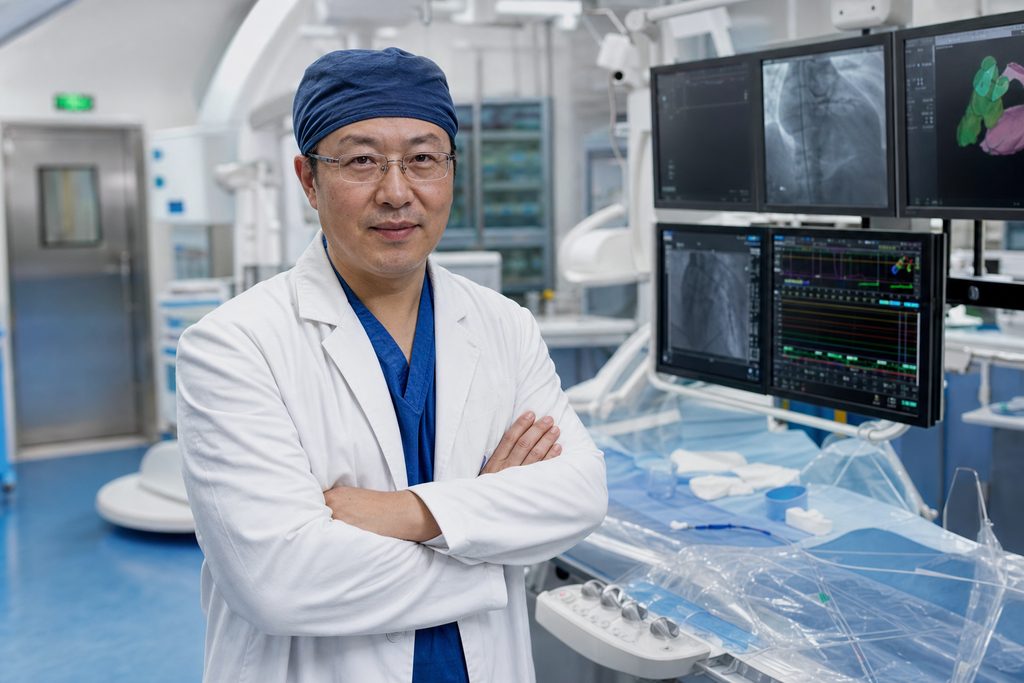
Dr Wang Jian’an is not just a prominent cardiologist. He is the president of the Second Affiliated Hospital of Zhejiang University School of Medicine and a genuine pioneer in structural heart disease in Asia. His team was the first in China to perform a transcatheter aortic valve replacement using a self-expanding domestic valve system. The numbers tell the story. The center has completed more than 1,500 TAVR procedures. This is not a program finding its footing. It is a high-volume engine. Why does volume matter? Multiple studies, including a 2019 analysis in the New England Journal of Medicine, have demonstrated a strong inverse relationship between hospital TAVR volume and 30-day mortality. Centers performing over 100 procedures annually show significantly better outcomes. ZJU Second Hospital far exceeds that threshold. When you ask “is TAVR safe in China for international patients,” the answer starts here: safety is built on repetition.
Technology and Efficiency at a Scale Most Western Hospitals Cannot Match
The cath labs at ZJU Second Hospital are equipped with the same imaging systems you would find at Cleveland Clinic or Charité in Berlin. But the operational tempo is different. China’s top public hospitals run at a pace that shocks most Western visitors. Outpatient volumes can exceed 10,000 patients per day across the hospital. This scale drives an efficiency that translates into shorter inpatient stays and rapid mobilization of surgical teams. For a TAVI patient, this means pre-operative workups — echocardiography, CT angiography, coronary assessment — are often completed within 48 hours of admission. The procedure itself is predominantly performed via transfemoral access under local anesthesia with conscious sedation, avoiding general anesthesia and its associated recovery burden. Dr Wang’s team has been particularly aggressive in adopting minimalist TAVR protocols, which data shows reduces ICU stays and speeds discharge.
TAVI Cost China ZJU Second Hospital: The Economics That Make Sense
Let us talk about the number most patients search for first. The TAVI cost at China’s ZJU Second Hospital, inclusive of the transcatheter heart valve device, hospital stay, and professional fees, typically falls between $45,000 and $65,000 USD. That is the all-in range for international patients through the hospital’s VIP pathway. Compare this to the United States, where the same procedure routinely costs $150,000 to $200,000, or Western Europe where prices hover between $80,000 and $120,000. The cost difference is not a reflection of lower quality. It is structural. China’s labor costs for highly skilled nursing and support staff are lower. Hospital systems operate on narrower margins per procedure but make up for it through enormous volume. The valve devices themselves — often from Edwards Lifesciences or Medtronic — are the same products used globally and represent the single largest line item on the bill. You are not buying a cheaper valve. You are buying it in a different economic environment.
The Dr Wang Jian’an aortic valve replacement price for international patients is not published on a menu. It requires a formal case evaluation. The final quote depends on valve type, vascular access route, and whether any concomitant procedures are needed. But the range above is what our team has seen consistently for straightforward transfemoral TAVR cases. For context, a written second opinion from a top specialist before you travel starts around $300 to $500 USD — a small investment to confirm you are a candidate before booking a flight.
What You Need to Know Before Going Alone
China’s public hospitals are not designed for international self-navigation. This is not a criticism. It is a structural reality. The system was built to serve a domestic population of 1.4 billion people, and it does so with remarkable efficiency. But if you arrive without Mandarin and without a local guide, you will hit walls immediately. Here is what those walls look like.
- Visa Requirements Are Specific and Unforgiving: Medical treatment in China requires an S2 visa with a notation specifying the purpose of travel is for diagnosis or treatment. This is not a tourist visa. It is not an M business visa. The application requires an invitation letter from the Chinese hospital — a document that public hospital outpatient departments do not routinely issue to individuals. The hospital’s international department can provide it, but only after your case has been accepted and a consultation scheduled. This creates a chicken-and-egg problem that stops many patients before they start.
- Payment Systems Do Not Work the Way You Expect: Chinese public hospitals require upfront payment. They do not bill your insurance company in Minnesota or Munich. You pay a deposit upon admission, and the balance is settled before discharge. International credit cards are not universally accepted at hospital cashier counters. Wire transfers are common but slow. This means you need a local payment strategy — typically a combination of wire transfer for the deposit and a UnionPay-compatible card or cash for incidentals. If you plan to seek reimbursement from your insurer back home, you will need properly translated and stamped invoices, which the hospital’s standard billing office may not provide in English.
- Medical Records and Imaging Must Be Prepared Correctly: Dr Wang’s team will want to see your full cardiac workup: echocardiogram with valve area and gradient measurements, CT angiogram for annular sizing and access route assessment, coronary angiography to rule out concomitant CAD, and recent lab work. These records need to be translated into Chinese. Not summarized. Fully translated. A missing gradient measurement or an unclear CT slice can delay your case by weeks while the team requests repeat imaging. This is not bureaucracy. This is a surgical team doing its due diligence on a high-risk procedure. But it is a logistical hurdle that international patients consistently underestimate.
How We Help You Navigate This
These barriers are real. They are also solvable. Our team exists because we have watched too many patients give up after hitting the third or fourth wall. The process we have built tackles each friction point in sequence.
It starts with your records. You send us everything. We organize it, identify gaps, and arrange certified medical translation by professionals who understand cardiology terminology — not generic translators who will mangle “transfemoral approach” into something unrecognizable. We then submit your case through the official channel of ZJU Second Hospital’s international department. This is the only legitimate route to pre-arrange a consultation with Dr Wang Jian’an. There is no back door. There is the front door, and we know how to knock on it properly.
Once the hospital reviews your case and confirms that you are a candidate for evaluation, they issue the invitation letter. We guide you through the S2 visa application. We recommend accommodations near the hospital in Hangzhou — a beautiful city that happens to be a comfortable place to recover, with West Lake and tree-lined walking paths that are genuinely therapeutic during post-operative recovery. When you land, a bilingual medical companion meets you. This person handles registration, payment, queue navigation, and real-time translation during every doctor interaction. You are not left staring at a Chinese signage board wondering where to go. You are walked through the system by someone who knows it cold.
How long to recover from transcatheter aortic valve replacement? Most patients are ambulatory within 24 hours and discharged within three to five days. The recovery is remarkably fast compared to surgical aortic valve replacement. Our companion stays with you through discharge, ensures you have translated discharge instructions and a medication plan you understand, and remains available remotely for follow-up questions. If you need a follow-up echocardiogram before flying home, we coordinate it. The goal is not just to get you through the procedure. It is to get you home safely with a functioning valve and a clear recovery roadmap.
Frequently Asked Questions
No. And any service that promises otherwise is misleading you. You cannot book a surgery from overseas. What you can do is submit your case for review, receive a preliminary assessment of candidacy, and schedule a face-to-face consultation. The surgical plan is finalized only after Dr Wang’s team has examined you in person and completed their own diagnostic workup. The pathway is: case submission → invitation letter → visa → travel → consultation → workup → procedure. This sequence is non-negotiable in China’s public hospital system. The good news is that once you are in the pipeline, the timeline compresses significantly. Patients who arrive prepared often complete their workup and proceed to TAVR within a week of the initial consultation.
Yes. The transcatheter heart valves used at ZJU Second Hospital are the same FDA-approved and CE-marked devices from manufacturers like Edwards Lifesciences (SAPIEN platform) and Medtronic (CoreValve/Evolut platform). The hospital also has experience with domestic Chinese valves that have undergone rigorous clinical trials and are approved by China’s NMPA. Dr Wang’s team will recommend the device best suited to your anatomy. The valve is not where corners get cut. The cost savings come from the overall system economics, not from using inferior implants.
TAVR carries real risks — stroke, vascular complications, paravalvular leak, need for permanent pacemaker — and those risks exist regardless of where the procedure is performed. ZJU Second Hospital has a cardiac surgery team on standby for every TAVR case, capable of converting to open surgery if needed. The hospital’s complication rates are consistent with international benchmarks for high-volume centers. What you should understand is that post-procedure follow-up is your responsibility once you return home. You need a cardiologist in your home country who is willing to accept you as a patient and manage your follow-up care, including echocardiographic surveillance of the valve. We strongly recommend establishing this relationship before you travel. Dr Wang’s team will provide a detailed discharge summary and imaging that your home cardiologist can use. But they cannot be your long-term follow-up provider from 6,000 miles away.
“Best” is a loaded word in medicine. What you want is a surgeon whose outcomes are consistently excellent and whose team performs the procedure frequently enough to maintain that excellence. Dr Wang Jian’an is widely regarded as among the most experienced TAVR operators in Asia. His center’s volume places him in the top tier globally. But China has other exceptional TAVR programs — at Fuwai Hospital in Beijing, at Zhongshan Hospital in Shanghai, at West China Hospital in Chengdu. The best surgeon for you depends on your specific anatomy, your valve morphology, your access route options, and frankly, which center can evaluate you most efficiently. Our cardiac surgery department rankings can help you compare programs. The right question is not “who is the best” but “which high-volume center is the best fit for my specific case.”
Your Next Step
Aortic stenosis does not improve with time. It only narrows further. If you have been quoted a price that terrifies you or a wait time that worries you, there is a legitimate alternative in Hangzhou. Dr Wang Jian’an’s team at ZJU Second Hospital has the volume, the technology, and the outcomes data to be taken seriously. The barriers to accessing that care are real but navigable.
If you want to understand whether your case is suitable for evaluation, start with a conversation. Our team can review your situation, explain the likely costs, and map out a realistic timeline. There is no pressure and no commitment. Just clarity. Reach out for a free consultation and let us help you figure out the next right move.
For more medical information and treatment options in China, visit chinamedservices.com (China Medical Services).
