CAR-T Therapy in China for Americans: Real Costs, Safety, and How to Access It
How This Actually Works, Step by Step
China’s regulatory approvals for CAR-T have moved fast. Since 2021, the National Medical Products Administration has approved six commercial CAR-T products. Five target CD19 for B-cell malignancies. One targets BCMA for multiple myeloma. For American patients watching insurance denials pile up, this matters.
But approval doesn’t equal access. Here’s the sequence.
You send your existing medical records. Pathology reports, flow cytometry, PET-CT scans, prior treatment lines. Our team translates these into clinical Chinese. Not Google Translate. Clinical terminology that a hematologist at Ruijin Hospital or Peking University Cancer Hospital can act on.
A Chinese specialist reviews your file. This is a written second opinion, from $300-500. The question isn’t just “are you eligible.” It’s “which product, which center, what timing.” China’s CAR-T landscape splits between commercial products and clinical trials. The distinction affects everything.
Commercial products mean you pay out of pocket. Trials mean you might not pay for the cells themselves. But trials have narrow windows. Your prior lines of therapy, your performance status, your CD19 expression levels—all of it gates eligibility.
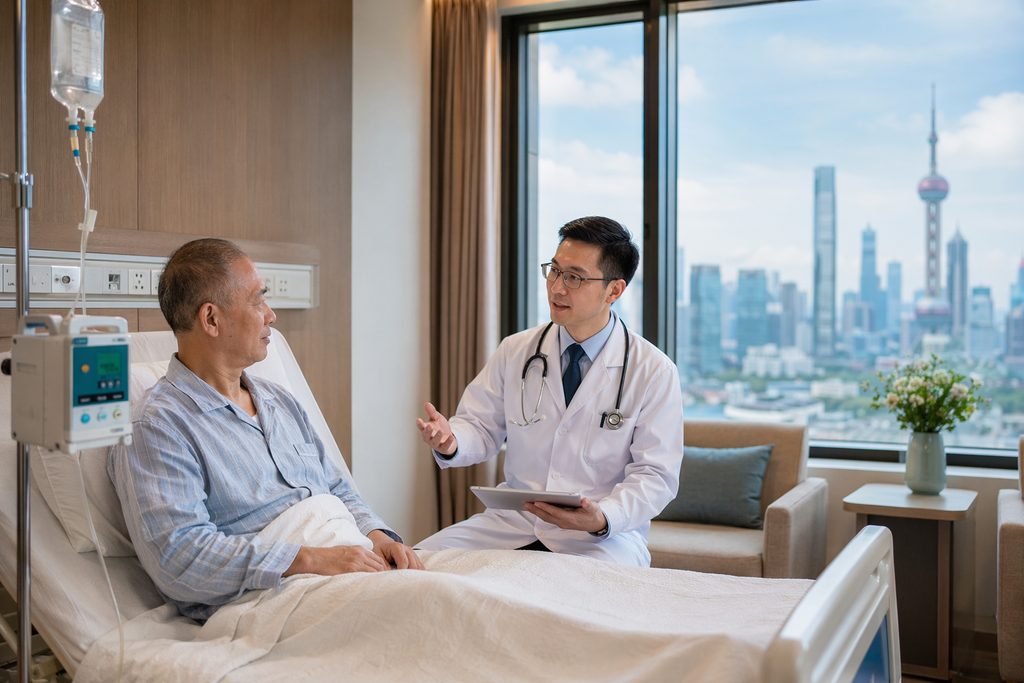
The specialist’s report comes back in English. If they say yes, we move to video consultation. $500-800 for a top-specialist session. You ask your questions directly. The doctor explains apheresis scheduling, bridging therapy options, the hospitalization timeline.
Then comes the coordination phase. Hospital appointment coordination starts from $300. We handle the S2 visa documentation package. The hospital issues an invitation letter. You apply at your nearest Chinese consulate.
Apheresis happens in China. Your T-cells are collected, shipped to the manufacturing facility, engineered, expanded, and tested. This takes 3-4 weeks. You may stay in China or return home during this window. Most patients stay. Bridging chemotherapy happens during this gap to control disease.
Lymphodepleting chemotherapy. Then infusion. Then 2-4 weeks of in-hospital monitoring for cytokine release syndrome and neurotoxicity. Chinese centers manage CRS with tocilizumab and steroids, same as US centers. The protocols are international.
You’re discharged. You stay locally for another 2-4 weeks for follow-up. Then you fly home with a treatment summary and a follow-up plan your US oncologist can execute.
What CAR-T Therapy Cost in China Actually Looks Like for Americans
At accredited academic centers running NMPA-approved commercial products or registered clinical trials, safety profiles mirror those reported in US and European trials. CRS and neurotoxicity rates are comparable. The key is selecting a center with substantial CAR-T experience—at least 50 infusions—and GMP-compliant manufacturing. We do not coordinate with centers that cannot demonstrate this track record.
You cannot book CAR-T as a fixed-price package. Each case requires specialist review before any treatment plan or cost estimate can be confirmed. What we provide is coordination: record translation, specialist matching, written second opinion, video consultation, visa documentation, hospital appointment coordination, and bilingual companion services. The hospital bills you directly for all medical services. Any coordination fees paid to us are credited in full toward on-the-ground services if you proceed within 90 days.
Complete response rates in relapsed/refractory large B-cell lymphoma are 40-54%. A significant portion of patients achieve partial response or no response. If you do not respond, you return home to continue care with your US oncologist. Subsequent treatment options—bispecific antibodies, allogeneic transplant, clinical trials—depend on your disease status and prior lines of therapy. The financial loss is real. We cannot refund hospital charges or drug costs. We believe patients deserve to hear this before they spend a dollar.
Some will. Some won’t. We recommend discussing your plans with your US oncologist before traveling. The treatment summary we provide includes all the information a US hematologist needs for ongoing monitoring: product type, cell dose, toxicity history, response assessment timing, and recommended prophylaxis. But the therapeutic relationship is yours to manage. A US oncologist who feels excluded from the decision may be less willing to manage complications.
Your Next Step
CAR-T therapy in China is not for every American patient. It makes sense if you have a clear indication for a commercial CD19 or BCMA product, if your insurance has denied coverage, and if you are well enough to travel and wait through the manufacturing window. It makes less sense if you need immediate treatment or if your disease is progressing rapidly.
Our team at China Medical Services does not provide medical care. We connect you with specialists at 340+ top-ranked hospitals across 37 cities, handle record translation, and coordinate the logistics that make treatment abroad possible. The medical decisions remain between you and the doctors. If you want to understand whether CAR-T in China is a viable path for your specific case, the first step is a written second opinion. Send your records. Let a Chinese hematologist who does this every day tell you what’s possible. You can reach our coordination team through our patient services page. There is no cost for the initial consultation about your situation.
Frequently Asked Questions
Yes. The hospitals used for international patients are JCI-accredited and follow the same international safety standards as top hospitals in the US and Europe. Surgical teams perform high volumes of procedures — often more than their Western counterparts — which studies show leads to better outcomes.
Costs vary by procedure and hospital, but international patients typically save 40-80% compared to US prices — even when factoring in travel and accommodation. A consultation with our team will give you an exact, all-inclusive quote with no hidden fees.
Send us your existing medical reports to get started. We handle everything from hospital selection and appointment scheduling to visa assistance and post-operative recovery planning. Your medical records are reviewed by the specialist before you even book a flight.
For more medical information and treatment options in China, visit chinamedservices.com (China Medical Services).
