Chinese Hospital Queue System: Real Name Registration Wait Times Explained
Key Takeaways
- China’s top public hospitals handle over 10,000 outpatient visits daily, creating significant queues for specialists without a strategic approach.
- The mandatory real-name registration system, while adding a verification step, is a patient safety measure that prevents ticket scalping and ensures medical records are accurate.
- Foreigners cannot simply walk in and see a top specialist the same day; however, a “China hospital real name registration wait time” of weeks can be reduced to days through official hospital international channels.
- VIP fast-track packages exist legally through hospital international departments, not backdoor deals, and cost a fraction of what similar concierge access costs in Western hospitals.
The Problem: A System Built for Millions, Not the Unprepared
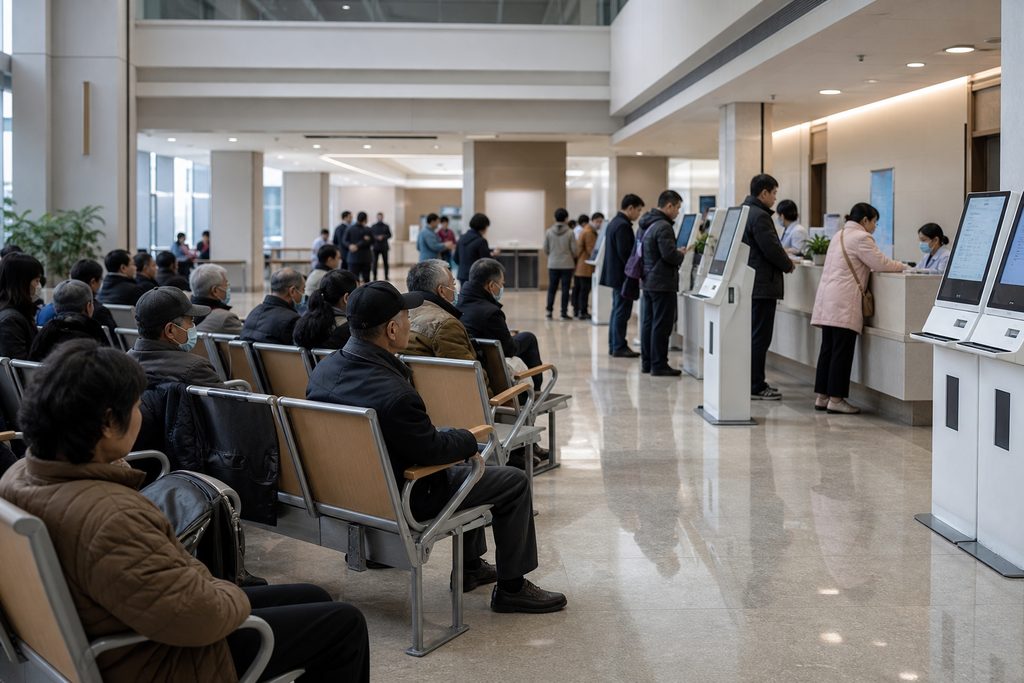
Walking into a major Chinese public hospital at 8:00 AM is an experience that stuns most Western visitors. The registration halls at institutions like Peking Union Medical College Hospital or West China Hospital often see 15,000 to 20,000 outpatient visits in a single day. A 2023 study published in the International Journal of Health Planning and Management noted that patient density in top-tier Chinese hospitals is among the highest in the world, with specialist clinics operating at over 95% capacity daily. For a foreign patient arriving without a plan, the “China hospital real name registration wait time” is not measured in hours. It is measured in days or weeks of confusion.
The bottleneck starts with a rule that surprises many: real-name registration. Since 2016, Chinese health authorities have mandated that every hospital visit be linked to a verified government ID. For Chinese citizens, this is their national ID card. For foreign patients, it is a passport. You cannot simply give a name and receive a ticket. The system cross-references your identity, creates a digital medical record, and ties every prescription, lab test, and imaging report to that verified file. This is excellent for long-term care continuity. It is a nightmare if you are a visitor holding a stack of foreign medical records and no local ID card, trying to explain to a registration window clerk who speaks no English.
And the queues are not just a registration problem. After you secure that initial ticket—often by lining up at 6:00 AM for a limited daily release—you face a second wait to see the specialist. A third wait for blood tests or imaging. A fourth wait to bring results back to the specialist. Each step can consume a full day. For a patient on a limited-duration S2 visa, burning a week just to get a diagnosis is not sustainable.
Why the Chinese Hospital Queue System Works This Way
The density is not an accident. China’s top 100 hospitals, ranked by the Fudan University Hospital Ranking system, represent the top 5% of the country’s 35,000+ hospitals. They are magnets for complex cases from across a population of 1.4 billion. A cardiac surgeon at Fuwai Hospital performs more bypass procedures in a month than many Western surgeons perform in a year. The queue system is a raw mechanism for rationing scarce, elite expertise. Understanding its structure is the first step to navigating it.
Real-Name Registration: A Safety Lock, Not Just Bureaucracy
The real-name policy crushed a rampant black market for scalped appointment tickets. Before the rule, touts would line up, grab all the specialist slots, and resell them at massive markups. Now, the appointment is tied to a passport number. It cannot be transferred. This protects you from fraud, but it also means walk-in flexibility is gone. You must present original identification. For international patients, this requirement is the single biggest source of friction at the entry point. The “China hospital real name registration wait time” often includes the hidden step of first figuring out how to validate a foreign passport in a domestic-facing system.
Volume Creates Expertise, Not Convenience
There is a direct line between the chaotic queues and the clinical excellence patients seek. A study in The Lancet (2019) examining surgical outcomes found a clear volume-outcome relationship: hospitals performing high volumes of specific procedures report lower complication rates. Chinese top-tier orthopedic surgeons routinely complete 200-500 joint replacements annually. The US average for a similar surgeon is roughly 65. This repetitive volume builds an instinctual proficiency. But it also means the system is optimized for throughput, not for hand-holding. The assumption is you know how to navigate it, or you brought someone who does.
How Long to Queue for a Specialist in China: The Real Timelines
Let us put concrete numbers on the question every patient asks: “how long to queue for specialist in China?” The answer splits into two completely different realities.
In the standard public outpatient channel, a foreigner attempting self-registration for a top specialist faces a wait of 2 to 6 weeks for a first appointment. This timeline assumes you successfully navigate the passport verification, find the right department, and are willing to take whatever slot is available. For a few ultra-famous specialists—the kind who appear on national television—the wait can stretch to 3 months. And this is just the consultation. Surgery scheduling adds another layer. A knee replacement at a top-ranked orthopedics hospital might have a surgical wait of 4 to 8 weeks after the decision for surgery is made.
The fast-track reality is different. Every major public hospital now operates a parallel International Medical Department or VIP Center. These are official hospital units, not third-party brokers. They allocate a fixed number of specialist slots daily for international and private-paying patients. Through these channels, the same specialist who has a 4-week public queue can often be seen within 2 to 5 business days. The trade-off is cost—consultation fees in these departments are typically 1.5 to 3 times the public rate, which still translates to roughly $100 to $300 USD for a specialist visit.
| Registration Channel | Specialist Wait Time | Consultation Fee (USD) | Surgery Scheduling |
|---|---|---|---|
| Standard Public Registration | 2–6 weeks | $15–$50 | 4–8 weeks post-consult |
| Hospital International Department | 2–5 business days | $100–$300 | 1–3 weeks post-consult |
| Private International Hospitals | 1–3 business days | $150–$400 | Coordinated directly |
These are not bribes. They are not backdoor deals. They are the published, official dual-track system that Chinese hospitals maintain to serve different patient populations. The international department has English-speaking staff, dedicated registration counters, and an expectation that patients arrive with translated records and a clear treatment goal. This is the structural answer to “fast track hospital queue China foreigner” searches—it is the legitimate infrastructure that exists precisely for this purpose.
Skip the Queue China Hospital Package: What It Actually Buys
Searching for “skip the queue China hospital package” reveals a market full of vague promises. Strip away the marketing language, and what a legitimate coordination package provides is this: someone who knows the hospital’s internal scheduling rhythm, has pre-established relationships with the international department, and handles the documentation translation before you arrive. You are not skipping the queue in the sense of cutting in line. You are entering a different queue entirely—one with fewer people in it and a staff trained to process international cases.
A legitimate VIP medical registration China price typically ranges from $800 to $1,200 for specialist consultation coordination. This fee covers the labor of translating your existing medical records into Chinese, submitting them to the international department for pre-review, securing a confirmed appointment slot with a named specialist, and providing a bilingual companion on the day of your visit. The fee does not go to the hospital. It does not go to the doctor. It pays for the coordination work that turns a 4-week guessing game into a confirmed Tuesday morning appointment.
What this package does not do is guarantee a specific treatment outcome or promise that the specialist will agree to perform surgery. The clinical decision remains entirely with the hospital team. The package eliminates the administrative and linguistic barriers that consume time. It does not influence medical judgment. Patients who understand this distinction tend to have realistic expectations and better experiences.
Can I Book a Hospital Appointment in China Without Waiting?
The blunt answer: no, but the wait can be compressed to a clinically irrelevant timeframe. The question “can I book a hospital appointment in China without waiting” reflects a reasonable anxiety—traveling internationally for medical care is expensive, and burning days in a hotel room waiting for a consultation is not acceptable.
The realistic minimum timeline from first contact to specialist consultation through an international coordination channel is 3 to 7 business days. This accounts for document translation (1-2 days), hospital review of your case to match you with the appropriate specialist (1-2 days), and slotting into the next available international department appointment (1-3 days). Emergency cases are handled differently, through emergency departments that operate 24/7, but planned specialist consultations for chronic conditions follow this cadence.
The key variable under your control is preparation. Arriving with a complete medical dossier—imaging on CD or cloud link, pathology reports, current medication list, and a concise treatment history—cuts days from the coordination timeline. The international department needs to see that your case is appropriate for their specialist before they allocate a slot. Incomplete records trigger a back-and-forth that adds a week or more to the “China hospital real name registration wait time.”
Practical Considerations: Documentation, Payment, and Follow-Up
Navigating the queue is only the first logistics hurdle. Several practical realities shape the experience once you are through the registration door.
Visa requirements. Medical treatment in China falls under the S2 visa category, which covers short-term private affairs including medical visits. The hospital’s international department will issue an invitation letter confirming your appointment, which supports the visa application. The S2 typically allows stays of up to 180 days. Family members accompanying you also apply for S2 visas. Do not apply for an M visa—that is strictly for commercial and trade activities and will create problems if immigration officials determine your purpose is medical.
Payment methods. Chinese public hospitals operate on a prepaid deposit system. You load funds onto your hospital card at registration, and services are deducted as you go. International departments accept credit cards and wire transfers, but the standard outpatient halls are often cash-or-WeChat-Pay only. Bring a credit card with a high enough limit to cover an initial deposit of $3,000 to $10,000, depending on the anticipated procedure. Private international hospitals like United Family or Jiahui offer direct insurance billing with many global insurers, but public hospital international departments generally require payment upfront with reimbursement claimed from your insurer afterward.
Medical records and translation. Every document you bring must be translated into Chinese. This is non-negotiable. The specialist may read English, but the hospital’s medical records system operates in Chinese, and the formal consultation report will be written in Chinese. Professional medical translation costs roughly $50 to $100 per page for complex reports. Coordination services typically bundle this into their package, which is one reason the “VIP medical registration China price” reflects more than just appointment booking.
Follow-up after returning home. Chinese specialists are increasingly comfortable with remote follow-up via video consultation. After an in-person procedure, your surgeon will typically schedule a follow-up video call at 2 weeks, 6 weeks, and 3 months. These sessions cost $100 to $300 each through the hospital’s international department. Your local primary care physician receives a translated discharge summary and can handle wound checks and routine monitoring. This hybrid model—surgery in China, follow-up at home—is becoming standard practice for international patients.
Frequently Asked Questions
The system is governed by China’s Personal Information Protection Law, which imposes strict requirements on how medical institutions handle patient data. Hospitals are required to secure digital medical records and limit access to authorized clinical staff. The real-name link between your passport and your medical file is a patient safety measure designed to prevent mix-ups in test results, prescriptions, and surgical records. The risk of data misuse is low, and the risk of a medical error from an unverified identity is higher.
This does happen. Specialists get called into emergency surgeries or government consultations. In the standard public queue, a cancellation means you start over. Through an international department or coordination service, the hospital will typically assign a deputy specialist of equivalent seniority from the same department, or reschedule you into the next available slot within 1-2 days. The coordination fee you paid covers the rebooking labor. You are not abandoned at the registration counter.
The hospital’s clinical charges—consultation, imaging, surgery, medication—are generally reimbursable by international insurers, subject to your policy’s terms. The coordination service fee, which is the $800-$1,200 paid to a third party for translation, scheduling, and companionship, is typically not reimbursable. It is classified as a concierge or facilitation service, not a medical expense. Check with your insurer before committing. Some high-tier expatriate policies are beginning to cover coordination services, but it is not yet standard.
Yes, with a trade-off. Private international hospitals in China—such as United Family Healthcare, Jiahui Health, and Parkway—operate on a Western-style appointment model with minimal waits. You can often see an English-speaking specialist within 24 to 48 hours. The trade-off is that these hospitals, while excellent for routine and moderately complex care, do not have the same depth of subspecialty expertise for ultra-complex cases. For a rare cancer or a complex cardiac reconstruction, the world-renowned expert is still at a public hospital. Private hospitals are an excellent entry point for diagnosis and stabilization, but for definitive treatment of the hardest cases, the public hospital queue—accessed through the international department—remains the destination.
Your Next Step
The Chinese hospital queue system looks impenetrable from the outside, but it operates on a logic that becomes manageable once you understand the dual-track structure. The real-name registration requirement is an administrative hurdle, not a wall. The wait times that stretch into weeks for the unprepared compress into days for those who enter through the correct channel with properly translated records. Our team at China Medical Services handles the translation, the hospital matching, and the appointment coordination so that your arrival is a consultation, not a research project. We do not provide medical advice or diagnoses—we provide the logistical bridge that connects you to the specialists who do. When you are ready to explore your options, we are here to help you take the first step.
For more medical information and treatment options in China, visit chinamedservices.com (China Medical Services).
