Chronic Pain Plus Surgery in China: A Dual Recovery Roadmap
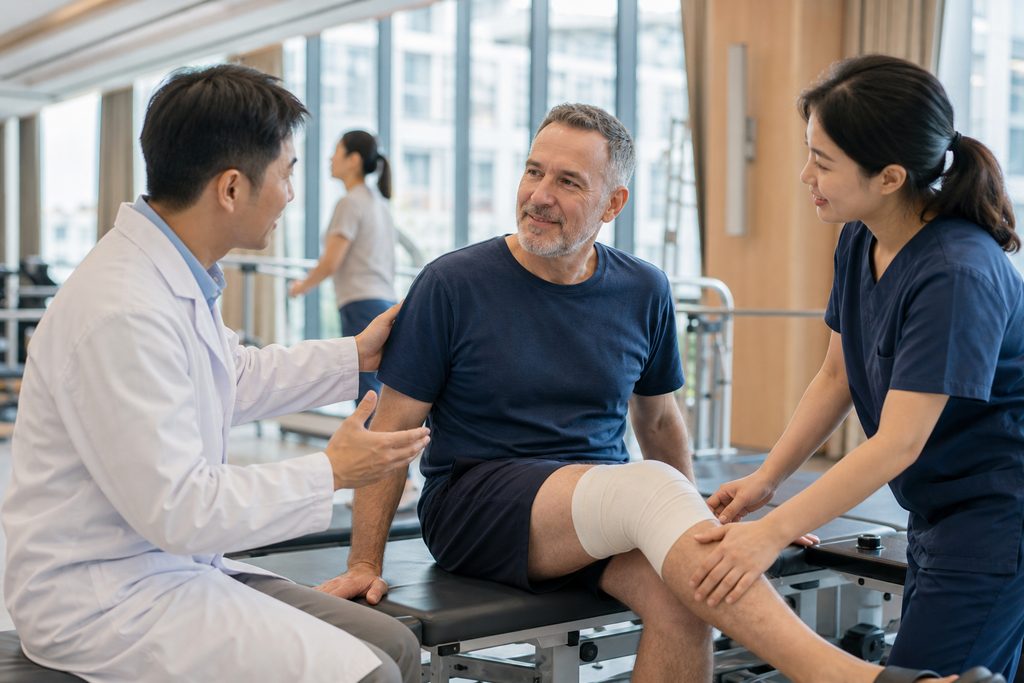
Dual Recovery: The Short Answer
Dual recovery means treating the surgical problem and the pre-existing pain condition as one clinical episode. Instead of fixing a knee and hoping the back stops hurting, a team addresses both simultaneously. For international patients, combining a major surgery with a structured pain rehabilitation program in China typically costs 60–80% less than doing the same in the United States. A full dual recovery package, including surgery, inpatient rehab, and outpatient follow-up, runs from $18,000 to $45,000 depending on complexity. The catch: not every hospital runs a genuine integrated program. Some bolt a few physiotherapy sessions onto a surgery and call it dual recovery. Knowing the difference matters.
Who This Is Right For — and Who It Isn’t
The ideal candidate has two distinct problems that feed each other. A degenerated hip that changed your gait, which then triggered chronic lumbar pain. Or a shoulder injury that led to years of guarding, freezing up the cervical spine. When the surgical fix alone won’t resolve the pain because the pain has developed its own pathology, dual recovery makes clinical sense.
Typically a good candidate:
- You have a clear surgical diagnosis (joint replacement, spinal decompression, post-traumatic reconstruction) AND a documented chronic pain condition lasting over six months.
- Previous single-modality treatment — surgery alone or pain management alone — gave incomplete relief.
- You are medically stable enough for surgery and can commit to a 3–6 week in-country stay.
- You have tried conservative measures (physical therapy, medications) and plateaued.
Who should not pursue this:
- Acute surgical emergencies. Dual recovery is a planned pathway, not for trauma cases needing immediate intervention.
- Active, untreated infections or uncontrolled comorbidities that make elective surgery high-risk.
- Pain that is purely nociceptive from the surgical site itself — that resolves when the surgery heals. You don’t need a dual program. You need good post-op analgesia.
- Patients unwilling to participate in daily active rehabilitation. The pain component requires work. Passive treatments alone won’t cut it.
The Options, Compared
Patients researching a dual recovery surgery and pain management China pathway usually face a choice between three real-world approaches. Each has a different clinical philosophy, timeline, and price tag.
| Approach | Typical Duration | Estimated Cost (USD) | Best For |
|---|---|---|---|
| Sequential: Surgery first, pain rehab second (separate admissions) | 6–10 weeks | $22,000–50,000 | Complex cases where post-surgical healing must be assessed before designing the pain protocol |
| Integrated: Single admission, daily surgical and pain team rounds | 3–5 weeks | $18,000–38,000 | Patients with well-documented dual diagnoses who want the fastest consolidated recovery |
| Pain-first optimization, then surgery | 4–8 weeks | $15,000–30,000 | Chronic pain so severe it would compromise post-surgical mobilization; needs pre-habilitation |
The integrated model is what most patients picture when they search for a combined surgery and pain treatment in China. It is also the hardest to find done well. Many hospitals co-locate an orthopedic department and a pain clinic in the same building and call it integration. True integration means the pain specialist rounds with the surgical team every morning. The medication plan adjusts daily based on surgical recovery markers, not on a fixed taper schedule. If you are traveling from abroad, the integrated model gives you the highest clinical value per day in-country.
What “Dual Recovery” Actually Looks Like Day by Day
This is the part most websites skip. They describe the concept. They do not describe the lived experience. Here is what a typical integrated dual recovery admission looks like at a top-tier Chinese hospital running a genuine program.
Days 1–2: Pre-operative mapping. You are not rushed into the OR. The pain team conducts quantitative sensory testing and maps your chronic pain generators independently of the surgical site. This baseline matters because post-operative pain will overlay your chronic pain. Without a map, no one knows what is new and what is old.
Day 3: Surgery. The procedure itself. Anesthesia is often a combined technique — regional blocks plus monitored sedation rather than full general anesthesia where possible. This reduces the neuroinflammatory cascade that can flare chronic pain conditions.
Days 4–7: Acute post-op with parallel pain intervention. This is where dual recovery diverges from standard care. You receive surgical wound care and early mobilization. Simultaneously, the pain team starts interventions that make no sense in a surgery-only protocol: trigger point needling away from the surgical site, graded motor imagery if central sensitization is present, and medication adjustments that prioritize neuropathic pain control over pure opioid analgesia.
Days 8–14: Active rehabilitation phase. Twice-daily sessions. Mornings with the surgical physiotherapist focusing on the operated structure. Afternoons with the pain rehabilitation specialist working on the chronic condition. The two therapists share notes. You are not doing exercises that help your knee but aggravate your back.
Days 15–21: Consolidation and discharge planning. Tapering to once-daily combined sessions. The team designs a home program that accounts for both conditions. You receive a written protocol in English to share with your local providers.
This structure answers the question how does dual recovery work after surgery in China at a practical level. It is not magic. It is logistics and communication between specialties that usually operate in silos.
What It Costs — and What Drives the Variance
The chronic pain rehabilitation center China cost depends on four variables. Understanding them helps you evaluate quotes accurately.
The surgical procedure itself. A single-level spinal fusion costs more than an arthroscopic knee procedure. The hospital’s surgical fee is the largest line item. At a top-tier public hospital’s international department, expect $8,000–18,000 for the surgery alone.
Length of inpatient rehabilitation. Most integrated programs run 14–21 days post-operatively. Each additional week adds roughly $2,500–4,000 in bed charges, nursing, therapy sessions, and pain specialist consultations.
Pain intervention complexity. A program relying on medication management and physical therapy costs less than one incorporating ultrasound-guided nerve blocks, radiofrequency ablation, or intrathecal pump trials. The latter can add $3,000–8,000.
Hospital tier and room type. A private room in a JCI-accredited international hospital runs higher than a semi-private room in a public hospital’s VIP wing. The spread is roughly $200–800 per inpatient day.
What is included: surgeon fees, anesthesiologist fees, operating theater, inpatient bed and nursing, daily pain specialist consultations, all scheduled physiotherapy and rehabilitation sessions, standard medications during admission, and one post-discharge video follow-up. What is not included: airfare, visa fees, pre-admission outpatient diagnostics if done abroad, high-cost implant surcharges (certain custom prosthetics), and extended stay beyond the planned protocol.
Is Combined Surgery and Pain Treatment in China Safe?
The direct question deserves a direct answer. The safety of a combined surgery and pain treatment in China depends on the hospital, not the country. China’s top-tier hospitals perform volumes that create competency. Fuwai Hospital does over 14,000 cardiac surgeries annually. The orthopedic department at Peking University Third Hospital handles more sports medicine cases in a month than many Western hospitals see in a year. Volume correlates with safety when systems are in place.
That said, dual recovery programs are not standardized across China. Some hospitals have published protocols, dedicated dual-diagnosis wards, and English-speaking multidisciplinary teams. Others are essentially a surgical ward with a pain consultant available on request. The difference matters clinically. A genuine program has weekly multidisciplinary case conferences where surgeons, pain specialists, physiatrists, and psychologists review each patient’s trajectory. Ask to see the program’s protocol document before committing. If none exists in writing, you are looking at ad-hoc coordination, not a program.
Infection rates, complication rates, and patient satisfaction data should be available for any hospital you consider. Top-tier Chinese hospitals accredited by JCI or ranked in the Fudan Hospital Ranking top tier publish these metrics. If a hospital cannot produce its surgical site infection rate for the procedure you need, keep looking.
Practical Considerations: Records, Visas, and Payment
Planning a dual recovery trip involves logistics that single-procedure medical travel does not. You are coordinating two clinical teams, which means more documentation and more pre-departure communication.
Medical records. You need imaging for both conditions — MRI or CT of the surgical site plus diagnostic studies documenting the chronic pain generator. Nerve conduction studies, pain diaries, medication histories, and records of prior interventions (injections, ablations, implantable devices) all matter. The pain team needs to know what has already been tried and failed. Send everything in DICOM format where possible, not just radiology reports.
Visa. Medical treatment in China requires an S2 visa with the purpose annotated for medical treatment. Your accompanying family member applies for the same S2 category. Processing typically takes 1–3 weeks depending on your home country’s Chinese embassy or consulate. You will need an invitation letter from the hospital, a treatment plan summary, and proof of financial means. Our team guides you through the documentation but does not issue visas. Approval rests with the consular officer.
Payment. Chinese public hospitals require prepayment. You deposit an estimated amount before admission, and the hospital draws down against it daily. Any surplus is refunded at discharge. International private hospitals like United Family or Jiahui often accept direct insurance billing, but most public hospital international departments do not. You pay upfront and seek reimbursement from your insurer. Confirm with your insurance provider before traveling that overseas inpatient rehabilitation for chronic pain is a covered benefit — many policies exclude pain management even when they cover surgery.
Language. The surgical team and pain specialists at top international departments speak English. Floor nurses, physiotherapists, and administrative staff may not. A bilingual medical companion bridges this gap during the daily non-specialist interactions that make or break a hospital stay: ordering meals, understanding medication schedules, clarifying physiotherapy instructions.
Follow-up after returning home. The discharging team provides a detailed written protocol. One video follow-up is standard. Ongoing remote consultations can be arranged at $100–300 per session. You need a local provider willing to execute the protocol — identify this person before you travel to China, not after you return.
Frequently Asked Questions
You can reserve a treatment slot and confirm the program structure, but no reputable hospital will guarantee a specific surgery date without first examining you in person. The standard pathway: remote video consultation with the surgical and pain teams ($500–800), conditional acceptance based on your records, travel to China, in-person evaluation, then admission. The remote step confirms you are a candidate. It does not replace the pre-operative physical exam. Anyone offering a fixed-price “package” with a locked surgery date before seeing you is selling tourism, not medicine.
What if the chronic pain does not improve after surgery?
This is the hardest question and the one every patient should ask. Dual recovery programs improve outcomes, but they do not guarantee them. Chronic pain involves neuroplastic changes that sometimes persist despite correcting the peripheral driver. A responsible program builds in a contingency plan: extended pain rehabilitation if the surgical outcome is good but pain persists, or referral to a pain-specific program if further surgery is not indicated. Ask what happens at week three if you are not progressing. The answer tells you more about the program’s quality than any brochure.
Which hospital is best for chronic pain and surgery in China?
There is no single best hospital for chronic pain and surgery in China — the answer depends on your specific conditions. For orthopedic surgery with chronic musculoskeletal pain, Peking University Third Hospital and Shanghai Sixth People’s Hospital have strong integrated programs. For spinal conditions with neuropathic pain, Xuanwu Hospital in Beijing runs a dedicated pain medicine department alongside neurosurgery. For complex multi-joint cases, the rehabilitation medicine department at West China Hospital in Chengdu coordinates closely with orthopedics. The right choice matches your diagnosis to a hospital where both relevant departments are ranked in the Fudan Specialist Reputation Top 10. Our team helps you map your specific conditions to the hospital database — not to a generic recommendation.
How long should I plan to stay in China?
Plan for five weeks minimum if you are doing a true integrated dual recovery program. Three weeks inpatient, one week in a nearby serviced apartment for early outpatient follow-up, and a buffer week. Complications, delayed wound healing, or slower-than-expected pain progress can extend this. Do not book a return flight for week four. Book a changeable ticket for week six and count yourself lucky if you leave early.
Your Next Step
Dual recovery in China is a specific solution for a specific problem: when surgery alone has failed or will likely fail because of an entrenched pain condition. It works when the program is real — integrated teams, written protocols, measurable outcomes. It disappoints when the program is a marketing label on standard care. Your job is to distinguish the two. Our job is to give you the information and access to do that.
We are not a hospital. We do not diagnose, treat, or make clinical recommendations. What we do is connect you with top-ranked Chinese hospitals that run genuine dual recovery programs, translate your records, coordinate the remote consultation, and support you on the ground with bilingual medical companions. If you want to understand whether your specific case fits a dual recovery pathway — and what it would cost — start with a free consultation. No commitment, no pressure, just an honest assessment of your options.
For more medical information and treatment options in China, visit chinamedservices.com (China Medical Services).
