Vascular Surgery in China: Full-Service Hub for Aortic Aneurysm, PAD & Carotid Care
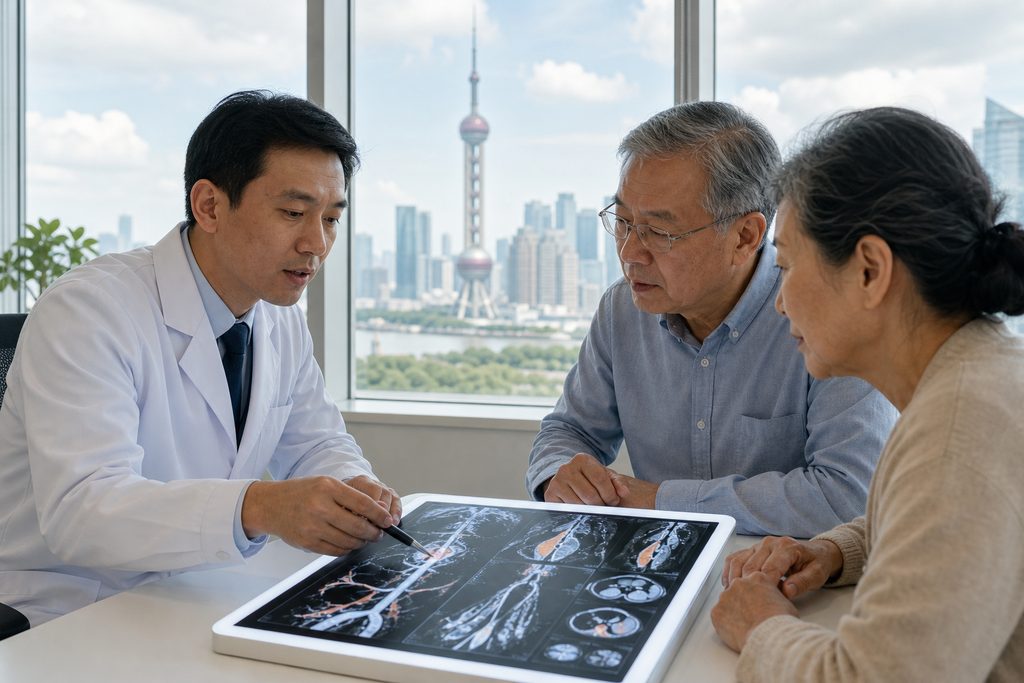
When 42-year-old Michael first heard the diagnosis, he had no idea where to start looking for treatment. An abdominal aortic aneurysm. His local specialist recommended monitoring until it reached 5.5 centimeters. But Michael wanted options. He wanted to understand the procedure, the recovery, and frankly, whether he could afford it without draining his retirement savings. That search led him to look beyond his borders. He discovered that the aortic aneurysm surgery cost China ranges from $25,000 to $45,000 for complex endovascular repair, roughly one-fifth of what he would pay at home. But the price tag was only the beginning of his questions.
For patients facing vascular conditions—whether an aortic aneurysm, peripheral artery disease, or a blocked carotid artery—the decision matrix is complex. You are weighing surgical skill against cost, recovery time against travel distance, and the comfort of a familiar system against the possibility of world-class care elsewhere. Our team works at that intersection every day. We do not perform surgery. We connect you with the specialists who do, at hospitals that rank in the top 5% of China’s 35,000+ medical institutions.
How This Actually Works, Step by Step
The process is more straightforward than most patients imagine. But it is not instant. Here is the sequence we walk every international patient through, from first inquiry to recovery.
You start by sending your existing medical records. This means your imaging—CT angiograms, duplex ultrasounds, MRIs—and your clinical history. A vascular surgeon in Shanghai or Beijing cannot give you a meaningful opinion without seeing the actual scans, not just the radiology report. We coordinate the translation of key documents. Then your case goes to the vascular department at a hospital matched to your specific condition. Not every top cardiac center is equally strong in endovascular repair of complex aortic arch aneurysms. The match matters.
Within five to seven business days, you receive a written second opinion. This document outlines the Chinese team’s assessment, their recommended surgical approach, and a preliminary treatment plan. Cost estimates follow separately, once the clinical picture is clear. If you decide to proceed, we handle the hospital registration through the international medical center channel. This is not the public outpatient queue. It is the route that allows for scheduled consultations with senior specialists and coordinated admission planning. Then comes the visa—an S2 visa for short-term private affairs, which covers medical treatment. We guide you through the documentation the Chinese embassy or consulate will require, including the hospital invitation letter. You fly to China. You meet your surgical team. You have the procedure. And we remain with you through discharge and the initial recovery phase before you return home.
Why International Patients Choose China for Complex Vascular Surgery
The question we hear most often is not about cost. It is about capability. Can a hospital in China really handle a complex juxtarenal aortic aneurysm repair or a high-risk carotid endarterectomy at the same level as a major Western center?
The answer sits in the numbers. Fuwai Hospital in Beijing performs over 14,000 cardiac and major vascular surgeries annually, the highest volume of any center globally. Zhongshan Hospital in Shanghai, affiliated with Fudan University, runs one of the largest vascular surgery departments in Asia, with dedicated endovascular suites handling complex aortic dissections and thoracoabdominal aneurysms that many centers decline. These are not small, boutique practices. They are high-throughput institutions where vascular surgeons see rare pathology with enough frequency that it becomes routine.
Volume drives proficiency. A 2023 study published in the *European Journal of Vascular and Endovascular Surgery* reinforced what vascular surgeons have long understood: centers performing more than 25 open aortic repairs per year demonstrate significantly lower perioperative mortality rates. Several Chinese hospitals in our network exceed that threshold several times over. The technical capability in endovascular techniques—fenestrated and branched stent grafts, chimney techniques for arch aneurysms, hybrid procedures combining open and endovascular approaches—matches what you would find at a major university hospital in North America or Europe. The difference is that you can access these teams without a six-month wait.
Aortic Aneurysm Surgery Cost China: A Transparent Breakdown
Let us address the financial question directly. The aortic aneurysm surgery cost China varies by hospital tier, procedure complexity, and whether the approach is open surgical repair or endovascular aneurysm repair. Here is what international patients can expect, based on current pricing at top-tier public hospital international departments and JCI-accredited private hospitals.
| Procedure | China (USD) | United States (USD) | United Kingdom (USD) |
|---|---|---|---|
| EVAR (standard infrarenal) | $25,000–35,000 | $120,000–180,000 | $80,000–130,000 |
| Complex EVAR (fenestrated/branched) | $35,000–45,000 | $180,000–250,000 | $140,000–200,000 |
| Open AAA repair | $20,000–30,000 | $100,000–150,000 | $70,000–110,000 |
| Carotid endarterectomy | $8,000–12,000 | $40,000–60,000 | $25,000–40,000 |
| PAD angioplasty with stenting (per limb) | $6,000–10,000 | $30,000–50,000 | $18,000–35,000 |
These figures include the procedure itself, the stent graft or surgical supplies, hospitalization, and standard post-operative monitoring. They do not include international travel, accommodation, or our coordination services. Prices vary by hospital and case complexity. A patient with significant comorbidities requiring extended ICU stay will see costs at the higher end of these ranges. Someone undergoing a straightforward EVAR with an uncomplicated recovery will land closer to the lower bound.
What these numbers do not capture is the avoidance of a delayed diagnosis. Michael, the patient we opened with, had his aneurysm repaired in Shanghai three weeks after his records arrived. His local system had advised another year of watchful waiting. The aneurysm measured 5.4 centimeters at the time of surgery. The surgeon found a contained rupture that imaging had not fully revealed.
A Realistic Timeline
Patients often underestimate the administrative runway. Surgery itself may take a few hours, but the full journey from decision to discharge spans weeks. Here is a realistic sequence.
| Stage | Duration | What Happens |
|---|---|---|
| Record submission and translation | 3–5 business days | You send DICOM files and clinical summaries. We translate non-English documents. |
| Specialist review and written second opinion | 5–7 business days | The vascular team reviews your case and issues a treatment recommendation. |
| Decision and hospital coordination | 3–5 business days | We coordinate your admission date and surgical schedule through the international channel. |
| Visa processing (S2) | 1–3 weeks | Depends on your home country’s Chinese embassy or consulate processing time. |
| Travel to China and pre-op evaluation | 3–5 days | You arrive, meet your surgeon, and complete any additional pre-operative testing. |
| Surgery and inpatient recovery | 5–10 days | EVAR typically requires 3–5 days. Open repair may need 7–10 days. |
| Local post-discharge monitoring | 1–2 weeks | You stay near the hospital for wound checks and a follow-up imaging study before flying home. |
The total timeline from first contact to returning home typically spans six to eight weeks. EVAR patients sometimes move faster. Open surgical patients need the full window. Rushing this process is a mistake. The body does not heal on a schedule.
What Can Go Wrong — and What Happens Then
Honesty here is non-negotiable. Vascular surgery carries real risks, regardless of geography. Endoleaks after EVAR. Cranial nerve injury during carotid endarterectomy. Graft occlusion in peripheral stenting. These complications occur at every major center worldwide. The relevant question is not whether complications happen. It is what the system does when they do.
Chinese hospitals in the top tier manage complications through the same protocols you would find in any Western academic medical center. Hybrid operating rooms allow intraoperative conversion from endovascular to open repair if a stent graft fails to deploy correctly. Post-operative endoleaks detected on follow-up CT are managed with re-intervention—either angiographic embolization or, in persistent cases, open conversion. The infrastructure exists. The vascular surgeons have done this before.
The practical challenge for international patients is follow-up. EVAR requires annual imaging surveillance. Carotid stenting demands periodic duplex ultrasound. You cannot fly back to Shanghai every six months for a thirty-minute scan. The solution we recommend is a formal handoff. Before you leave China, your surgical team prepares a detailed discharge summary with specific imaging protocols and surveillance intervals. You take that document to a vascular specialist in your home country. Most are willing to continue surveillance for a patient who had surgery elsewhere, especially when the documentation is thorough. We facilitate that transition. It is part of the coordination.
Choosing the Right Center: JCI Accreditation and Specialty Focus
Not every hospital with a strong cardiac program excels at vascular surgery. The two are related but distinct. When patients ask us about the best hospital for carotid artery surgery in Beijing, we direct them to centers where vascular surgery operates as an independent department with dedicated endovascular suites, not as a subsection of general surgery or cardiology.
JCI accreditation provides one useful filter. It signals that a hospital meets international standards for patient safety, infection control, and clinical documentation. Several hospitals in our network hold JCI accreditation, including private international facilities and the international departments of major public institutions. But JCI alone is insufficient. You also want to look at case volume for your specific procedure. A hospital that does fifty EVARs a year is a different proposition from one that does five.
For carotid artery disease, the decision between endarterectomy and stenting depends on anatomy, plaque morphology, and surgical risk. The top JCI accredited vascular hospital China options tend to offer both approaches and let the clinical picture dictate the choice. That flexibility matters. Some centers in other countries default to one technique because that is what their interventionalist or surgeon prefers. You want a team that can do either and selects based on evidence, not habit.
For peripheral artery disease, the question patients often search—what is recovery time for PAD stent abroad—depends heavily on the lesion location and whether the approach is femoral or radial. Most patients undergoing PAD stenting are ambulatory within 24 hours and can fly home within a week, provided there are no access-site complications. More complex iliac or femoral bifurcation stenting may require a slightly longer observation window. The key variable is not the stent itself. It is the wound healing at the access site. Flying long-haul with a fresh groin puncture is inadvisable. We typically recommend staying local for five to seven days post-procedure for uncomplicated cases.
How Safe Is Endovascular Surgery in China? The Data and the Reality
The question how safe is endovascular surgery in China deserves a data-driven answer, not reassurance. The largest published series from Chinese centers report perioperative mortality rates for elective EVAR at 1 to 2 percent, consistent with international benchmarks. A 2022 multicenter study from the Chinese Vascular Surgery Collaborative, published in the *Journal of Vascular Surgery*, analyzed over 4,000 EVAR cases across 12 high-volume centers and found a 30-day mortality rate of 1.4 percent and a major complication rate of 6.2 percent. These numbers align closely with the Vascular Quality Initiative data from the United States.
Infection control standards at top-tier Chinese hospitals have tightened significantly over the past decade. JCI-accredited facilities undergo unannounced surveys. International departments maintain separate inpatient wards with lower patient-to-nurse ratios than the general wards. The surgical teams are trained in the same techniques, use the same stent graft systems, and follow the same clinical guidelines as their Western counterparts. The difference is not in the quality of the procedure. It is in the support infrastructure around it. You will need a bilingual companion to navigate the hospital. You will encounter cultural differences in communication style and bedside manner. These are not safety issues, but they affect the experience.
Practical Considerations: Records, Visas, Payment, and Follow-Up
The logistics are manageable if you address them early. Here is what applies specifically to vascular surgery patients traveling to China.
Medical records must include the original DICOM files from your CT or MR angiography, not just screenshots or printed films. Chinese vascular surgeons plan their endovascular approach on 3D reconstructions. They need the raw data. If your imaging is more than three months old at the time of consultation, expect to repeat it upon arrival. Aneurysm morphology can change, and surgical planning depends on current anatomy.
The S2 visa is the correct category for medical treatment. Processing times vary by country. Some Chinese embassies issue S2 visas within a week. Others take three weeks. Apply as soon as you receive the hospital invitation letter. Do not book non-refundable flights before the visa is in hand. Family members traveling with you also apply for S2 visas. The invitation letter should list all travelers.
Payment is almost always required upfront. Chinese public hospitals operate on a prepaid deposit system. You will be asked to place a deposit at admission, with additional payments if the stay extends beyond the initial estimate. International insurance plans that offer direct billing are accepted at JCI-accredited private hospitals. Public hospital international departments typically require self-payment with reimbursement from your insurer afterward. Confirm this with your insurance provider before traveling. The phrase “in-network” has no meaning in China unless your insurer has an explicit agreement with a specific Chinese hospital.
Language is the friction point that surprises patients. Even at international departments, not every nurse or technician speaks English. The vascular surgeon likely will, especially at a major center. But the person drawing your blood at 6 AM may not. Our bilingual medical companions bridge that gap. It is not a luxury. It is a practical necessity for anyone who does not speak Mandarin.
Follow-up imaging is the long-tail commitment. EVAR patients need CT angiography at one month, six months, twelve months, and annually thereafter. Carotid stenting requires duplex ultrasound at similar intervals. PAD stents need periodic ankle-brachial index measurements and duplex. Arrange your surveillance plan before you leave China. Know who will read the scans at home and how the images will be shared with your Chinese surgical team if questions arise.
Frequently Asked Questions
The aortic aneurysm surgery cost China for international patients ranges from $25,000 to $45,000 for endovascular repair, depending on aneurysm complexity and whether a standard or fenestrated stent graft is required. Open surgical repair typically costs $20,000 to $30,000. These figures include the procedure, the device, hospitalization, and standard post-operative care at top-tier hospital international departments. They do not include travel, accommodation, or coordination services.
The best hospital for carotid artery surgery in Beijing will be a center with an independent vascular surgery department performing high volumes of both carotid endarterectomy and carotid artery stenting. Look for hospitals listed in the Fudan University specialty rankings for vascular surgery, and confirm JCI accreditation for the international department. Our team matches patients to specific centers based on their clinical presentation—symptomatic versus asymptomatic stenosis, plaque characteristics, and surgical risk profile—rather than applying a one-size-fits-all recommendation. You can explore our database of specialty-ranked hospitals to understand the landscape.
Published multicenter data from high-volume Chinese centers shows perioperative mortality rates for elective EVAR at 1 to 2 percent, consistent with international benchmarks from the Vascular Quality Initiative and European registries. The safety profile of how safe is endovascular surgery in China depends more on the specific center’s case volume and the surgeon’s experience than on the country. A Chinese hospital performing 100 EVARs annually will likely have better outcomes than a low-volume center anywhere. Ask about your surgeon’s annual case numbers and complication rates during the pre-operative consultation.
What is the recovery time for PAD stent placement abroad
For more medical information and treatment options in China, visit chinamedservices.com (China Medical Services).
