Recovery and Rehabilitation in China After Surgery: A Complete Post-Treatment Care Guide
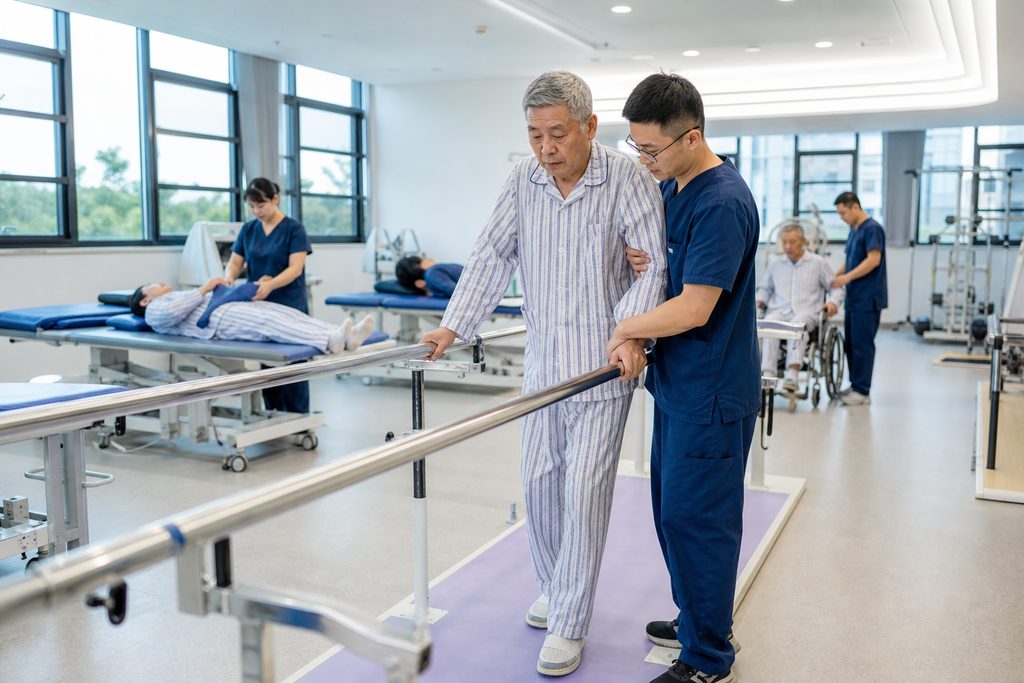
When 42-year-old Michael first heard the diagnosis, he had no idea where to start looking for treatment. A complex spinal fusion was on the table. The quote from his local hospital in Phoenix came back at $175,000. His insurance would cover barely half. But what really kept him awake wasn’t the surgery itself. It was the three months of rehabilitation afterward. Who would drive him to physical therapy? Who would ensure the fusion healed correctly? The post-surgical care felt like an unscalable wall, a logistical nightmare layered on top of a financial one. This is the quiet crisis that follows every major operation. The operation fixes the anatomy. But recovery is what restores the life. And for many, planning that recovery is harder than planning the surgery.
The conversation around medical travel usually stops at the operating room door. It is a glaring blind spot. We see patients obsess over a surgeon’s credentials but give almost no thought to the structured rehabilitation that determines whether the surgery succeeds. A perfectly executed knee replacement becomes a failure if the patient loses range of motion due to inadequate physiotherapy. A brilliant cardiac bypass yields poor quality of life if no one manages the sternal precautions and gradual return to activity. China’s medical system has addressed this gap with a model that is uncommon in the West: the integrated post surgery recovery package. It bundles the procedure with a defined, monitored, and priced-out rehabilitation phase. This is not a spa with a few therapy sessions tacked on. It’s a clinical pathway with measurable milestones, and for the international patient, it solves the single biggest barrier to seeking care abroad: “What happens after I leave the hospital?”
Key Takeaways
- A structured post surgery recovery package in China typically costs 40-60% less than standalone rehabilitation in the US or UK, with the total surgical-plus-recovery bundle often landing at one-fifth to one-tenth of Western surgical fees alone.
- Top Chinese rehabilitation centers serving international patients integrate daily physician rounds, aggressive physical therapy protocols starting within 24 hours post-op, and Traditional Chinese Medicine modalities rarely available in Western settings.
- Language and cultural barriers in standard Chinese rehab wards are real and significant. The quality of your experience hinges entirely on choosing a hospital with a dedicated international ward and verified English-speaking rehabilitation staff.
- You should understand that “package” pricing varies dramatically by hospital tier. A private international hospital package is transparent and all-inclusive. A public top-tier hospital’s VIP wing offers deeper clinical expertise but requires more careful coordination of the non-medical logistics.
The Problem: Fragmented Aftercare Destroys Surgical Outcomes
Data from the US Agency for Healthcare Research and Quality paints a grim picture. Nearly 20% of Medicare patients undergoing major surgery are readmitted within 30 days. A significant portion of these readmissions stem not from surgical error, but from breakdowns in post-discharge care coordination. Missed medications. Infections caught too late. A physical therapy regimen that the patient simply stops following because no one is tracking compliance. The surgeon’s job ends at the incision. The rest falls into a chasm between hospital discharge and the patient’s home.
This fragmentation is expensive and dangerous. The average cost of a 30-day readmission in the United States for a surgical patient hovers around $16,000 for a private payer. For the patient, it means another hospital stay. More lost work. A deeper erosion of confidence. The standard Western model is episodic. You are discharged with a sheet of instructions and a referral to an outpatient physical therapist who may not have access to your operative report. The surgeon’s team is focused on the next round of cases. The system is not designed for continuity. It’s designed for throughput.
That’s the structural gap a well-designed medical travel recovery program fills. When the rehabilitation is physically connected to or tightly coordinated with the surgical team, communication failures drop. The physical therapist reads the surgeon’s notes because they share the same electronic medical record. The physician managing your pain is down the hall, not across town. This is the default in many top-tier Chinese hospitals serving international patients: a bundled, inpatient-to-outpatient continuum where the team that operated on you remains accountable for your functional recovery. It shifts the definition of a successful outcome from “the operation went well” to “the patient returned to normal life.”
Why China’s Integrated Recovery Model Delivers Results
The structural advantage is not a secret. It’s a product of how Chinese hospitals are organized and how they prioritize rehabilitation as a medical discipline. The evidence is in the outcomes and the operational design.
Clinical Volume Drives Rehab Protocol Refinement
A top Chinese orthopedic surgeon completes 200 to 500 joint replacements annually. The average US orthopedic surgeon performs approximately 65. That volume difference cascades into the rehabilitation department. The physical therapists in a high-volume Chinese joint center see more total knee replacement recoveries in a month than a community therapist in Ohio sees in a year. They have seen every complication. Every plateau. Every patient type. The rehabilitation protocols are not generic templates. They are living documents, tweaked continuously based on thousands of patient trajectories. When a hospital performs over 14,000 cardiac surgeries annually, as Fuwai Hospital in Beijing does, the step-down and cardiac rehab program is not an afterthought. It is a core competency, staffed by nurses and therapists who have managed more sternotomy recoveries than most entire Western cardiac units will see in a decade. This volume breeds a specific, hard-to-replicate expertise: the ability to spot a subtle deviation from the expected recovery curve and intervene before it becomes a crisis.
Physician-Led, Inpatient Rehabilitation as Standard
In many Western systems, acute inpatient rehabilitation is heavily restricted by insurance criteria. A patient after a major spinal surgery might be discharged home on day three with outpatient physical therapy starting a week later. In the Chinese model, particularly in the international and VIP wards we work with, the post-surgical stay is longer and physician-directed. A rehabilitation medicine specialist (a distinct medical specialty in China, known as rehabilitation medicine) rounds on you alongside your surgeon. Your pain management, wound care, and mobilization are managed under one roof. This is not a longer hospitalization for its own sake. It is a deliberate, intensive early-recovery phase. The first two weeks after a major orthopedic or neurological surgery are when the window for preventing contractures, muscle atrophy, and dysfunctional movement patterns is widest. Keeping the patient in a medically supervised environment during this window is not conservative. It is aggressive. It aims to front-load the hardest work of recovery when the patient has 24/7 access to the clinical team that can push them safely.
Cost Structure That Makes Comprehensive Packages Viable
Let’s address the obvious. A bundled surgery-plus-rehabilitation package in China, even at a premier private international hospital, costs a fraction of the surgery alone in the United States. A total knee replacement with 21 days of inpatient rehabilitation and three months of follow-up virtual physical therapy might be priced between $18,000 and $28,000. The same surgery, without any structured rehab, averages $35,000 to $50,000 in the US. The structural reasons are straightforward: lower hospital labor costs, higher patient-to-therapist ratios that maintain quality without inflating costs, and a reimbursement system that does not incentivize fragmenting care across a dozen different billing entities. The lower cost does not reflect lower quality. It reflects a system where the post surgery recovery package China cost is built on different economic fundamentals. You are not paying a US hospital’s administrative overhead, pharmaceutical markup, or liability insurance premium. You are paying for clinical labor, facility time, and consumables in a market where those inputs are genuinely less expensive.
What a Complete Post-Surgery Recovery Package Actually Includes
This is the question that matters. “Recovery package” can mean anything from a hotel room with a nurse on call to a fully medicalized rehabilitation admission. For international patients considering China, you need to know the difference. A legitimate, medically rigorous package at a hospital accustomed to serving foreign patients should include specific, verifiable components. If a provider cannot list these items clearly, you are likely looking at a tourism product, not a clinical one.
The core components we verify when evaluating a hospital’s post-surgical package for our patients are:
- Daily surgical team rounds: The operating surgeon or a senior member of their team must physically assess the wound, check for infection, and clear each advancement in the rehab protocol. This is not a phone check-in. It is a hands-on examination.
- Rehabilitation medicine physician oversight: A doctor specialized in physical medicine and rehabilitation must design and adjust your therapy plan. This is distinct from a physical therapist. The physician manages the medical aspects of recovery: spasticity, neuropathic pain, bowel and bladder function after spinal surgery, cardiac load during mobilization.
- Twice-daily, one-on-one physical therapy: Group classes are for maintenance. Early post-surgical recovery requires individualized sessions where a therapist’s hands are guiding your movement, not just counting reps. Expect two sessions daily, each 45-60 minutes, five to six days per week.
- Wound care and dressing changes: Performed by a wound care nurse using sterile technique, with the wound photographed and documented at each change. Any sign of dehiscence or infection must trigger an immediate surgical consult.
- Pain management titration: Transitioning from IV patient-controlled analgesia to oral medications, then weaning entirely, requires daily adjustment. This must be managed by a physician, not a standing order set.
- Nutritional support: A clinical dietitian should assess your caloric and protein needs for wound healing and adjust your meals accordingly. Malnutrition is a silent driver of poor surgical outcomes.
- Discharge planning with a functional benchmark: The discharge date should not be arbitrary. It should be tied to specific, measurable goals: walk 150 meters independently, climb a flight of stairs, demonstrate independent self-catheterization, or whatever is clinically appropriate for your procedure.
Packages at centers like the Jiahui International Hospital in Shanghai or the United Family Healthcare network often include these as standard, with transparent pricing. At a public top-tier hospital’s international department, like Peking Union Medical College Hospital‘s International Medical Service, the clinical components are equally rigorous, but the non-medical logistics (private room amenities, interpreter availability, meal selection) require more active coordination. Both models can work. The key is knowing which model you are walking into and what is included in the post surgery recovery package China cost you are being quoted.
How Long Should You Plan to Stay? Realistic Recovery Timelines
The question “how long to recover from surgery in China” is the wrong one if you mean total recovery. Full biological healing of a fused joint or a reconstructed ligament takes months, regardless of geography. The right question is: “How long must I remain in China under active medical supervision before I can safely fly home?” That answer is procedure-specific and surprisingly standardized across the top centers we work with.
For a primary total hip or knee replacement, the minimum supervised inpatient rehabilitation stay is typically 14 to 21 days. By day 14, the wound should be sealed, the risk of deep vein thrombosis has dropped significantly, and you should be ambulating with a walker or cane on level surfaces and stairs. Some patients stay for a full 28 days to maximize one-on-one therapy before returning home. For a single-level spinal fusion, plan on 10 to 14 days in the hospital itself, followed by another two to four weeks in a rehabilitation unit or a serviced apartment adjacent to the hospital with daily outpatient therapy. The surgeon will want a follow-up X-ray and a physical exam before clearing you for a long-haul flight. For cardiac surgery, the timeline is more variable. A straightforward coronary artery bypass graft might see you discharged from the acute hospital in 7 to 10 days, but a full three to six weeks of supervised cardiac rehabilitation is strongly advised before flying. The altitude and cabin pressure of a commercial flight place measurable stress on a healing cardiovascular system. No responsible program will wave you onto a plane the moment your stitches are out.
These timelines assume no major complications. A wound infection, a pulmonary embolism, or an unexpected arrhythmia resets the clock. That is precisely why you want your recovery to occur in the same system where your surgery was performed. If a complication arises, the team that knows your case is immediately available. You are not trying to explain a complex post-operative course to an emergency room doctor in a different country who has never seen you before.
Best Rehabilitation Centers in China for International Patients
The term “best rehabilitation center Shanghai for international patients” gets searched often, and the answer is not a single facility. It depends entirely on your surgery and your priorities. Shanghai, Beijing, and Guangzhou each have distinct strengths, and the right choice balances clinical specialization with genuine international patient capability.
In Shanghai, the Jiahui International Hospital operates a rehabilitation center that is purpose-built for the international patient. The entire clinical staff communicates in English. The facility is modern, private, and designed to Western expectations of privacy and hotel-like amenities. Its rehabilitation medicine department is led by physicians trained in both Chinese and Western systems. For orthopedic and sports medicine recovery, Jiahui is arguably the most seamless experience for an English-speaking patient. The trade-off is cost. It is more expensive than a public hospital’s VIP wing. But what you are buying is frictionless communication and a facility that does not require an interpreter to bridge every interaction.
For complex neurological rehabilitation, Huashan Hospital’s Department of Rehabilitation Medicine is one of the most respected in the country. Huashan is a public hospital, part of the Fudan University system, and its international ward provides access to this clinical depth with English-speaking coordination. A patient recovering from a brain tumor resection or a stroke would find a level of neuro-rehab expertise at Huashan that is difficult to match in private facilities. The same logic applies in Beijing. The China Rehabilitation Research Center (CRRC) is the largest and most academically influential rehabilitation facility in the country. It is a public institution, and navigating it without Chinese language skills requires a dedicated coordinator. But for spinal cord injury or amputee rehabilitation, the clinical density of expertise is extraordinary. The therapists here see a volume of complex cases that creates a deep, intuitive clinical judgment.
Is Post Operative Care in China Good for Foreigners? The Unvarnished Answer
The honest answer is: it depends entirely on where you go. Asking “is post operative care in China good for foreigners” is like asking if post operative care in the United States is good. A patient at the Mayo Clinic has a fundamentally different experience from a patient at a rural critical-access hospital. China’s healthcare system is vast and stratified. The top 5% of hospitals, the roughly 340+ institutions we work with, provide post-operative care that is objectively excellent by any international standard. The nursing ratios, physician availability, and therapy intensity in these hospitals’ international wards meet or exceed what you would find in a good Western private hospital. The remaining 95% of Chinese hospitals are not designed for international patients. The care may be clinically sound, but the experience will be defined by language barriers, shared rooms, and a cultural approach to patient autonomy that can feel jarring to a Western patient.
The single most important variable is the presence of a dedicated international ward with permanent, employed English-speaking nursing staff. Not an interpreter who pops in once a day. Not a doctor who studied in the US 20 years ago and is rusty. You need a nurse at the bedside who can understand when you say “I feel short of breath” and can communicate that immediately and accurately to the attending physician. The hospitals we direct patients toward all meet this standard. The hospitals we steer patients away from have excellent surgeons but a rehabilitation floor where no one speaks more than 20 words of English. Post-operative recovery is a period of vulnerability. Pain, medications, and the stress of healing all impair your ability to navigate a foreign language. You need the environment to accommodate you, not the other way around.
Practical Considerations: Documentation, Payment, and Follow-Up
Planning a recovery stay in China requires more than choosing a hospital. The logistics are manageable, but they demand attention to detail. The biggest friction points for our patients are predictable, and they are avoidable.
Medical records before you travel. The rehabilitation team needs your full surgical documentation before you arrive. This means the operative report, the anesthesia record, the implant stickers (for orthopedic hardware), and any imaging on a CD in DICOM format. A discharge summary is not enough. The rehab physician needs to know exactly what was done inside your body to design a safe mobilization plan. Send these digitally at least two weeks before your planned arrival. Our team translates and formats them for the receiving hospital’s electronic medical record system, ensuring the rehabilitation team reviews your case before you walk through the door.
Visa category and duration. Medical treatment in China falls under the S2 visa category. This is a short-term private affairs visa, and it can be issued for up to 180 days. For a recovery stay of 30 to 90 days, an S2 is appropriate. Your accompanying family member also applies for an S2. The hospital will provide
Frequently Asked Questions
Yes. The hospitals used for international patients are JCI-accredited and follow the same international safety standards as top hospitals in the US and Europe. Surgical teams perform high volumes of procedures — often more than their Western counterparts — which studies show leads to better outcomes.
Costs vary by procedure and hospital, but international patients typically save 40-80% compared to US prices — even when factoring in travel and accommodation. A consultation with our team will give you an exact, all-inclusive quote with no hidden fees.
Send us your existing medical reports to get started. We handle everything from hospital selection and appointment scheduling to visa assistance and post-operative recovery planning. Your medical records are reviewed by the specialist before you even book a flight.
For more medical information and treatment options in China, visit chinamedservices.com (China Medical Services).
