Rotator Cuff Repair Surgery Cost China: Your 2025 Shoulder Arthroscopy Guide
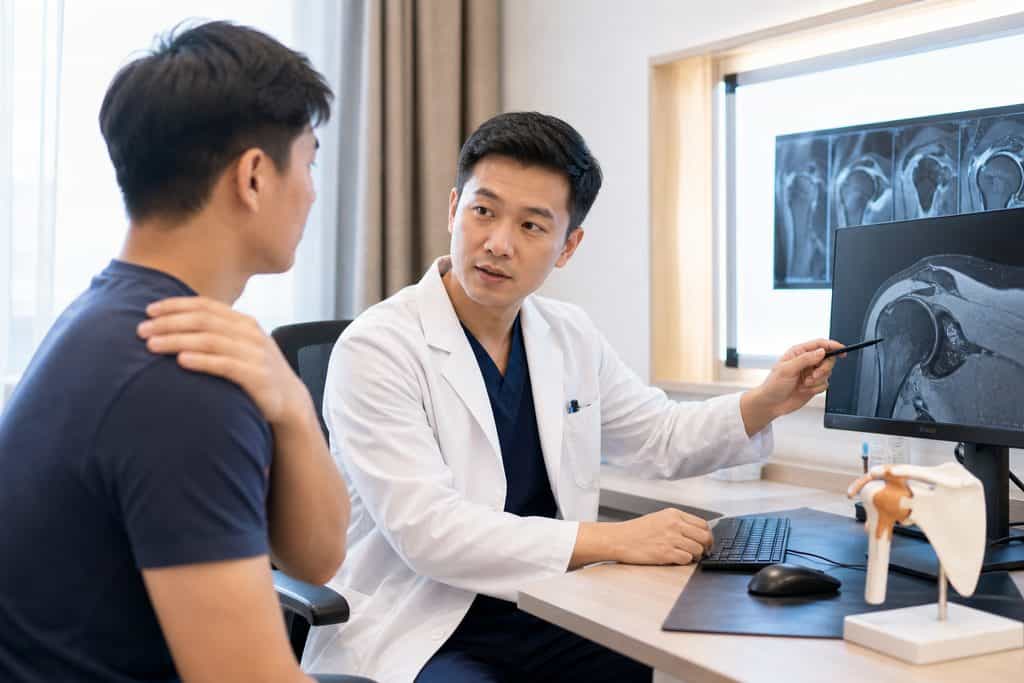
When 52-year-old David, a contractor from Manchester, tore his rotator cuff on a job site, the NHS told him the wait for repair surgery would be at least 11 months. The private quote back home came in at £9,500. He couldn’t swing a hammer. He couldn’t sleep through the night. The pain was wearing him down, and the financial math didn’t add up. David started typing “shoulder surgery abroad” into his phone at 2 a.m. That search eventually led him to a very different number: a total rotator cuff surgery cost China that landed between $4,000 and $7,500 — all-inclusive of the procedure, hospital stay, and implant. He was skeptical. He should be. But the data held up.
Key Takeaways
- A full rotator cuff repair via shoulder arthroscopy in China runs between $4,000 and $7,500 — roughly 70-80% less than the US cash price of $20,000-$35,000.
- China’s top orthopedic centers perform thousands of shoulder arthroscopies annually; high surgical volume correlates strongly with lower complication rates.
- Language barriers and the standard public hospital process make independent navigation extremely difficult — this is the single biggest friction point for international patients.
- Any cost comparison must account for implant type, tear size, hospital tier, and whether you need a written second opinion before committing to travel.
The Problem: A Common Injury With an Uncommon Price Tag
Rotator cuff tears affect approximately 30% of people over 60, and the numbers climb steeply with age. But it’s not just an older person’s problem. Athletes, manual laborers, and anyone who takes a hard fall can tear the supraspinatus tendon in an instant. In the United States, roughly 250,000 rotator cuff repairs are performed each year. The cash price for an uninsured patient averages around $22,000, with a typical range stretching from $15,000 to $35,000 depending on geography and facility fees. In the UK, private payers face bills between £8,000 and £12,000. For patients in countries with long public waitlists or high private costs, the math gets punishing fast.
You cannot work. You cannot lift your kid. Sleep becomes a negotiation with a dull, throbbing ache. And then the quote arrives. That’s the moment people start researching alternatives. The question “how much does shoulder surgery cost in China” isn’t born from idle curiosity. It comes from a place of real pressure — a need to fix the problem without emptying a retirement account or waiting two years in pain.
Why China’s Orthopedic Centers Deliver Results for Shoulder Arthroscopy
The structural reasons behind the cost difference matter. They also explain why outcomes at top Chinese hospitals match or exceed international benchmarks. This is not about “cheaper care.” It’s about a different economic model built on volume, efficiency, and concentrated specialization.
Surgical Volume Drives Precision
A senior orthopedic surgeon at a major Chinese teaching hospital may perform 300 to 500 shoulder arthroscopies in a single year. Compare that to the average US orthopedic surgeon, who completes roughly 30 to 50 rotator cuff repairs annually according to data published in the Journal of Bone and Joint Surgery. Volume matters. A 2018 study in The Lancet found that hospitals performing more than 50 rotator cuff repairs per year had significantly lower re-tear rates than low-volume centers. China’s top-tier hospitals sit far above that threshold. The surgeons who would handle your case have seen your exact tear pattern hundreds of times. That repetition breeds a kind of calm, practiced efficiency that shows up in shorter operating times and lower infection rates.
Technology Without the Markup
Walk into the orthopedic department at a hospital like Peking University Third Hospital or Shanghai Sixth People’s Hospital and you’ll find the same arthroscopic towers, suture anchors, and imaging systems used in any major Western center. Arthrex, Smith & Nephew, DePuy Synthes — the implant brands are identical. But the facility fees and device markups that inflate US hospital bills simply don’t apply in the same way. A double-row suture anchor repair using premium biocomposite implants might add $800 to the total cost in China. In a US facility, that same implant line item can hit $4,000 before the surgeon even picks up a scalpel. The technology is the same. The pricing structure is not.
The Cost Advantage, Explained Honestly
Let’s address the elephant in the room: does lower cost mean lower quality? No. It means lower labor costs, lower administrative overhead, and a hospital payment system not built on aggressive chargemaster pricing. A Chinese orthopedic surgeon’s salary is a fraction of their American counterpart’s — not because they’re less skilled, but because the entire physician compensation model differs. Hospital construction costs, nursing wages, and malpractice insurance premiums all run dramatically lower. These structural savings pass through to the final bill without cutting corners on sterilization protocols, implant quality, or surgical technique. The result: a rotator cuff surgery cost China that lands at roughly one-fifth to one-quarter of the US price for equivalent clinical quality.
What You’ll Actually Pay: Rotator Cuff Surgery Cost in China Broken Down
The numbers that follow are real ranges based on 2025 pricing at China’s top orthopedic hospitals and international medical centers. Every figure varies by tear complexity, implant choice, and hospital tier. Use these as a planning baseline, not a fixed quote.
| Procedure & Setting | Cost Range (USD) | What’s Included | Comparable US Cash Price |
|---|---|---|---|
| Arthroscopic rotator cuff repair — Public Grade-A Tertiary Hospital (standard ward) | $4,000 – $6,000 | Surgeon fee, anesthesia, 2-3 day inpatient stay, single-row or basic double-row anchor implant | $18,000 – $25,000 |
| Arthroscopic rotator cuff repair — Public Hospital International/VIP Department | $5,500 – $7,500 | English-speaking coordinator, private room, senior surgeon, premium implant, expedited admission | $22,000 – $35,000 |
| Arthroscopic rotator cuff repair — Private International Hospital (JCI-accredited) | $7,000 – $10,000 | Full English-speaking staff, direct insurance billing, Western-style private room, premium implant | $25,000 – $40,000 |
| Written Second Opinion (remote) — Top Orthopedic Specialist | $300 – $500 | Review of MRI/medical records, written analysis and treatment recommendation | $500 – $1,500 |
These figures reflect the all-in hospital bill for the surgery itself. They do not include international airfare, local accommodation for a companion, or post-operative physiotherapy — though physio in China runs between $30 and $60 per session at hospital-affiliated rehab centers. That’s another line item worth factoring in. A patient flying in from London or Los Angeles should budget an additional $1,500 to $2,500 for flights, a modest hotel or serviced apartment for 10-14 days, and ground transport.
One more thing about the numbers. A small partial-thickness tear repaired with a single-row anchor will sit at the low end. A massive full-thickness tear involving two or three tendons, requiring a complex double-row or suture-bridge construct, will push toward the upper end. The implant matters. The surgeon’s time matters. Get a detailed breakdown before you book a flight.
Where to Go: Choosing the Best Hospital for Rotator Cuff Repair in China
Not every hospital in China is equipped for high-quality shoulder arthroscopy. The orthopedic departments worth traveling for cluster in a handful of cities — Beijing, Shanghai, Guangzhou. These are teaching hospitals with dedicated sports medicine divisions, surgeons who publish in international journals, and arthroscopy volumes that dwarf most Western centers.
Peking University Third Hospital in Beijing runs one of the country’s most respected sports medicine institutes. Its orthopedic surgeons handle professional athletes and complex revision cases routinely. Shanghai Sixth People’s Hospital is another heavyweight — its orthopedic department is consistently ranked among China’s top five, and its shoulder service performs thousands of arthroscopic procedures annually. For patients who prefer a Western-style experience with English-speaking staff and JCI accreditation, Shanghai United Family Hospital and Jiahui International Hospital offer shoulder arthroscopy with direct insurance billing, though at a higher price point.
How do you evaluate a specific hospital? Look at three things. First, annual arthroscopy volume — ask directly. Second, the surgeon’s fellowship training and publication record. Third, whether the hospital has a dedicated international patient department that can handle visa documentation, interpreter services, and post-operative coordination. The orthopedics specialty rankings page on our site breaks down top departments by subspecialty, including sports medicine and joint surgery. For a broader view of hospital tiers across cities, the top-ranked hospitals database lists every Fudan-ranked institution with details on international patient services.
Is rotator cuff surgery safe in China at these hospitals? The short answer is yes — with a caveat. Safety depends entirely on hospital selection. A top-10 orthopedic center with 1,000+ annual shoulder arthroscopies carries a deep well of experience, standardized infection control protocols, and low complication rates comparable to any major Western center. A small provincial hospital with 20 shoulder cases a year does not. Choose carefully. The data published by the Chinese Orthopaedic Association shows that Grade-A tertiary hospitals in major cities report surgical site infection rates for clean orthopedic procedures below 1%, consistent with international benchmarks. But those numbers only hold at the top tier.
Medical Tourism Rotator Cuff Repair China Package: What a Realistic Trip Looks Like
Searching for a “medical tourism rotator cuff repair China package” pulls up a lot of glossy websites with vague promises. Let’s cut through that. There is no standard package because no two rotator cuff tears are identical. What does exist is a predictable sequence of steps that any well-planned trip will follow.
Step one happens before you leave home. You send your MRI images, radiology report, and a summary of your symptoms and medical history to the hospital or a coordination service. A senior orthopedic surgeon reviews the file. You get a written opinion back: is surgery indicated, what technique is recommended, what implant, what the realistic recovery timeline looks like. This step costs $300-$500 and it tells you whether you should even get on a plane. If surgery isn’t the right call — maybe physical therapy is still the first-line option — you learn that from the comfort of your living room, not a hospital lobby in Shanghai.
Step two is scheduling. Once the surgeon confirms the case, the hospital’s international department or your coordinator locks in a surgery date, reserves a bed, and issues the invitation letter you’ll need for the S2 visa application. The S2 is the short-stay visa category used for private medical treatment in China. Processing takes roughly one to two weeks at most embassies and consulates. You’ll need the hospital’s invitation letter, a completed application form, your passport, and a recent photo. Family members traveling with you apply under the same S2 category.
Step three is arrival and pre-operative workup. You land, rest a day, then go to the hospital for repeat imaging and pre-op labs. The surgeon examines you in person. The procedure happens the following day or within 48 hours. A standard arthroscopic rotator cuff repair takes 60 to 90 minutes under general anesthesia with a regional nerve block for post-op pain control. You stay in the hospital for two to three nights — long enough for the surgical team to check the wound, manage pain, and start passive range-of-motion exercises under a physiotherapist’s guidance.
Step four is the critical part most people underestimate: the early recovery window before flying home. You should plan to stay in China for at least 10 to 14 days after surgery. During this period, you’ll attend daily or every-other-day physiotherapy sessions at the hospital’s rehab department, the surgical team will check your incisions, and you’ll get clear instructions on the next six weeks of protected movement. Flying with a fresh shoulder repair is uncomfortable but safe if you follow the surgeon’s guidance on compression stockings, movement, and pain management. Most patients fly home around day 10 to 12 post-op.
Step five is the long game — the six to twelve months of progressive rehabilitation back home. The Chinese surgeon will provide a detailed rehab protocol that any qualified physiotherapist in your home country can follow. Some hospitals offer follow-up video consultations at the three-month and six-month marks to check progress. The success of the repair depends as much on those months of disciplined rehab as it does on the surgery itself.
Practical Considerations: Visas, Payments, and What Could Go Wrong
Let’s talk about the unglamorous logistics that determine whether a medical trip succeeds or unravels.
Visas. You will apply for an S2 visa, specifying medical treatment as the purpose of your visit. The hospital must provide an official invitation letter with their stamp and license details. Without that letter, the visa application goes nowhere. Processing times vary by country — budget two to three weeks from application to passport return to be safe. Do not book non-refundable flights until the visa is in your hand.
Payment. Chinese public hospitals require upfront payment. You pay the estimated total at admission, and the hospital settles the final bill at discharge — refunding any surplus or billing any shortfall. Most international departments accept wire transfers and major credit cards. Cash deposits in Chinese yuan also work, though carrying large amounts of currency is impractical. Private international hospitals like United Family often accept direct insurance billing if your policy covers overseas treatment. Check with your insurer before assuming anything. Most international policies require pre-authorization for planned surgery abroad.
Language. In a standard public hospital ward, very little English is spoken. Nursing staff, administrative clerks, even some junior doctors will communicate almost entirely in Mandarin. The international or VIP departments of major hospitals provide English-speaking coordinators and translators — that’s part of what the higher price buys. If you’re navigating the standard public system, you need a bilingual companion. It’s not optional. The difference between a smooth experience and a confusing, stressful one often comes down to having someone in the room who can translate both the medical instructions and the cultural expectations.
Complications. Surgical complications are rare but real. Infection, stiffness, re-tear, nerve injury — these are the known risks of any rotator cuff repair, anywhere in the world. The question is what happens if a complication arises after you’ve returned home. Your Chinese surgeon will provide operative notes, implant details, and post-op imaging that any orthopedic surgeon in your home country can use to manage follow-up care. But the continuity of care is on you to arrange. Find a local orthopedic surgeon before you travel — someone willing to see you for post-op checks and take over if a problem develops. Most are happy to do this if you’re upfront about your plans and bring complete documentation back with you.
Frequently Asked Questions
At a top-tier Chinese orthopedic center, the safety profile is comparable. Infection rates, anesthesia complications, and re-tear rates at hospitals like Peking University Third Hospital or Shanghai Sixth People’s Hospital align with international benchmarks. The critical variable is hospital selection — a high-volume academic center with a dedicated sports medicine division is a different world from a low-volume general hospital. Verify the surgeon’s annual arthroscopy volume and the hospital’s international accreditation status before committing.
A realistic all-in budget for an international patient runs between $6,500 and $10,500. That includes the surgery itself ($4,000-$7,500), round-trip economy airfare ($800-$1,500), a modest hotel or serviced apartment for two weeks ($600-$1,200), daily expenses, and post-operative physiotherapy sessions. The total still lands at roughly one-third of the US cash price for the surgery alone. Patients choosing private international hospitals should budget at the higher end of the range.
You are never obligated to proceed. A written second opinion obtained remotely before travel is the best safeguard against this scenario. It costs $300-$500 and gives you a clear recommendation before you commit to flights and visas. If you arrive and the in-person consultation raises new concerns, you have every right to decline surgery and return home. You would lose the travel costs and the consultation fee, but that’s a small price compared to undergoing an unnecessary procedure. No reputable hospital pressures a patient into surgery.
Can I get a “package deal” that covers everything from airport pickup to rehab?
Some private international hospitals and medical facilitation services offer coordinated packages that bundle surgery, accommodation, ground transport, and interpreter services. These are not standardized products — each is quoted based on your specific case and accommodation preferences. Expect to pay a premium for the convenience. A well-coordinated package removes logistical headaches but adds $1,500-$3,000 to the total cost. Whether that’s worth it depends
For more medical information and treatment options in China, visit chinamedservices.com (China Medical Services).
